
U.S. Army moves Anduril battle network from test to field
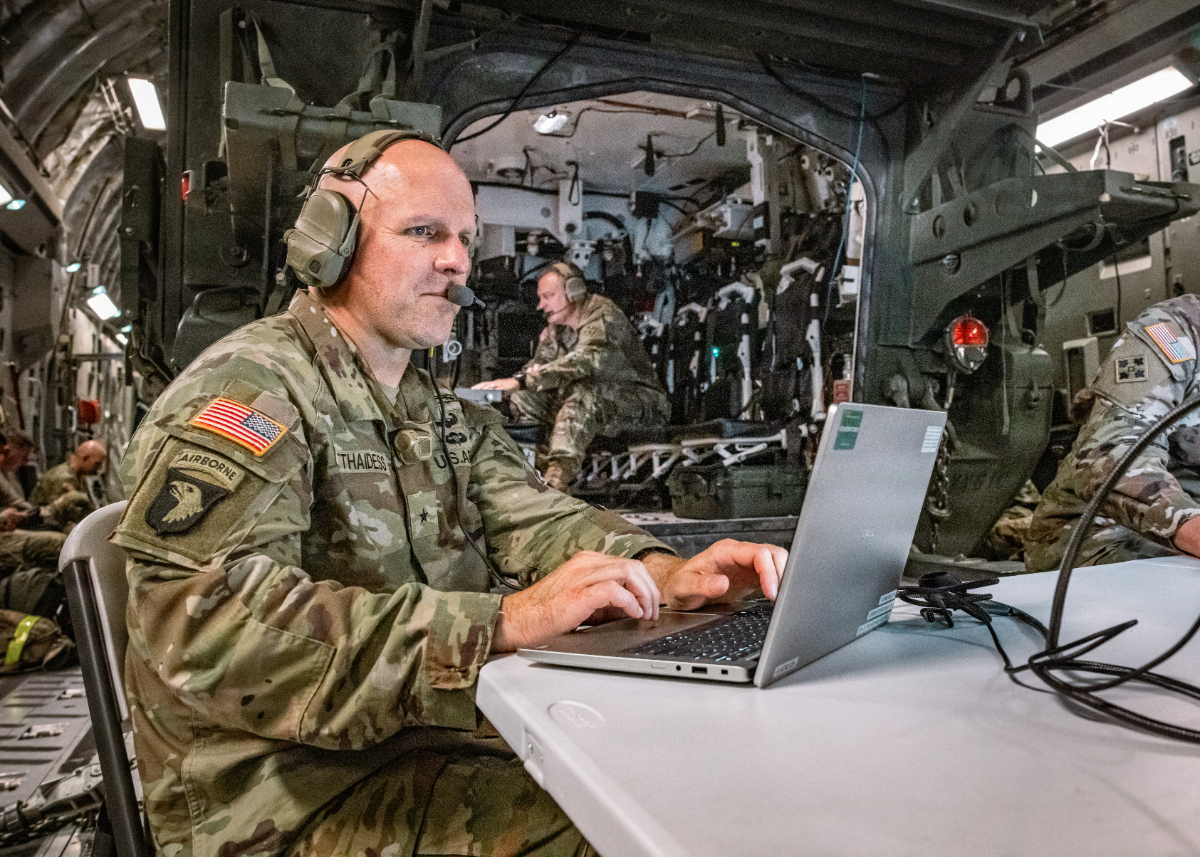
The U.S. Army has awarded Anduril Industries a contract worth up to $1.8 billion over five years to roll out its Next Generation Command and Control network, known as NGC2, starting with I Corps, the Army headquarters responsible for much of its force in the Pacific.
The initial base period of the contract is valued at $162.8 million, Anduril said on Oct. 6. Options could bring the total to $1.8 billion over five years. The award moves NGC2 from prototype testing with a single division to operational fielding at corps level.
NGC2 is the U.S. Army’s effort to replace its patchwork of separate command, intelligence and fire-control systems with one shared data network. Instead of each system running on its own hardware and software, sensors, weapons, vehicles and applications from different companies plug into a common data layer, so information moves between them without soldiers re-entering it by hand. Anduril’s Lattice software provides that layer.
I Corps, headquartered at Joint Base Lewis-McChord in Washington state, commands four Army divisions. Anduril said the Pacific mission is a much harder problem than its earlier testing, since units there can be thousands of miles apart, must coordinate with joint and allied forces, and have to keep operating when parts of the network go down.
The company did not say which I Corps units will receive the system first, how many devices or vehicles will be equipped, or when fielding begins.
The contract follows about a year of field testing with the 4th Infantry Division at Fort Carson, Colorado. The Army awarded an Anduril-led team that included Palantir and Microsoft a $99.6 million prototype agreement in July 2025, and Anduril engineers began working with soldiers weeks later through a series of exercises called Ivy Sting.
In the first of those, in September 2025, 4th Infantry Division soldiers fired M777 howitzers using artillery fire-control software running on Lattice. By Ivy Mass in May 2026, the whole division was operating on NGC2, with more than 2,500 end-user devices and a range of applications on the same data network, according to Anduril. The company says NGC2 cut artillery fire timelines by 90 percent compared with legacy systems and sped up airspace coordination. It also says later exercises showed U.S. Army, U.S. Marine Corps and U.S. Navy systems sharing data directly, and that the network kept supporting units after they lost connection to higher headquarters.
The U.S. Army ran a second NGC2 prototype in parallel. The 25th Infantry Division in Hawaii has tested a version led by Lockheed Martin through its Lightning Surge exercises, including during Exercise Balikatan 2026 in the Philippines. In June 2026, after both divisions’ exercises, the Army set a common data baseline for NGC2 and picked Anduril to lead it, working with Palantir and Raft.
Anduril says the architecture is designed so that no single company controls the Army’s whole command-and-control system. Under the common data layer, the Army can add new sensors, applications or weapons from other vendors without rebuilding the underlying network for each one.
Content preview only. Full article available at source. View Full Article
The U.S. Army awarded a contract worth up to $1.8 billion to Anduril Industries for the rollout of the Next Generation Command and Control network (NGC2) at Joint Base Lewis-McChord, Washington, starting October 6, 2025. This system aims to integrate various command, intelligence, and fire-control systems into a unified data network, enhancing operational efficiency for I Corps in the Pacific region. The initial contract phase is valued at $162.8 million, with potential expansions based on performance.
- U.S. Army awarded a contract worth up to $1.8 billion to Anduril Industries for NGC2.
- The initial base period of the contract is valued at $162.8 million.
- NGC2 will replace separate command, intelligence, and fire-control systems with a shared data network.
- I Corps will be the first to implement NGC2, enhancing operational capabilities in the Pacific.
- The system has shown significant improvements in artillery fire timelines and coordination among forces.