
U.S. Army plans long-haul flights for the MV-75
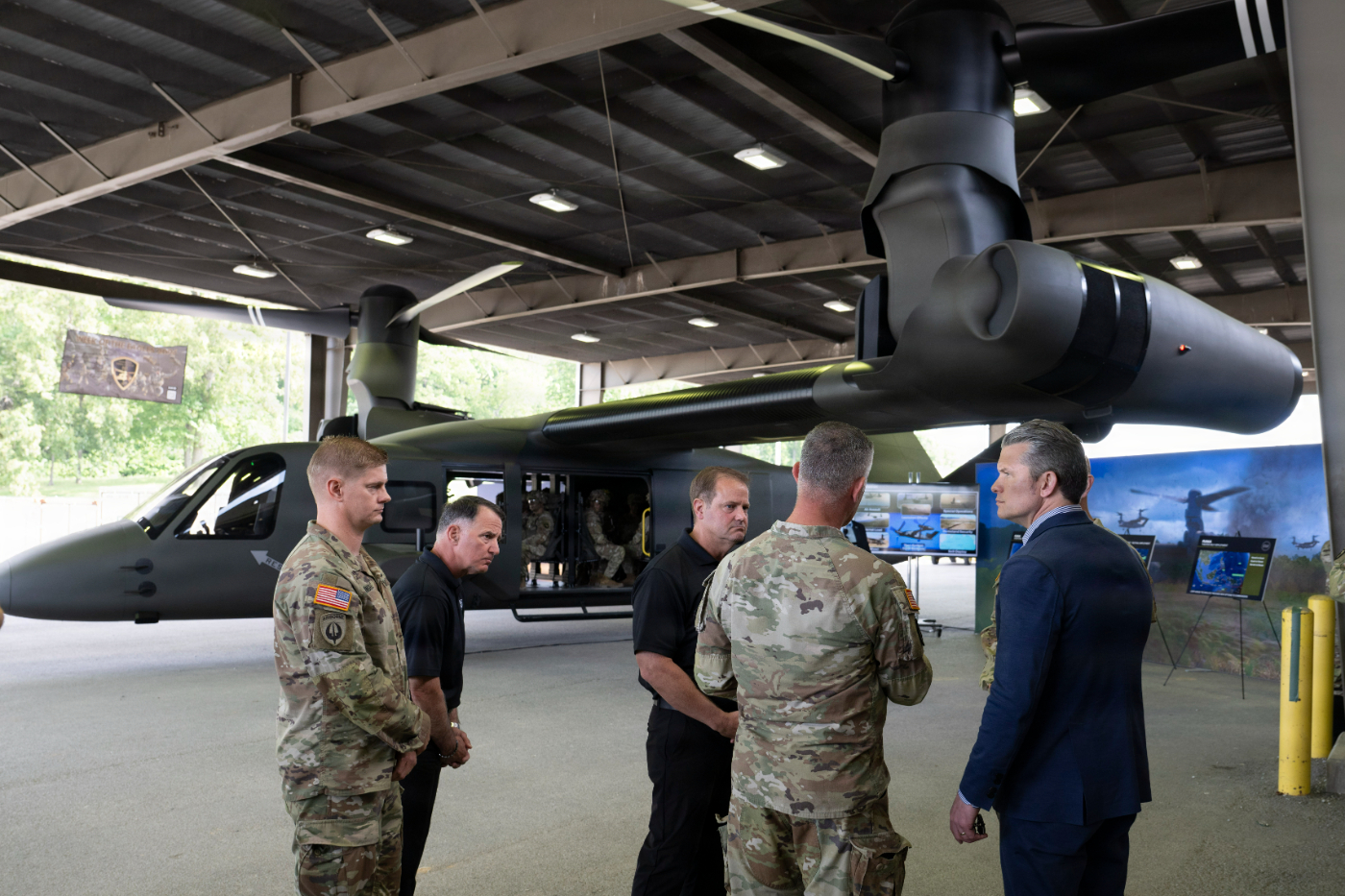
The U.S. Army is planning flights of about seven hours at up to 18,000 feet for its new MV-75 Cheyenne II aircraft, and it is now looking for a way to keep the crew breathing on those trips.
The details come from a notice the service posted on the government’s contracting site on Nov. 16. It asks companies for a portable oxygen system that can supply “a minimum of two pilots and one nonrated crewmember for approximately seven hours.”
Eighteen thousand feet is about 5,500 meters, higher than the top of Mont Blanc. The air there has roughly half the pressure it has at sea level. Without extra oxygen, a pilot’s judgment and reactions fade fast.
Seven hours is a long time in the air for a U.S. Army crew. At the MV-75’s planned cruising speed of about 520 km/h (280 knots), that is enough to cover roughly 3,600 km (2,200 miles) in one hop.
The U.S. Army calls these trips “self-deployment.” The aircraft flies itself to a distant region. Nobody takes it apart and loads it onto a cargo plane or a ship. The service required the MV-75 to be able to fly 4,520 km (2,440 nautical miles) one way without refueling.
That is the main reason the U.S. Army is buying the MV-75. It is a tiltrotor: it takes off and lands like a helicopter, then tilts its rotors forward and flies like an airplane. It is meant to fly about twice as fast and twice as far as the Black Hawk helicopters it will partly replace.
The aircraft itself isn’t finished. On the same day the oxygen notice went up, Bell said it had completed the first MV-75 fuselage and sent it to Texas for final assembly.
The oxygen system has to make its own supply on board. The U.S. Army doesn’t want to depend on bottles, which run out and must be refilled at a base with the right equipment. The MV-75 is supposed to work from remote places where that equipment may not exist.
It also has to be small and removable. The notice describes a “roll-on/roll-off” unit that crews put in for a long flight and take out afterward. It should fit a space about 24 cm wide, 40 cm deep and 70 cm tall (0.8 by 1.3 by 2.3 feet), close to the size of a carry-on suitcase standing on end.
And it can’t get in the crew’s way. The notice says the system must not block “emergency egress, or access to individual weapons and required survival equipment.”
Some things aren’t answered. The notice covers only the three crew members and says nothing about oxygen for soldiers riding in the back. It gives no price, no quantity and no date for when the system is needed.
The U.S. Army named the aircraft Cheyenne II in April.
Companies have until Dec. 16 to respond. The notice is a market survey, and no contract is promised. The U.S. Army said it wants more freedom to fly from places where oxygen support “may be limited or unavailable.”
Content preview only. Full article available at source. View Full Article
The U.S. Army is planning long-haul flights for the MV-75 Cheyenne II aircraft, requiring a portable oxygen system for its crew. The aircraft is designed for self-deployment and aims to operate from remote locations. A notice was posted on November 16, seeking solutions for oxygen supply during flights, with responses due by December 16.
- U.S. Army plans seven-hour flights for the MV-75 Cheyenne II aircraft at 18,000 feet.
- The aircraft requires a portable oxygen system for crew members during flights.
- The MV-75 is designed for self-deployment without needing to be transported by cargo planes or ships.
- The aircraft is intended to operate from remote locations without traditional oxygen support.
- The U.S. Army has set a deadline of December 16 for companies to respond to the notice.