
US F-15EX Permanently Stationed at Kadena for the First Time, PLA Eastern Theater Command Will Face Greater Long-Range Firepower Density
 Li Minghui
U.S. Military F-15EX Permanently Stationed at Kadena for the First Time, PLA Eastern Theater Faces Greater Long-Range Firepower Density
On November 15, two F-15EX "Eagle II" aircraft landed at Kadena Air Base in Okinawa, Japan. The U.S. Air Force stated that this is the first permanent deployment of the aircraft overseas and a key milestone following the replacement of the older F-15C/D at Kadena. Although only two aircraft are involved, this situation is more significant than a temporary rotation: it indicates that the U.S. military is beginning to embed the maintenance, training, and ammunition support for this heavy fighter into the First Island Chain.
Deployment Changes Behind the Two Aircraft
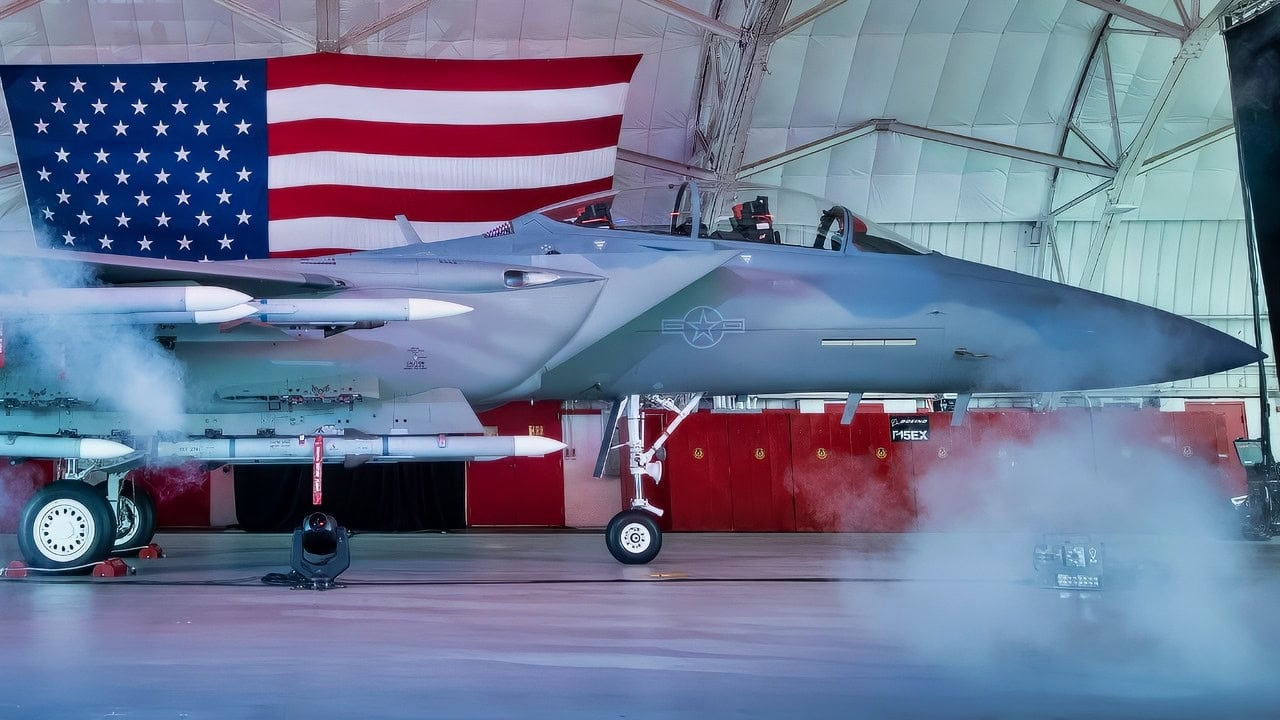
The U.S. Air Force's 18th Wing stated that the 44th and 67th Fighter Squadrons will both utilize the F-15EX. Crew members have previously completed qualification training at Eglin and Portland, and maintenance personnel have coordinated with Boeing and other F-15E bases. This information indicates that what Kadena is receiving is not a "ready-to-fly" demonstration aircraft, but a complete unit that is establishing personnel, maintenance, and operational processes.
The value of the F-15EX does not lie in stealth. Public information shows that it can carry up to 12 air-to-air missiles and has stronger electronic warfare systems and greater external weapon capacity. The U.S. Air Force's fiscal year 2027 planning even proposes to expand the F-15EX fleet from the originally planned 129 aircraft to 267, with plans to purchase an additional 24 aircraft at a cost of approximately $3 billion. This figure is still pending final approval from Congress, but the direction is clear: the F-35 is responsible for penetration, while the F-15EX is tasked with providing munitions and sustained sortie rates from a relatively safe distance.
PLA Faces More Than Just a Single Fighter
From the perspective of the PLA Eastern Theater, the F-15EX itself may not change the balance of stealth confrontation in the Taiwan Strait. It does not have the low detectability of the F-35, and its deployment at Kadena is constrained by runway, fuel, and base protection factors. The real change lies in the ability of the U.S. and Japan to integrate the F-15EX into a combat network composed of AWACS, tankers, F-35s, and long-range missiles, forming a division of labor where "stealth platforms detect targets, and heavy platforms release munitions."
This will increase the planning pressure on the PLA Air Force and Rocket Force regarding the Okinawa base. In the past, assessments of Kadena may have focused on how many aircraft could be destroyed; in the future, it will also be necessary to calculate how many sorties can be maintained through dispersed deployment, rapid repairs, ammunition pre-positioning, and allied support. In other words, the target of the strike chain will expand from the aircraft in the hangars to the entire base's ability to generate combat power.
Production Capacity and Support Are the Follow-Up Observation Points
The author believes that the planning for 267 aircraft cannot be equated with actual combat capability. The F-15EX uses the mature F-15 platform, which helps lower training and maintenance thresholds, but its engines, electronic warfare suites, long-range munitions, and personnel support still require stable supply. The initial deployment at Kadena consists of only two aircraft, which precisely illustrates that the first phase of deployment is about establishing a system, rather than immediately forming a large-scale strike force.
For the PLA, what is most worth tracking is not how many missiles these two aircraft can carry, but whether the U.S. can continuously supplement the F-15EX, F-35, and unmanned wingmen in the Western Pacific after 2027. If the increase in numbers aligns with the construction of distributed bases, the Eastern Theater will face a joint combat force that emphasizes sortie rates and ammunition capacity; if procurement, maintenance, or ammunition supply encounters bottlenecks, the political signal of the first permanent deployment may outweigh the military increment.
Sources
Two F-15EX aircraft were permanently deployed at Kadena Air Base in Okinawa, Japan, on November 15, 2023. This marks the first overseas permanent deployment of the F-15EX, which will be operated by the U.S. Air Force's 44th and 67th Fighter Squadrons. The deployment signifies a strategic enhancement of U.S. air power in the region, integrating the F-15EX into a broader operational network with other aircraft and systems.
- Two F-15EX aircraft permanently deployed at Kadena Air Base in Japan.
- This marks the first permanent overseas deployment of the F-15EX.
- The aircraft will be used by the 44th and 67th Fighter Squadrons of the U.S. Air Force.
- The F-15EX can carry up to 12 air-to-air missiles and has advanced electronic warfare capabilities.
- The U.S. Air Force plans to increase the F-15EX fleet from 129 to 267 aircraft by 2027.