
U.S. Intercepts Cargo Ship in the Gulf of Oman, Iran Insists on Strait Passage Rights, Uncertain Prospects for Second Round of U.S.-Iran Negotiations
[Global Times Correspondents in the U.S. and Pakistan: Feng Yaren, Huang Xiaona, Jing Kuan] As the two-week ceasefire previously reached between the U.S. and Iran is set to expire on April 22, U.S. President Trump announced on the 19th that he would send a U.S. delegation to Pakistan. He also threatened again that if Iran does not reach an agreement, the U.S. will attack Iran's energy infrastructure. Iran has "not yet confirmed" its attendance at the negotiations. Iranian media quoted informed sources as saying that Iran "currently has no plans to participate in the next round of U.S.-Iran negotiations." Iranian Foreign Ministry spokesman Baghaei stated on the 20th that Iran has not made any decisions regarding the next round of negotiations. However, Ibrahim Aziz, chairman of the Iranian Islamic Parliament's National Security and Foreign Policy Committee, stated on the 20th that Iran has decided to continue negotiations with the U.S. As diplomatic efforts face difficulties, maritime confrontations have suddenly escalated. On the 19th, the U.S. military intercepted and took control of a container ship heading to Iran in the Gulf of Oman, with the Iranian military accusing the U.S. of openly violating the ceasefire agreement and stating that it would soon respond to this "armed piracy." The Pakistani newspaper Dawn reported that the attack on the Iranian vessel has cast a shadow over the preparations for the second round of U.S.-Iran negotiations.
Iran: Will not negotiate at all costs
In an interview with the New York Post on the 20th, Trump stated that Vice President Pence would lead the U.S. delegation to arrive in Islamabad, Pakistan, "within hours." If the negotiations make breakthrough progress, he is willing to meet with Iranian leaders. The White House had previously confirmed that Pence would lead the delegation to Islamabad for a new round of U.S.-Iran negotiations, accompanied by Middle East envoy Wittekov and Trump's son-in-law Kushner. According to the Pakistani newspaper Dawn on the 20th, the U.S. advance team arrived in Islamabad on the 19th and 20th, and the U.S. delegation is expected to arrive on the evening of the 20th.
According to U.S. Fox News, Trump told the media in a phone call on the morning of the 19th that the negotiations in Islamabad "could last from Tuesday to Wednesday." According to Al Jazeera, unlike the "21-hour" first round of U.S.-Iran negotiations held in Islamabad on April 11, the second round of negotiations may last several days until a temporary memorandum of understanding is signed, allowing both sides to reach a long-term peace agreement during a longer ceasefire period.
In an interview with the New York Times, Trump stated that if the U.S. and Iran reach an agreement, he is "very likely" to go to Islamabad. On social media on the 19th, Trump stated: "We have proposed a very fair and reasonable agreement, and I hope they accept it, because if they do not, the U.S. will destroy every power plant and every bridge in Iran."
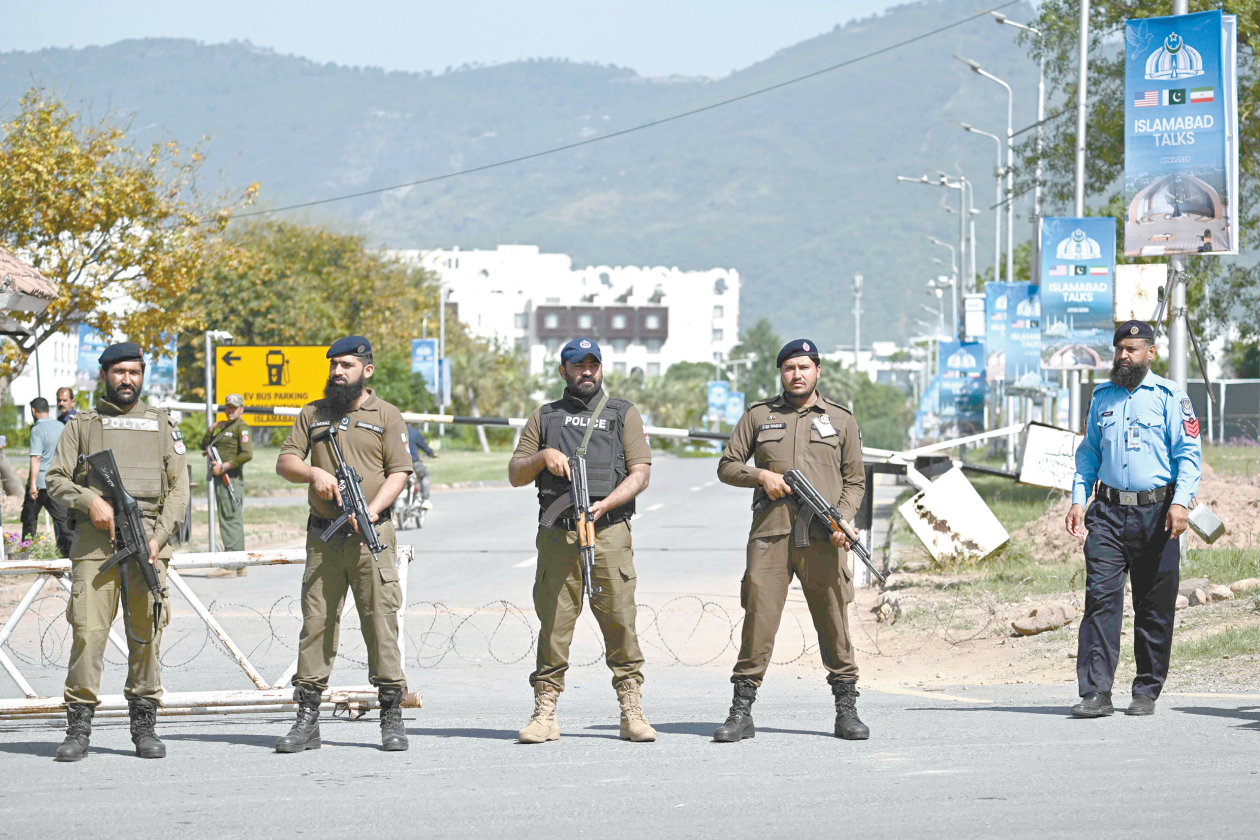
Islamabad is strengthening security for the possible second round of negotiations. According to information from Global Times correspondents in Pakistan, starting on the 20th, Islamabad's "Red Zone" (the security core area where Pakistan's main government departments are located) is fully locked down, and personnel from government departments and institutions in the Red Zone are working from home. Schools of all levels in Islamabad have also switched to online classes. Major roads in the urban area of Islamabad have implemented large-scale closures and detours, and heavy transport vehicles are prohibited from entering. Pakistan's Interior Minister Mohsin Naqvi stated on the 20th that preparations for the second round of U.S.-Iran negotiations are ready, and security measures for foreign delegations have been put in place.
However, Iranian Foreign Ministry spokesman Baghaei stated at a regular press conference on the 20th: "So far, we have not made any decisions regarding the next round of negotiations." The spokesman criticized the U.S. for claiming to seek a diplomatic solution while taking contradictory actions. He emphasized that the U.S. actions are completely inconsistent with its rhetoric, and this contradiction will only deepen Iran's distrust of the entire negotiation process. "Iran will seriously consider its national interests and make necessary decisions about the future path," he added.
Ibrahim Aziz, chairman of the Iranian Islamic Parliament's National Security and Foreign Policy Committee, stated in an interview with Al Jazeera on the 20th that Iran has decided to continue negotiations with the U.S., but this "does not mean that negotiations will be conducted at all costs," nor does it mean accepting "any actions taken by the other side." According to Sky News Arabic, Aziz said that if the U.S. sends positive signals, Iran will send a delegation to participate in the negotiations.
U.S. Forces in Japan Involved in Intercepting Iranian Cargo Ship
As diplomatic efforts face difficulties, maritime confrontations have suddenly escalated. Trump posted on social media "Truth Social" on the 19th that the U.S. Navy destroyer USS Spruance had forcefully intercepted and taken control of an Iranian cargo ship that day in the Gulf of Oman.
The U.S. Central Command later disclosed details of the operation: the USS Spruance intercepted the Iranian-flagged cargo ship "Touska" in the northern Arabian Sea on the 19th, which was heading to Iran's Abbas Port. The U.S. military fired several rounds of shells at the "Touska" to disable its propulsion system. Subsequently, U.S. Marines boarded and took control of the cargo ship.
The Washington Post reported that this was the first time U.S. forces had conducted a boarding operation since the U.S. imposed a maritime blockade on Iran on April 13. U.S. officials stated that the military had been preparing for possible control of the ship for several days. The Marines involved in this operation belong to the 31st Marine Expeditionary Unit stationed in Okinawa, Japan, which arrived in the Middle East in March of this year.
Regarding the U.S. action, the Iranian Armed Forces' Khatam al-Anbiya Central Headquarters issued a statement on the 19th saying that the U.S. violated the ceasefire agreement by attacking an Iranian cargo ship in the Gulf of Oman and sending U.S. Marines aboard. The Iranian Armed Forces will soon respond and retaliate against this "armed piracy" by the U.S. However, the department stated on the 20th that, considering there are many crew members' families on board, Iran has postponed its response to protect their lives. Once the safety of the crew and their families is fully guaranteed, the Iranian Armed Forces will take necessary action against the U.S. military.
"The U.S. must accept the new order in the Strait of Hormuz"
Due to the U.S. control of the Iranian cargo ship and concerns over the ceasefire breakdown, international oil prices rose significantly on the 20th. Iranian First Vice President Aref stated on social media X that if the economic and military pressure on Iran's oil exports is not lifted, global fuel prices will be difficult to stabilize.
"The U.S. must accept the new order in the Strait of Hormuz." Aziz told the BBC that Iran will never give up its control over the Strait of Hormuz. He said that Iran will decide the passage rights in the Strait of Hormuz, including the permission for ships to pass through the strait. This right is about to be written into Iranian law.
On the 20th, Iranian sources told Reuters that the U.S. continued to blockade Iranian ports, undermining the prospects for negotiations; and Tehran's "defensive capabilities," including its missile program, leave no room for negotiation. A Pakistani security source stated that the key mediator from Pakistan, Army Chief Munir, has informed Trump that the blockade against Iran is an obstacle to negotiations. Trump responded that he would consider this.
According to AFP, one of the main issues facing U.S.-Iran negotiations is Tehran's enriched uranium reserves. Trump stated on the 17th that Iran had agreed to hand over about 440 kilograms of enriched uranium. However, Baghaei stated on the 20th that at no stage of the current or past negotiations has the issue of transferring Iran's enriched uranium reserves to any other country been mentioned. Fundamentally, this option is not on Iran's agenda. He stated that Iran's nuclear achievements are related to national dignity, and protecting these achievements is crucial for Iran.
Allen El, a researcher at the Middle East Institute, told the U.S. Consumer News and Business Channel that the fundamental differences between Washington and Tehran are much deeper than the current deadlock. He warned that the latest series of flashpoints could lead to further escalation of the situation in the short term, "which is something no one wants to see."
Al Jazeera believes that even if Iran ultimately agrees to negotiate in Islamabad, officials from all sides do not expect a final agreement to be reached this week. The most realistic goal at present is likely to be extending the ceasefire, with both sides striving to reach a limited consensus in Islamabad. Reports indicate that Pakistani officials are cautiously optimistic about this, stating that the process is moving in a positive direction, but also emphasizing that a final agreement requires continuous contact and mutual compromise between the U.S. and Iran.
On April 19, 2023, the U.S. Navy destroyer USS Spruance intercepted and took control of an Iranian cargo ship in the Gulf of Oman, accusing Iran of violating a ceasefire. The U.S. military used artillery to disable the ship, leading to Iranian threats of retaliation. Ongoing negotiations between the U.S. and Iran are further complicated by this military action.
- U.S. Navy destroyer USS Spruance intercepted an Iranian cargo ship in the Gulf of Oman on April 19, 2023.
- Iranian military accused the U.S. of violating a ceasefire agreement.
- U.S. military used artillery to disable the cargo ship's propulsion system.
- Iran has threatened to respond to the U.S. actions as 'armed piracy'.
- Negotiations between the U.S. and Iran are ongoing but complicated by military actions.