
U.S. Military Resumes Naval Blockade, Iran Declares Continued Retaliation, Trump Announces Re-Engagement in War Against Iran
[Global Times Special Correspondent in the U.S. Xiao Da, Wang Yi] On the evening of the 13th local time, the U.S. Central Command stated that the U.S. military had launched military operations against Iran for the "third consecutive night," targeting multiple military sites within Iran. The Central Command also mentioned that, following the directive of President Trump, the U.S. military would resume maritime blockade operations against Iran starting at 4 PM Eastern Time on the 14th. On the same day, according to a report by The New York Times, Trump officially notified Congress of the resurgence of hostilities with Iran. The main reason for the renewed conflict between the U.S. and Iran is the struggle for control over the Strait of Hormuz. On the 13th, Trump posted on social media that the U.S. would become the "guardian of the Strait of Hormuz" and would impose a 20% fee on all goods transported through the strait. International media are concerned that the Trump administration's struggle for control over the Strait of Hormuz and the resumption of maritime blockade operations against Iran could likely plunge both sides into a "permanent conflict."
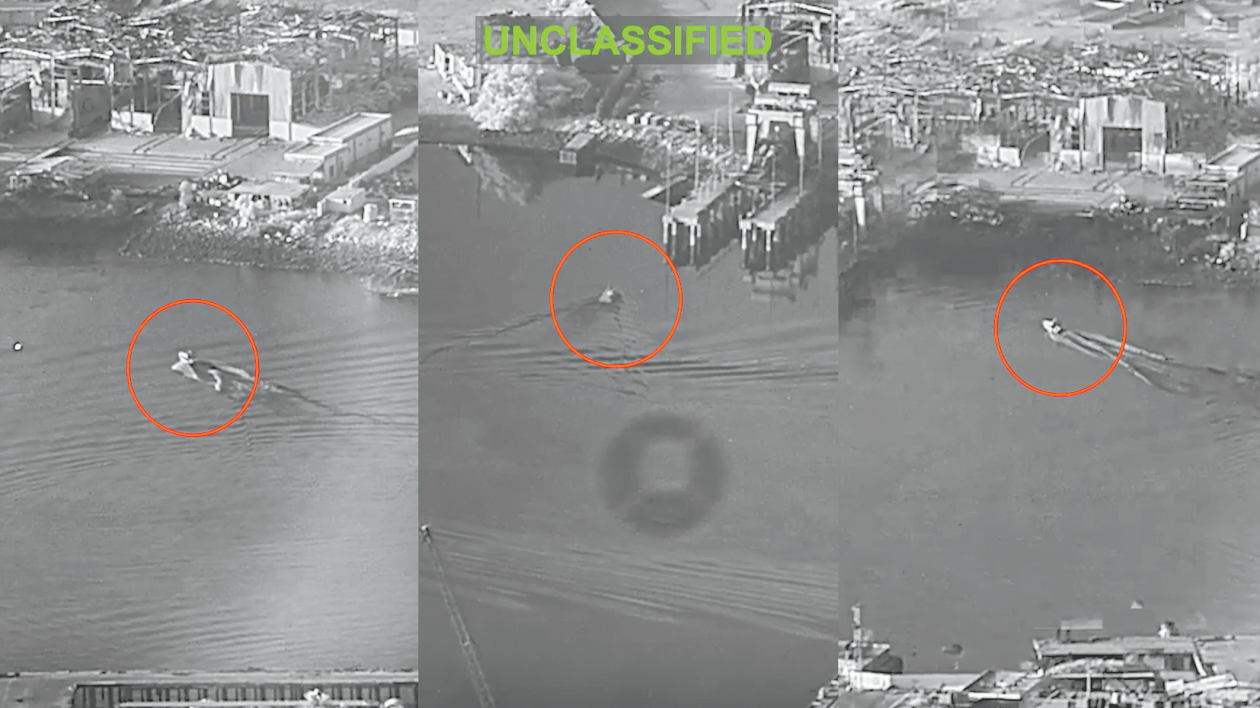
U.S. military launches attacks for three consecutive days
On the 13th, the U.S. Central Command stated in a statement that the U.S. military completed its latest round of strikes against Iran at 10:15 PM Eastern Time on the 13th. During the five-hour strike operation, the U.S. military targeted multiple military sites in Iran, including those in Bushehr, Chabahar Port, and Abbas Port. The statement claimed that these strikes would "continue to impose heavy costs on Iranian forces and weaken their ability to attack innocent civilians and commercial shipping in the Strait of Hormuz."
The Wall Street Journal quoted U.S. military officials on the 13th, stating that the U.S. military's attacks on Iran for three consecutive days were aimed not only at punishing Tehran for its attacks on vessels in the Strait of Hormuz but also at forcing the Iranian regime back to the negotiating table.
According to a report by The New York Times on the 13th, Trump recently sent a formal letter to congressional leaders. In the letter, he stated that he had authorized the U.S. military to carry out "defensive strikes" against targets within Iran. The New York Times noted that this letter opens a new 60-day window, indicating that the Trump administration is restarting hostilities against Iran. Previously, both houses of Congress had voted to pass a resolution limiting the president's war powers, requiring the president to either end the war or seek congressional approval to continue military actions.
On the 13th, Trump described the U.S. military's renewed actions against Iran as a "small-scale conflict" during an interview with a CNN reporter, but he refused to specify how long this conflict would last or how it would be resolved.
Iran attacks the U.S. Fifth Fleet
According to a report by Iran's Mehr News Agency on the 14th, the Islamic Revolutionary Guard Corps (IRGC) issued a statement that its naval and aerospace forces attacked the U.S. Fifth Fleet located in Bahrain with missiles and drones, hitting multiple weapons support warehouses, a satellite communication center, and a U.S. military base building. The statement emphasized that retaliatory actions would continue.
In response to the U.S. resuming its maritime blockade against Iran, the IRGC warned on the 14th that Iran would continue to "exercise full control" over the Strait of Hormuz and accused the U.S. of "actions in this strategic waterway that endanger global energy security." An IRGC spokesperson stated on social media that "Iran will continue to firmly and resolutely uphold its sovereignty and authority over the Strait of Hormuz and will force foreign powers and their allies to submit to the will of the Iranian nation."
The Abu Dhabi National Oil Company in the UAE reported on the 14th that two supertankers under its ownership were attacked while passing through the Strait of Hormuz early that morning, resulting in one death and eight injuries. The UAE's Ministry of Foreign Affairs issued a statement condemning the attack.
In response, the IRGC stated on the 14th that these two tankers were "maliciously manipulated" by the U.S., shutting down their navigation systems and ignoring multiple warnings from the Strait of Hormuz shipping safety control center, endangering the safety of navigation in the waterway, and ultimately being hit by the IRGC Navy and losing power. The statement warned that "cooperating with aggressors will yield no results other than regret, loss, delays in reopening the Strait of Hormuz, and triggering a global energy crisis."
"No end in sight for U.S.-Iran war"
The renewed hostilities between the U.S. and Iran are primarily over the struggle for control of the Strait of Hormuz. On the 13th, Trump posted on social media that the U.S. would become the "guardian of the Strait of Hormuz" and would impose a 20% fee on all goods transported through the strait, with related processes and deployments to be initiated immediately.
The U.S. stance has caused an uproar in global public opinion, with many industry insiders criticizing it as equivalent to "maritime highway robbery." According to Reuters, Brazilian President Lula criticized on the 13th that the Trump administration's actions are akin to those of a "pirate nation." A spokesperson for the International Maritime Organization stated that there is no legal basis for imposing mandatory fees in the Strait of Hormuz and that the organization "strongly opposes charging tolls in straits used for international navigation."
In response to Trump's statements, Iranian Foreign Minister Zarif sarcastically remarked on the 14th, "The U.S. president is not wrong; whoever guarantees the safety of shipping in the Strait of Hormuz should collect this service fee. Iran has always been the guardian of the strait and will continue to be. However, 20% is indeed too high; we will charge fairly."
The New York Times reported that following Trump's announcement of the resumption of the maritime blockade against Iran and the imposition of tolls on vessels passing through the Strait of Hormuz, international oil prices surged, and stock markets fell. The report noted that this move by the U.S. clearly abandons its previously claimed principle of freedom of navigation in the strait, and Trump's remarks completely shattered his earlier argument that Iran had no right to charge fees. For international shipping companies, the question has become which powerful force will compel them to pay. "Trump has undermined the legitimacy that the U.S. could have claimed," said Kagan, a senior fellow at the Brookings Institution. "The U.S. has always portrayed itself as a defender of global public interest; are we asking other countries to take enormous risks to help us seize control of the Strait of Hormuz just so we can charge them?"
"Because of the Strait of Hormuz, the U.S.-Iran war shows no signs of ending," stated Australia's The Conversation on the 14th, noting that control over the Strait of Hormuz has become the main focus of the U.S.-Iran struggle. The report indicated that this could prolong the duration of the conflict and have broader implications.
U.S. Central Command conducted airstrikes against Iranian military targets in Bushehr, Chabahar, and Abbas Port on October 13-14, 2023. President Trump announced the restoration of a maritime blockade in the Strait of Hormuz, asserting U.S. control over shipping in the area. In retaliation, the Iranian Revolutionary Guard Corps attacked the U.S. Fifth Fleet in Bahrain. The situation escalates tensions between the U.S. and Iran, with potential implications for global energy security.
- U.S. military conducted airstrikes on Iranian military targets for three consecutive nights.
- Trump announced the restoration of maritime blockade against Iran.
- Iranian Revolutionary Guard Corps attacked U.S. Fifth Fleet in Bahrain.
- Trump's administration indicated a new 60-day window for military action against Iran.
- Two UAE oil tankers were attacked in the Strait of Hormuz, resulting in casualties.