
U.S. Navy, Australia pay $66M to upgrade Triton spy drones
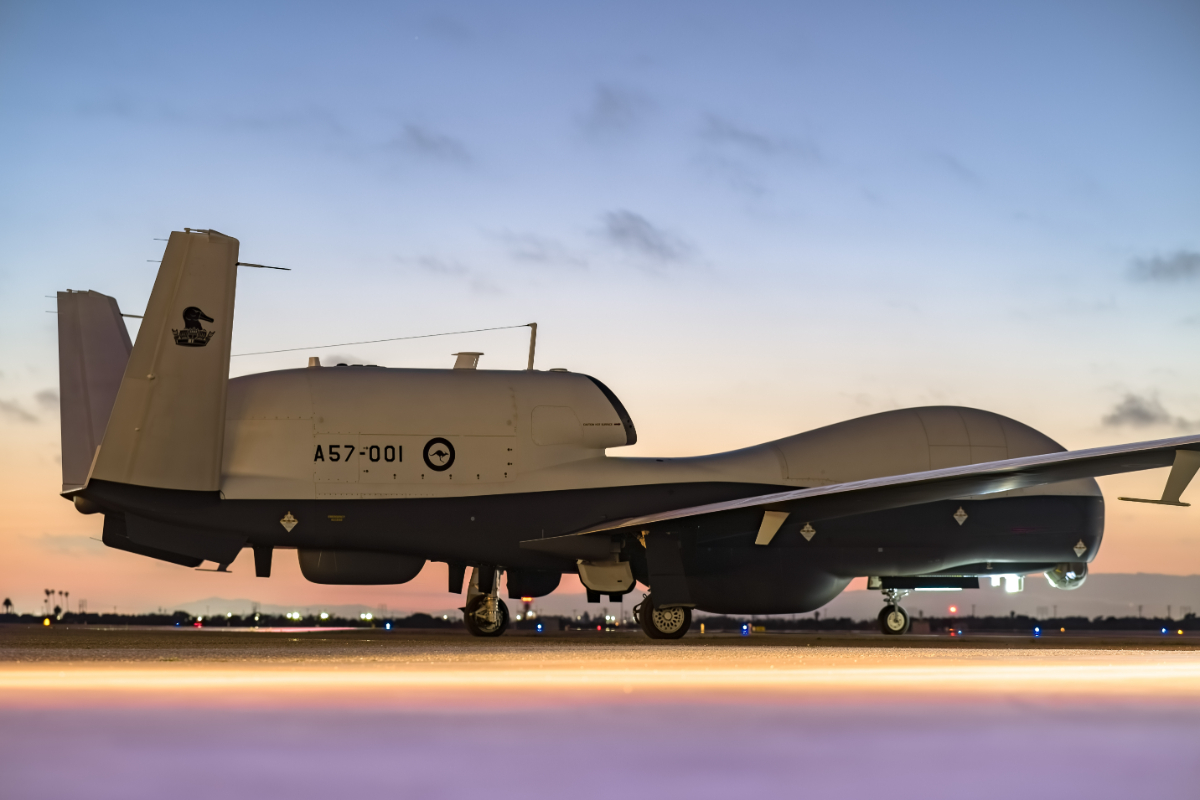
The U.S. Navy has awarded Northrop Grumman a $66 million order to retrofit MQ-4C Triton surveillance drones already in service with the U.S. Navy and the Royal Australian Air Force, bringing both fleets up to a common configuration.
The firm-fixed-price delivery order covers engineering work, materials and spare parts to install 17 engineering change proposals on U.S. Navy aircraft and 16 on Royal Australian Air Force aircraft. Engineering change proposals are approved modifications to an aircraft’s design, and the U.S. Department of War said the work supports fleet standardization and mission readiness. The announcement did not describe what the individual changes involve.
Naval Air Systems Command at Patuxent River, Maryland, placed the order. Of the money obligated at award, about $53.6 million comes from fiscal 2026 U.S. Navy aircraft procurement funds and about $12.4 million from Australia under the two countries’ cooperative program. The order was not competed. Work is expected to be finished by June 2030.
Most of the work will take place in California, with 63 percent in Hayward and 31 percent in San Diego, where Northrop Grumman builds the Triton. Smaller shares are split among Red Oak and Waco in Texas, Tukwila in Washington, Elyria in Ohio, Irvine in California and other U.S. sites.
The MQ-4C Triton is a large, high-altitude drone derived from the U.S. Air Force’s RQ-4 Global Hawk and designed for long maritime patrol missions. It can stay aloft for more than 24 hours and uses radar and other sensors to track ships across wide stretches of ocean. The U.S. Navy flies it alongside its crewed P-8A Poseidon patrol aircraft.
Australia is the only foreign operator. It ordered four Tritons through a cooperative program with the U.S. Navy and Northrop Grumman. The first arrived at Royal Australian Air Force Base Tindal in the Northern Territory in June 2024, and the second and third followed in June 2025. The Australian Department of Defence has said the fourth and final aircraft is scheduled for delivery in 2028. The aircraft are flown by the Royal Australian Air Force’s No. 9 Squadron, which was re-formed to operate the Triton, and work alongside Australia’s P-8A fleet patrolling the country’s northern maritime approaches.
Content preview only. Full article available at source. View Full Article
The U.S. Navy awarded a $66 million contract to Northrop Grumman to retrofit 33 MQ-4C Triton surveillance drones for fleet standardization and mission readiness. The work will be completed by June 2030, primarily in California, and involves both U.S. Navy and Royal Australian Air Force aircraft. The Triton drones are designed for long maritime patrol missions and can remain airborne for over 24 hours.
- U.S. Navy awarded a $66 million contract to Northrop Grumman for retrofitting MQ-4C Triton drones.
- The contract includes modifications for both U.S. Navy and Royal Australian Air Force aircraft.
- Work is expected to be completed by June 2030, primarily in California.
- The MQ-4C Triton is designed for long maritime patrol missions and can stay aloft for over 24 hours.
- Australia operates the Triton drones through a cooperative program with the U.S. Navy.