
U.S. Navy fields single-use EW decoy program for naval aviation
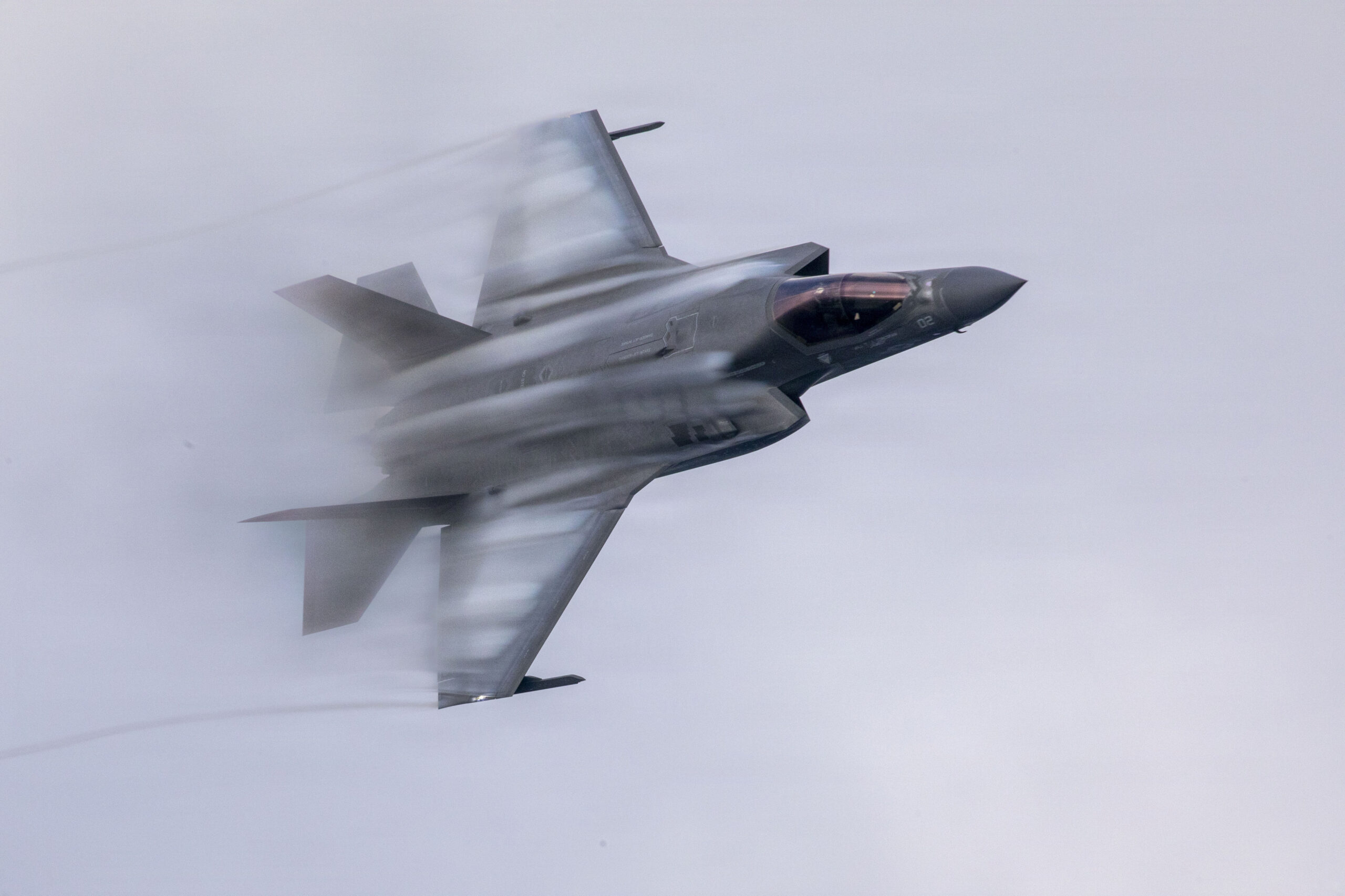
The United States Navy has issued a sources sought notice to identify industry partners capable of producing single-use Active Expendable Decoys (AED) designed to protect F-35 Lightning II and F/A-18E/F Super Hornet fighter aircraft, according to a notice released by Naval Air Systems Command on Feb. 25, 2026. The effort begins market research supporting a planned procurement program covering fiscal years 2027 through 2031.
The Navy is seeking production-ready solutions that can be rapidly deployed to expand defensive countermeasure capacity across multiple aircraft platforms.
According to Naval Air Systems Command, the requirement includes procurement of Active Expendable Decoys, related test equipment, spare impulse cartridges, repair services, and field support personnel. The systems are intended for integration primarily on the F-35 and F-18, with potential application to other U.S. government aircraft.
The government estimates production demand at approximately 3,000 decoys annually during the first two years of the program, increasing to roughly 6,000 units per year in follow-on periods. Initial manufacturing output is expected to reach an estimated rate of 300 devices per month once production begins.
The notice states that deliveries could begin as early as four months after contract award and no later than ten months after award or option activation. The anticipated contract structure combines fixed-price production elements with cost-reimbursable support services covering repairs and field service representatives.
Naval Air Systems Command emphasized that the announcement is strictly a market research activity and does not constitute a request for proposals. Information collected will inform acquisition planning ahead of a formal solicitation, with an anticipated contract award targeted for November 2026.
As described in the program background, Active Expendable Decoys provide radio-frequency countermeasure capability independent of an aircraft’s onboard defensive systems. These devices are battery-powered and designed for single use, released from an aircraft during flight to act as electronic warfare decoys.
Once deployed, the decoy emits radio-frequency signals intended to imitate or amplify the aircraft’s electronic signature, diverting hostile radar tracking and missile guidance systems away from the fighter. Because the decoy operates independently after release, it adds an additional protective layer without relying on the aircraft’s internal electronic warfare suite.
Technical requirements outlined in the notice specify a compact form factor measuring approximately 2 inches by 1 inch by 8 inches. The system must be mission-load programmable by the government and demonstrate Technology Readiness Level 9 performance, defined as an operational system proven through successful mission use.
Manufacturing readiness requirements also call for Level 9 maturity, meaning contractors must demonstrate established low-rate production capability ready to transition into full-rate manufacturing. Proposed systems must already be qualified for use on the F-35 and prepared for integration onto F-18 aircraft and other platforms following production approval.
The Navy stated that AED capability has already been tested and integrated on the F-35, resulting in a fielding decision. Integration activities for the F-18 are expected to reach a fielding decision by fiscal year 2027.
In operational terms, expendable electronic warfare decoys serve as disposable defensive assets carried by combat aircraft. Unlike reusable jamming systems, these devices are released during high-threat engagements and sacrificed to draw enemy radar or missile seekers away from the aircraft.
Such countermeasures form part of a layered survivability approach that combines onboard electronic attack systems, maneuvering tactics, and expendable protection devices. By operating independently of aircraft avionics, decoys can function even when onboard systems are saturated or degraded.
Background development of expendable decoy systems has emphasized modular, self-contained designs that can be integrated across multiple aircraft types with minimal modification. This approach allows rapid scaling of defensive capabilities as threat environments evolve.
Content preview only. Full article available at source. View Full Article
The U.S. Navy issued a sources sought notice to identify partners for producing single-use Active Expendable Decoys for F-35 and F/A-18E/F aircraft. The program aims to enhance defensive countermeasures, with an estimated production demand of 3,000 decoys annually, increasing to 6,000. Initial manufacturing is expected to reach 300 devices per month, with deliveries starting within four to ten months post-contract award.
- The U.S. Navy issued a sources sought notice for Active Expendable Decoys.
- The decoys are intended for F-35 and F/A-18E/F aircraft.
- Production demand is estimated at 3,000 decoys annually, increasing to 6,000.
- Initial manufacturing output is expected to reach 300 devices per month.
- Deliveries could begin as early as four months after contract award.