
U.S. Navy pays Castelion $105M to test Blackbeard hypersonic weapon
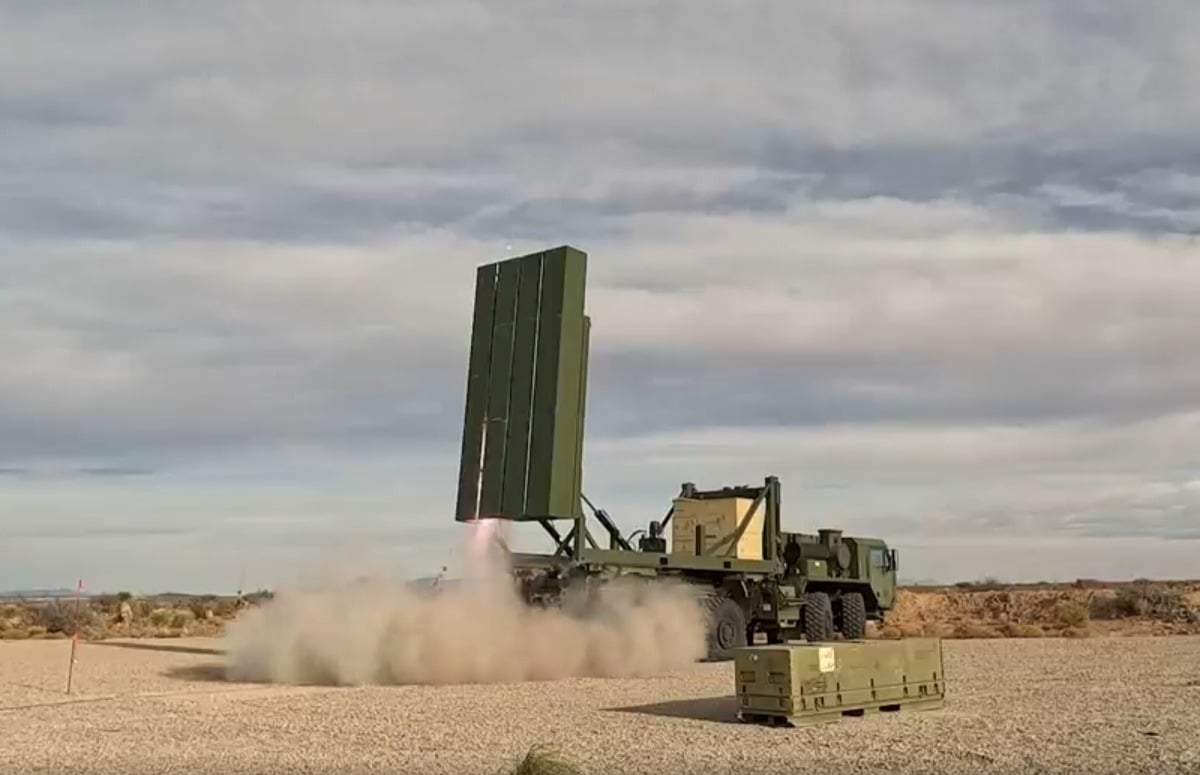
A small California defense company just landed a $105 million Navy contract to push its Blackbeard hypersonic weapon through live fire testing in the Indo-Pacific — and the Pentagon is betting on a startup to deliver one of the most strategically critical weapon types in modern warfare.
Naval Air Warfare Center Aircraft Division in Lakehurst, New Jersey, awarded the $104,998,566 modification on April 24, 2026, to Castelion Corp. of Torrance, California. The contract is a modification to a firm-fixed-price order against a previously issued basic ordering agreement, exercising an option under a Small Business Innovation Research Phase III effort. The SBIR topic designation — AF231-D026 — is titled “Low Cost Highly Manufacturable Long Range Strike Weapon Production,” a name that signals the program’s central ambition: not just a hypersonic weapon, but one that can be built at scale and at a price point that makes operational quantities achievable. Work will be performed in Torrance and is expected to be completed by January 2028.
Navy research, development, test and evaluation funds from fiscal year 2025 account for $33,983,566 of the obligated amount — that portion expires at the end of the current fiscal year. Fiscal year 2026 Navy research, development, test and evaluation funds cover the remaining $71,015,000. Unlike many high-value defense contracts, this action was competed.
Castelion will provide final early operational capability requirements for the Blackbeard weapon — the specification work that defines exactly what the system must do to be declared operationally ready. The company will also provide test and integration configurations of the weapon, the engineering packages needed to mount and fire Blackbeard from its intended launch platforms. The third and most operationally significant element is the completion of live fire test events, and those tests will take place in the Indo-Pacific Command area of responsibility — not in a domestic test range, but in the geographic theater where the weapon would actually be used in a conflict.
Conducting hypersonic weapon tests in the Indo-Pacific means validating the weapon’s performance in the actual operational environment — atmospheric conditions, ranges, and flight profiles relevant to the targets it would be expected to engage. It also sends a message. Testing a long-range strike weapon in the Indo-Pacific is a public demonstration of intent and capability directed at the region’s primary military competitor.
Hypersonic weapons travel at speeds exceeding Mach 5 — five times the speed of sound — and many designs maintain maneuverability throughout their flight, unlike traditional ballistic missiles that follow a predictable arc. That combination of speed and maneuverability makes hypersonic weapons extremely difficult to intercept with current air defense systems. A missile traveling at Mach 8 or higher, capable of changing course mid-flight, gives defending systems a fraction of the reaction time available against subsonic or even supersonic threats. For strike missions against hardened or time-sensitive targets — command posts, air defense batteries, naval vessels, logistics hubs — that speed and unpredictability translates directly into a higher probability of successful penetration and target destruction.
The “low cost, highly manufacturable” framing embedded in the SBIR topic title addresses what has historically been the Achilles heel of hypersonic weapon programs: they tend to be extraordinarily expensive per unit, which limits the quantities that can be procured and therefore the operational flexibility they provide. A hypersonic weapon that costs tens of millions of dollars per shot can be held in reserve for only the highest-value targets. A hypersonic weapon that costs a fraction of that — and can be produced in industrial quantities — fundamentally changes the calculus of how and how often it gets used. Castelion’s program is explicitly oriented toward solving that manufacturing and cost problem, not just the aerodynamic and propulsion challenges.
Castelion is a small business by Pentagon classification, operating out of Torrance in the Los Angeles area. The company’s emergence as a recipient of a nine-figure hypersonic weapon contract reflects a deliberate shift in how the U.S. military is approaching advanced weapons development. Traditional prime contractors — Lockheed Martin, Raytheon, Northrop Grumman — have dominated hypersonic programs for decades, with mixed results and significant cost growth. The SBIR pathway that Castelion has traveled is specifically designed to channel defense investment toward smaller, more agile companies that can move faster and potentially deliver at lower cost than established primes operating under cost-plus contract structures. A firm-fixed-price contract — where the contractor bears the cost risk rather than the government — reinforces that competitive discipline.
Content preview only. Full article available at source. View Full Article
Castelion Corp. was awarded a $105 million contract by the U.S. Navy to conduct live fire testing of the Blackbeard hypersonic weapon in the Indo-Pacific. The contract, awarded on April 24, 2026, aims to validate the weapon's performance in an operational environment and is expected to be completed by January 2028. This initiative represents a strategic shift towards utilizing smaller defense companies for advanced weapon systems development.
- Castelion Corp. received a $105 million contract from the U.S. Navy for the Blackbeard hypersonic weapon.
- The contract was awarded on April 24, 2026, and work is expected to be completed by January 2028.
- Testing will occur in the Indo-Pacific Command area, validating the weapon's performance in an operational environment.
- The program aims to produce hypersonic weapons at a lower cost and in larger quantities.
- This contract reflects a shift towards smaller defense companies in advanced weapons development.