
US Navy, Saildrone to use unmanned systems in expanded counternarcotics role
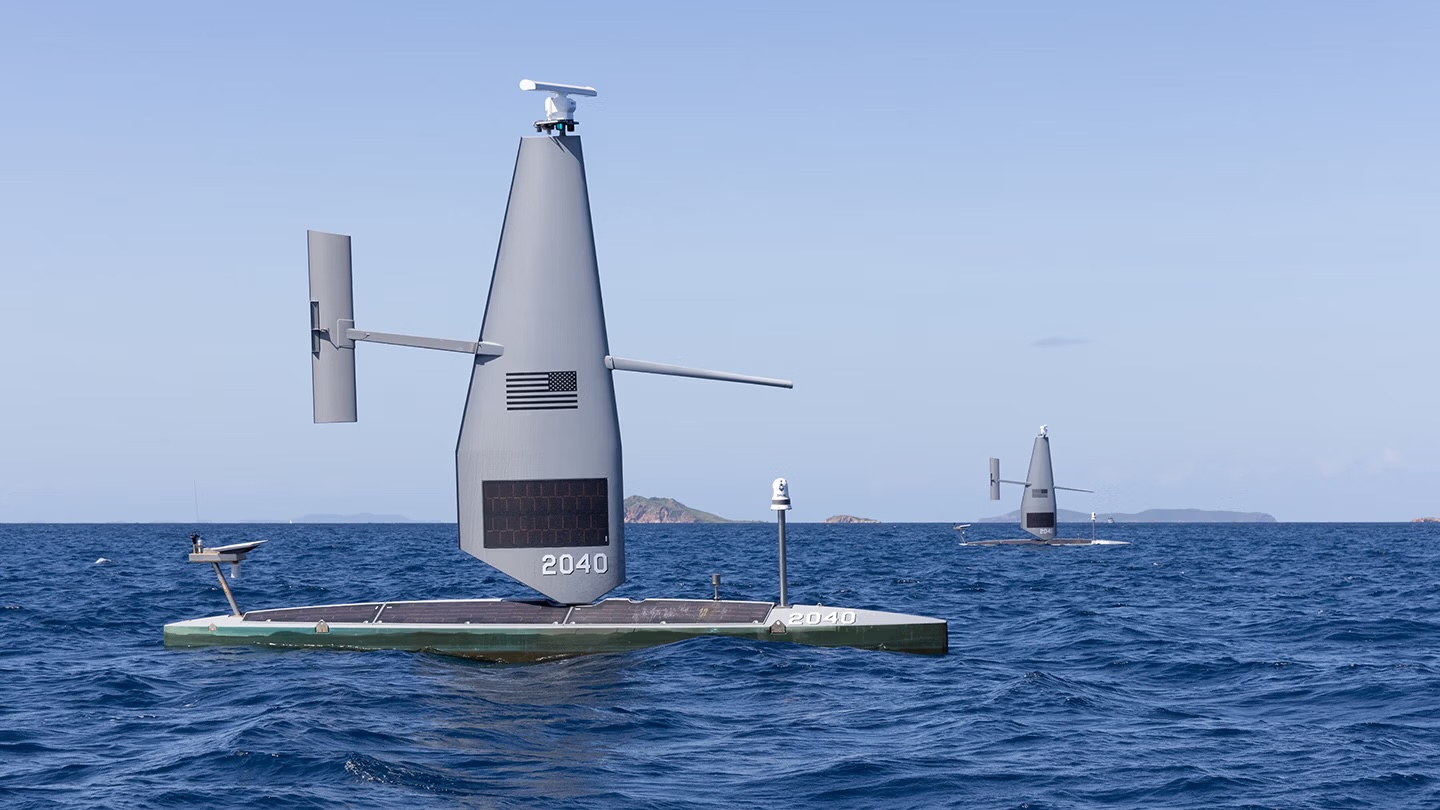
Following the recent announcement that a Saildrone Voyager unmanned surface vehicle directly aided the U.S. Navy during a drug interdiction in the Caribbean that led to the seizure of more than $81 million worth of cocaine, the Navy has awarded the California-based company a $16.3 million task order to extend operations of the Voyager fleet in the Caribbean and Eastern Pacific, according to a recent release.
The extension is in line with the Trump administration’s efforts to curb illicit narcotics flowing into the United States via alleged drug-carrying vessels in the Caribbean Sea and eastern Pacific Ocean.
Since 2023, Saildrone’s USVs have worked in coordination with the U.S. Navy, supporting the Joint Interagency Task Force South (JIATF-S) and U.S. Naval Forces Southern Command/U.S. Navy Fourth Fleet, per the release.
“The continuity of Saildrone’s presence along the southern border for nearly three years demonstrates the strategic value we bring as the world’s most experienced operators of unmanned surface vehicles,” said Saildrone President VADM (ret.) John Mustin. “Our unmatched ability to remain on station and on mission in critical regions for months at a time is why our fleet serves as a powerful deterrent to bad actors. We look forward to continuing to partner with the Navy in its mission to secure the country’s maritime approaches and southern border.”
The 33-foot-long Voyager is designed for persistent surface and subsurface surveillance and can also conduct nearshore mapping missions and seafloor characterization, the release states.
Able to remain “on mission and on station” for months at a time, the USVs are “both a deterrent and an alarm” along the U.S.’s expansive southern maritime border, according to the company.
Since September 2025, the U.S. military has conducted strikes against alleged drug-carrying vessels in the Caribbean Sea and eastern Pacific Ocean in support of what the Pentagon has called continued counternarcotics efforts.
As of June 22, the Trump administration and U.S. military have disclosed 66 strikes, killing at least 196 people.
The U.S. Navy awarded Saildrone a $16.3 million task order to extend operations of the Voyager unmanned surface vehicle in the Caribbean and Eastern Pacific for counternarcotics efforts. Since 2023, these unmanned systems have supported the Navy's drug interdiction operations, contributing to 66 strikes against alleged drug-carrying vessels, resulting in at least 196 casualties. The Saildrone Voyager is designed for persistent surveillance and can remain on mission for months.
- Saildrone Voyager aided U.S. Navy in drug interdiction leading to $81 million cocaine seizure.
- U.S. Navy awarded Saildrone a $16.3 million task order for extended operations.
- Saildrone's USVs have been operational since 2023 in coordination with U.S. Navy.
- 66 strikes conducted against drug-carrying vessels since September 2025, resulting in 196 casualties.