
U.S. Navy wants new variant of ESSM missile
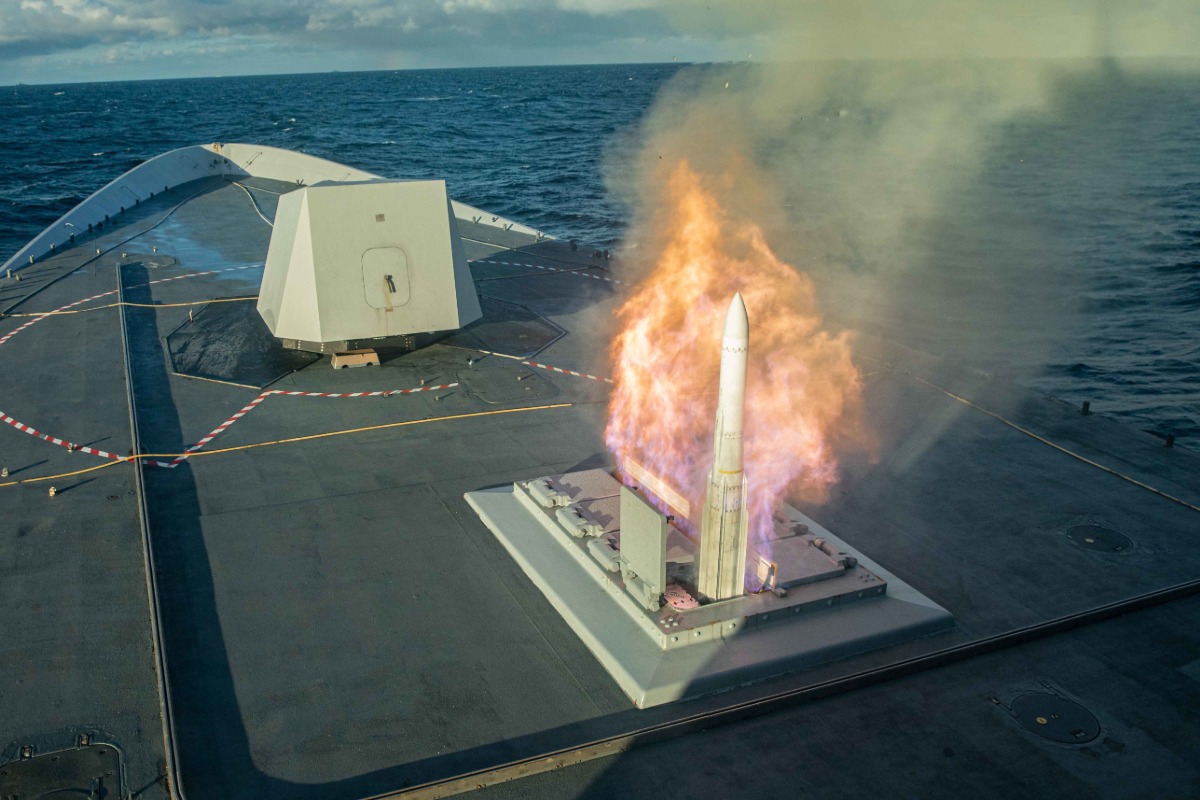
The U.S. Navy is asking industry for ideas on a replacement for the Evolved SeaSparrow Missile, the ship-defense weapon used by a dozen NATO navies to shoot down anti-ship missiles and aircraft.
The Naval Sea Systems Command posted a sources sought notice on Aug. 20 seeking companies capable of designing, building, and supporting what the NATO SEASPARROW Project Office calls the Next Significant Variant, or NSV, of the ESSM. Responses are due Oct. 19. The notice is market research, not a request for proposals, and carries no funding. NAVSEA says it may lead to a Federal Acquisition Regulation-based contract or a prototype award under Other Transaction authority.
The NATO SEASPARROW Project Office manages the missile on behalf of a 12-nation consortium: Australia, Belgium, Canada, Denmark, Germany, Greece, the Netherlands, Norway, Portugal, Spain, Türkiye, and the United States. The office is currently organized under Program Executive Office Integrated Warfare Systems 12.0 and is transitioning to a new designation, Program Acquisition Executive Munitions NSPO, according to the notice.
The current missile, ESSM Block 2, is a 10-inch-diameter interceptor with a stated range of about 50 km (31 miles) and a top speed above Mach 4. It uses a dual-mode radar seeker that can guide itself to a target using its own onboard radar or rely on a ship’s illumination radar, and it can be packed four to a cell in the Mk 41 Vertical Launching System used across U.S. and allied warships. Raytheon, now part of RTX, is the missile’s design agent and prime contractor. The company delivered its 500th Block 2 round to the U.S. Navy in October 2025 and has said it plans to roughly double production by mid-2026.
The sources sought notice sets the same 10-inch diameter limit for the NSV, so it can fit into existing Mk 41 quad-pack canisters or an equivalent launcher without forcing ships to redesign their magazines. Beyond that constraint, NAVSEA is asking for concepts that can handle a wider range of threats than current interceptors, including targets that vary in speed, altitude, and maneuverability, and that can operate in contested radar, electro-optical, and infrared environments. The notice also calls for the ability to track and discriminate between multiple closely spaced targets and to counter enemy jamming or decoys.
Companies can respond with a complete missile design or focus on a single subsystem, such as the seeker, propulsion, guidance electronics, or warhead. NAVSEA said in the notice that it is seeking both integrated system proposals and clearly marked subsystem-only responses.
The Navy is asking that any resulting design follow a Modular Open Systems Approach, a Department of War-wide policy requiring adaptable, interoperable systems built from severable, standards-based components. The notice says the government wants at least Government Purpose Rights to the technical data, source code, and design documentation under the Defense Federal Acquisition Regulation Supplement, which would let the consortium’s member nations manufacture, upgrade, or sustain the missile without being tied to a single supplier.
Any technology or data submitted must be releasable to all 12 consortium nations, and companies responding are required to describe how they would comply with U.S. export control law, including the International Traffic in Arms Regulations, as well as domestic sourcing rules such as the Buy American Act. Companies seeking more detailed ESSM technical requirements must first sign a non-disclosure agreement with the government before receiving that material.
NAVSEA has not disclosed a timeline for a follow-on solicitation, an estimated program cost, or whether the NSV is intended to replace ESSM Block 2 outright or serve alongside it. The sources sought notice states explicitly that the announcement may or may not lead to an actual procurement.
Content preview only. Full article available at source. View Full Article
The U.S. Navy is soliciting proposals for a new variant of the Evolved SeaSparrow Missile (ESSM) to improve ship defense capabilities. The sources sought notice was posted on August 20, 2023, with responses due by October 19, 2023. The new missile must fit existing launch systems and address a broader range of threats. Raytheon is the current prime contractor for the ESSM.
- The U.S. Navy is seeking a replacement for the Evolved SeaSparrow Missile (ESSM).
- Responses to the sources sought notice are due by October 19, 2023.
- The current ESSM Block 2 has a range of about 50 km and a speed above Mach 4.
- The new variant must fit into existing Mk 41 launchers and handle a wider range of threats.
- Raytheon is the prime contractor for the current ESSM design.