
U.S. Officials Say Interception Results "Below Expectations," Intense Offense and Defense Expose U.S. Military's Missile Defense Vulnerabilities in the Middle East
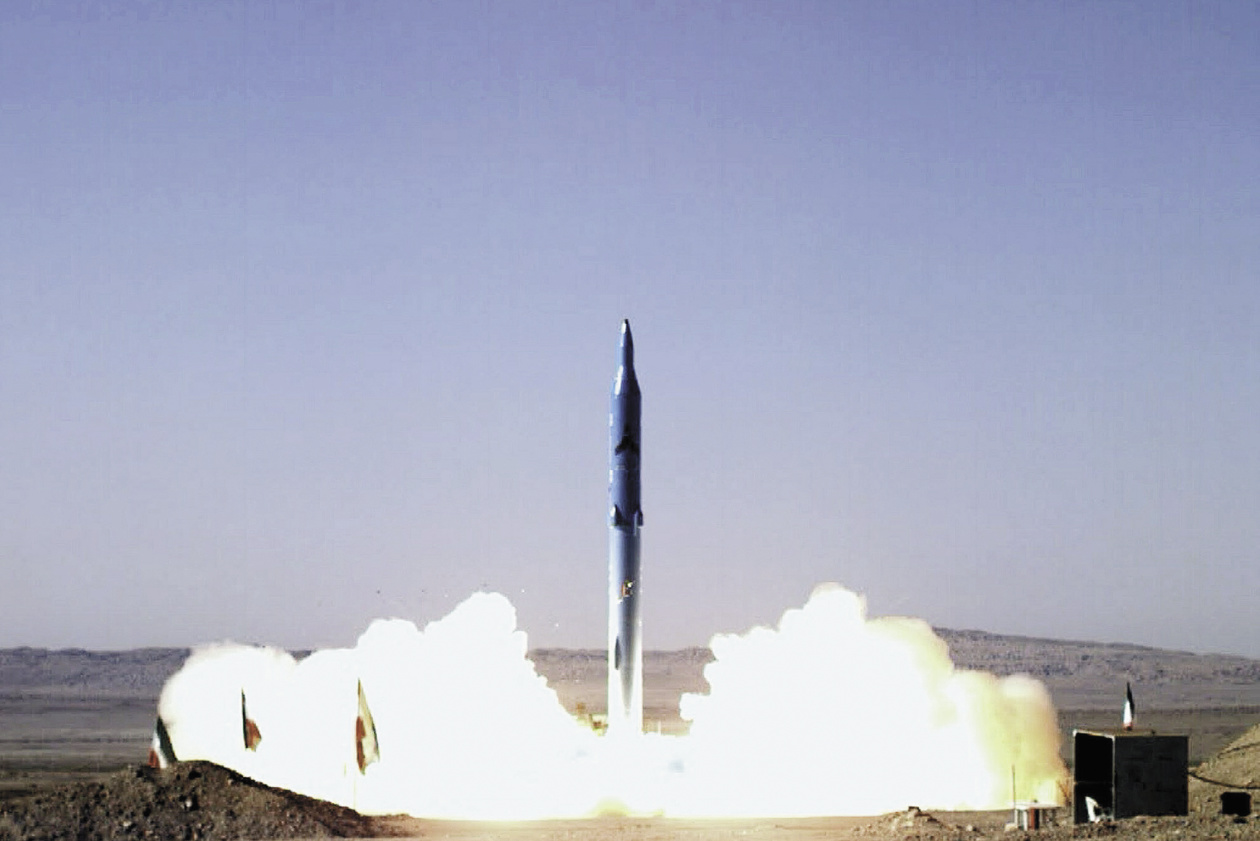
[Global Times Special Correspondent Chen Yang] According to multiple Iranian media reports, on March 15, the Islamic Revolutionary Guard Corps of Iran launched the 54th round of the "Real Commitment-4" operation and for the first time deployed the "Mudstone" solid-fuel ballistic missile. This move indicates that the claims made by the United States and Israel about "Iran's missiles being exhausted" have fallen flat, and the missile offense and defense battle in the Middle East may continue for quite some time. Meanwhile, the true interception capabilities of the U.S. missile defense systems, which have been meticulously deployed in the Middle East for decades, have been fully exposed.
Exposing the Vulnerability of the U.S. Missile Defense Network in the Middle East
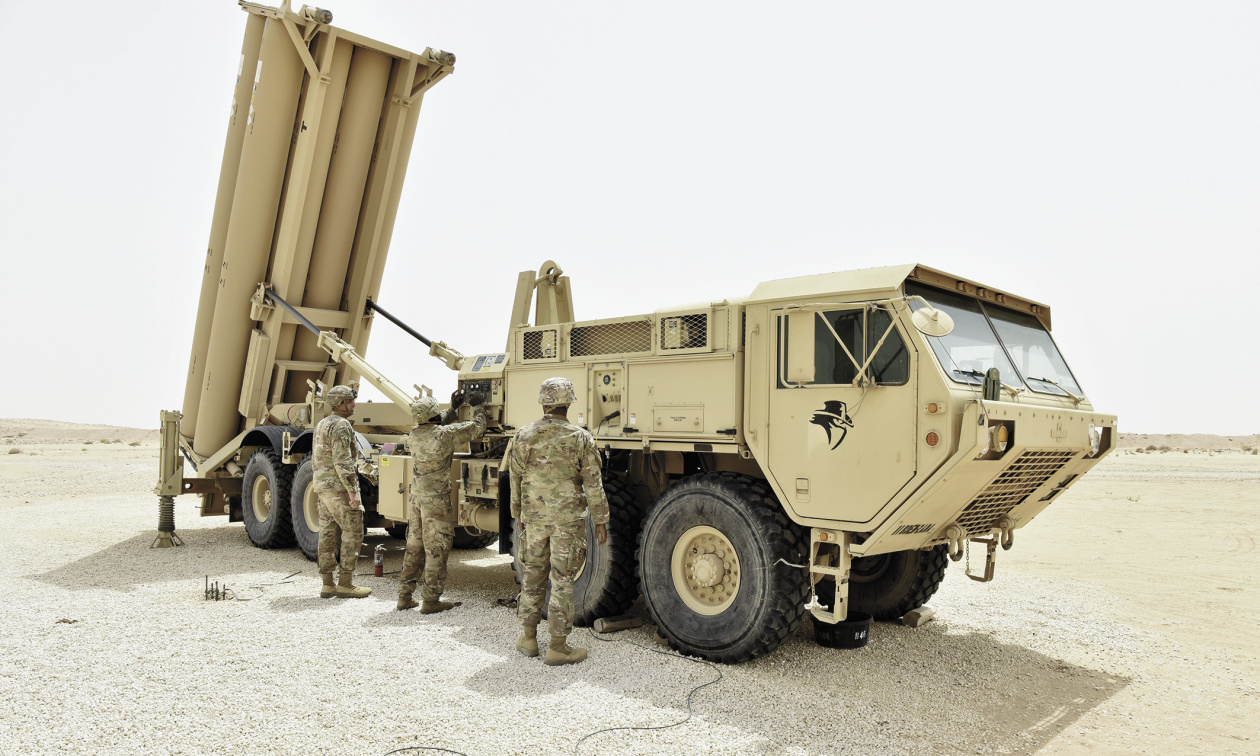
According to the U.S. website "Power," in the "Battlefield" channel, the U.S. has spent years integrating the missile defense systems of various countries in the Middle East, which were previously operating independently, into a comprehensive "super missile defense system" covering the entire region. This missile defense network is supported by the U.S. Space Force's "Space-Based Infrared System" and the "Roadrunner" long-range warning radar deployed in Qatar, which provide early warning. Once Iran launches missiles, they will calculate the relevant ballistic information and relay it to the AN/TPY-2 detection radars in countries such as Israel, Turkey, Saudi Arabia, the UAE, and Qatar for relay tracking. The latter, as part of the "THAAD" missile defense system, has a detection range of up to 2000 kilometers, which can directly guide the "THAAD" system's interceptors to perform high-altitude target interceptions and also provide relevant information for the "Patriot" systems deployed in multiple countries in the Middle East for terminal interception. In addition, several U.S. Navy Aegis destroyers deployed in the eastern Mediterranean can also launch "Standard-3" interceptors to intercept medium-range ballistic missiles launched by Iran.
However, this carefully crafted missile defense network of the U.S. military has faced tremendous pressure in the face of coordinated attacks from Iranian missiles and drones. As early as the first day of the U.S. and Israeli airstrikes against Iran, Iran claimed to have "destroyed" the strategic warning radar located in Qatar during its counterattack. Subsequently, several Western media outlets released satellite images from Western commercial satellite companies that also confirmed that one side of the three-sided array radar antenna of the "Roadrunner" strategic warning radar, facing Iran, was suspected to have been damaged in an attack.
Furthermore, Iran also claimed to have destroyed at least four "THAAD" systems deployed by the U.S. and its allies in the Middle East. Although the U.S. has not acknowledged this, CNN reported that satellite images show signs of destruction or explosions near the AN/TPY-2 detection radars of several "THAAD" systems deployed in the UAE, Saudi Arabia, and Jordan. After losing these "thousand-mile eyes" that remotely detect Iranian missiles, the U.S. early warning capability regarding Iranian missiles in the Middle East has significantly decreased, greatly affecting the response capability of the interception systems. The Islamic Revolutionary Guard Corps of Iran has repeatedly announced that its attacks have accurately hit key targets such as the "Patriot" missile defense systems at the Al Dhafra Air Base in the UAE, the Sheikh Isa Air Base in Bahrain, and the Al Udeid Air Base in Qatar.
Some analysts believe that due to the U.S. military's long-term focus on missile defense while neglecting air defense capability construction, the missile defense network deployed in the Middle East has repeatedly shown vulnerabilities when faced with coordinated attacks from Iranian suicide drones and ballistic missiles. As expensive long-range warning radars are destroyed or fail to function properly, the U.S. military finds it difficult to timely replenish them, leading to a decrease in the interception efficiency of its missile defense systems. U.S. officials have revealed that the interception effectiveness of the missile defense systems deployed in the Middle East is "not as expected." Theodore Postol, a professor at MIT and a missile defense expert, analyzed that based on videos circulating on the internet, the interception success rate of the "Patriot" system is only in the "single digits," and as the inventory of interceptors is rapidly consumed, its interception effectiveness continues to decline.
Increasingly Imbalanced Costs of Offense and Defense
During the 12-day conflict between Israel and Iran last year, the U.S. and Israel expended a large number of interceptors to intercept medium-range ballistic missiles and long-range suicide drones launched by Iran. The Wall Street Journal estimated at the time that the Israeli-made "Arrow-2/3" and "David's Sling" missile defense systems consumed interceptors worth tens of millions to even hundreds of millions of dollars daily.
The "Power" website's "Battlefield" channel reported that the U.S. "THAAD" system launched 100-150 interceptors during this period, accounting for about one-quarter of its total, with each missile costing over $12.7 million. The New York Times reported that the U.S. Navy also launched over 80 "Standard-3" interceptors, accounting for about one-fifth of its total inventory, with the Block IB missile priced at about $12.5 million, while the newer Block IIA missile costs about $37 million.
Before the U.S. and Israel launched attacks against Iran, the U.S. military had drawn a large number of interceptor missiles from various locations around the world to the Middle East to increase its inventory. However, multiple Western media outlets reported that the consumption of interceptors used by the U.S. and Israel during the conflict was enormous.
Although U.S. President Trump claimed that "the U.S. ammunition can be supplied almost infinitely," many defense analysts believe that the U.S. arsenal is smaller than the "ideal scale" envisioned by the military. Even the "Patriot" system, which has a relatively large stock of interceptors, has seen its inventory reduced due to prior military aid to Ukraine. In fact, even before the U.S. and Israel's attack on Iran, there was already a problem of tight inventory for "Patriot" interceptors. Germany ordered eight "Patriot" missile defense systems from the U.S. in 2024, but German officials stated that the U.S. has yet to provide a preliminary delivery schedule.
What worries U.S. analysts even more is the cost issue of the missile offense and defense battle. The "Power" website's "Battlefield" channel stated that the production cost of Iranian ballistic missiles is about several hundred thousand to over a million dollars, while even the cheapest "Patriot" system interceptors cost over $4 million, not to mention the high-end interceptors that can easily exceed tens of millions of dollars. Typically, to intercept an incoming missile, two to three interceptors need to be launched to achieve a high interception success rate, which further increases the cost disparity in the missile offense and defense battle.
Postol emphasized that Iran's recent attacks have frequently utilized a larger number of lower-cost suicide drones, which Western assessments estimate to cost about $50,000 or even less. Compared to ballistic missiles that require complex specialized production facilities, suicide drones have very low production requirements and can even be assembled in small workshops, making it difficult for the U.S. and Israel to destroy Iran's drone production capabilities solely through airstrikes. Postol believes that by launching a large number of such drones, Iran forces the U.S. and its allies in the Middle East to use expensive air defense systems for interception. He warned that the Pentagon may underestimate the scale of such attacks. Coordinated "swarm" attacks by drones could quickly deplete U.S. missile defense reserves, exposing key U.S. facilities in the region.
Offense and Defense Technologies in a Spiral Upgrade
The missile offense and defense in this Middle Eastern conflict have entered a war of attrition while the technology continues to upgrade. Although the U.S. and Israel have repeatedly claimed to have destroyed a large number of Iranian ballistic missile launchers and "almost all" of Iran's missile production facilities through airstrikes, various signs indicate that Iran still has a considerable number of missile reserves. In the 54th round of the "Real Commitment-4" operation launched by the Islamic Revolutionary Guard Corps of Iran on the 15th, the "Mudstone" medium-range solid-fuel ballistic missile was used for the first time. This is one of Iran's most advanced ballistic missiles, with a range of up to 2,500 kilometers, capable of terminal maneuvering and deploying decoys, enhancing its penetration capability. Compared to the previously used liquid-fuel missiles like "Qader" and "Khoramshahr-4," solid-fuel missiles have shorter launch preparation times and theoretically possess the characteristics of "shoot and scoot," making them more survivable.
According to Iranian media reports, a spokesperson for the Islamic Revolutionary Guard Corps stated on the 15th that most of the missiles currently launched by Iran were "produced 10 years ago," and many missiles produced after the June conflict between Israel and Iran "have not yet been used," with many of Iran's missile stocks "still untouched." The spokesperson also stated that as of now, Iran has launched about 700 missiles and 3,600 drones targeting U.S. and Israeli objectives.
Meanwhile, the Pentagon believes that after losing production facilities, Iran's ballistic missiles are "one less for every one fired," and therefore the focus should shift to intercepting Iranian suicide drones. U.S. Army Secretary Daniel Driscoll stated that the U.S. has deployed 10,000 "Switchblade" intercept drones originally intended for Ukraine to the Middle East to counter Iran's aerial strikes. This "anti-drone" drone has already seen successful application in the Russia-Ukraine conflict, claiming to autonomously identify, track, and intercept enemy aerial targets using its onboard AI system, providing a significant tactical advantage against Iran's "Shahed-136" drones. In terms of cost, this type of drone has a procurement price of $14,000 to $15,000, and "if large-scale procurement is initiated, the price is expected to drop to $3,000 to $5,000." As a countermeasure, Iran has recently used jet-powered "Shahed-238" drones in airstrikes, increasing their flight speed from about 180 kilometers per hour of the "Shahed-136" to over 500 kilometers per hour, with a much higher flight altitude, significantly increasing the difficulty for U.S. "anti-drone" drones to intercept them.
On March 15, 2023, the Islamic Revolutionary Guard Corps (IRGC) launched a coordinated attack using solid-fuel ballistic missiles and drones against U.S. and allied forces in Qatar, the United Arab Emirates, and Bahrain. This operation exposed vulnerabilities in U.S. missile defense systems, which struggled to effectively intercept the incoming threats. Iran claimed to have successfully targeted key U.S. missile defense installations, significantly impacting U.S. early warning capabilities.
- Iran launched the 54th round of attacks on March 15, 2023, using solid-fuel ballistic missiles.
- U.S. missile defense systems in the region have shown vulnerabilities against Iranian attacks.
- Iran claims to have destroyed several U.S. and allied missile defense systems in the region.
- The cost of intercepting Iranian missiles is significantly higher than the cost of the missiles themselves.