
US Reopens Two Greenland Bases and Tests NATO Trust in 2026
 Alexandra Reeves
US Reopens Two Greenland Bases and Tests NATO Trust in 2026
Washington is getting new bases in Greenland. The awkward part is that it nearly broke NATO to get them.
The United States plans to re-establish a Cold War-era installation at Narsarsuaq in southern Greenland and create another at Mestersvig on the east coast, according to reporting by Reuters published through Defense News. The agreement with Denmark and Greenland was expected to be signed at the United Nations on September 22. Its text was not public when the details emerged, so the basing plan remains a reported outline rather than a fully transparent alliance commitment.
Two Bases, Two Very Different Missions
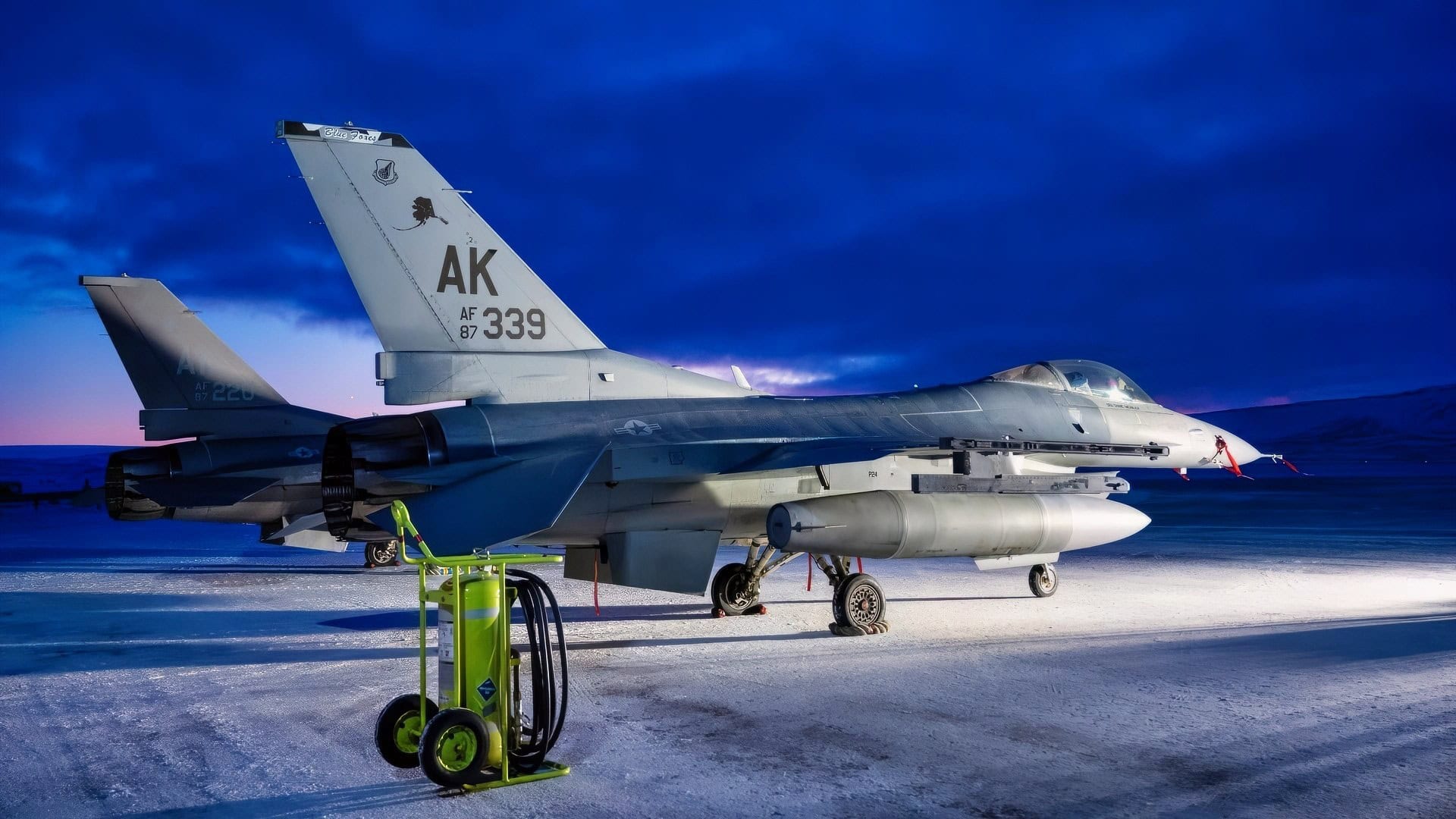
Narsarsuaq is the symbolic and logistical piece. The United States closed its Bluie West One base there in the 1950s, and the settlement now has only a few dozen residents. Reopening it would give Washington another southern access point into the Greenland-Iceland-United Kingdom gap, the maritime corridor that connects the North Atlantic to the Arctic and Europe.
Mestersvig is more politically delicate. The site is currently associated with the Sirius Dog Sled Patrol, a Danish special forces unit that conducts long-range surveillance in one of the planet least forgiving environments. A US presence there would not simply add a runway or a communications node. It would place American infrastructure inside a Danish and Greenlandic security ecosystem that has always depended on local knowledge.
The technical headline is less about a new fighter squadron than about distributed access. Greenland geography can support early warning, satellite tracking, air operations, maritime surveillance and reinforcement routes. Its weather and distance also impose hard limits: fuel, runway maintenance, communications redundancy and search-and-rescue capacity matter as much as the flag over the gate.
The Numbers Expose the Strategic Shift
During the Cold War, the United States operated 17 military installations in Greenland with more than 10,000 personnel. Today, Pituffik Space Base is the only permanent US installation, with roughly 150 American personnel, according to the Reuters reporting. That is not a minor adjustment. It is the difference between treating Greenland as a fixed strategic outpost and treating it as an active theatre.
Pituffik remains the anchor because its location supports missile warning and space surveillance across the high north. The proposed southern and eastern sites would add depth around that anchor. They could complicate Russian and Chinese planning, improve the alliance ability to watch the North Atlantic approaches and make it harder for a crisis to isolate a single installation.
But a base is not a capability until it has people, stockpiles, aircraft, sensors and a political mandate. Two lightly staffed outposts would be useful nodes. Two fully supported bases would be expensive and conspicuous. The difference will be visible in budgets and construction schedules, not in the ceremony at the United Nations.
NATO Gets the Mission After Washington Created the Crisis
Denmark says the agreement places Arctic security under NATO responsibility rather than leaving it as a purely bilateral US-Danish arrangement. That framing matters. The United States already possessed extensive rights under the 1951 Defense of Greenland Agreement, as experts told the Atlantic Council. The new value is political: turning access into an alliance story.
Here is the uncomfortable contradiction. Washington is using NATO to legitimise a security expansion that emerged after months of American pressure to control Greenland. Greenlanders overwhelmingly rejected that idea, while Danish and Greenlandic officials insisted that the territory sovereignty and right to self-determination remain intact. The bases may strengthen deterrence, but the route taken to obtain them made allies question whether the United States sees NATO as a collective defence pact or as a permissions system.
That is why this is not simply an Arctic basing article. It is a test of whether operational gains can repair political damage. The Atlantic Council experts described the deal as a possible thaw while warning that European efforts to hedge against American uncertainty are unlikely to disappear. A new base can be built in months or years. Trust takes longer, and it cannot be poured in concrete.
What Moscow and Beijing Will Watch
Russia has the shorter military route to Greenland strategic problem. Its Northern Fleet, Arctic airfields and submarine activity make the North Atlantic and Arctic approaches inseparable from European defence. Moscow does not need to establish a base on Greenland to benefit from political friction inside NATO. It only needs to make the alliance spend more time debating sovereignty, burden-sharing and American intentions.
China role is different. Beijing Arctic activity is still more economic, scientific and diplomatic than expeditionary, but the infrastructure question is the same: who can access the island, under what rules and with what persistence? A stronger US-NATO presence will narrow China options. It will also increase the pressure on Washington and its allies to show that Arctic security is not a pretext for ignoring Greenlandic consent.
The Real Test Starts After the Signing
The reported agreement is a sensible military answer to a real geography problem. Greenland sits across the routes NATO must defend, and the alliance has allowed its northern depth to atrophy since the Cold War. Reopening Narsarsuaq and establishing a presence at Mestersvig could improve surveillance, dispersal and reinforcement planning.
Yet the political price is already on the balance sheet. The next measures to watch are the published text, Greenlandic consultation, NATO command arrangements, construction funding and whether the sites receive durable air-defence and logistics support. If those details remain vague, the bases will be symbols. If they become a properly allied network, they will be useful.
America may have won access to Greenland. The harder question is whether it can convince NATO that access is being used to defend the alliance, not to remind the alliance who is in charge.
Sources
The United States plans to reopen the Narsarsuaq base and establish a new base at Mestersvig in Greenland, with an agreement expected to be signed on September 22, 2026. This move aims to enhance NATO's Arctic security and complicate Russian and Chinese military planning. The reopening of these bases reflects a shift in US military strategy in the region, emphasizing the importance of Arctic security under NATO responsibility.
- The US plans to reopen Narsarsuaq and establish a new base at Mestersvig in Greenland.
- The agreement with Denmark and Greenland is expected to be signed at the UN on September 22, 2026.
- The reopening of these bases aims to enhance NATO's Arctic security and surveillance capabilities.
- The bases could complicate Russian and Chinese military planning in the region.
- The political implications of the bases may affect NATO's collective defense perception.