
U.S. soldiers turn small drones into bombers in training
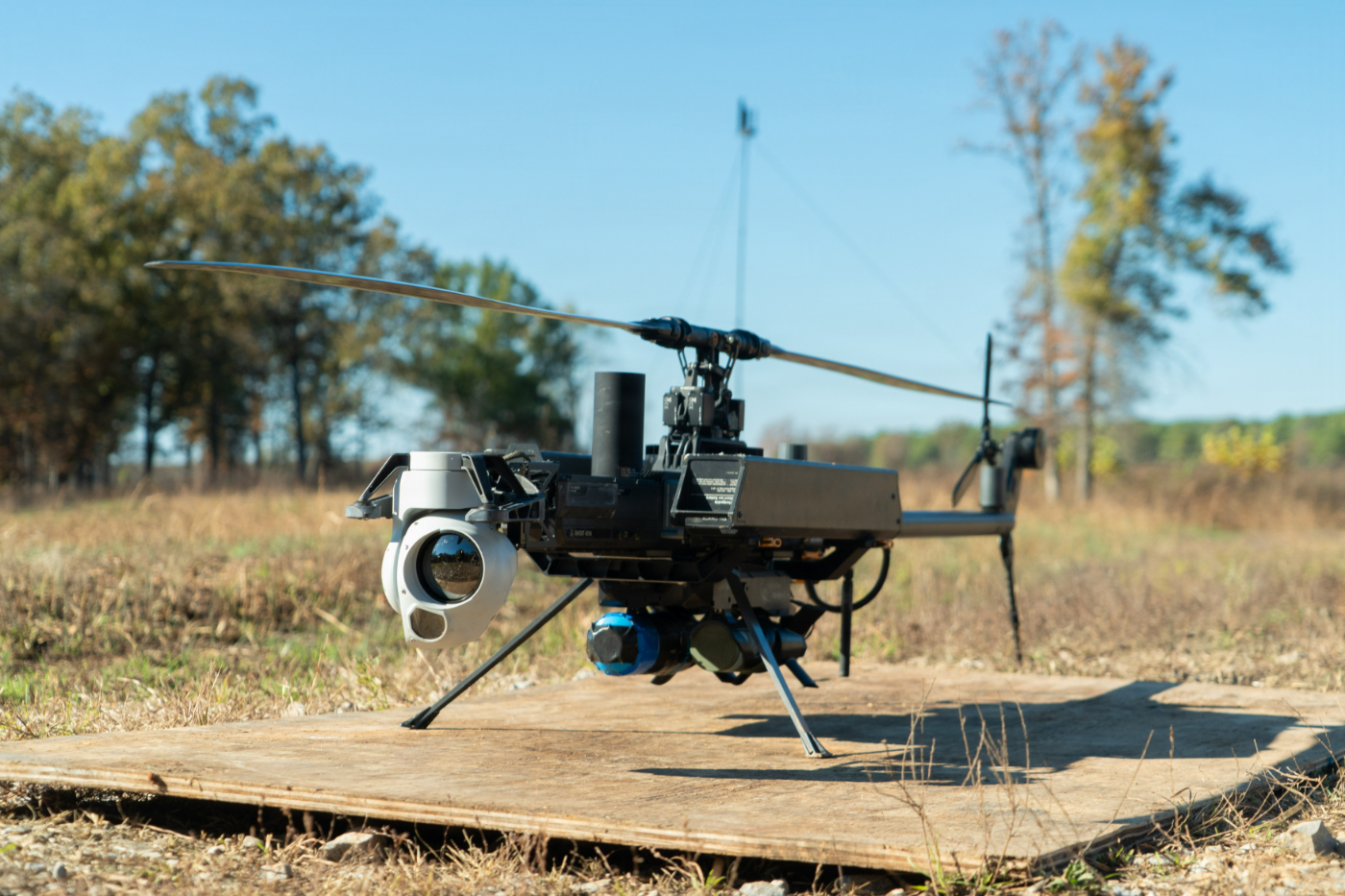
Soldiers from the U.S. Army’s 101st Airborne Division dropped smoke and explosive munitions from drones during live-fire training at Fort Campbell, Kentucky, using a new universal release kit and an experimental drone munition, the service said this week.
The training ran Nov. 2-8 with Delta Multi-Purpose Company, 1st Battalion, 502nd Infantry Regiment, 2nd Mobile Brigade. It centered on two systems: the Drone Agnostic Release Kit, or DARK, and Broad Lethality Air Deployed Effects, or BLADE, according to the Army.
“This capability we are demonstrating in collaboration with our maneuver live fire exercise proves that we are closing the gap in capability with lethal UAS,” said Capt. Jacob Moberly, the company commander.
DARK, built by Orbital Research, lets different drones carry and drop payloads “without requiring a separate release system for each type of aircraft,” the Army said. It handles both lethal and nonlethal loads, including explosives and smoke grenades. Photos from the training show an Anduril Ghost-X drone fitted with a payload delivery system.
BLADE is “an experimental drone-delivered munition” designed specifically for small drones, per the release. Moberly said it is meant to deliver effects comparable to conventional military munitions while giving soldiers more options against different targets. The Army didn’t say who makes BLADE, how much explosive it carries, or how many were dropped during the training.
The company’s Advanced Reconnaissance and Effects Systems platoon flew the drones. During simulated combat, its aircraft scouted ahead and “delivered smoke and explosive munitions,” the Army said.
The new gear builds on a homemade tool. During the company’s earlier rotation to Europe, soldiers 3D-printed a cheap grenade dropper they called the Widowmaker, and they field-tested it on a PDW C100 drone with M67 fragmentation and M18 smoke grenades. Moberly said giving soldiers room to try their own ideas led to that work.
“Through empowering my Soldiers to innovate and test their ideas,” Moberly said, “our Multi-Purpose Company has been able to tackle complex problems in order to drive solutions that will ultimately save lives on the battlefield and dramatically increase our lethality in combat.”
The 101st has been arming small drones across the division. Its soldiers also built the ABE 1.01, a low-cost FPV-style bomb drone, and the division flew it with a Gray Eagle and C100 drones in a March live-fire exercise at Fort Campbell.
Moberly said he wants other units to copy the setup.
“My hope is for every unit in the Army with the UAS we have is able to integrate this capability into their own systems and achieve the same enablement as we have experienced here in Wardog Company,” he said.
Content preview only. Full article available at source. View Full Article
U.S. soldiers from the 101st Airborne Division conducted live-fire training at Fort Campbell, Kentucky, from November 2-8, 2023. They utilized drones to drop smoke and explosive munitions, employing the Drone Agnostic Release Kit (DARK) and Broad Lethality Air Deployed Effects (BLADE). This training aimed to improve the soldiers' operational capabilities and lethality in combat situations.
- U.S. Army's 101st Airborne Division conducted live-fire training at Fort Campbell, Kentucky.
- Drones were used to drop smoke and explosive munitions during the training.
- The training involved the Drone Agnostic Release Kit (DARK) and Broad Lethality Air Deployed Effects (BLADE).
- The training took place from November 2-8, 2023.
- The exercise aimed to enhance the lethality and operational capabilities of soldiers.