
U.S. special ops test drone laser for longer mortar shots
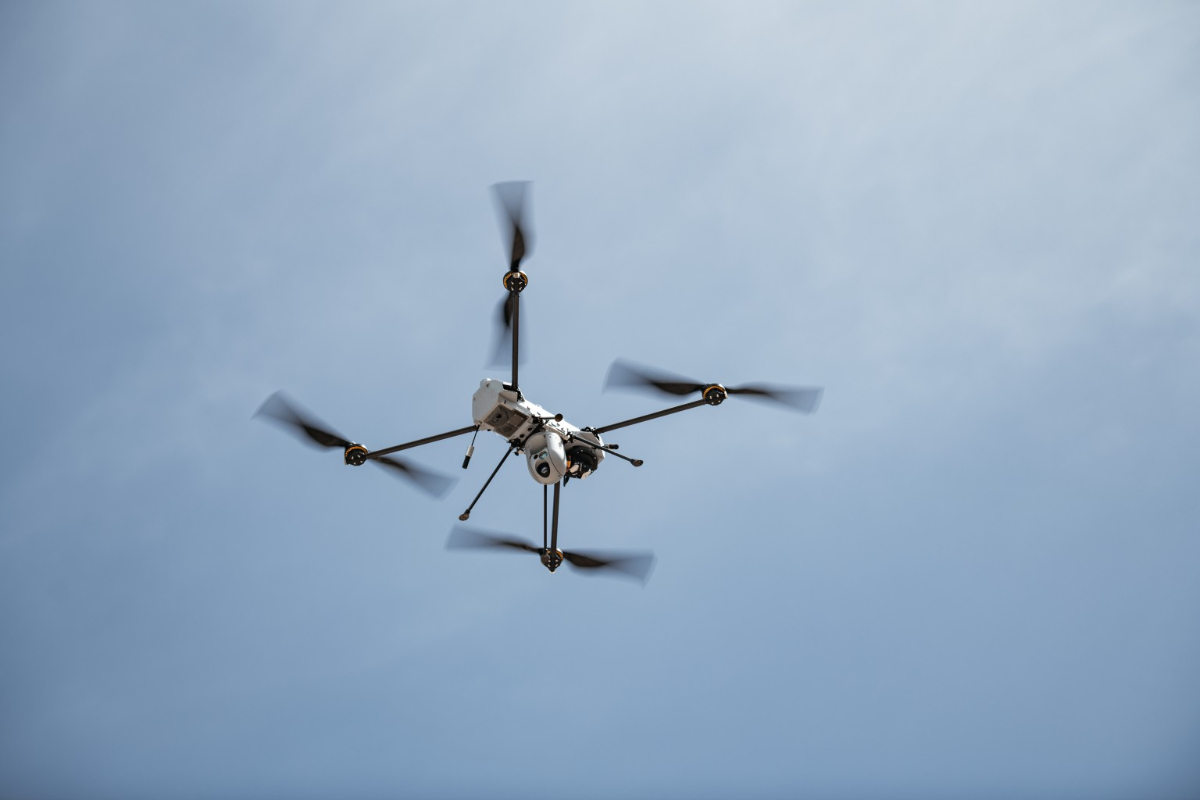
A small Performance Drone Works quadcopter carrying a Leonardo DRS laser designator guided precision mortar rounds onto targets beyond the normal maximum range of a 120 mm mortar during a recent test for U.S. Army special operations forces at Dugway, Utah, Leonardo DRS said on Oct. 14.
The company said its STAG-5 electro-optical and infrared gimbal with a built-in laser target designator flew on PDW’s C100 drone during the Iron Sting Precision Mortar Validation Event at the White Sage Mortar Range. Repeated engagements were completed at ranges beyond the standard maximum for a smoothbore 120 mm mortar, according to Leonardo DRS, though the company did not give the distances, the number of rounds fired or how close they landed to their targets.
The event was run by the Capability Development and Innovation office, previously known as the Irregular Warfare Technical Support Directorate, for U.S. Army Special Operations Command. Organizers tested the safety, accuracy and extended-range performance of new precision mortar munitions, and let operators try the technology in realistic scenarios.
Leonardo DRS did not name the munitions used. The event shares its name with Iron Sting, a 120 mm mortar round made by Israel’s Elbit Systems that combines GPS and semi-active laser guidance and has been used in combat by the Israel Defense Forces since 2023.
A laser designator marks a target with a coded beam, and a laser-guided munition steers itself onto the spot where that beam reflects. Putting the designator on a drone lets the observer stay well away from the target while still lighting it up, and lets a mortar team engage targets that its crews cannot see.
“The STAG-5 is designed to provide operators with precise, reliable ISR and targeting capabilities that can enhance mission effectiveness across a wide range of operational environments,” said Jerry Hathaway, senior vice president and general manager of the Electro-Optical Infrared Systems business at Leonardo DRS.
Leonardo DRS says the gimbal pairs its laser with day and night cameras so operators can find a target, mark it, confirm the strike and watch the mission from a safer distance.
The C100 is already in U.S. Army service. In September 2024 the service selected PDW’s C100 and Anduril’s Ghost X for its Company-Level Small Uncrewed Aircraft System program, which puts reconnaissance and target acquisition drones in the hands of maneuver companies in brigade combat teams. The rucksack-portable quadcopter can carry about 6.8 kg (15 pounds) of payload and fly for up to 74 minutes.
Content preview only. Full article available at source. View Full Article
U.S. Army Special Operations Command tested a Performance Drone Works quadcopter equipped with a Leonardo DRS laser designator for precision mortar targeting at Dugway, Utah, on October 14, 2023. The system successfully engaged targets beyond the standard range of a 120 mm mortar, demonstrating enhanced targeting capabilities. This event was part of the Iron Sting Precision Mortar Validation Event.
- A quadcopter tested a laser designator for precision mortar targeting.
- The test occurred at Dugway, Utah, on October 14, 2023.
- The system allows for targeting beyond the normal range of a 120 mm mortar.
- The event was organized by U.S. Army Special Operations Command.
- The C100 drone is already in U.S. Army service.