

When the USS Long Beach (CGN-9) entered service in 1961, it looked unlike any warship ever built.
With a towering, box-shaped superstructure, massive radar arrays, and nuclear propulsion, the vessel was instantly recognizable.
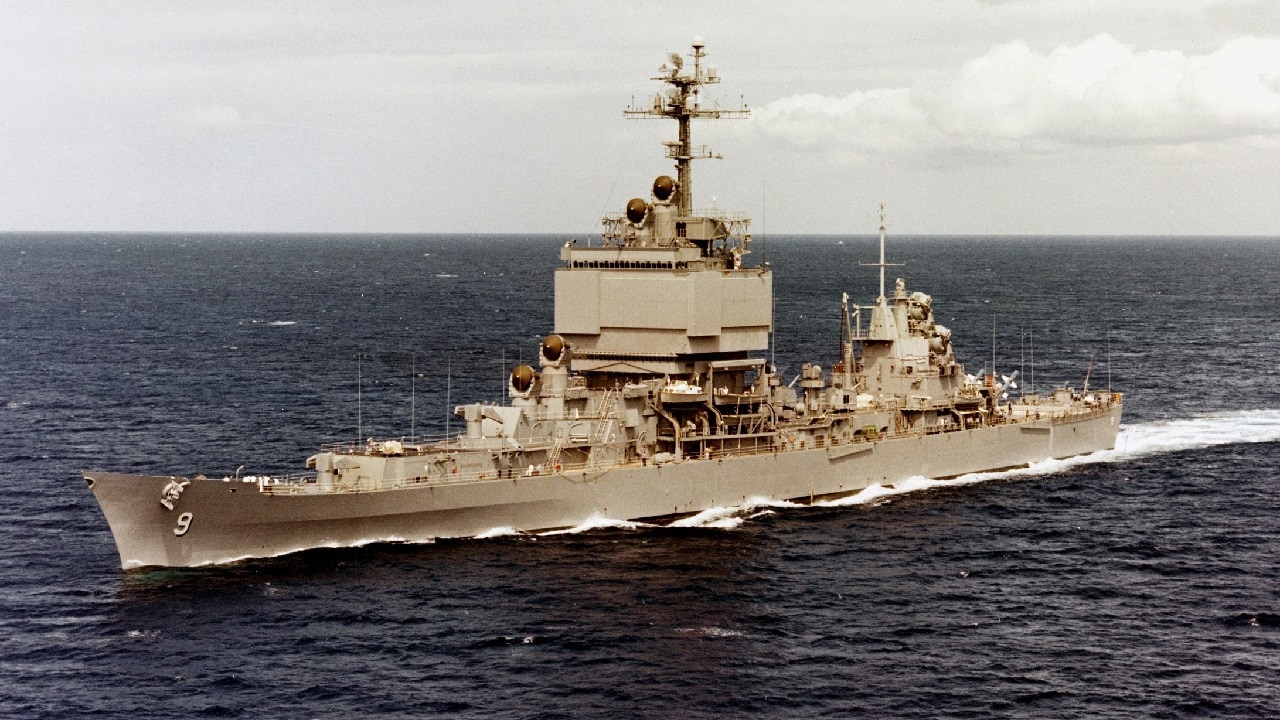
The U.S. Navy guided missile cruiser USS Long Beach (CGN-9) underway off Oahu, Hawaii (USA), 9 May 1973.
Indeed, the Long Beach was the first nuclear-powered surface combatant ever commissioned, symbolizing Cold War confidence that nuclear power would transform naval warfare just as it had for submarines.
Although Long Beach was retired in 1995, the vessel pioneered technologies that shaped modern Aegis cruisers and today’s networked naval warfare.
Cold War Origins
Designed during the height of the Cold War’s naval competition, Long Beach was built to escort the Navy’s new nuclear-powered aircraft carriers.
As conventional escorts lacked the endurance to keep pace with nuclear carriers on long deployments, Long Beach was considered a necessity.
And with nuclear propulsion, Long Beach offered virtually unlimited range, sustained high speed, reduced dependence on fleet oilers, and greater operational flexibility.
The keel was laid in 1957, and the ship was commissioned in September 1961.
Radical Design Elements
Long Beach was different. First off, it was enormous for a cruiser of its era, weighing nearly 16,000 tons when fully loaded.
Long Beach completely abandoned the traditional gun cruiser appearance, featuring instead an unusual slab-sided aluminum-and-steel superstructure.
Notably, Long Beach was designed around electronics—not guns—with large flat surfaces optimized for mounting increasingly powerful radar systems. Some sailors nicknamed the vessel “the cube.”
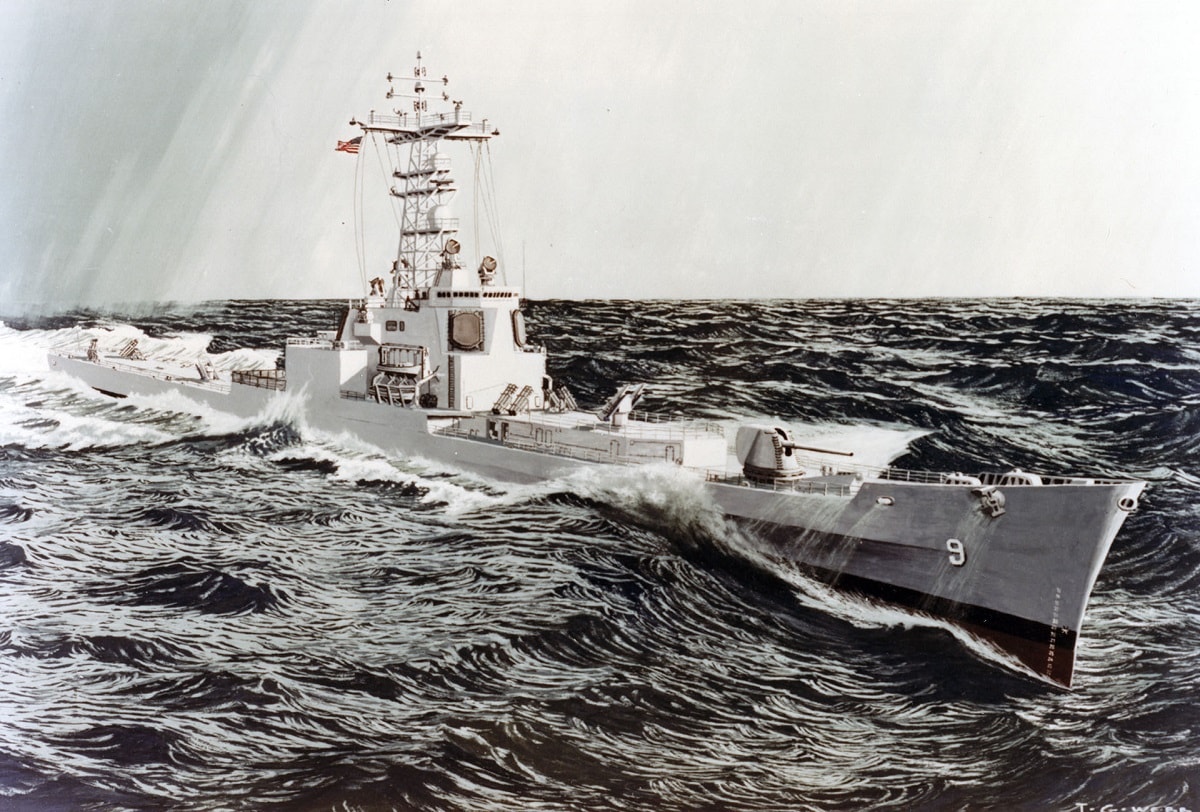
USS Long Beach. Image: Creative Commons.
New Technologies
Long Beach was powered by two C1W nuclear reactors. Steam turbines generated roughly 80,000 shaft horsepower, allowing for a top speed in excess of 30 knots.
And unlike a conventional cruiser, Long Beach did not need to make routine fuel stops and could remain underway for months.
The vessel’s endurance was limited primarily by food and crew fatigue, not the ship itself. This ability proved especially valuable during Cold War deployments that spanned entire oceans.
In addition to exceptional endurance, Long Beach benefited from exceptional radar systems. Indeed, it was one of the most advanced sensor ships of its generation.
Built around the massive AN/SPS-32 electronically scanned radar and the AN/SPS-33 tracking radar, Long Beach was among the earliest operational electronically scanned naval radar systems.
The vessel could simultaneously search vast volumes of airspace, representing an important precursor to later phased-array radars.
Eventually, Long Beach was upgraded with additional, modernized radar suites later in the Cold War and in the 1990s.
From Guns to Missiles
Long Beach reflected the Navy’s transition from artillery to guided missiles.
Originally, the vessel carried Talos long-range surface-to-air missiles, Terrier medium-range SAMs, ASROC anti-submarine rockets, and torpedo launchers.
Later modernizations refreshed the weaponry with Standard missiles, Harpoon anti-ship missiles, Tomahawk land-attack cruise missiles, and Phalanx CIWS. Through multiple upgrades and adaptations, Long Beach demonstrated remarkable adaptability over three decades.
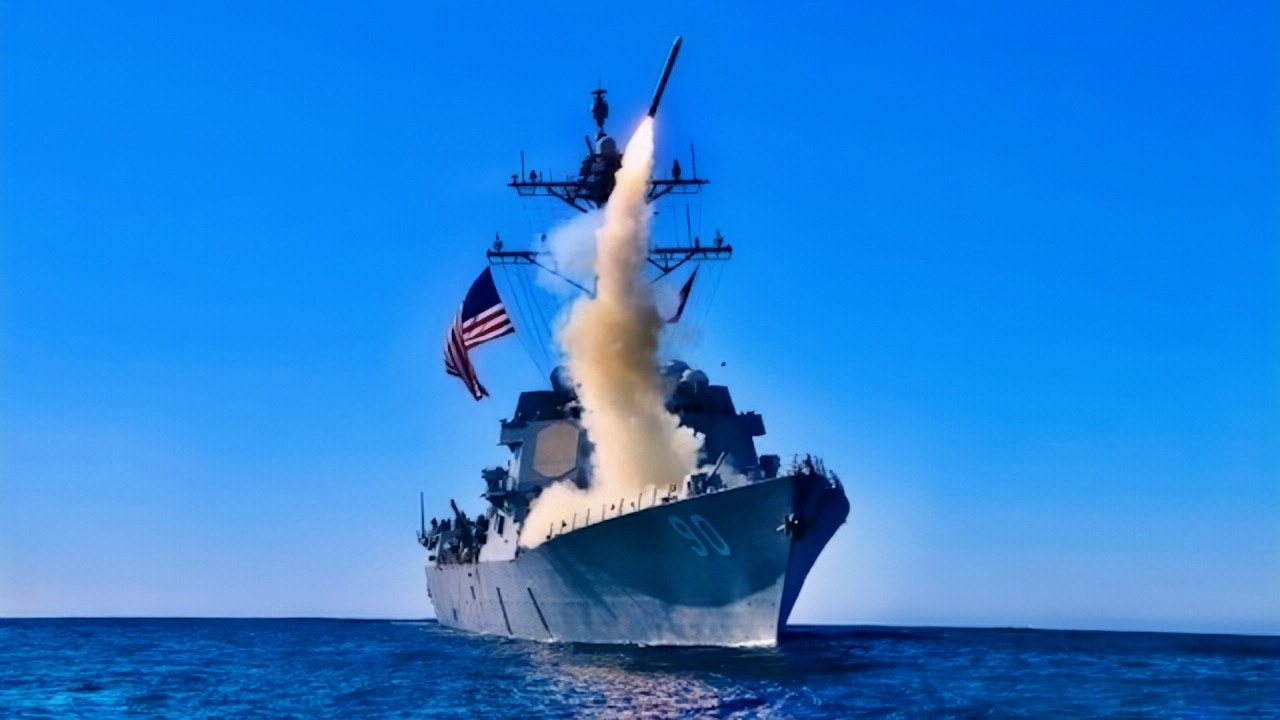
(Dec. 01, 2020) – The guided-missile destroyer USS Chafee (DDG 90) launches a Block V Tomahawk, the weapon’s newest variant, during a missile exercise. This event marked the first time a Block V Tomahawk missile was operationally tested, marking the Navy’s transition to a more advanced capability for the fleet. Block V includes an upgrade that will enhance navigation performance and provide robust and reliable communications. Chafee is currently assigned to Carrier Strike Group ONE and is homeported in Pearl Harbor. (U.S. Navy photo by Ens. Sean Ianno/Released)
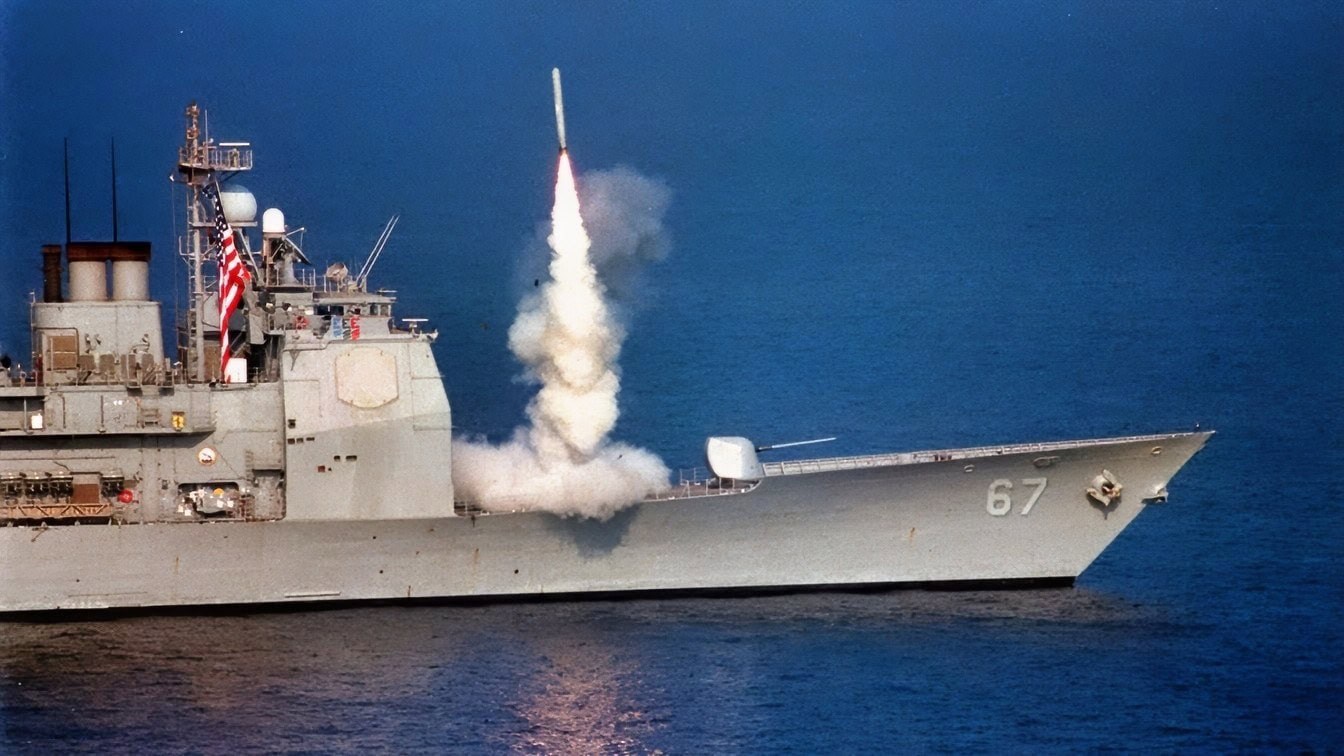
A Tomahawk cruise missile launches from the forward vertical launch system of the USS Shiloh (CG 67) to attack selected air defense targets south of the 33rd parallel in Iraq on Sept. 3, 1996, as part of Operation Desert Strike. The attacks are designed to reduce risks to the pilots who will enforce the expanded no-fly zone. President Clinton announced an expanded no-fly zone in response to an Iraqi attack against a Kurdish faction. The larger no-fly zone in Southern Iraq will make it easier for U.S. and coalition partners to contain Saddam Hussein’s aggression. The U.S. Navy Ticonderoga Class cruiser launched the missiles as it operated in the Persian Gulf.
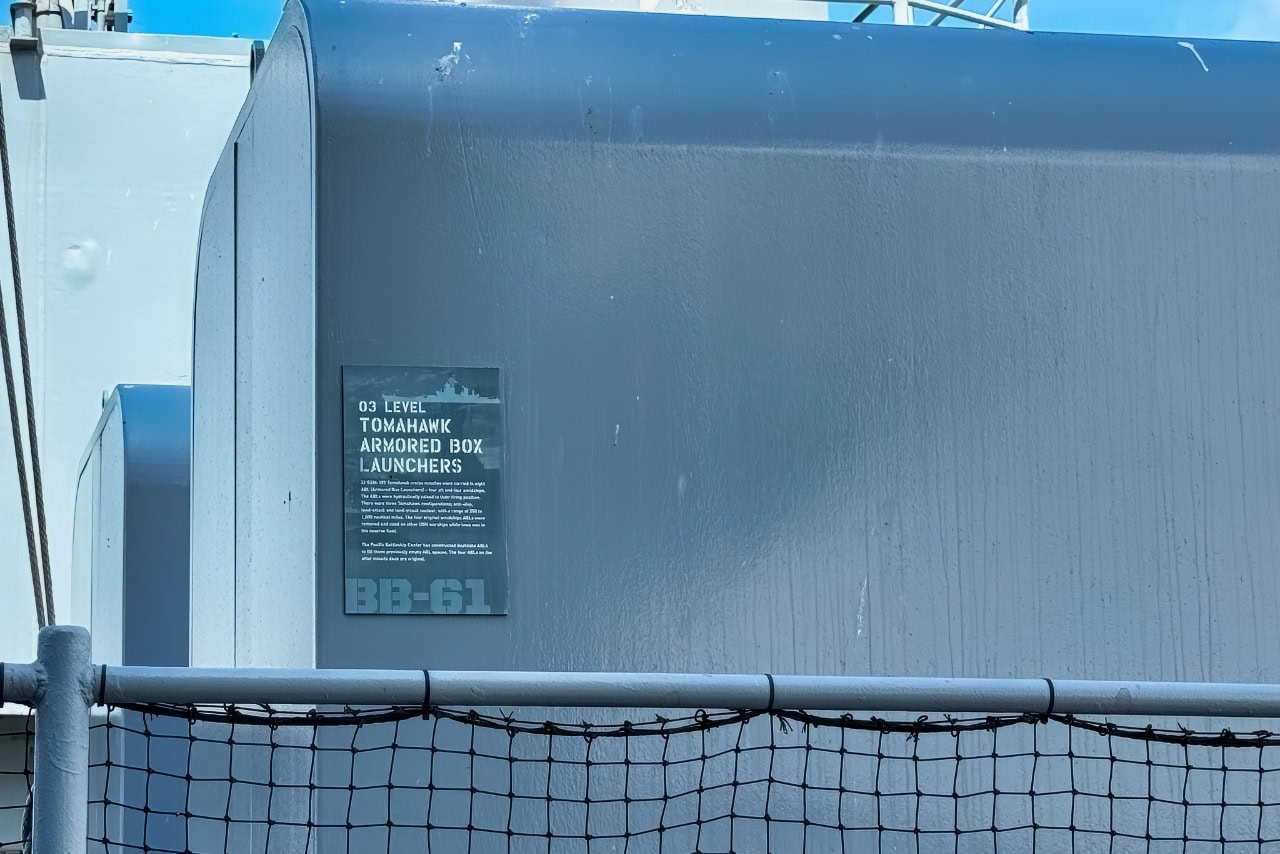
USS Iowa 19FortyFive image of Tomahawk Missiles on USS Iowa.
The vessel served extensively during the Vietnam War, providing air defense coverage, naval gunfire coordination, radar picket duties, and strike support.
Credited with shooting down multiple North Vietnamese MiGs using long-range Talos missiles, this is one of the few confirmed surface-to-air missile kills against aircraft during the entire war.
After Vietnam, Long Beach continued deploying throughout the Cold War, into the Mediterranean, Pacific, and Persian Gulf.
Nuclear Revolution
Operating nuclear propulsion required highly trained crews.
Reactor safety procedures are far more demanding than conventional engineering, with higher operating costs and extensive maintenance and refueling overhauls.
But the strategic payoff is obvious; it offers unmatched endurance and sustained global pressure, something conventional propulsion systems just can’t offer.
Long Beach served as a floating laboratory for emerging naval technologies, helping to validate nuclear-powered surface combatants, long-range missile defense, integrated radar operations, and electronic command-and-control.
Many of Long Beach’s concepts later matured into Ticonderoga-class cruisers, the Aegis Combat System, and modern carrier escort doctrine.
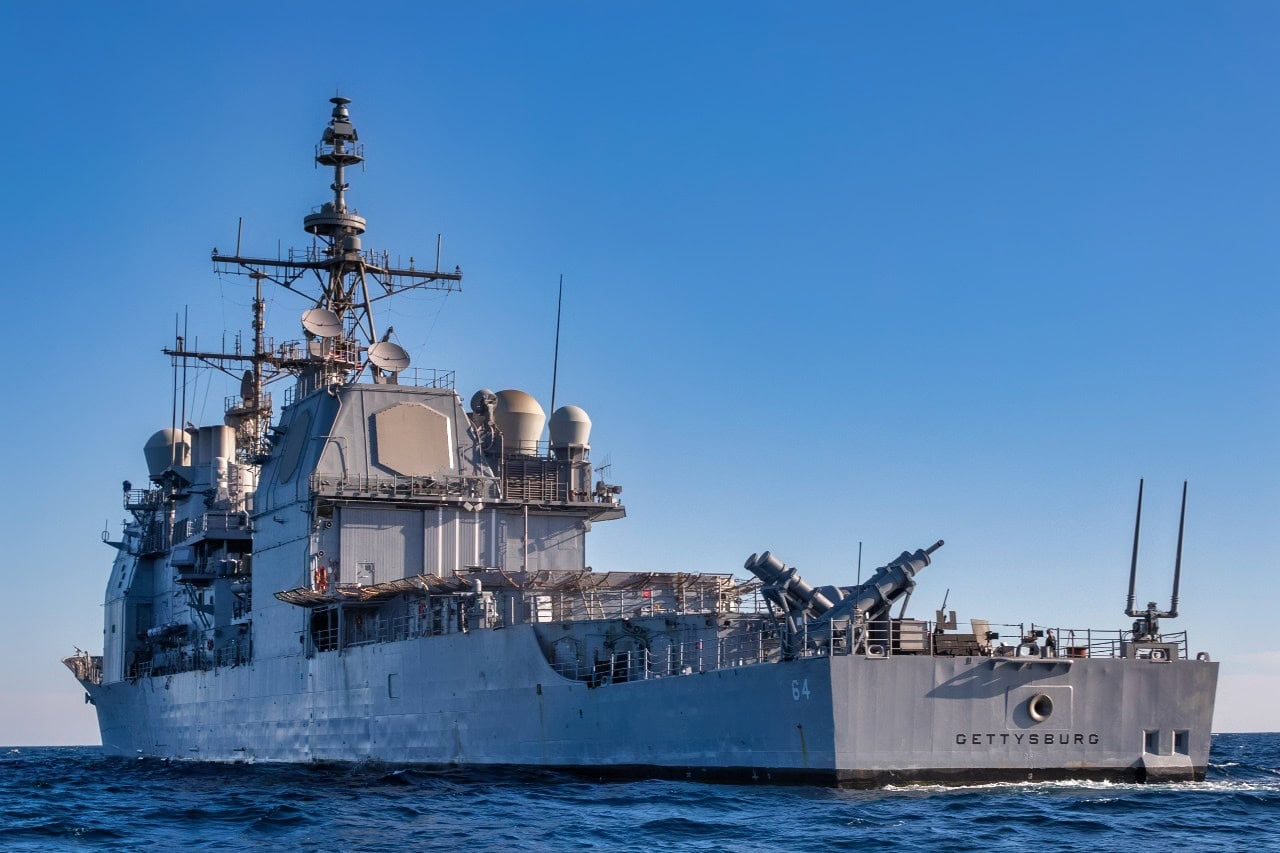
(Feb. 18, 2025) The Ticonderoga-class guided-missile cruiser USS Gettysburg (CG 64) sails in the U.S. Central Command area of responsibility. (Official U.S. Navy photo)
Nuclear cruisers eventually disappeared, however.
They were technically successful but very expensive.
Reactors dramatically increased procurement and maintenance costs.
The end of the Cold War reduced demand for nuclear-powered escorts.
And improved gas-turbine propulsion became cheaper, more reliable, and easier to maintain.
The Arleigh Burke destroyer ultimately provided similar combat capability at much lower lifecycle costs. The last US nuclear cruiser retired in the late 1990s.
About the Author: Harrison Kass
Harrison Kass is a writer and attorney focused on national security, technology, and political culture. His work has appeared in Tablet, City Journal, The Hill, The Spectator, and The Cipher Brief. He holds a JD from the University of Oregon and a master’s in Global & Joint Program Studies from NYU. More at harrisonkass.com.