
Summary and Key Points: Venus is the closest thing Earth has to a twin — about 95% of our diameter, 82% of our mass, 90% of our surface gravity — and almost nothing about the way it moves makes sense. It takes 243 Earth days to rotate once relative to the stars and only 224.7 Earth days to orbit the Sun, meaning its day is longer than its year. It rotates backward, the opposite direction to nearly every other planet, so its axial tilt is normally written as 177 degrees, and the Sun rises in the west. And it turns so slowly that a point on its equator moves at roughly 4 miles per hour. A person could outwalk Venus’s rotation. That same planet is hurtling around the Sun at about 78,000 miles per hour — racing through its orbit while barely turning at all.
Venus and Earth are Very Different
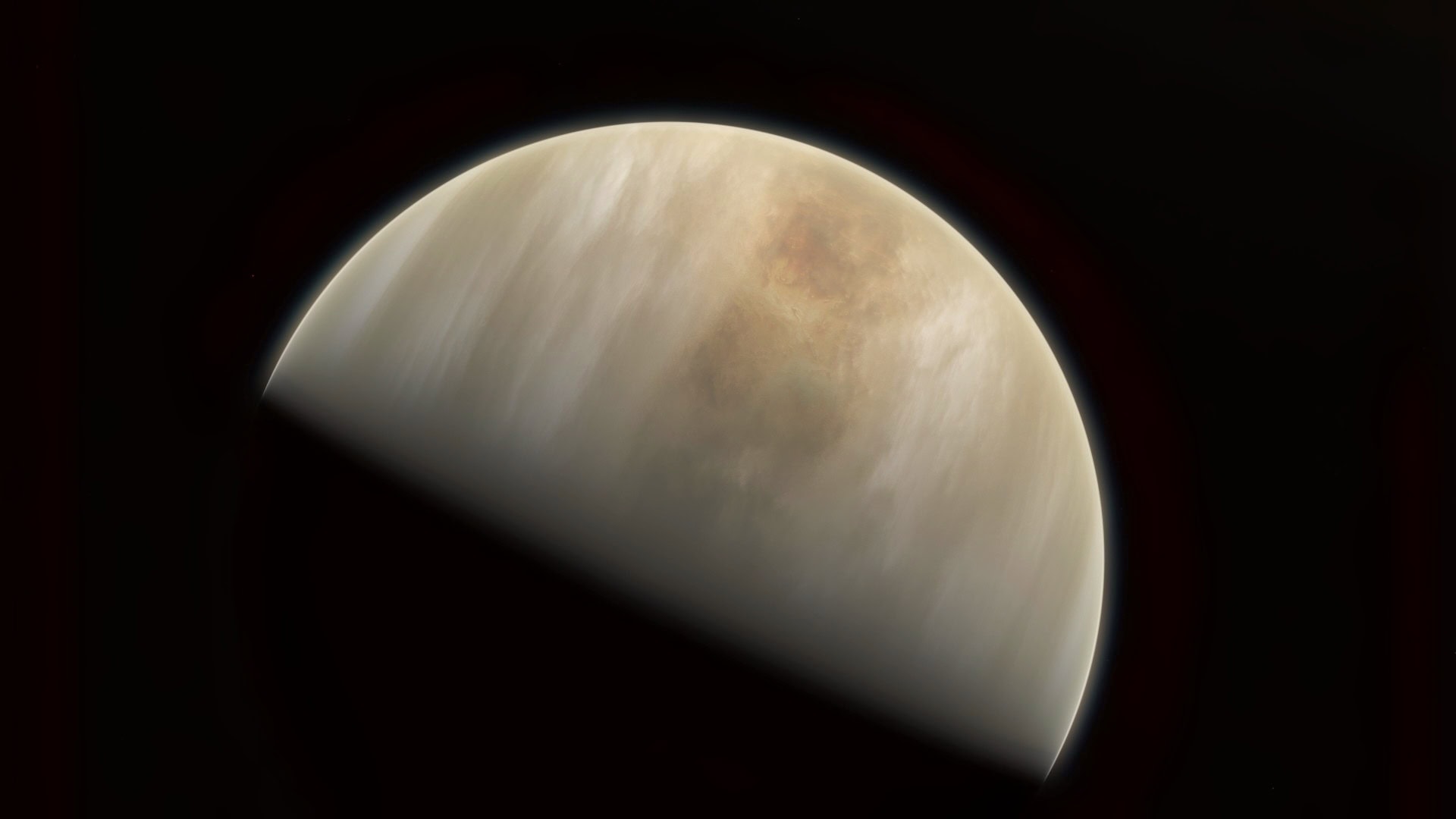
This artistic impression depicts our Solar System neighbour Venus, where scientists have confirmed the detection of phosphine molecules. The molecules were detected in the Venusian high clouds in data from the James Clerk Maxwell Telescope and the Atacama Large Millimeter/submillimeter Array, in which ESO is a partner. Astronomers have speculated for decades that life could exist in Venus’s high clouds. The detection of phosphine could point to such extra-terrestrial “aerial” life. NASA Photo.
Venus is often called Earth’s sister planet because the two are remarkably similar in basic physical dimensions. Earth’s diameter, for example, is about 7,918 miles.
Venus has a diameter of about 7,521 miles.
Venus has about 95% of Earth’s diameter, 82% of Earth’s mass, and 90% of our surface gravity.
Yet virtually everything else about Venus seems far stranger than Earth’s reality.
Venus takes about 224.7 Earth days to orbit the Sun; it takes about 243 Earth days to rotate once on its axis relative to the stars.
As a result, a Venusian sidereal day is longer than a Venusian year.
And stranger still, Venus rotates in the opposite direction from most planets.
Viewed from above Earth’s North Pole, Earth rotates counterclockwise, while Venus rotates clockwise.
The result is, if you could somehow stand on Venus and see through its clouds, the sun would rise in the west and set in the east.
Defining a Day
There are two different measurements for a planetary “day.”
A sidereal day is the time it takes a planet to complete one rotation relative to the stars; for Venus, that is roughly 243 days.
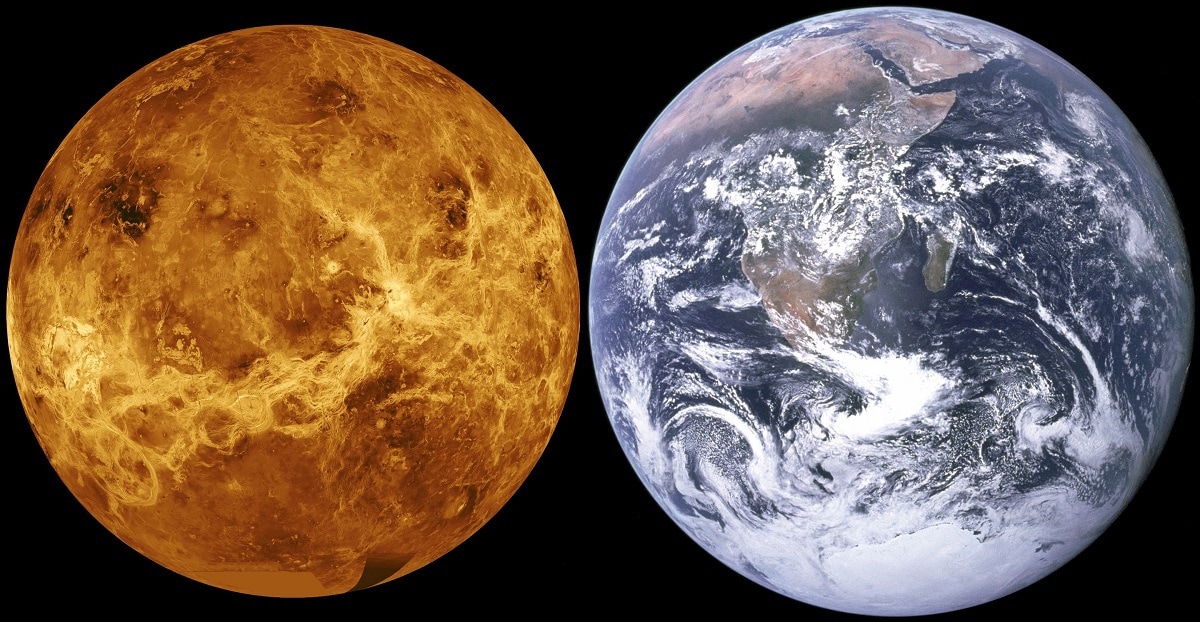
Venus vs. Earth. Image: Creative Commons
The second type of day is a solar day—the time from noon to the next or roughly sunrise to sunrise.
Here’s what’s strange about Venus: the planet orbits the Sun while slowly rotating backward.
Orbital motion and retrograde rotation combine so that the Sun returns to the same position in the sky after about 116.75 Earth days.
Thus, a Venusian year is 225 Earth days, a sidereal day is 243, and a solar day is 117.
Venus rotates incredibly slowly.
Earth’s equator rotates at roughly 1,040 mph; Venus’s equatorial surface creeps around at only 4 mph.
A human being could theoretically walk faster than Venus’s surface rotates.
That’s especially bizarre because Venus itself is traveling around the Sun at roughly 78,000 mph, so the planet races through its orbit while barely turning on its own axis.
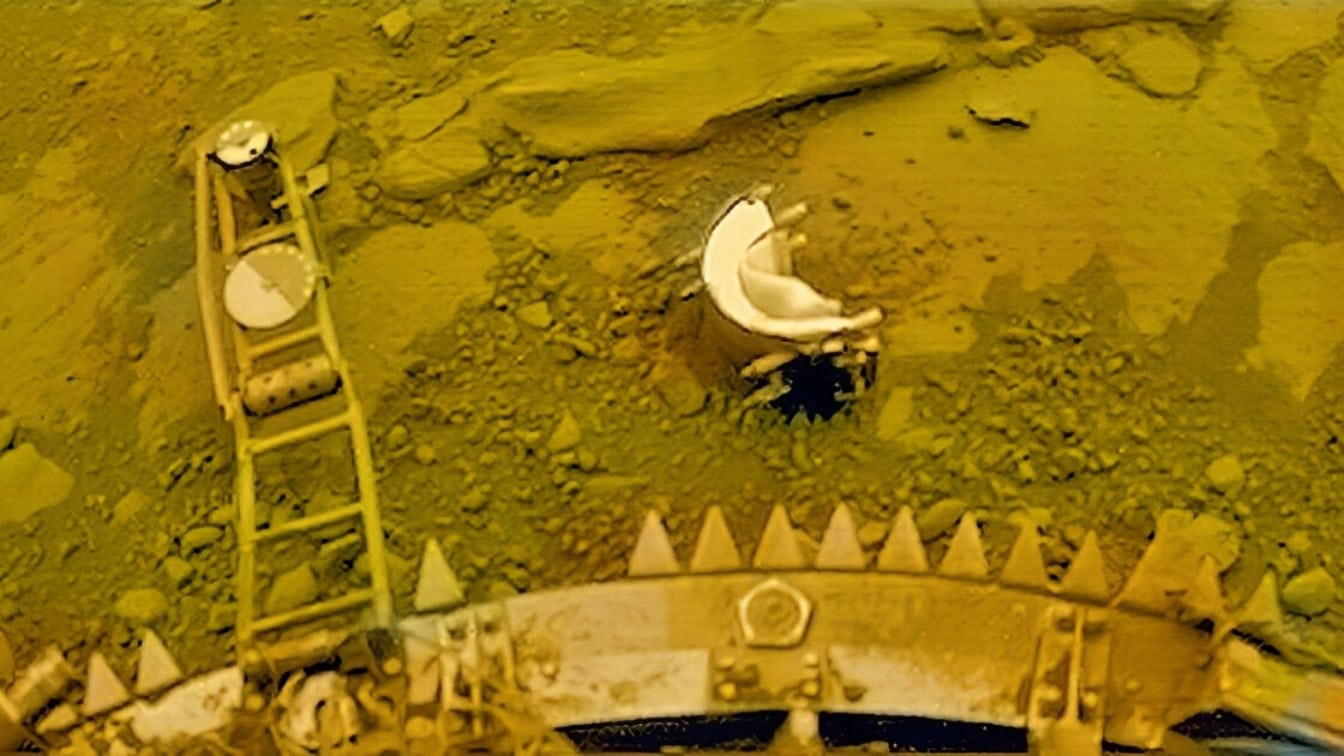
Venera 13 Venus Probe Creative Commons Photo
By comparison, Earth rotates in 24 hours, Mars in 24.6 hours, and Jupiter in 10 hours, yet Venus needs 243 Earth days to complete a rotation.
Even Mercury, itself extremely slow at a 59-Earth-day rotation, is far faster than Venus.
More Strangeness on Venus
And Venus is basically upside down.
The planet’s axial tilt is often listed as approximately 177°.
Another intuitive way of describing it: its rotational axis is only about 3° from upright, but it rotates backward.
Either convention produces the same result, and almost every major planet rotates prograde in the same general direction as its orbit.
Venus is the great exception, along with Uranus, which is bizarre in its own way with its extreme axial orientation.
From Venus’s surface, the sun rises in the west, crosses across the sky, and sets in the east.
Why does Venus rotate backward?
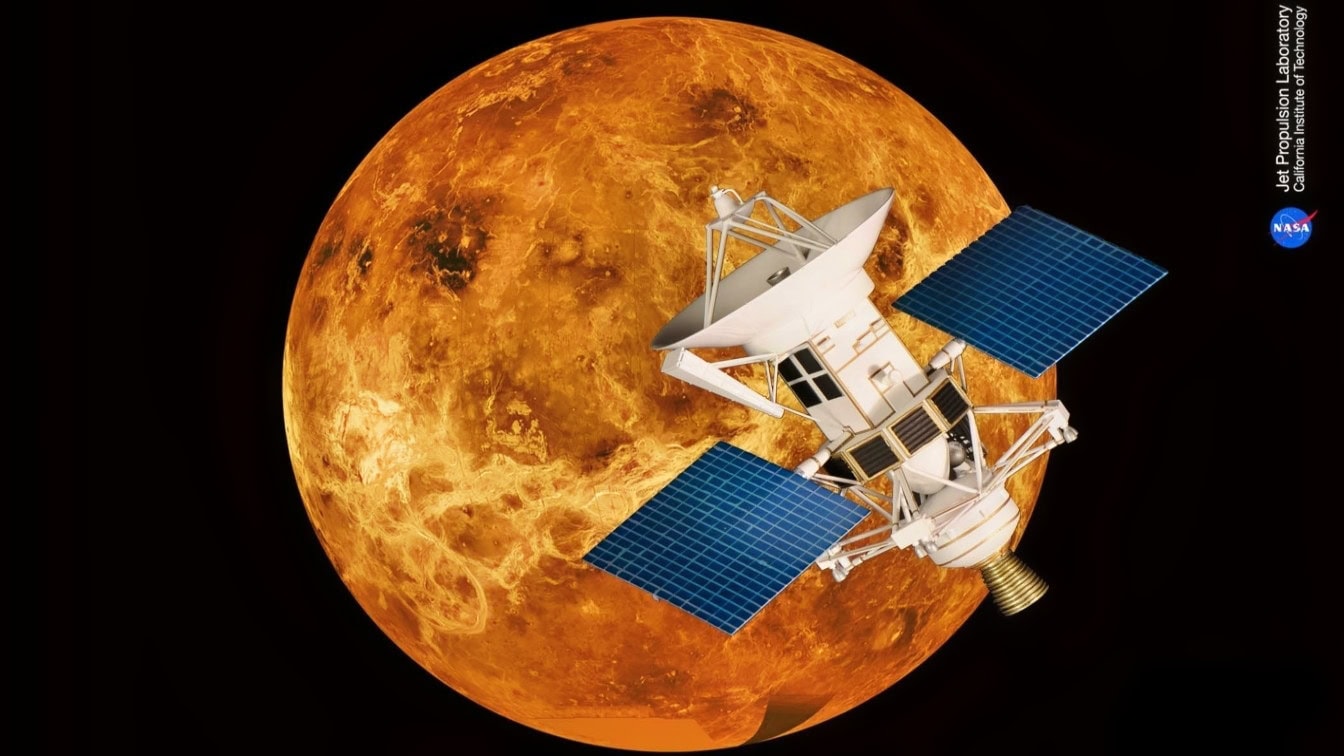
Magellan Venus Mission NASA Photo
Scientists don’t know exactly.
The Solar System formed from a rotating disk of gas and dust roughly 4.6 billion years ago.
That common origin explains why most planets orbit and rotate in broadly the same direction.
Venus somehow departed from that pattern.
One longstanding possibility is that a colossal early impact altered its rotation.
Similar giant impacts are used to explain planetary evolution, most famously, of course, the creation of Earth’s Moon.
But an impact isn’t the only possible explanation.
Over billions of years, Venus’s rotation may have been altered by a number of factors, including solar gravitational tides, Venus’s dense atmosphere, atmospheric thermal tides, and friction/coupling between the atmosphere and the surface/interior.
Indeed, Venus’s enormously thick atmosphere may therefore be partly responsible for its unusual rotation. The true answer remains unknown.
Once Like Earth
Making things stranger still: Venus may have once been more like Earth.
This is what makes Venus scientifically important, not just weird and curious. Venus and Earth began with remarkably similar sizes, masses, rocky compositions, and positions in the inner Solar System.
Evidence suggests that Venus may have once possessed substantial water, though the specifics remain debated.
Eventually, the planets followed radically different climatic paths, with Venus becoming completely uninhabitable.
Understanding Venus, therefore, helps answer questions about Earth’s prospective climatic futures.
About the Author: Harrison Kass
Harrison Kass is a writer and attorney focused on national security, technology, and political culture. His work has appeared in Tablet, City Journal, The Hill, The Spectator, and The Cipher Brief. He holds a JD from the University of Oregon and a master’s in Global & Joint Program Studies from NYU. More at harrisonkass.com.