
Video: Seizing the Opportunity for Rapid Landing, Yueyang Ship Conducts Day-Night Helicopter Flight Training
Recently, the Navy's 49th Escort Task Force's Yueyang ship conducted helicopter cross-day-and-night flight training. The pilots carried out reconnaissance patrols, target verification, search and rescue, and other training tasks in a realistic environment, significantly enhancing their situational awareness, emergency response, and ship-aircraft coordination capabilities.
In a certain sea area of the Gulf of Aden, with the issuance of orders, the aviation personnel of the Yueyang ship coordinated with the ship's maintenance personnel to carry out various preparatory work for the helicopter cross-day-and-night flight training.
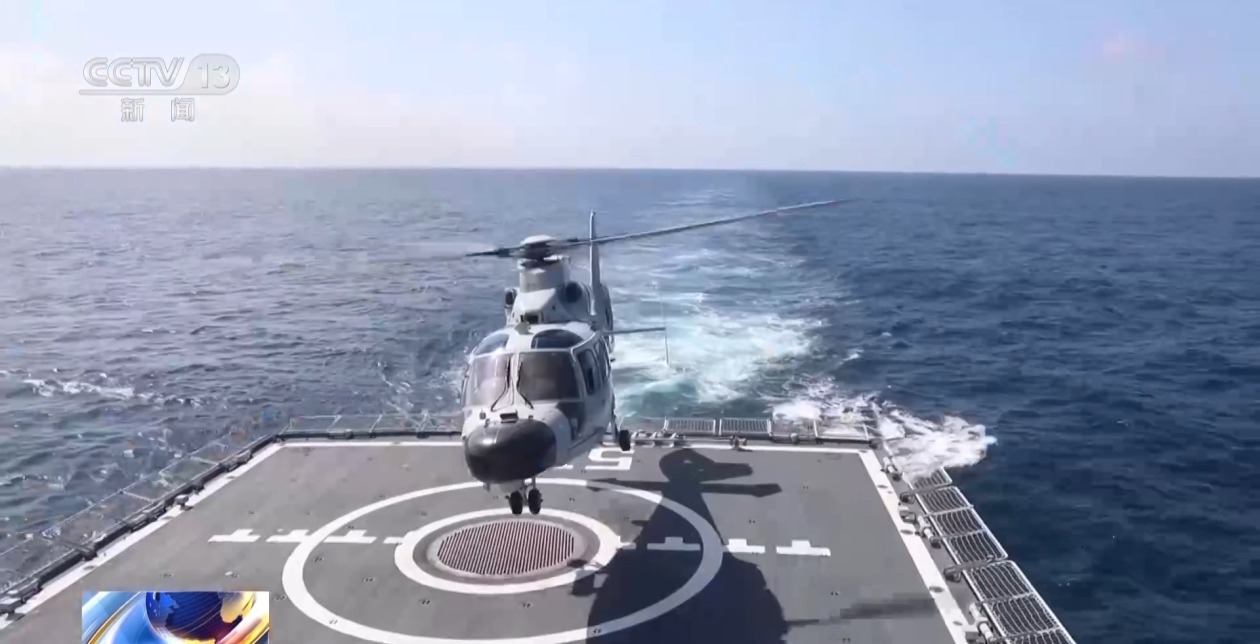
After receiving the takeoff command, the helicopter slowly ascended from the deck, turned and accelerated in mid-air, heading to the designated airspace to conduct reconnaissance searches and low-altitude flight training. The shipborne helicopter, characterized by its quick response, strong maneuverability, and large cruising range, plays an irreplaceable and important role in diverse military operations such as search verification, anti-piracy, and escorting passing merchant ships.
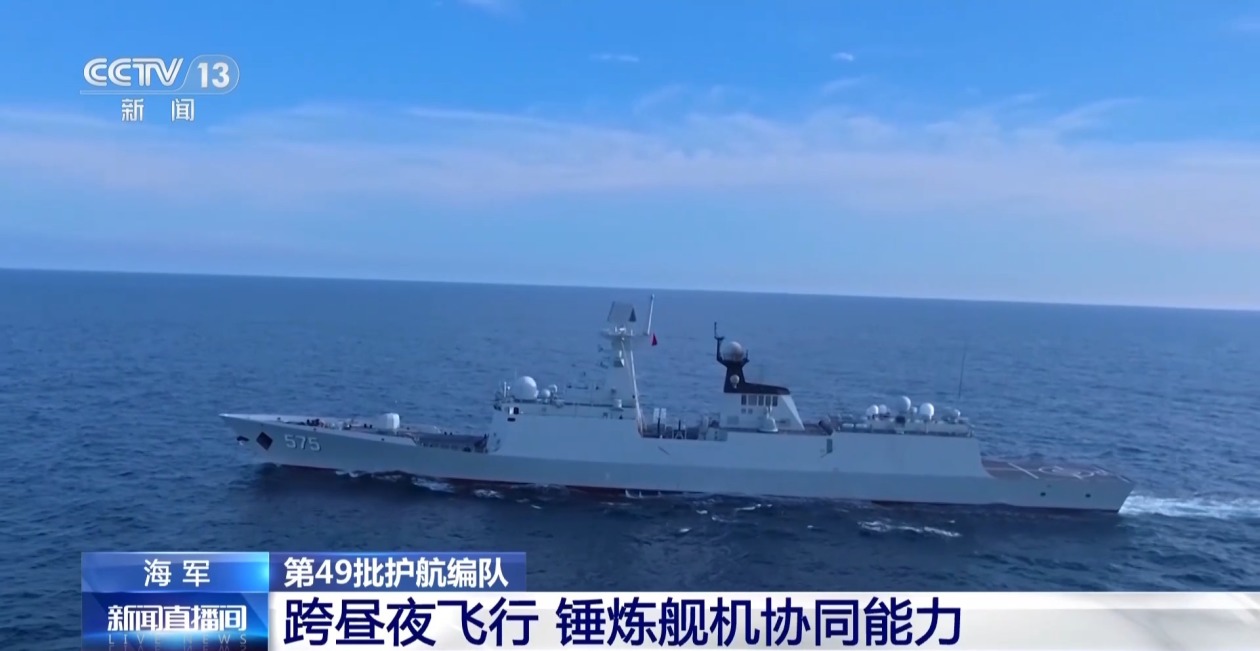
Once the aircraft entered the designated airspace, the Yueyang ship immediately informed the helicopter of an unidentified target, instructing it to proceed for verification. The aircraft quickly approached the target using low-altitude flybys and close-range observation to ascertain its nature and relayed the relevant information back to the Yueyang ship.
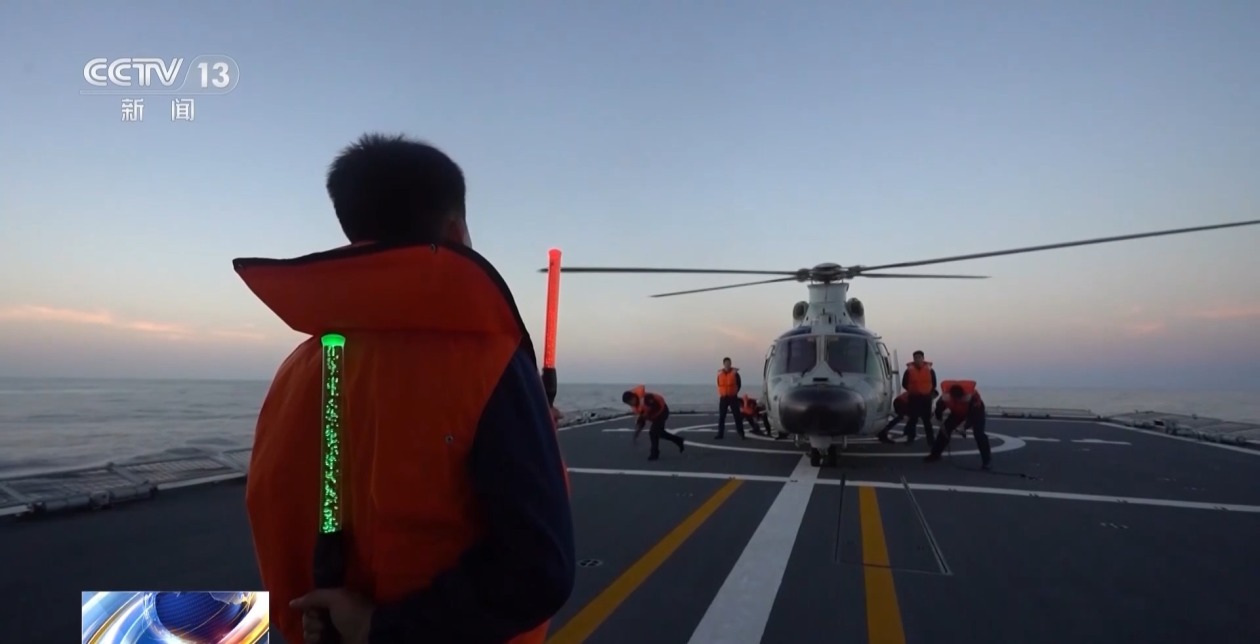
As night fell, the training on the Yueyang ship continued, with nighttime landing flight training following. Compared to daytime, nighttime landings at sea present numerous challenges for helicopters, including limited visibility, lack of obvious reference points, and complex and variable sea conditions.
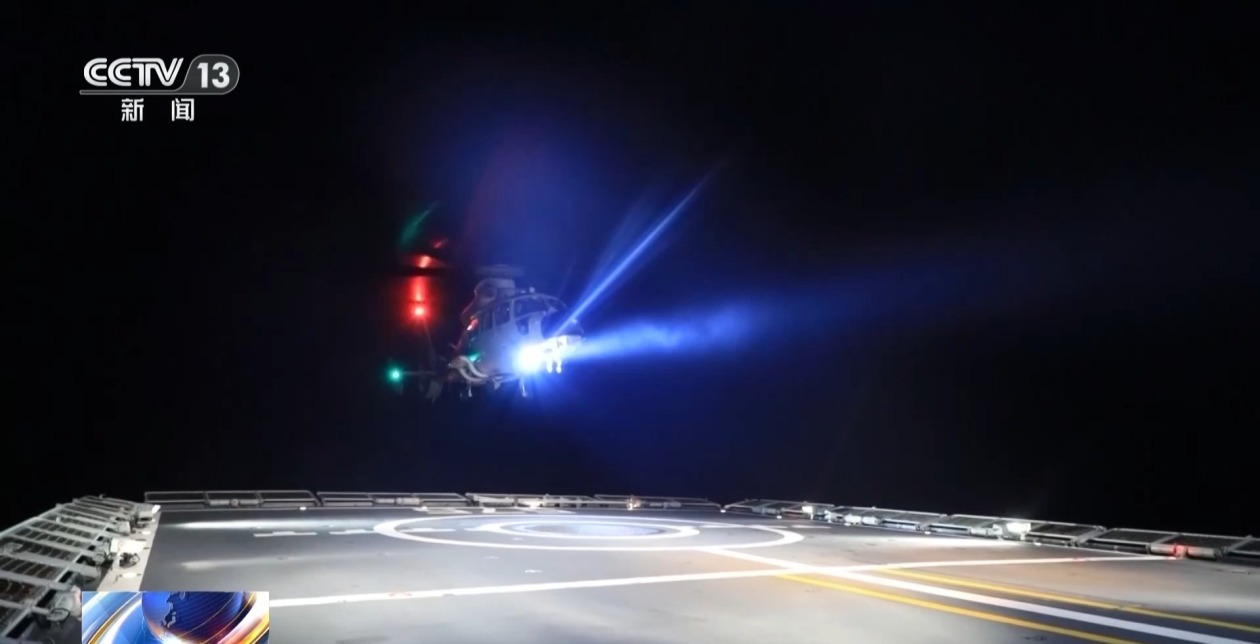
Under the guidance of the ship's tower commander and the ship's signal personnel, the crew members closely coordinated, accurately interpreted instrument data, steadily established the descent path, and adjusted the flight attitude and reduced airspeed.
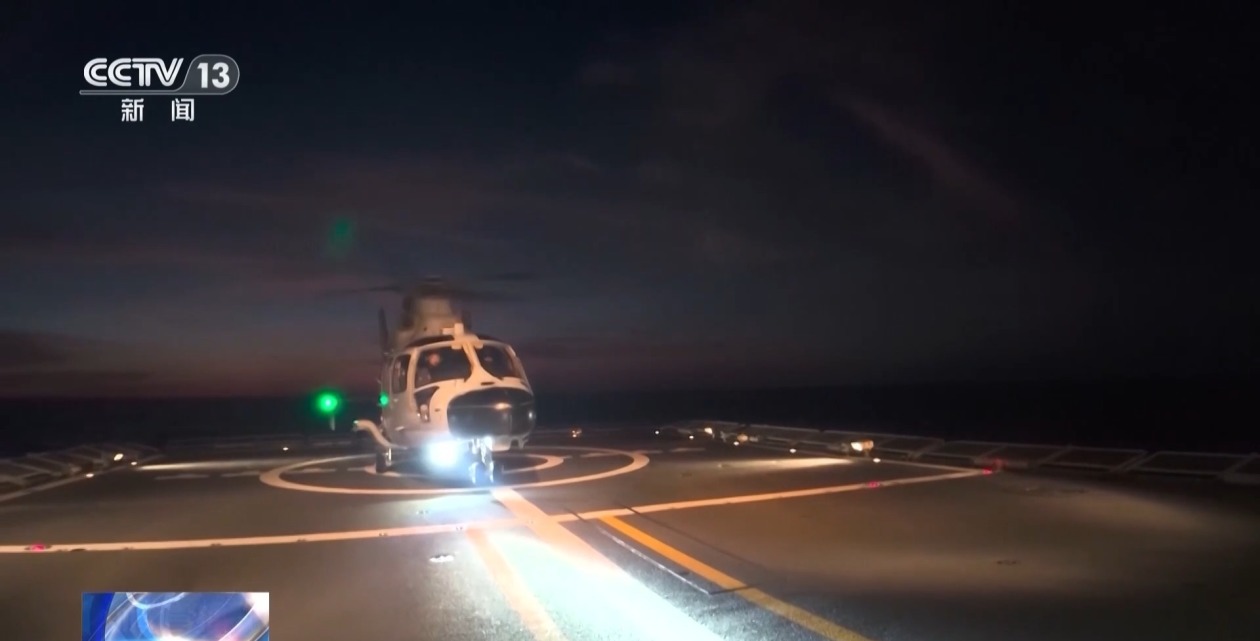
Upon receiving the command, the pilot firmly grasped the control stick and quickly descended at the moment when the ship was relatively stable, successfully landing within the designated circle on the ship's takeoff and landing platform.
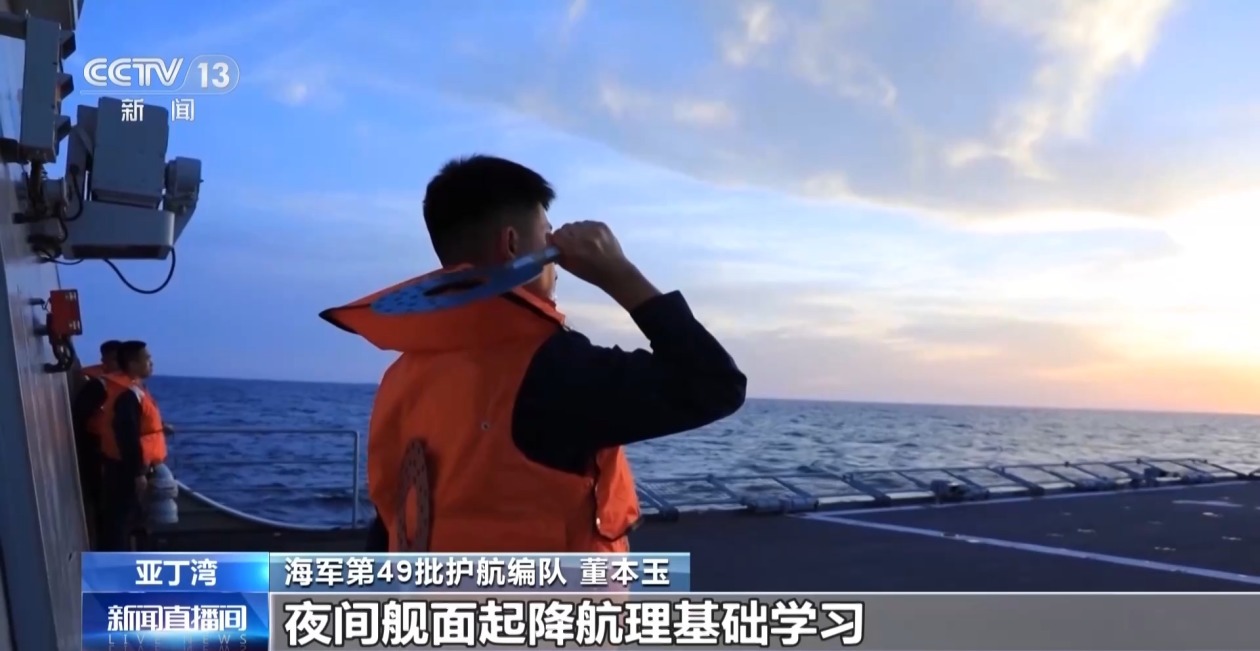
Dong Benyu, Navy's 49th Escort Task Force: We focused on the potential risks and hazards that helicopter night training may face, emphasizing the strengthening of the trainees' foundational knowledge of nighttime shipboard takeoff and landing, effectively enhancing the crew's all-time, all-domain emergency response and combat capabilities, laying a solid foundation for completing subsequent escort missions in the Gulf of Aden.
The 49th Escort Task Force conducted helicopter cross-day-and-night flight training in the Gulf of Aden, focusing on reconnaissance, target verification, and search and rescue exercises. The training aimed to enhance pilots' situational awareness and emergency response capabilities, with specific emphasis on night operations. Coordination between shipboard personnel and helicopter crews was crucial for the success of the exercises.
- The 49th Escort Task Force conducted helicopter training in the Gulf of Aden.
- Training included reconnaissance, target verification, and search and rescue.
- Helicopters demonstrated capabilities in low-altitude flight and night operations.
- The training aimed to enhance pilots' situational awareness and emergency response skills.
- The operation involved coordination between shipboard personnel and helicopter crews.