
Video | The Stronger It Becomes! Unveiling the Evolution of "Sixth Master" →
The H-6 is China's first medium bomber with medium to long-range strike capabilities, and military enthusiasts like to refer to the H-6 as "Old Six." After more than half a century of service, why has the H-6 become increasingly powerful with each modification? What are the key variants? How has the ammunition been upgraded in sync?
Military commentator Zhang Xuefeng: First of all, it had its maiden flight quite early, and it has a history of several decades now. We know that threats are changing, adversaries are evolving, and technology is improving, so it must be continuously upgraded to meet the demands of modern warfare. Secondly, it has a very solid foundation, with relatively low operating costs and high reliability, which allows for continuous upgrades and iterations to meet modern combat requirements.
What are the variants that have truly enabled the H-6 platform to achieve a milestone upgrade in combat capability?
Military commentator Zhang Xuefeng believes that there are two main variants that have truly enabled the H-6 platform to achieve a milestone upgrade in combat capability:
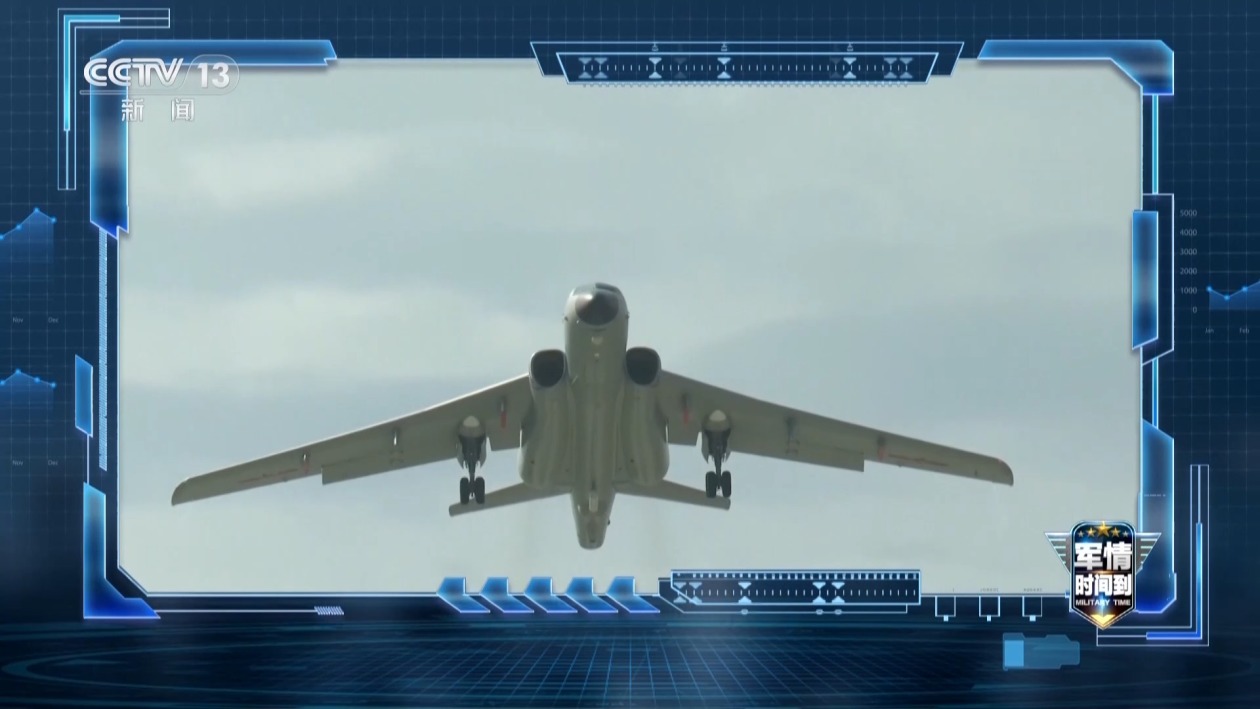
The first is the H-6K. It has undergone significant changes:
It has been equipped with new turbofan engines, extending its range;
The avionics system has been significantly upgraded, greatly reducing the workload of pilots and crew while enhancing display effects;
Onboard weapons have been continuously enriched, with range consistently increasing and strike accuracy also being upgraded.
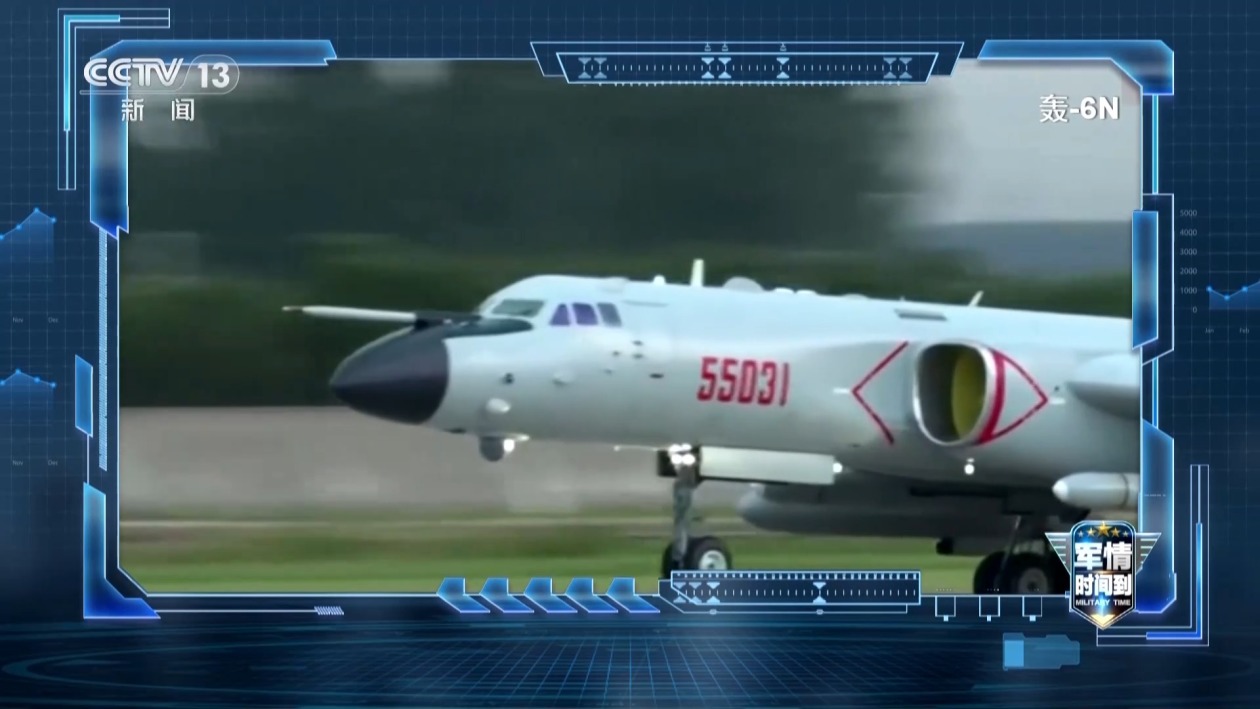
The second is the H-6N. Based on the H-6K, the H-6N strategic bomber has been developed. The H-6N has structural modifications, allowing for a longer range; it can perform aerial refueling; and more importantly, it can carry missiles with nuclear warheads, elevating its strike and deterrence capabilities to a new level.
Why can the H-6N perform aerial refueling, but the H-6J cannot?
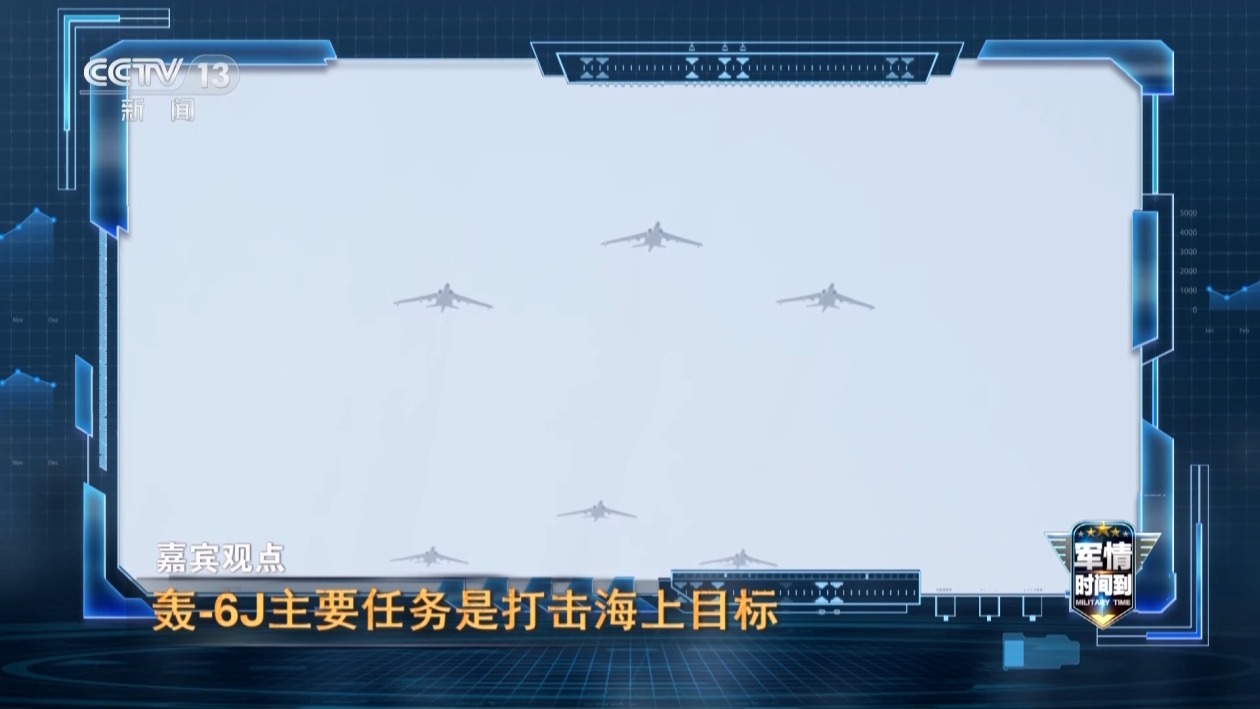
Military commentator Zhang Xuefeng: The H-6J is an improved variant developed based on the H-6K, without significant changes to the airframe structure. It can quickly form combat capabilities through relatively simplified upgrades. The core mission of the H-6J is to strike enemy maritime targets and land-based bases. Even without aerial refueling capability, it can still effectively strike important targets on the so-called "first island chain" and can also effectively deter large warships and other significant maritime targets within the "second island chain." Therefore, its current range is fully capable of meeting mission requirements.
As the H-6 platform undergoes iterative upgrades, has the "ammunition depot" also been upgraded?
Military commentator Zhang Xuefeng: The types of ammunition it carries are continuously expanding, and its payload capacity is steadily increasing. The basic H-6 primarily carries aerial bombs through its internal bomb bay, with a maximum payload of about 9 tons. Subsequently, by adding wing pylons, it can carry large air-to-ground munitions and stand-off weapons, increasing its maximum payload to about 15 tons, significantly enhancing its strike capability.
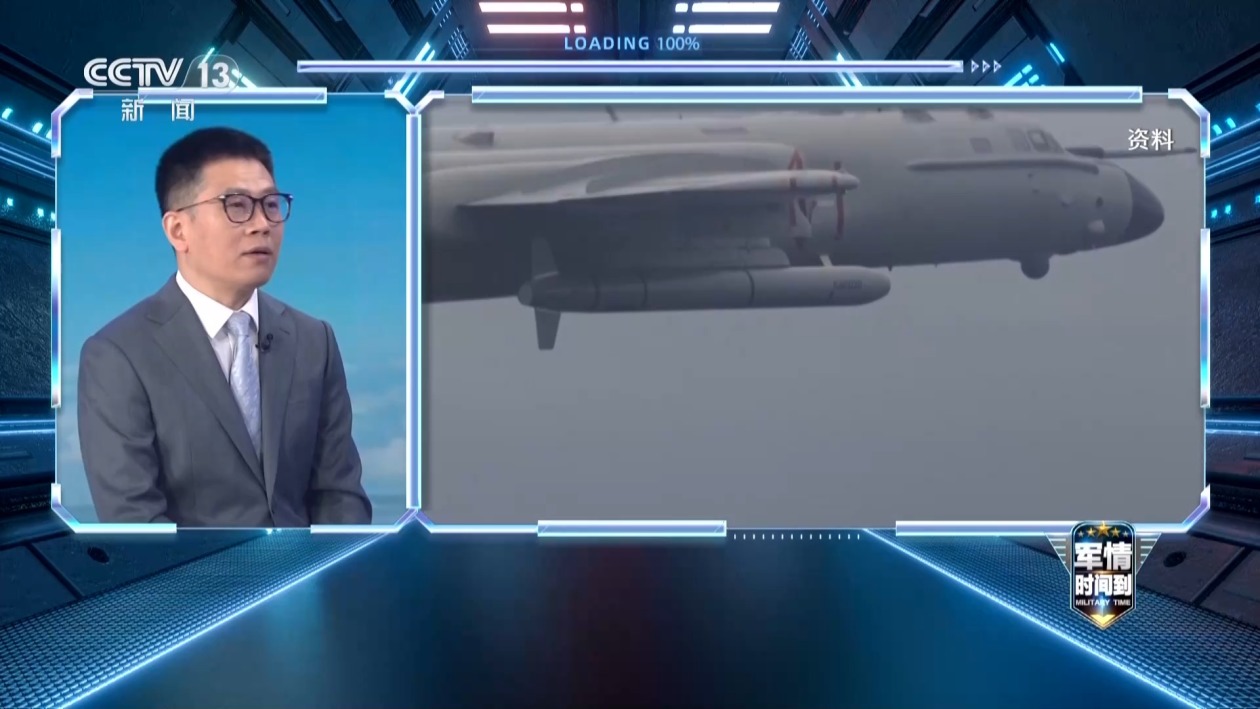
Entering the era of the H-6K, H-6J, and H-6N, the ammunition has been further optimized and upgraded. For example, it can carry the Changjian-20 cruise missile, with a range increased from several hundred kilometers of earlier missiles to over 1000 kilometers, even approaching 2000 kilometers, allowing for precise strikes on important targets deep within enemy strategic operations. The H-6K can also carry the YJ-21 hypersonic missile, which has a long range, high speed, and strong penetration capabilities, enabling it to strike heavily fortified ground targets and even underground targets. The missiles carried by the H-6N have even longer ranges and possess nuclear strike capabilities, further enhancing its deterrent power.
The People's Liberation Army Air Force (PLAAF) is enhancing the H-6 bomber series, including the H-6K and H-6N variants, to improve their strike capabilities. These upgrades involve new engines, increased payload capacities, and the ability to carry advanced missiles, including nuclear options. The ongoing enhancements aim to adapt to modern warfare requirements and increase deterrence capabilities.
- The H-6 is China's first medium bomber with medium to long-range strike capabilities.
- The H-6K and H-6N variants have significantly upgraded capabilities, including new engines and the ability to carry nuclear missiles.
- The payload capacity of the H-6 has increased from 9 tons to approximately 15 tons with upgrades.
- The H-6K can carry CJ-20 cruise missiles with ranges exceeding 1000 kilometers, while the H-6N has enhanced nuclear strike capabilities.