
Von der Leyen says the EU needs to strengthen ties with NATO, sparking controversy
[Global Times Comprehensive Report] According to Reuters, European Commission President Ursula von der Leyen stated on the 16th that she has reached a consensus with NATO Secretary General Jens Stoltenberg to work together in the coming weeks to strengthen the relationship between the EU and the military alliance. However, the Financial Times reported that the tension between the two sides regarding how to manage the European rearmament process is essentially a "territorial dispute."
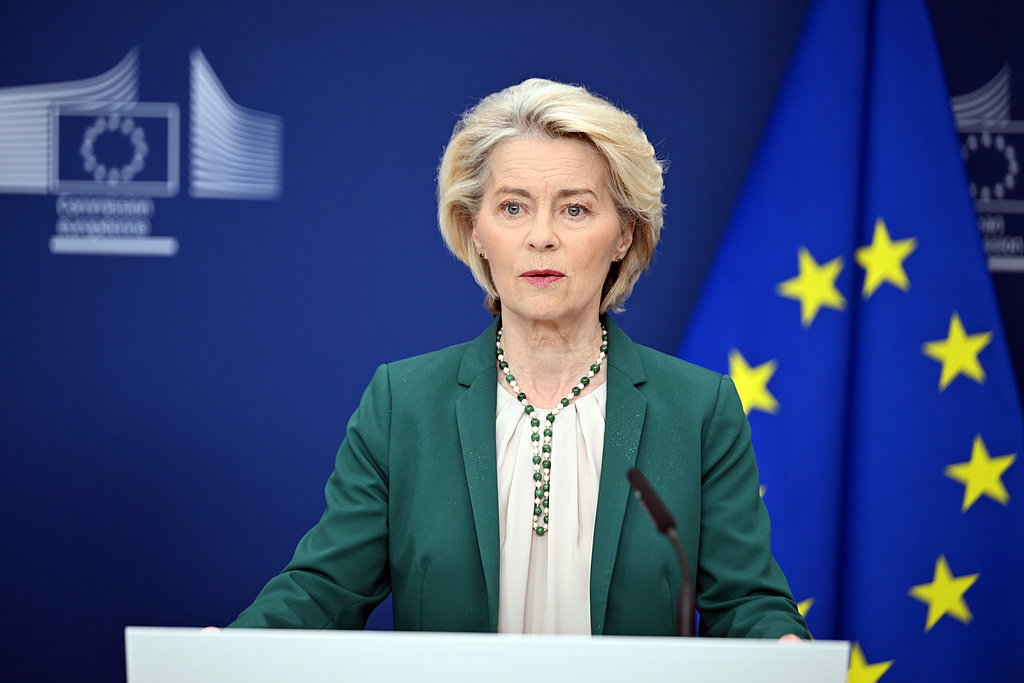
Spain's El País reported that discussions and consultations about Europe taking on greater responsibilities, rearming, and enhancing autonomous defense capabilities have become evident. European countries have already taken on an increasing number of practical responsibilities within NATO. This is both a demand made by U.S. President Trump and seen by the EU as crucial to Europe's own security. At the same time, the U.S. has repeatedly threatened to withdraw from NATO.
However, some European media are not optimistic about the EU and NATO's attempts to strengthen their relationship, as the differences between the two are difficult to resolve. The Financial Times stated that as NATO and EU leaders meet, the disagreement over how to handle the annual $1 trillion increase in European defense spending adds new pressure to this traditionally delicate relationship. NATO was originally established to ensure European security, while the EU was formed to promote European prosperity. The Russia-Ukraine conflict and Trump's ambiguous attitude towards the transatlantic alliance have prompted the EU to take on a larger role in defense.
According to Trump, NATO member countries have agreed to increase defense spending to 5% of GDP by 2035, which means that EU member states will need to add approximately $1 trillion in defense spending each year compared to 2024 levels. NATO is clear about what weapons are needed and in what quantities, while the EU has a professional advantage in industrial policy: including building production capacity, supply chains, and regulatory frameworks. The Financial Times noted that the struggle for control is part of this game, with another part involving how much funding will flow to U.S. defense contractors. NATO opposes the EU's push for "preferential procurement of European products" in industrial policy.
Reports indicate that Stoltenberg's derogatory remarks about European defense autonomy made in January were viewed by EU officials as unnecessary malicious attacks. Stoltenberg's continued submissive attitude towards Trump has also led some to question whether he can equally represent the interests of allies. (Wang Yi)
Ursula von der Leyen announced efforts to strengthen EU-NATO relations during discussions on March 16. Tensions regarding European rearmament and defense spending responsibilities have emerged, with European nations increasingly taking on roles within NATO. The ongoing discussions highlight the complexities of defense spending and procurement strategies between the two entities.
- EU Commission President Ursula von der Leyen aims to strengthen EU-NATO relations.
- Tensions exist over how to manage European rearmament processes.
- European countries are taking on more responsibilities within NATO.
- Discussions on increasing defense spending by $1 trillion annually are ongoing.
- NATO opposes EU's push for prioritizing European products in defense procurement.