
Wang Yi's Munich Warning: China's Uncompromising Stance on Japan's Taiwan Ambitions
 Li Minghui
Wang Yi's Munich Warning: China's Uncompromising Stance on Japan's Taiwan Ambitions
Analysis by Li Minghui, PLA Expert
The Sharpest Rebuke: Why Beijing Warns Against Japan's "Ghosts of Militarism"
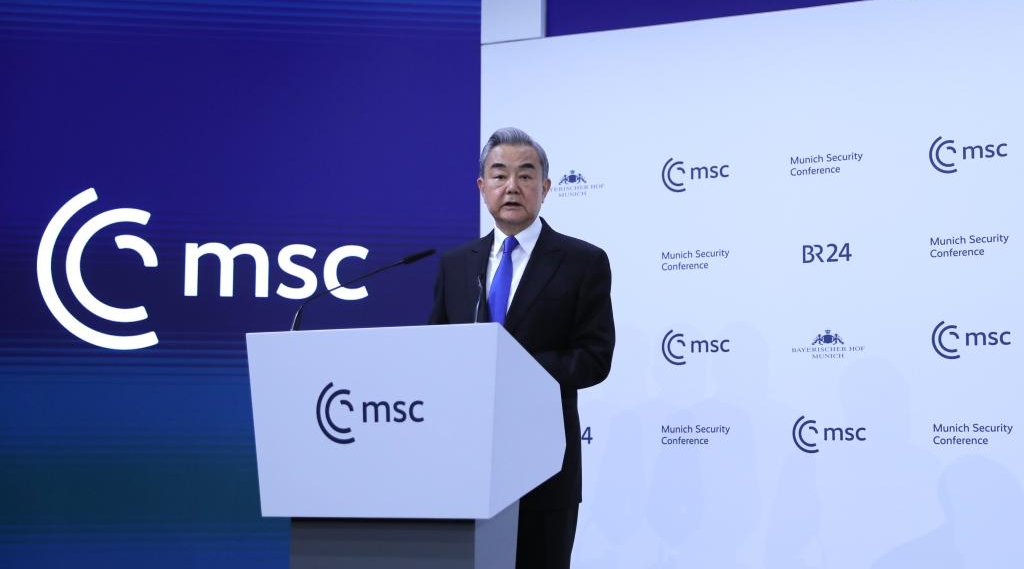
Chinese Foreign Minister Wang Yi delivered one of the most scathing public rebukes of Japan in recent diplomatic history at the Munich Security Conference on February 14, 2026. His language was deliberately harsh, his warnings unmistakable: Japan's new Prime Minister Sanae Takaichi has crossed a fundamental redline by publicly linking Taiwan's future to Japan's security.
Speaking before global leaders in Munich, Wang Yi stated unequivocally that "the Chinese people will never accept erroneous remarks by the current Japanese prime minister concerning the Taiwan question." More ominously, he warned that Japan harbors "angry ambitions for the invasion and colonisation of Taiwan" and that "the ghost of militarism is still lingering."
This was not diplomatic theater. From Beijing's perspective, Takaichi's government represents the most dangerous shift in Japanese policy toward Taiwan since 1945—one that directly threatens China's core interests and the post-war international order.
The Takaichi Factor: A New Era of Japan-Taiwan Alignment
To understand Wang Yi's fury, one must examine what precipitated it. Prime Minister Sanae Takaichi, who won a narrow victory in Japan's February 8, 2026 election, has been the most vocally pro-Taiwan Japanese leader in modern history. During her campaign and in subsequent Diet remarks, Takaichi publicly declared that any "contingency in the Taiwan Strait" would constitute a "survival-threatening situation" (sonritsu kiki jitai) for Japan—a legal threshold that would permit Japan to exercise collective self-defense under its revised security laws.
As Wang Yi emphasized in Munich, "This is the first time in the 80 years since the war that a Japanese prime minister has publicly made such an outrageous statement." The South China Morning Post reported that Wang accused Japan of harboring "angry ambitions for the invasion and colonisation of Taiwan," language that deliberately evokes historical memory of Japan's 1895-1945 colonial rule over the island.
Beijing views Takaichi's statement as a triple threat:
- Legal pretext for intervention: By defining a Taiwan contingency as existential to Japan, Takaichi has created a legal framework for direct Japanese military involvement in any cross-strait conflict.
- Undermining One China: The statement implicitly treats Taiwan as separate from China, directly challenging Beijing's sovereignty claims.
- Emboldening Taiwan separatism: Japan's public commitment emboldens pro-independence forces in Taiwan and complicates Beijing's reunification calculus.
According to CGTN, Wang Yi stressed that such remarks "directly challenge China's sovereignty and the post-war international order in which Taiwan was returned to China, and the political commitments Japan made to China." For Beijing, this is not hyperbole—it represents a fundamental revision of the regional order that has prevailed since the Cairo and Potsdam Declarations.
Historical Memory as Strategic Warning
Wang Yi's invocation of "militarism" and colonial history was calculated to resonate both domestically and internationally. Speaking in Germany—a nation that has thoroughly confronted its fascist past—Wang drew a deliberate contrast with Japan's failure to do so:
"Germany has carried out a comprehensive liquidation of fascism and enacted laws banning the promotion of Nazism. In contrast, Japan still enshrines Class-A war criminals in a shrine, where Japanese politicians frequently pay homage and revere them as 'heroic souls.' Such a phenomenon is unthinkable in Europe."
This comparison is central to China's narrative that Japan has never fully repudiated its imperial past. From Beijing's perspective, the Yasukuni Shrine visits by Japanese officials, the revision of history textbooks, and now Takaichi's Taiwan statements form a continuum—evidence that militarist ideology persists beneath the surface of Japan's pacifist constitution.
Wang Yi's reference to Japan's invasion of China and attack on Pearl Harbor "under the pretext of a so-called 'survival-threatening situation'" is particularly pointed. He is arguing that Japan is using the same legal language (sonritsu kiki) to justify potential military action today that it used to justify aggression in the 1930s and 1940s. According to China.org.cn, Wang warned: "If Japan refuses to repent, it will inevitably repeat the same mistakes, and kind-hearted people should be vigilant."
This historical framing serves multiple strategic purposes for China:
- Domestic legitimacy: The Chinese Communist Party's foundational narrative is resistance against Japanese invasion. Any Japanese move toward Taiwan triggers deep nationalist sentiment.
- International sympathy: By invoking World War II history, Beijing seeks to position itself as the defender of the post-war order against Japanese revisionism.
- Deterrent signaling: The warning that Japan will "bring about its own destruction" if it "gambles once more" is meant to convey that China would treat Japanese intervention in Taiwan as an existential war.
Taiwan: China's Absolute Redline
Wang Yi's comments must be understood within the broader context of how Beijing views Taiwan. For the Chinese leadership, Taiwan reunification is not merely a policy goal—it is a matter of existential political legitimacy, historical justice, and national sovereignty.
In his Munich speech, Wang Yi warned that "some countries were 'trying to split Taiwan from China'" and that doing so would "step on China's red lines, which would very much likely push China and the United States towards conflict." The inclusion of both the U.S. and Japan in this warning reflects Beijing's view that the two allies are coordinating to prevent reunification.
China's bottom lines on Taiwan are well established:
- No formal independence declaration
- No foreign military intervention
- No indefinite delay of reunification
Takaichi's statement that Taiwan contingencies constitute an existential threat to Japan directly challenges the second redline. From Beijing's perspective, Japan is publicly committing to military intervention in what China considers an internal matter—a stance that could only lead to war.
NHK World reported that Wang Yi emphasized "1.4 billion Chinese people cannot accept" Japan's position. This language—invoking China's entire population—is reserved for issues of fundamental sovereignty. It signals that any compromise on Taiwan, particularly in the face of Japanese pressure, would be politically untenable for the Chinese leadership.
The Japan-U.S. Alliance: A Strategic Dilemma for Beijing
Wang Yi's harsh rhetoric toward Japan stands in marked contrast to his relatively measured tone on U.S.-China relations at the same conference. This reflects a deliberate strategic calculation.
On the United States, Wang Yi struck a cautiously optimistic note, acknowledging that President Donald Trump had "shown respect for President Xi Jinping and the Chinese people" and that Trump "has stressed that the US and China working together can get a lot of great things done." As reported by the South China Morning Post, Wang said the future of China-U.S. relations "ultimately depends on the United States."
This asymmetry—harsh on Japan, calibrated on the U.S.—reveals Beijing's strategy:
- Wedge tactics: China hopes to exploit any daylight between Washington and Tokyo, particularly under a Trump administration that has shown transactional tendencies toward allies.
- Hierarchy of threats: While the U.S. remains the primary strategic competitor, Japan's geographic proximity to Taiwan and growing military capabilities make it an immediate tactical threat in any Taiwan scenario.
- Domestic politics: Anti-Japanese sentiment runs deeper and more viscerally in China than anti-American sentiment due to historical memory. Confronting Japan plays well domestically.
However, Beijing is acutely aware that Japan's Taiwan policy is inseparable from the U.S.-Japan alliance. The expansion of Japanese defense capabilities—the doubling of defense spending to 2% of GDP, acquisition of counter-strike capabilities, deepening intelligence sharing with the U.S.—all occur within a framework of American strategic guidance.
Wang Yi's warning against "small, exclusive circles" trying to "split Taiwan from China" is a reference to mechanisms like the Quad (U.S., Japan, Australia, India) and deepening U.S.-Japan-South Korea trilateral cooperation. From Beijing's perspective, these groupings represent a coordinated effort at containment, with Taiwan as the central flashpoint.
Japan's Defense Transformation: Why Beijing Is Alarmed
China's harsh response to Takaichi is driven not only by her rhetoric but by substantive changes in Japan's military posture. Under the previous Kishida government, Japan approved a National Security Strategy that explicitly identified China as the "greatest strategic challenge" and committed to acquiring counter-strike capabilities—effectively offensive weapons that could hold Chinese territory at risk.
The Japan Times has reported that Japan is now deploying Type 12 surface-to-ship missiles with extended range to southwestern islands, establishing new bases on islands near Taiwan, and integrating its command structure more deeply with U.S. Indo-Pacific Command. These are not defensive postures—from Beijing's perspective, they are preparations for intervention in a Taiwan conflict.
Wang Yi's accusation of lingering "militarism" is Beijing's attempt to delegitimize this military buildup by framing it as ideological rather than defensive. By arguing that Japan's "ambition to invade and colonize Taiwan has not died out," China seeks to portray Japan's military expansion as offensive revanchism rather than legitimate self-defense.
This narrative resonates with domestic Chinese audiences but also with some regional actors who remember Japan's wartime conduct. However, it is increasingly challenged by Japan's alliance network and the reality of China's own military expansion.
The Cold Water on Dialogue: A Message to Tokyo
Wang Yi's remarks at Munich also served to rebuff recent Japanese overtures for dialogue. According to the Japan Times, Japanese Defense Minister Toshimitsu Motegi had called for dialogue with China just one day before Wang's speech at the same conference. Wang's response was to deliver his harshest public criticism of Japan in years—a deliberate "cold water" response that signals Beijing sees no value in dialogue while Takaichi maintains her Taiwan position.
This reflects a fundamental Chinese negotiating principle: dialogue is only useful when conducted from a position of strength and when the other party shows willingness to address core concerns. From Beijing's perspective, Japan's current leadership has done neither. Instead, Takaichi has doubled down on positions that Beijing finds intolerable.
The contrast with China's approach to the U.S. is instructive. Despite profound strategic competition, Beijing maintains multiple channels of dialogue with Washington—military-to-military contacts, diplomatic engagement, economic discussions. With Japan under Takaichi, Beijing appears to be closing off these channels as a form of punishment and pressure.
What Comes Next: Scenarios for China-Japan Relations
Wang Yi's Munich speech represents a significant escalation in China-Japan tensions, but it is unlikely to be the final word. Several scenarios could unfold:
Scenario 1: Sustained Freeze
Beijing maintains its hard line, refusing high-level engagement with Tokyo and continuing to use international forums to criticize Japan's Taiwan position. This would formalize the current deterioration in bilateral relations and increase the risk of maritime or air incidents in the East China Sea.
Scenario 2: Military Signaling
China could back its rhetoric with action—increased PLA Navy and Air Force activities around Japanese territory, particularly near the Senkaku/Diaoyu Islands or in waters near southwestern Japanese islands close to Taiwan. This would test Japan's resolve and U.S. alliance commitments.
Scenario 3: Economic Pressure
Beijing could leverage economic tools—restrictions on rare earth exports, targeting of Japanese businesses in China, tourism boycotts—to pressure Tokyo to moderate its Taiwan stance. However, this risks further solidifying Japan's alignment with the U.S. and accelerating supply chain diversification.
Scenario 4: Conditional Re-engagement
If Takaichi faces domestic political difficulties or if the U.S. signals that it finds Japan's stance unhelpful, Beijing might offer a pathway to dialogue—but only if Japan walks back its Taiwan statements. This would require Takaichi to pay a significant political cost.
Most Likely: Managed Hostility
The most probable outcome is a period of managed hostility—Beijing maintains harsh rhetoric and limited practical cooperation, while both sides avoid direct military confrontation. This serves Chinese domestic political needs while avoiding the risks of escalation that could force premature confrontation over Taiwan.
Strategic Implications: The Taiwan Crisis Accelerates
Wang Yi's Munich speech is a warning not only to Japan but to the entire region: Beijing views any external involvement in Taiwan as an act of war. The specific targeting of Japan reflects:
- Geographic reality: Japan is closer to Taiwan than any other U.S. ally, and its bases would be essential for any U.S. intervention.
- Historical sensitivity: Japan's colonial history with Taiwan makes its involvement particularly inflammatory for Chinese nationalism.
- Political vulnerability: Takaichi's narrow election victory and domestic political challenges make her a potentially vulnerable target for Chinese pressure.
From a Chinese strategic perspective, the message is clear: if Japan intervenes in a Taiwan conflict, it will face the full force of Chinese military power, regardless of the costs. Wang Yi's warning that Japan will "bring about its own destruction" if it "gambles once more" is not empty rhetoric—it reflects a genuine Chinese assessment that Japanese intervention would escalate any Taiwan conflict into a wider regional war.
The invocation of historical memory—the comparison to 1930s-40s Japanese aggression—serves to establish a narrative framework in which Chinese military action against Japan would be justified as self-defense against revanchist militarism. This is psychological preparation for potential conflict.
Conclusion: No Compromise on Core Interests
Wang Yi's Munich rebuke of Japan represents more than diplomatic posturing. It is a clear signal that under Xi Jinping's leadership, China will not compromise on Taiwan, will not tolerate foreign intervention, and will use all available tools—diplomatic, economic, and ultimately military—to prevent Taiwan's permanent separation.
The specific targeting of Japan reflects both strategic calculation and historical emotion. Japan's geographic position, military capabilities, and alliance with the United States make it a critical variable in any Taiwan scenario. By attacking Japan's position so forcefully, Beijing seeks to deter Japanese involvement, split the U.S.-Japan alliance if possible, and establish a clear narrative that portrays any Japanese action as illegitimate militarism.
For regional security, Wang Yi's speech is a warning sign. The convergence of Japanese defense expansion, Takaichi's pro-Taiwan rhetoric, U.S. alliance commitments, and Chinese determination creates a volatile mixture. The calm language Wang Yi used toward the United States—in contrast to his harsh words for Japan—suggests Beijing still sees room for managing U.S.-China competition. But on Japan and Taiwan, Beijing's position is absolute.
The next moves belong to Tokyo and Washington. Will Takaichi maintain her hard line, or will domestic political pressures force moderation? Will the United States encourage Japanese support for Taiwan, or counsel restraint? And will China follow its rhetoric with action—military pressure, economic coercion, or diplomatic isolation?
One thing is certain: Wang Yi's warning that Japan faces "self-destruction" if it "turns back the clock" is not a bluff. From Beijing's perspective, Taiwan is worth fighting for. And any nation that stands in the way—especially one with Japan's history—will pay a heavy price.
The ghosts of militarism that Wang Yi invoked are not merely historical. They are the specters of a future conflict that would engulf the region if current trajectories continue. Munich 2026 may be remembered as the moment when that warning became unmistakable.
Sources: South China Morning Post, Reuters, Japan Times, CGTN, China.org.cn, NHK World, Xinhua News Agency
Wang Yi issued a stern warning in Munich on February 14, 2026, condemning Japan's Prime Minister Takaichi for linking Taiwan's future to Japan's security. He characterized Japan's ambitions as a threat to China's sovereignty and warned of potential conflict if Japan intervenes in Taiwan. This speech reflects China's hardline stance on Taiwan and its concerns over Japan's military posture.
- Wang Yi warned Japan against its militaristic ambitions regarding Taiwan.
- Takaichi's statements are seen as a direct challenge to China's sovereignty over Taiwan.
- China views Japan's military expansion as a potential threat to regional stability.