
Washington and Moscow Just Made Killer Robot Rules Optional
 Alexandra Reeves
Washington and Moscow Just Made Killer Robot Rules Optional
The uncomfortable part of the Geneva talks is not that diplomats failed to solve autonomous weapons in one week. Nobody serious expected that. The problem is that the two militaries with the deepest interest in battlefield autonomy, the United States and Russia, appear to have decided that even a weak pathway toward rules is too restrictive.
According to Reuters reporting carried by Defense News on Sept. 4, the 128 states party to the Convention on Certain Conventional Weapons were trying to agree on a non-binding text that could open negotiations on prohibitions and regulations for lethal autonomous weapons systems, or LAWS. Three diplomats told Reuters that opposition from Washington and Moscow raised doubts over whether consensus could be reached at all. The argument was not over science fiction. It was over language about lethality, human judgment and control.
The War Already Arrived Before the Rules
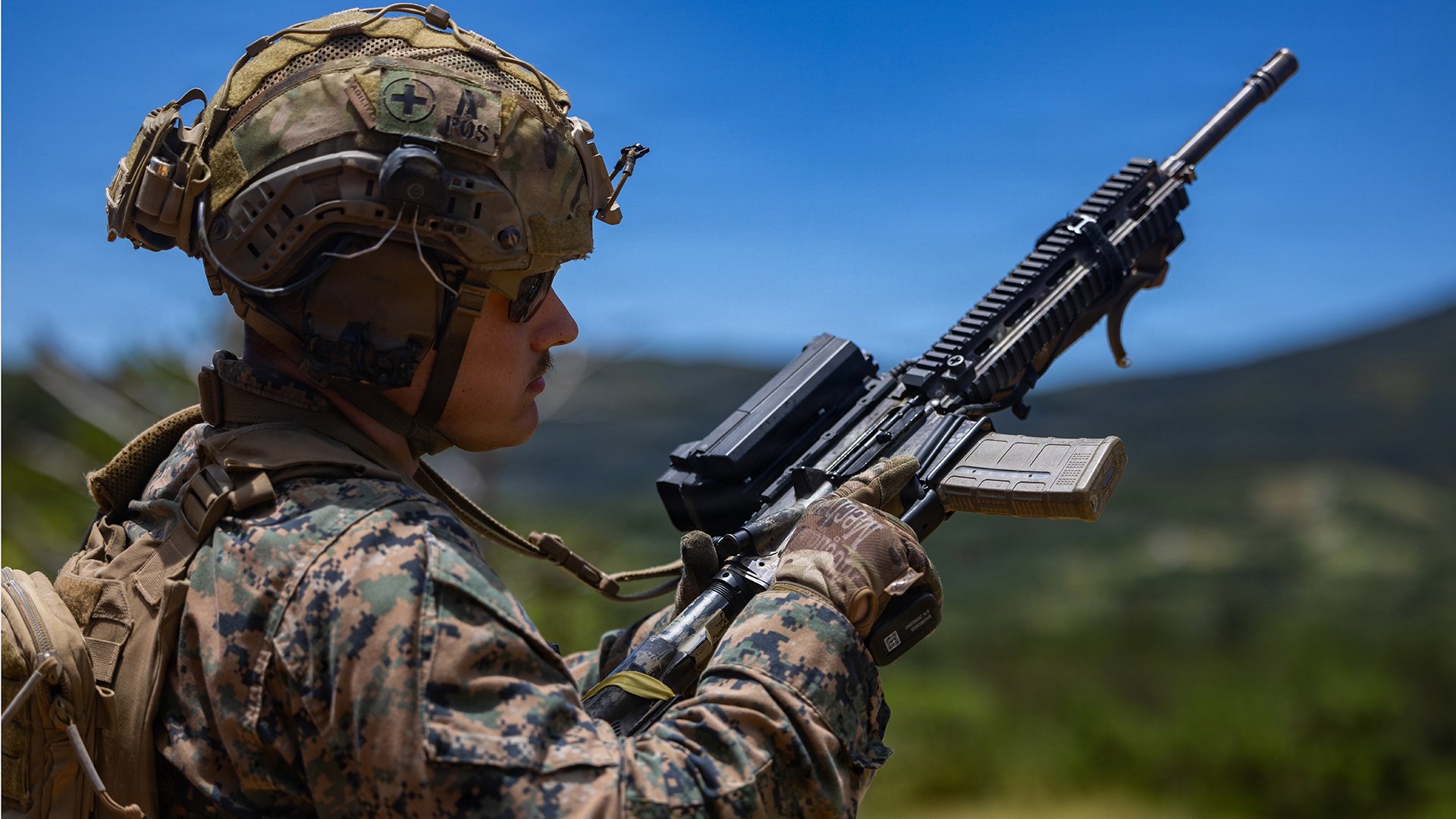
Here is the thing Geneva is trying to regulate: a category of weapons that is already bleeding into normal operations. Ukraine has made cheap drones, semi-autonomous targeting aids and interceptor systems part of daily combat. Russia has adapted with electronic warfare, one-way attack drones and increasingly complex strike packages. Sudan and the Middle East have shown the same direction of travel, even if the systems vary wildly in sophistication.
That matters because LAWS is not a neat equipment label. It is a sliding scale. A loitering munition that recommends a target is not the same as a drone swarm allowed to prosecute targets without human review. A shipboard close-in weapon system that reacts faster than a human can blink is not the same as an AI-enabled ground vehicle hunting dismounted troops. Yet all of them live inside the same political anxiety: how much killing can be delegated to software before command responsibility becomes theatre?
Human Rights Watch and the Stop Killer Robots campaign have warned that weapons assisted by artificial intelligence may behave unpredictably and create fatal errors. UN Secretary-General Antonio Guterres and International Committee of the Red Cross president Mirjana Spoljaric warned in August that the world was approaching a moral red line where machines could kill without human involvement. That warning sounds dramatic. It is also late.
Why the United States Wants Flexibility
Washington's position, according to Reuters diplomatic sources, has hardened over the past six months. The U.S. preference is closer to guidelines than a legally binding treaty, with officials arguing that existing international humanitarian law already governs battlefield conduct. That position has support from Russia, India and Turkey.
The American logic is not difficult to understand. The U.S. military is building autonomy into air, naval, cyber and ground systems because speed is becoming a survivability requirement. In a missile raid, a human-in-the-loop can become a bottleneck. In a drone swarm, manual target-by-target approval may be operationally useless. In the Indo-Pacific, distributed autonomous systems are not a luxury; they are part of how Washington hopes to complicate Chinese targeting and reduce risk to crewed platforms.
But that is exactly why the U.S. stance carries weight. If the country with the most advanced military AI ecosystem says binding rules are premature, every other state hears permission to keep pushing. The message is not officially reckless. It is worse than that. It is practical, reasonable and very convenient.
Russia Benefits From the Same Ambiguity
Moscow's alignment with Washington on this issue should make NATO planners uneasy. Russia does not need pristine legal theory to exploit autonomy. It needs ambiguity, scale and deniability. The Ukraine war has already shown how Russia combines massed drones, missiles, electronic warfare and adaptive targeting to stress Western-style air defence. The next step is not necessarily a Hollywood robot. It is a more automated kill chain that compresses decision time until human control becomes nominal.
Russia also has a political incentive to resist binding constraints. Rules that require meaningful human control would be easiest for transparent, well-resourced militaries to document and hardest for opaque forces and proxies to verify. Moscow can demand flexibility in Geneva, test systems in Ukraine, and still accuse NATO of hypocrisy when Western militaries do the same. That is a cheap diplomatic weapon.
This is where the NATO angle gets uncomfortable. Alliance members like to describe themselves as norm-setters. Yet if the United States resists hard rules and European members split between legal caution and military urgency, NATO will struggle to present a common position. The alliance may end up with the worst of both worlds: public unease about killer robots and no enforceable standard that separates responsible autonomy from battlefield outsourcing.
The Technical Question Is Also a Command Question
Any serious LAWS rule has to confront three technical issues. First, target identification: can the system reliably distinguish combatants, civilians, decoys and surrendered personnel under battlefield conditions? Second, communications: what happens when jamming, spoofing or broken data links change the system's perception of the target environment? Third, accountability: who is responsible when a model behaves within its code but outside a commander's intent?
Those are not activist talking points. They are command problems. A brigade commander does not get to blame a junior officer for a fire mission simply because the staff process was complicated. The same should be true of autonomous systems. If a machine is authorised to kill, the chain of command must be able to explain what it was authorised to do, under what constraints, and why those constraints were adequate.
That is also why a purely moral ban is unlikely to survive contact with reality. Ukraine will not stop using automation if it helps intercept Shahed-type drones or locate Russian artillery. Israel, Iran-backed groups, Gulf states and Western navies will not ignore autonomous sensing and engagement tools when missiles and drones arrive in salvos. The better question is not whether autonomy enters warfare. It already has. The question is whether states can draw a line before the most dangerous applications become normal.
What to Watch Next
The immediate indicator is whether Geneva produces even a non-binding text. If it fails, that will not end the debate, but it will prove that consensus-based arms control is badly mismatched to a technology moving this quickly. If the final language drops references to meaningful human control, the result may be worse than failure: a document that lets everyone claim responsibility while changing almost nothing.
The second indicator is NATO doctrine. Watch whether European members push for internal alliance standards even without a UN treaty. A NATO rulebook covering human authorization, testing, audit logs and deployment constraints would not bind Russia or China, but it would at least prevent the alliance from drifting into autonomy by procurement accident.
The third indicator is Ukraine. The war there is the world's harshest laboratory for military autonomy. If Kyiv and its partners develop effective interceptor drones, AI-assisted targeting tools and semi-autonomous strike systems, the legal debate will follow the battlefield rather than shape it.
The real danger is not that robots suddenly decide to fight wars on their own. It is that governments quietly decide machines can make killing faster, cheaper and politically easier, then call that human control because someone signed the procurement form.
Geneva was never going to stop the future. But it could have shown that the major powers still wanted a hand on the brake. Right now, Washington and Moscow look more interested in keeping the accelerator clear.
The United States and Russia opposed binding regulations on lethal autonomous weapons systems (LAWS) during discussions in Geneva on September 4, 2023. The two nations' positions raise concerns about the future of arms control as they prioritize flexibility over strict rules. The integration of autonomous systems into military operations continues to evolve, with implications for international humanitarian law and battlefield conduct.
- The U.S. and Russia oppose binding regulations on lethal autonomous weapons systems (LAWS).
- 128 states were involved in discussions at the Geneva talks.
- The U.S. prefers guidelines over a legally binding treaty regarding LAWS.
- Russia benefits from ambiguity in the regulation of autonomous weapons.
- The report highlights the ongoing integration of autonomous systems in military operations.