
Washington prepares strikes in Mali — 50 soldiers killed and Bamako keeps the door ajar
 Marie Dubois
Washington prepares strikes in Mali — 50 soldiers killed and Bamako keeps the door ajar
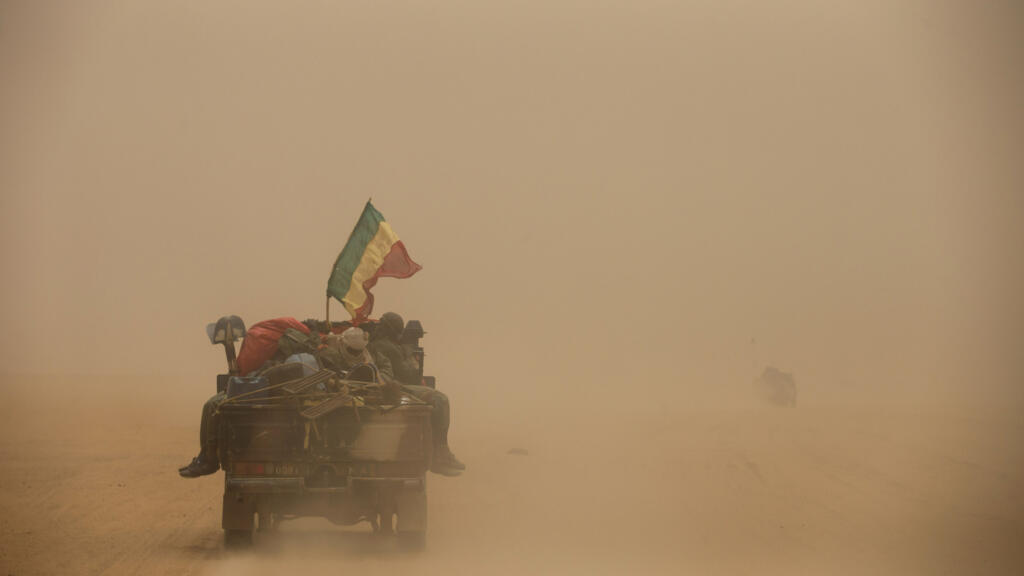
On July 18, on the Anéfis-Gao axis, a convoy of the Malian army fell into an ambush that claimed the lives of at least 50 soldiers, according to local and military sources cited by AFP and France 24. Twenty-four other men are reported to have been captured. The Support Group for Islam and Muslims, better known by its Arabic acronym JNIM, and separatists from the Azawad Liberation Front claimed responsibility for the attack.
This road is not a mere cartographic detail. Between Anéfis and Gao, it is referred to as a logistical corridor of northern Mali, dusty and exposed, where a column that loses its rhythm becomes a target. For an officer who has already seen a patrol stretch out in the sand because the first vehicle slowed down, the toll from Tabrichaat says something very simple: intelligence, escort, and coordination did not hold.
Four days later, the Washington Post revealed that the U.S. administration was considering military options against JNIM. The Malian Minister of Foreign Affairs, Abdoulaye Diop, responded from Bamako that he had received neither confirmation nor official communication from Washington. He added that Mali was not sitting idly by waiting for others to solve its problem.
What is striking is not what he said. It is what he did not say.
Tabrichaat changes the American calculation
Washington does not need to like the Malian junta to see the problem. JNIM is today one of the most powerful franchises of Al-Qaeda. It controls roads, collects taxes, attacks bases, negotiates locally when it suits them, and strikes at symbols of the state when it pays off. In the Gao region, its goal is not just to kill soldiers. It wants to make every government movement outside the cities costly.
The ambush at Tabrichaat thus has operational and political value. It shows that after years of Russian cooperation, the Malian army can still lose an entire column on a vital axis. France 24 reports that the Russian paramilitaries who were accompanying or supporting the operation had already arrived in Gao at the time of the attack and did not suffer any losses. Local sources mention a coordination problem between the Russians and the Malians.
One must remain cautious: the fog of war is thick, and Bamako does not publish a complete toll. But the image that emerges is bad for the junta. The Russians survive, the Malians die, and JNIM turns the episode into proof of the vulnerability of the central power.
Bamako's non-refusal
Since 2021, the official Malian discourse has been based on a single idea: regained sovereignty after the break with France, the end of Barkhane, and the departure of MINUSMA. In this narrative, publicly requesting an American strike would be politically toxic. It would give the junta's critics an easy phrase: Paris is gone, Washington is coming back through the window.
Abdoulaye Diop has therefore chosen a more skillful line. He denied having received an official request, contested the idea that Mali is waiting for an outside savior, but he did not declare that an American intervention would be unacceptable. For a regime that has built its legitimacy on the refusal of foreign injunctions, this nuance matters.
PassBlue notes that Bamako has already practiced this double-edged diplomacy: public refusal, private discussion, then a bilateral arrangement presented as sovereign. The same pattern had been observed around overflights, American sanctions lifted in February, and security contacts related to the mining sector. In the region, no one is really surprised by these contradictions anymore. Sahelian juntas denounce the West in public, then seek intelligence, drones, or credits when the military situation deteriorates.
Russia is not disappearing, it is reducing its risk
The idea of a brutal replacement of Moscow by Washington is too simplistic. The Russian presence in Mali has changed since the losses suffered at Tinzaouatène in 2024. The Africa Corps still provides assistance, support, and a political presence, but it is increasingly avoiding paying the main price on the ground. At Tabrichaat, if local information is accurate, this logic appears starkly: the Malian forces absorb the shock.
Moscow does not need to control every operation to maintain its influence. It just needs to remain indispensable in certain segments: training, close protection, aviation, arms contracts, political advice. The United States, on the other hand, can offer something else: aerial intelligence, targeted strikes, drones, target designation, perhaps surveillance means over the North and the center.
On the ground, this coexistence would be less strange than it seems from Paris or Washington. In Syria, Americans and Russians have already struck common enemies in the same theater without becoming allies. In Mali, the most plausible scenario is not an immediate expulsion of the Russians. It is a juxtaposition of partners, each keeping its corridor, its interlocutors, and its objectives.
Gold, lithium, and the map of routes
It would be naive to reduce American interest to counter-terrorism alone. Mali has significant gold reserves and wants to become a major lithium producer in Africa. Existing mines and the most promising permits are already of interest to Chinese, Russian, and Western actors. The security of the routes is therefore not an abstract question: it determines who can invest, extract, transport, and ensure.
The port of Dakar remains essential for Malian supply, and the visit of Senegalese President Bassirou Diomaye Faye to Bamako on July 28 reminded us of this. Africanews reports that discussions focused on security, military cooperation, and freight transport, as jihadist attacks have disrupted trade flows for months. Here again, the war goes beyond the strictly military field. It enters into the price of rice, fuel, mechanical parts, and ammunition.
An American plane will not solve this. A strike can destroy a katiba, neutralize a leader, or break a concentration of pick-ups. It does not sustainably secure a route, does not repair the trust between a garrison and neighboring villages, does not replace human intelligence obtained through years of proper presence. From experience, one does not control the Sahel from a screen. One can strike from the sky; one holds the ground through local relays.
The tactical risk
If Washington strikes, JNIM will likely try to present the event as proof of a new foreign occupation. This is predictable. The real danger is more practical: a poorly informed strike, a civilian casualty in an area already worked by jihadist propaganda, or an operation that forces Bamako to lie too clearly to its own opinion.
The Malian junta can survive discreet American aid. It will survive more difficultly with visible aid that contradicts its founding narrative. JNIM has understood this. Each attack on a column, an airfield, or a trade route also aims to force Bamako to choose between two humiliations: admit that its Russian partners are not enough, or accept an American hand that it claims not to have requested.
The next area to watch is therefore not just Anéfis. It is the Gao-Bamako line through the relay points, fuel depots, and places where convoys must slow down. If JNIM wants to push Washington and Bamako into a hasty decision, it will strike where logistics force the Malian state to leave its walls.
On July 18, a Malian army convoy was ambushed in Tabrichaat, resulting in the deaths of 50 soldiers and the capture of 24 others. The attack was claimed by the JNIM and Azawad independence fighters, highlighting vulnerabilities in Malian military operations. Following this incident, the U.S. is reportedly exploring military options against JNIM, raising concerns about the effectiveness of current military partnerships in the region.
- 50 Malian soldiers were killed in an ambush on July 18.
- 24 soldiers were reportedly captured during the attack.
- The ambush was claimed by JNIM and Azawad independence fighters.
- The U.S. is considering military options against JNIM following the attack.
- There are concerns about coordination between Malian and Russian forces.