
Why Germany's 25 Billion Order for 1,800 Boxers Fills the F126 Gap — But Is Not a Strategy
 Dr. Klaus Weber
Why Germany's 25 Billion Order for 1,800 Boxers Fills the F126 Gap — But Is Not a Strategy
A Record Order in the Month of Cuts
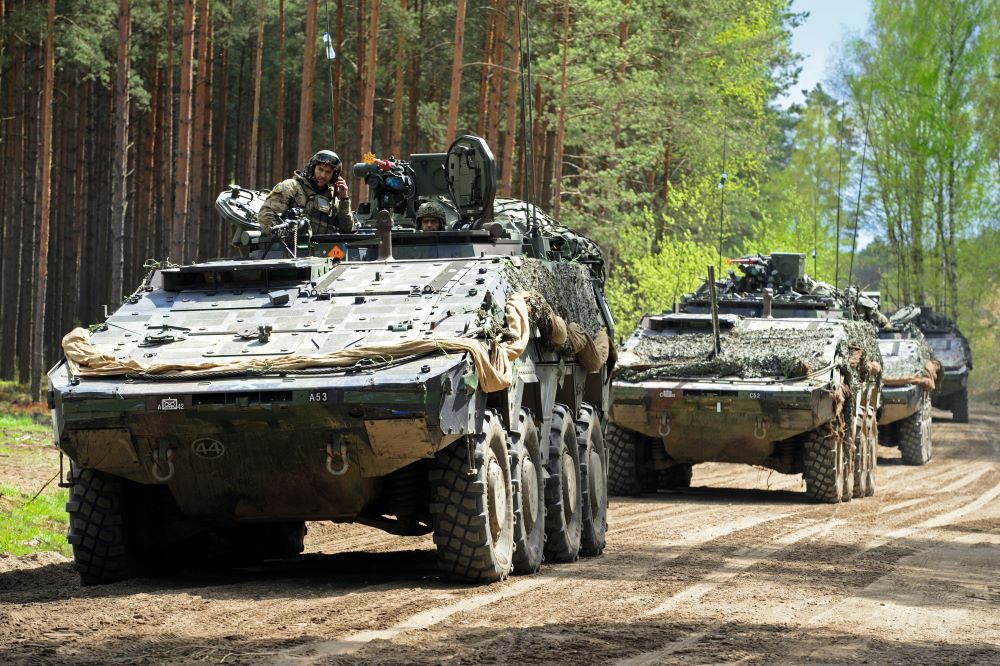
25 billion euros for around 1,800 wheeled armored vehicles, contract conclusion still this year: Rheinmetall CEO Armin Papperger announced on August 6 during an analyst conference the largest single order in the history of the Boxer program. The decision is made precisely in that summer when Berlin cancels the F126 frigates, effectively buries the MGCS project, and the Air Force waits for the American successor to FCAS. Germany orders the largest wheeled vehicle fleet in its history — from a catalog, not from a strategy.
What Arminius Is Actually Buying
The firm order under the project name "Arminius" includes around 1,800 vehicles of various Boxer variants: command vehicles, the Skyranger air defense tank, additional RCH-155 wheeled howitzers, bridge-laying vehicles, transport and medical vehicles, driver training Boxers, as well as the heavy JFST Boxer and the surface-to-air missile carriers NNbS. The order structure follows the old ARTEC logic: Rheinmetall and KNDS share the business in a 50:50 ratio, with Rheinmetall's share amounting to about 12.4 billion euros.
Behind this is a framework contract with two options: a further tranche for Rheinmetall worth around 14 billion euros between 2030 and 2035, as well as a second option, totaling about 26 billion euros. In the maximum case, the Arminius framework could grow to over 75 billion euros and up to 5,500 Boxers. A second contract for the maintenance of the fleet is estimated at four billion euros and is expected to follow in January 2027. The political timeline is equally ambitious: final talks with the Bundeswehr are scheduled for the second week of September, and the parliamentary debate for December 9 — the contract could be signed a few days later.
The F126 Connection — A Corporation Finds Comfort

This order cannot be understood without the cancellation of the F126 frigates in June. The cancellation of the naval program forced Rheinmetall to cut its annual forecast from 14.0 to 14.5 billion to 13.7 to 14.2 billion euros — a gap of 300 million euros, along with the admission to lower the order backlog ambition from around 135 billion to over 100 billion. The Boxer order almost completely compensates for this gap in the order book. "Who cuts, loses," was my formula after the F126 decision. It is only half true: the state cuts ships, the industry gains wheeled armored vehicles. The Navy remains the stepchild of the turning point, while the land systems sector is its favorite.
This is not a strategy, but industrial bookkeeping: Berlin compensates for a maritime cut with a land order because both fall under the same budget, but arise from different political reflexes. The frigates failed due to planning unreliability and cost overruns, the Boxer succeeds because it is a mature product that has been in series production since 2011. One buys what exists — and cuts what is complicated.
Distribution Logic — The Same Mechanism That Kills MGCS
The 50:50 ratio between Rheinmetall and KNDS in the ARTEC consortium is exactly the distribution logic that has broken MGCS and FCAS. The eight pillars of the MGCS agreement, the jurisdiction disputes between Airbus and Dassault — everywhere it was about the question of who gets what share before it was clarified what should be built. The same mechanism works for the Boxer because there is nothing to develop: the platform is finished, the variants are defined, it is only about production quantities. Distribution logic works as long as there is nothing to develop.
This is the real lesson of this summer: Europe can buy, but cannot develop together. MGCS dies, Boxer thrives — this is the verdict on European defense integration. The largest procurement in the history of the Bundeswehr is also the clearest evidence that the turning point has remained a budgetary turning point: a procurement turning point, not a production turning point, let alone a development turning point.
The Time Paradox
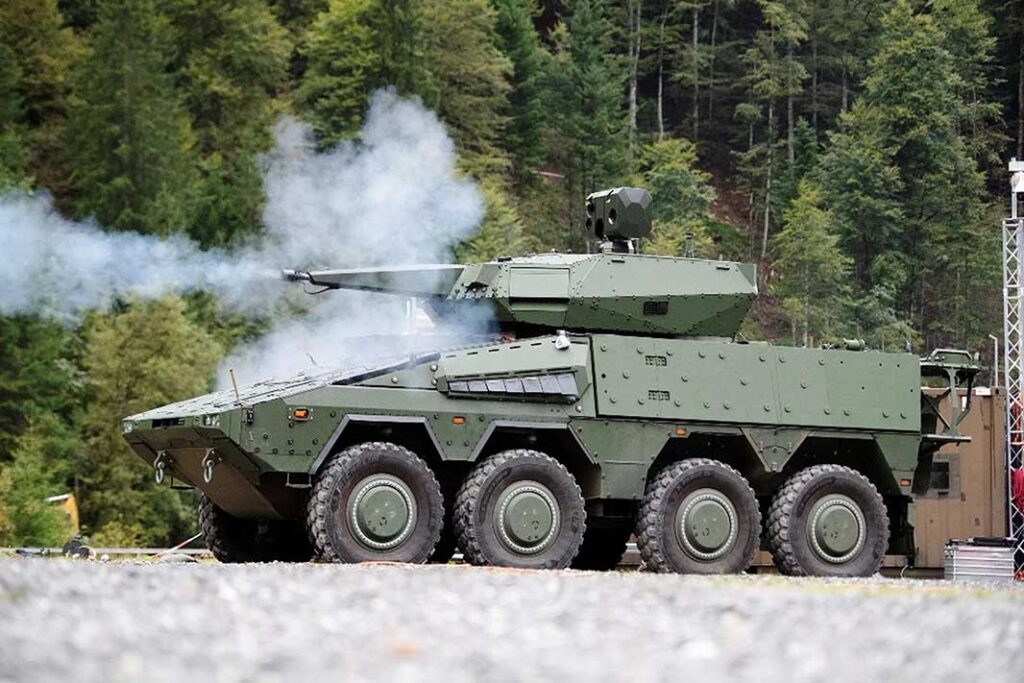
And then there is the timeline. The firm order is to be signed in December 2026, but the option tranches run from 2030 to 2035. Anyone considering what the second tranche might look like today is planning for a threat situation that no one can seriously predict. Russia has ramped up its arms production, NATO is discussing five percent targets, Ukraine is fighting with limited reserves — and the second half of the German wheeled vehicle fleet will arrive in the mid-2030s. This is not a criticism of the industry, which would deliver what is ordered. It is a criticism of a planning process that optimizes budget years instead of decades.
Additionally, there is the personnel problem that cannot be solved by any order. The Bundeswehr reports with 186,700 soldiers the highest number in 13 years and thus reaches the target range of 186,000 to 190,000 for 2026 — but the target of 260,000 remains far off, and the order backlog is growing faster than the troops. 1,800 Boxers need crews, trainers, workshop personnel. Equipment can be purchased, soldiers cannot. Germany orders vehicles that it cannot staff today — and hopes that this will change by the time of delivery.
Catalog Instead of Strategy
In the end, a paradox remains: The largest land vehicle order in the history of the Bundeswehr is industrial policy with defense rhetoric. It secures jobs, stabilizes the order book of a global corporation, and provides the troops with urgently needed platforms. But it does not answer any of the strategic questions: Why a navy that does not receive frigates? Why an army that buys wheeled armored vehicles while the main battle tank of the future is being developed nationally? Why a procurement that will be signed in 2026 and ends in 2035, in a threat situation that is acute in 2026?
Anyone spending 25 billion on existing vehicles while future systems are dying has no strategy — they have a catalog. Germany orders what it knows instead of developing what it needs. And therein lies the real turning point: not in the transition to more defense, but in the departure from the ability to develop defense together. The F126 gap is filled. The strategic gap remains open.
Germany has placed a record order for 1,800 Boxer armored vehicles worth 25 billion euros, expected to be signed in December 2026. This decision compensates for the cancellation of the F126 frigates and reflects a shift in defense strategy towards land systems. The order includes various vehicle types, such as air defense and self-propelled howitzers, highlighting the focus on existing capabilities rather than new developments.
- Germany has ordered 1,800 Boxer armored vehicles for 25 billion euros.
- The contract is expected to be signed in December 2026.
- The order compensates for the cancellation of the F126 frigates.
- The Boxer program includes various vehicle types, including air defense and self-propelled howitzers.
- The procurement reflects a shift in defense strategy towards land systems over naval capabilities.