
Will the U.S. Open a "Second Front" in the Middle East? Houthi Forces Warn: If Involved in the Conflict, They Will Face "Heavy Strikes"
[Global Times Special Correspondent in the U.S. Xiao Da, Global Times Special Correspondent Wang Yi] The conflict between the Houthi armed forces in Yemen and Saudi Arabia is escalating in a spiral manner. The Houthis have frequently launched ballistic missiles and drones at Saudi Arabia's capital Riyadh and military bases, causing serious casualties and property losses in attacks on Riyadh International Airport and Saudi oil facilities, forcing multiple international airlines to suspend flights to Riyadh. Faced with repeated domestic setbacks and a strained defense system, Saudi Arabia has urgently sought assistance from the U.S., requesting direct military intervention. The Houthis have publicly warned that if the U.S. participates in the "aggression against Yemen," they will "strike heavily at all U.S. interests in the region." Meanwhile, Saudi Arabia's request has put U.S. President Trump, who is facing pressure from midterm elections, in a dilemma: if he resumes bombing the Houthis, it will not only further drive up global energy prices but may also drag the U.S. into a second quagmire in the Middle East after the Iran war; if he continues to stand by, it could undermine the foundation of the U.S.-Saudi alliance. With Riyadh vowing to "respond seriously," the regional situation may slide toward a more dangerous cliff.
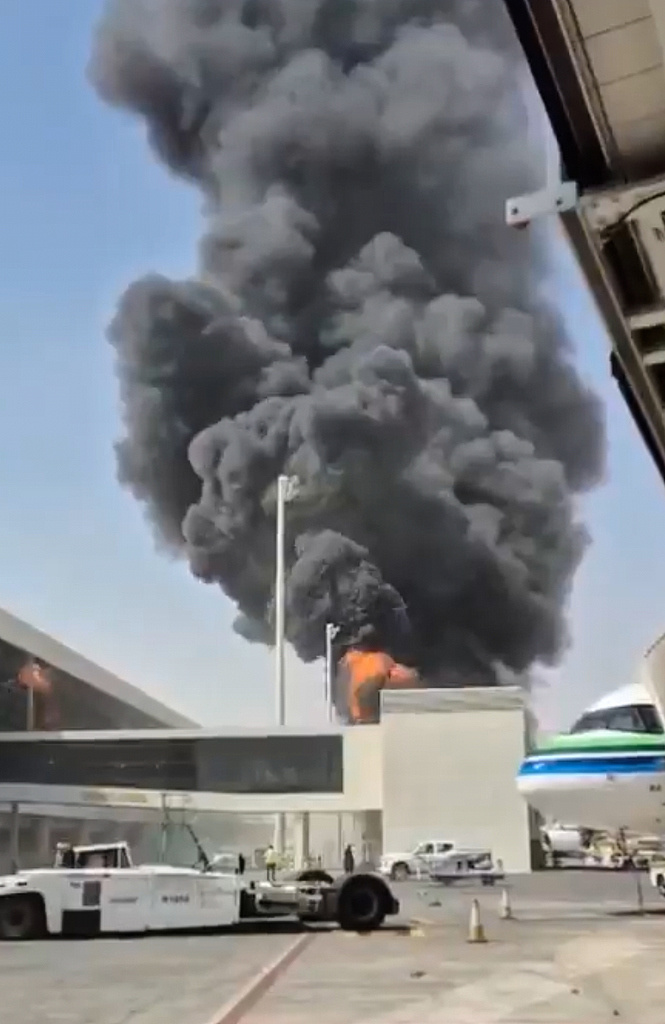
Saudi Counterattack: 119 Airstrikes Launched in 24 Hours
The military conflict between Saudi Arabia and the Houthi armed forces in Yemen continues to escalate. According to AFP, after the Houthis continuously attacked targets within Saudi Arabia, the Saudi side has intensified military operations within Yemen. Houthi military spokesman Yahya Saree stated on the 13th that in the past 24 hours, Saudi Arabia has launched 119 airstrikes and missile attacks on the Yemeni capital Sanaa and several other locations, resulting in casualties. Saree vowed that the Houthis would "continue to escalate military operations within Saudi Arabia, using 'blockade for blockade' and 'escalation for escalation' to strike at Saudi enemy reinforcements until the aggression stops."
On the previous day, Houthi Political Bureau member Mohammed Bukhaiti issued a stern warning to the U.S.: if the U.S. intervenes in the Yemen conflict, the organization will "not hesitate" to deliver a "heavy blow" to the U.S. and all its interests in the region. He also urged employees at Saudi oil facilities and airports to "stay away from these locations," stating that these sites have become "legitimate targets for attack."
Previously, the Houthis had launched missiles and drones into Saudi territory for several consecutive days. On the 10th, Riyadh's King Khalid International Airport was attacked by missiles and drones, resulting in at least 13 deaths and over 300 injuries. The ongoing security risks have forced Saudi Arabia to further extend the airport's closure time. According to Reuters on the 12th, Saudi Arabia has extended the closure measures for Riyadh International Airport until this Saturday. Many airlines have also extended the suspension of flights to and from Riyadh.
Reuters reported that the atmosphere in Riyadh remains tense. On the evening of the 12th, citizens received government alerts on their phones warning of a "hostile aerial threat," which was later announced to have been successfully intercepted. This was the first time in weeks that Riyadh used the mobile alert system.
According to the Saudi Press Agency, multiple explosions were heard in Riyadh on the evening of the 12th. Turki al-Maliki, spokesman for the Saudi-led coalition, stated that the coalition intercepted and destroyed missiles launched by the Houthis toward Riyadh that day. Saudi Arabia vowed to respond "seriously" to the deadly attacks launched by the Houthis. Saudi Energy Minister Abdulaziz bin Salman stated at the World Petroleum Congress held in Riyadh on the 12th: "The events of recent weeks are very serious. Our response must also be equally serious."
U.S. in a Dilemma
The New York Times on the 12th quoted Saudi government officials revealing that after the attack on Riyadh airport, Saudi Arabia requested "emergency defense support" from the U.S. Saudi officials stated that the U.S. needs to "intervene as soon as possible" to assist the Saudi-led coalition in striking the Houthis. In response, President Trump stated on the 12th: "The actions of the Houthis are very bad. They are behaving very poorly. This is absolutely unacceptable." On the day of the attack on Riyadh airport, Trump was also asked during a press interview at the White House whether the U.S. would support Saudi Arabia in striking the Houthis. He responded at the time: "There is a possibility. We will look into it."
"Will the U.S. open another front in the Middle East?" U.S. CNBC posed this question, stating that such a move could embroil the U.S. in a second war beyond the Iran conflict. The report noted that supporting Saudi Arabia militarily is costly. Middle East political expert at the Council on Foreign Relations, Cook, stated: "After more than seven months of the U.S.-Iran war, people are beginning to question whether the U.S. still has the capacity to wage another war against the Houthis. If the U.S. intervenes in the Yemen situation, can it return to fighting Iran when necessary, and can it prepare for emergencies in other parts of the world?"
The British Guardian stated that for Trump, the most important thing right now is how to ensure the Republican Party wins next month's congressional midterm elections. To this end, Trump has been trying to put the Iran and Yemen conflicts on hold, even angrily blaming the surge in U.S. diesel prices on Ukraine's attack on Russian oil refineries. The report noted that since the U.S. efforts to strike the Houthis have been thwarted in 2025, the U.S. has maintained a unilateral ceasefire agreement with the Houthis. After hostilities between Saudi Arabia and the Houthis erupted again this summer, the agreement has quietly been renewed. It is said that Trump has previously rejected Saudi Arabia's requests for assistance twice. Will he refuse a third time?
U.S. Bloomberg analysis stated that although the Saudi Crown Prince had previously promised to invest trillions of dollars in the U.S. to strengthen ties with the Trump administration, the U.S. has so far only provided intelligence, target designation, aerial refueling support, and sent military advisors, but has not agreed to direct combat. The report stated that Trump is facing a difficult choice. If the U.S. intervenes directly, it may face retaliation from the Houthis in the Red Sea shipping lanes, further driving up oil prices and making the Republican midterm election prospects even more difficult. Trump stated that he is "considering joining Saudi Arabia in striking the Houthis," but U.S. officials were still in contact with the Houthis in Oman last month, trying to maintain the fragile ceasefire agreement with them. Chatham House Middle East project researcher Hall believes that domestic support for U.S. involvement in military action in Yemen is weak, and Saudi Arabia "largely has to fight alone."
Middle East Fears Conflict Spread
U.S. Fox News Channel reported on the 12th that the escalation of the conflict between the Houthis and Saudi Arabia has raised concerns that the war in the Middle East may expand to another front. The escalating violence could draw Saudi Arabia deeper into regional conflicts and may impact the U.S. midterm elections. Additionally, there is growing global concern over the security of another critical maritime trade route: the previous blockade of the Strait of Hormuz has already caused oil prices to soar, and now the Bab el-Mandeb Strait, connecting the Red Sea, may also be forced to close due to the impact from Yemen, forcing global shipping companies to take longer detours around Africa, further disrupting global trade transport.
The New York Times stated that the conflict between the Houthis and Saudi Arabia further exacerbates the turmoil in the oil-rich Persian Gulf region, which has already been severely impacted by the U.S.-Iran war.
Bloomberg reported that the escalating conflict between the Houthis and Saudi Arabia is heightening anxiety across the region. More and more countries in the Middle East are worried that if the situation escalates further, the conflict may spread beyond Saudi Arabia.
Saudi Arabia conducted 119 airstrikes against Houthi targets in Yemen following missile and drone attacks on Riyadh. The Houthi forces warned of severe repercussions if the U.S. intervenes in the conflict. Saudi Arabia has requested urgent military support from the U.S. as tensions escalate in the region.
- Houthi forces launched missile and drone attacks on Riyadh and Saudi military bases.
- Saudi Arabia conducted 119 airstrikes in response to Houthi attacks within 24 hours.
- Saudi Arabia requested urgent military support from the U.S. amid escalating conflict.