
Willing Coalition meets on August 24 in Kyiv — the Reassurance Force remains a promise without command
 Dr. Klaus Weber
Willing Coalition meets on August 24 in Kyiv — the Reassurance Force remains a promise without command
Three meetings in Kyiv since March 2025, 30 participating states, an EU Council President traveling personally — and still no published troop numbers, no command structure, no mandate for deployment. This is the balance sheet with which the Willing Coalition will meet for the third time in the Ukrainian capital on August 24, Ukraine's Independence Day. The Kyiv Independent reported exclusively on August 21 that, alongside President Volodymyr Zelenskyy, EU Council President António Costa, Finland's President Alexander Stubb, and Luxembourg's Prime Minister Luc Frieden will personally travel to Kyiv; the majority of the over 30 states will participate online in a hybrid format.
A summit with symbolic power — and a troop without structure

The date is programmatic: Independence Day is the most symbolic date the coalition could choose. It is also the first meeting since the inauguration of the new British Prime Minister Andy Burnham on July 20 — if he were to attend in person, it would be his first trip to Ukraine as head of government. At the last meeting on July 13 in France, Poland announced plans to hold joint maneuvers with British and French troops in the fall. The purpose: The coalition is to fulfill its pledge to station a so-called Reassurance Force in Ukraine after a ceasefire — on land, in the air, and at sea, to train the Ukrainian armed forces and deter renewed Russian aggression.
However, what exactly this force is supposed to be remains unknown to this day. No target size, no national distribution, no Rules of Engagement, no decision-making procedure for deployment. Poland, whose army is now the largest in Europe, has ruled out troops on Ukrainian soil and is only offering logistical support — in addition to preparing for a permanent stationing of British and French units in Poland itself. Polish Prime Minister Donald Tusk clearly articulated the principle behind this division of roles on July 14: "Europe must take greater responsibility for its own security."
The institutional void
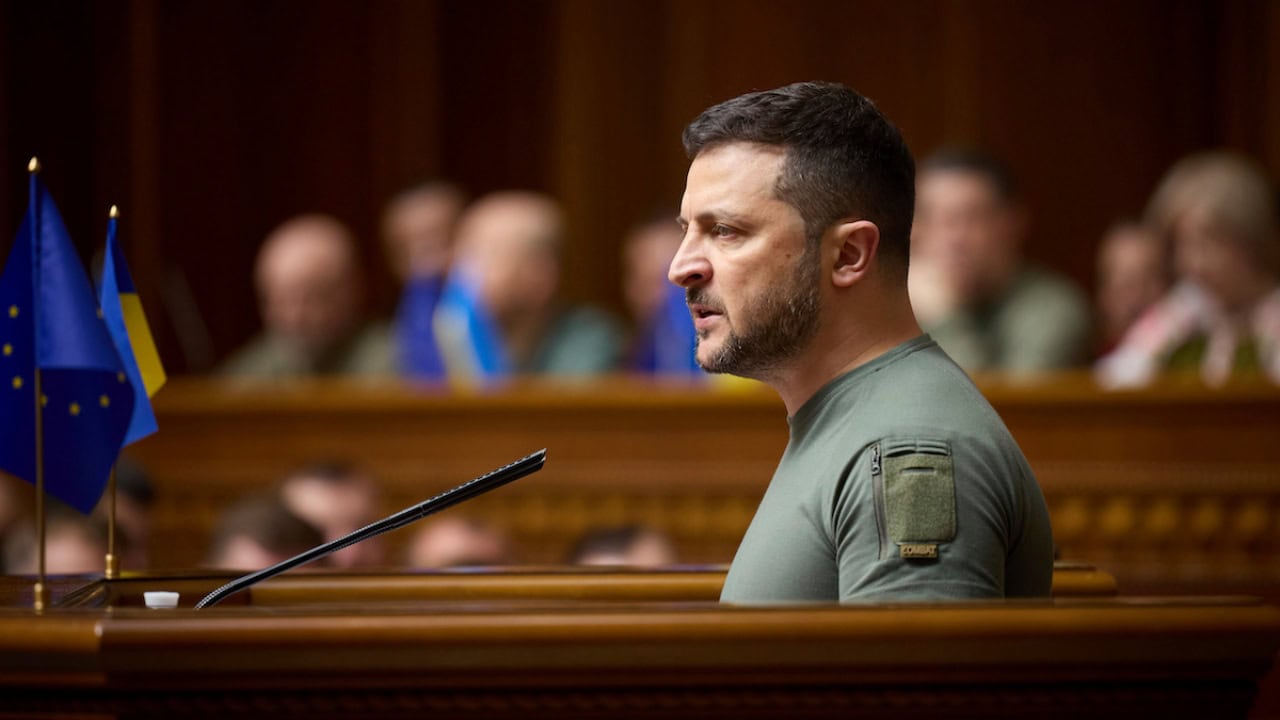
That the EU Council President is personally traveling to Kyiv is remarkable — because the Willing Coalition is a format that has deliberately emerged outside of EU institutions. France and the UK founded it in March 2025 because CSDP, EU Battlegroups, and NATO were considered ineffective in the context of Ukraine. Now the EU is knocking on the door of a format that documents its own inadequacy. This is institutional self-description: Those who need a parallel alliance because their own structure does not work cannot expect that joining the symbol will repair the structure.
The fundamental problem is the same one I analyzed back in February: Europe is supposed to provide security guarantees that it cannot institutionally deliver. The Reassurance Force is not a NATO contingent under an established commander, but a political promise of an ad-hoc coalition. The question is not whether enough soldiers would be available — the question is who has command in a serious situation, who defines the rules of engagement, and which state bears the political responsibility for losses. Who commands, not who recruits — that will determine whether the Reassurance Force becomes an army or just a logo.
The time problem: Exercises for a ceasefire that does not exist
Tusk made no secret at the July meeting that he does not expect a ceasefire anytime soon: Russia's stance is "absolutely rigid," an escalation is generally expected, and Moscow will want to prolong the war "at least until winter." This is the core of the institutional dilemma: The coalition is training in the fall for a deployment whose trigger — a ceasefire — does not exist and whose date no one can name. They are practicing deterrence for peace while the war continues. And they are practicing on Polish soil, not Ukrainian, because the political risk appetite ends where their own soldiers would be stationed.
Additionally, there is the industrial dimension: On July 13, Ukraine and nine European partners — Denmark, Germany, France, the UK, Italy, the Netherlands, Norway, Sweden, and Spain — established an Anti-Ballistic Missile Coalition to support the Ukrainian Freya project, a more affordable Patriot alternative from the Ukrainian company Fire Point. The goal: to have an operational system within twelve months. Here too, the pattern is evident: coalitions are multiplying, but capabilities are delayed. A coalition per problem does not replace a solution — it postpones the decision.
"Europe must take greater responsibility for its own security." — Donald Tusk, July 14, 2026
Institutionalization without substance
Three Kyiv meetings in 18 months, an EU Council President on a plane, a new British Prime Minister planning his first foreign trip to Kyiv — the Willing Coalition is institutionalizing itself. It is gaining a rhythm, a symbolism, a presence. But institutionalization is not the same as capability. The coalition has now become an institution — only the force it promised is not. A summit on Independence Day is symbolic politics with a date; the Reassurance Force remains a promise without a date. Those who provide logistical support and do not send soldiers have already made the political decision — without stating it.
The bitter point: The coalition is the most successful European security format in years, precisely because it has not institutionalized anything. As soon as it does — with a fixed seat, fixed personnel, fixed procedures — it will inherit the same paralysis it sought to avoid. Perhaps that is the real test of August 24: not whether the leaders appear, but whether they manage to create an institution that is not one.
The Willing Coalition convened in Kyiv on August 24, 2025, to discuss the establishment of a Reassurance Force for Ukraine. Despite the attendance of key leaders from 30 states, no troop numbers or command structure were disclosed. Poland has ruled out sending troops but will provide logistical support, highlighting the coalition's ongoing challenges in defining its military role.
- The Willing Coalition is meeting in Kyiv on August 24, 2025, to discuss military support for Ukraine.
- No troop numbers or command structure have been published yet.
- The coalition includes 30 states, with key leaders attending in person.
- Poland has excluded sending troops to Ukraine but offers logistical support.
- The Reassurance Force remains undefined with no clear engagement rules.