
Analysis & Reports
AI-assisted analysis of military-related information from public sources
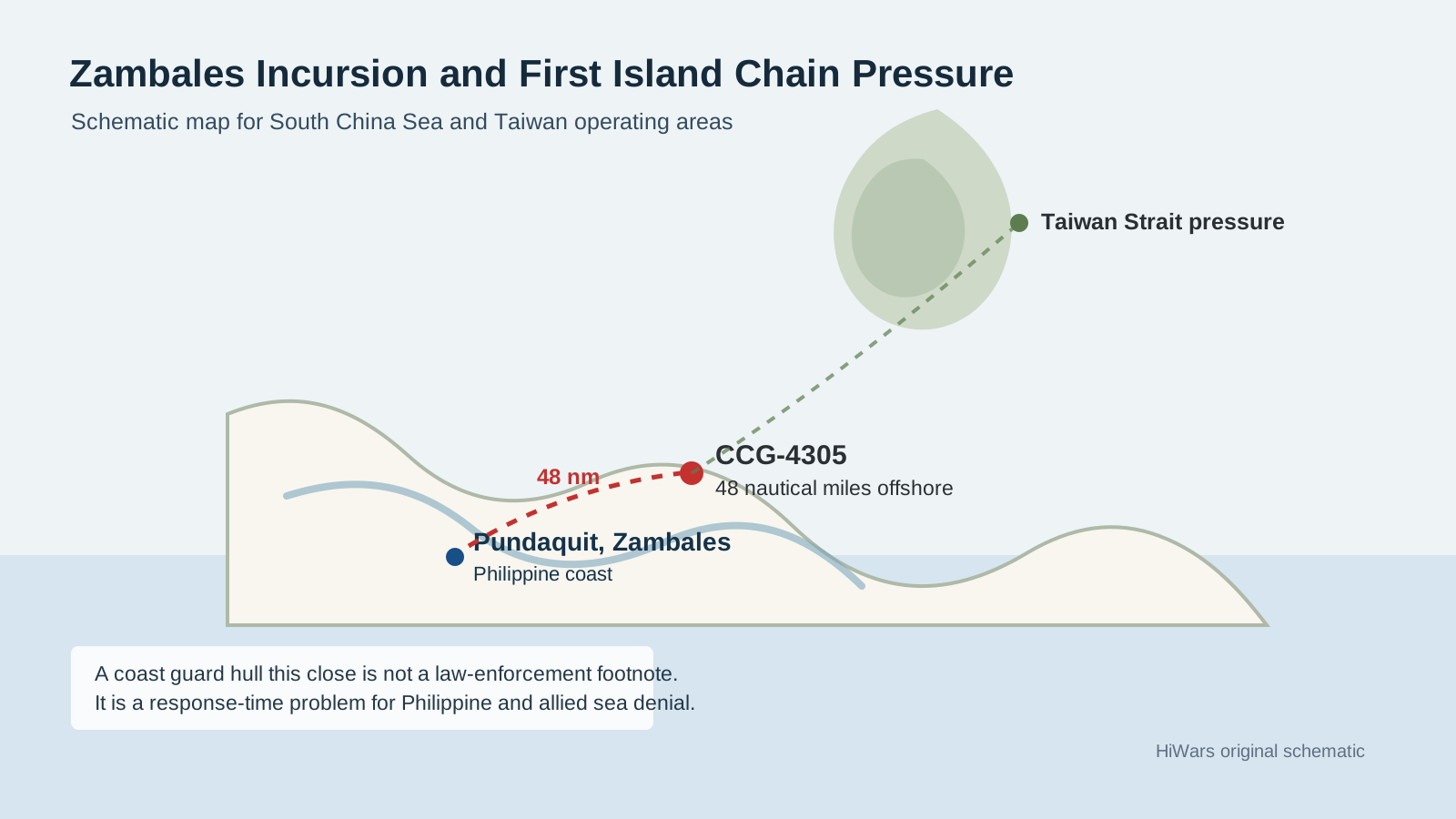
China’s 2026 CCG-4305 Patrol 48 Nautical Miles Off Zambales Tests Philippine Sea Denial
Chinese Coast Guard vessel CCG-4305 patrolled 48 nautical miles off Zambales on May 19, 2026, prompting a response from the Philippine Coast Guard. The incident is part of a broader pattern of Chinese maritime activity, including the presence of multiple vessels in Philippine waters. This situation raises concerns about sovereignty and the normalization of Chinese incursions into contested areas.
 Marcus ChenMon May 25 2026Loading...
Restraint or Recalibration? The 2026 National Defense Strategy and America's Shifting Posture in the Indo-Pacific
The 2026 National Defense Strategy emphasizes U.S. homeland defense over Indo-Pacific commitments, leading to the redeployment of warships to Venezuela. Japan is increasing defense spending and enhancing cooperation with the U.S. and Australia, while concerns about U.S. strategic restraint regarding Taiwan have arisen among allies. The strategy reflects a shift towards deterrence and burden-sharing in the region.
Marcus ChenTue Mar 31 2026Loading...Strategic Ambiguity or Strategic Retreat? Decoding the 2026 Indo-Pacific Defense Strategy
The Pentagon released the 2026 National Defense Strategy, emphasizing deterrence by denial in the Indo-Pacific. The strategy calls for increased defense spending from allies and outlines plans for enhanced military presence, including rotational deployments and advanced weapon systems. However, it notably omits explicit commitments regarding Taiwan, raising concerns about deterrence credibility. Allies are responding with increased defense budgets, while the U.S. seeks to balance its commitments between the Indo-Pacific and the Western Hemisphere.
Marcus ChenSun Mar 15 2026Loading...The Indo-Pacific Dilemma: How the Iran War Is Testing America's Strategic Commitment
The U.S. Armed Forces redeployed military assets, including THAAD interceptors and a carrier strike group, from the Indo-Pacific to the Middle East amid the ongoing Iran war. This shift has raised concerns among regional allies about American commitment to their security, as military operations in Iran and Venezuela have prioritized resources away from Asia. The financial burden of these operations has also strained U.S. military support for Taiwan and Japan, while China intensifies its military activities in the region.
Marcus ChenSat Mar 14 2026Loading...
The First Island Chain Strategy: US Redefines Indo-Pacific Deterrence Amid Fiscal Constraints and Alliance Tensions
The United States unveiled a new defense strategy focusing on deterring China in the Indo-Pacific, emphasizing the first island chain. This strategy demands greater defense contributions from allies, particularly Japan, South Korea, and the Philippines, while China continues its military modernization. The U.S. aims to maintain military superiority through forward-deployed forces and allied contributions, but faces challenges in ensuring commitment and reliability among regional partners.
Marcus ChenThu Mar 12 2026Loading...
The Credibility Paradox: US Indo-Pacific Strategy Between Deterrence and Doubt
The U.S. military has adjusted its strategic posture in the Indo-Pacific, prioritizing homeland defense while increasing demands for regional allies to enhance their defense spending. This has led to concerns among allies about the reliability of U.S. security guarantees, especially as military assets are redeployed to other regions. China is responding by bolstering its military capabilities, indicating a shift in regional dynamics and security partnerships.
Marcus ChenTue Mar 10 2026Loading...
Strategic Tradeoffs: How America's Hemispheric Pivot Reshapes Indo-Pacific Security
The U.S. military has prioritized hemispheric defense following the capture of Venezuelan dictator Nicolás Maduro in January 2026, reallocating naval assets from other regions. Indonesia plans to enhance its maritime capabilities by acquiring the Italian aircraft carrier Giuseppe Garibaldi, while the Philippines deepens military cooperation with the U.S. through extensive joint exercises. Concurrently, India is strengthening defense ties with the U.S. as regional security dynamics shift.
Marcus ChenMon Feb 23 2026Loading...When You Can't Build Enough Ships, Call It a Strategy
The U.S. Navy is adapting its strategy due to shipbuilding limitations, implementing 'tailored force packages' instead of traditional carrier strike groups. This shift is a response to the inability to meet operational demands, as the Navy currently operates 11 aircraft carriers, unchanged since 2006. The reliance on unmanned systems is increasing, but their effectiveness in contested environments remains unproven. China's naval expansion further complicates U.S. strategic planning.
Marcus ChenWed Feb 11 2026Loading...


