
故障频发,还经常外出活动,英国航母又出问题了
Recently, the British aircraft carrier "Prince of Wales" participated in the NATO "Dynamic Mongoose-2026" exercise for 10 days and was found to have a "minor technical issue" while docked in the southwestern Norwegian city of Stavanger. Although the UK Ministry of Defence attempted to downplay the impact of this incident, stating that the carrier is expected to set sail in the coming days, there are still doubts about the reliability of this carrier, which has faced numerous issues since its commissioning.
Frequent Carrier Failures
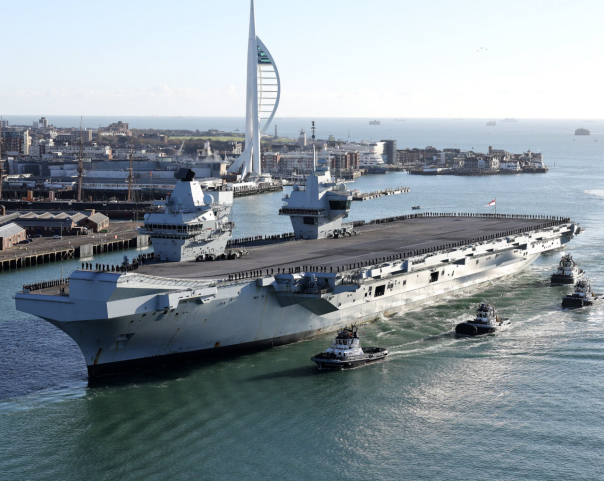
Data Image: British Navy "Prince of Wales" aircraft carrier
Since its maiden voyage, the British "Prince of Wales" aircraft carrier has encountered a series of problems, such as water ingress in the engine room and the breaking of the propeller shaft coupling. Some media reports suggest that this latest failure may be related to the propeller shaft. Military observer Cui Yiliang believes that the recurring issues with the propeller shafts of the "Prince of Wales" and its sister ship "Queen Elizabeth" are not inherent design flaws but rather deficiencies in the construction phase.
Cui Yiliang:
The drive shafts of the two "Queen Elizabeth" class aircraft carriers are nearly 100 meters long, connecting the propellers to the power system, with a rotation speed of up to 150 revolutions per minute, and the propellers weigh about 33 tons, which imposes extremely stringent requirements on the installation precision of the drive shafts.
For example, in August 2022, while en route to a joint military exercise involving the US, Canada, and the UK, the starboard propeller shaft of the "Prince of Wales" unexpectedly broke and was removed, with repair time exceeding six months. During the maintenance process, technicians also discovered that the port propeller was not aligned properly during installation. Additionally, the propeller shaft couplings of both carriers have also experienced issues. Therefore, it would not be surprising if the shaft system of the "Prince of Wales" fails again.
Decline of the Military-Industrial Sector
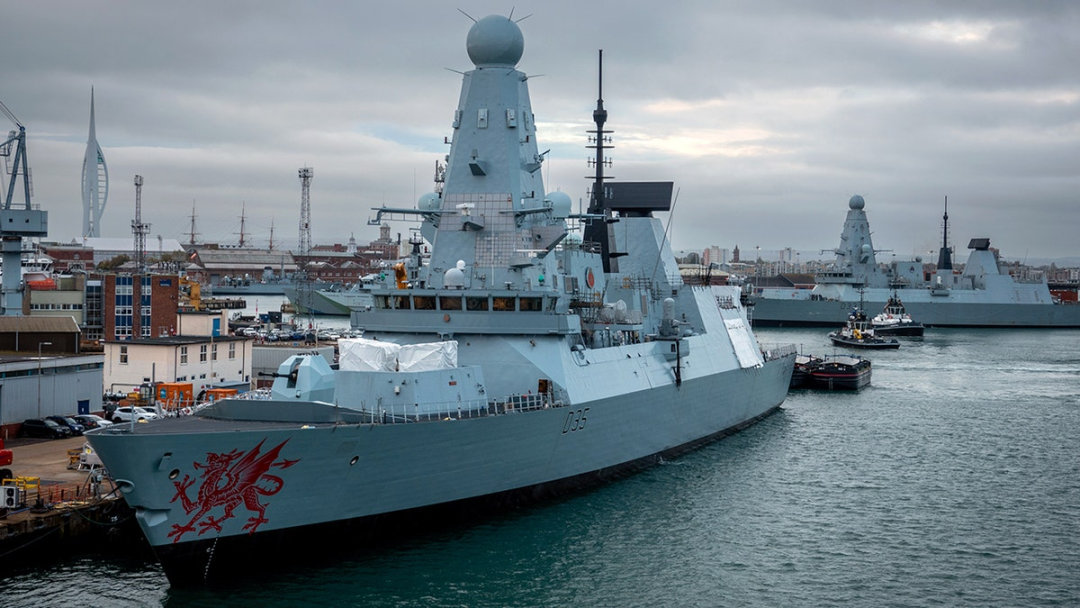
Data Image: British Navy Type 45 destroyer "Daring"
Cui Yiliang analyzes that the two aircraft carriers, which the UK invested heavily in, have continuously exposed reliability shortcomings, and other major combat vessels have also faced frequent accidents, reflecting a serious hollowing out of the UK's military-industrial supply chain.
Cui Yiliang:
First, even if the current UK civilian shipbuilding industry is combined with the military shipbuilding industry, its global market share is so low that it can be ignored.
Second, during the Cold War, the UK downgraded its aircraft carrier development strategy from large fleet carriers to light carriers, and by the time it began constructing the "Queen Elizabeth" class carriers, it had already lost its touch.
Third, aside from aircraft carriers, other British vessels are also plagued with problems. For instance, the six Type 45 destroyers frequently experience collective "breakdowns," and the newly developed Type 26 and Type 31 frigates have also faced delivery delays, while the latest "Tide" class supply ships are being built by a South Korean shipyard.
Maritime Power Insufficient
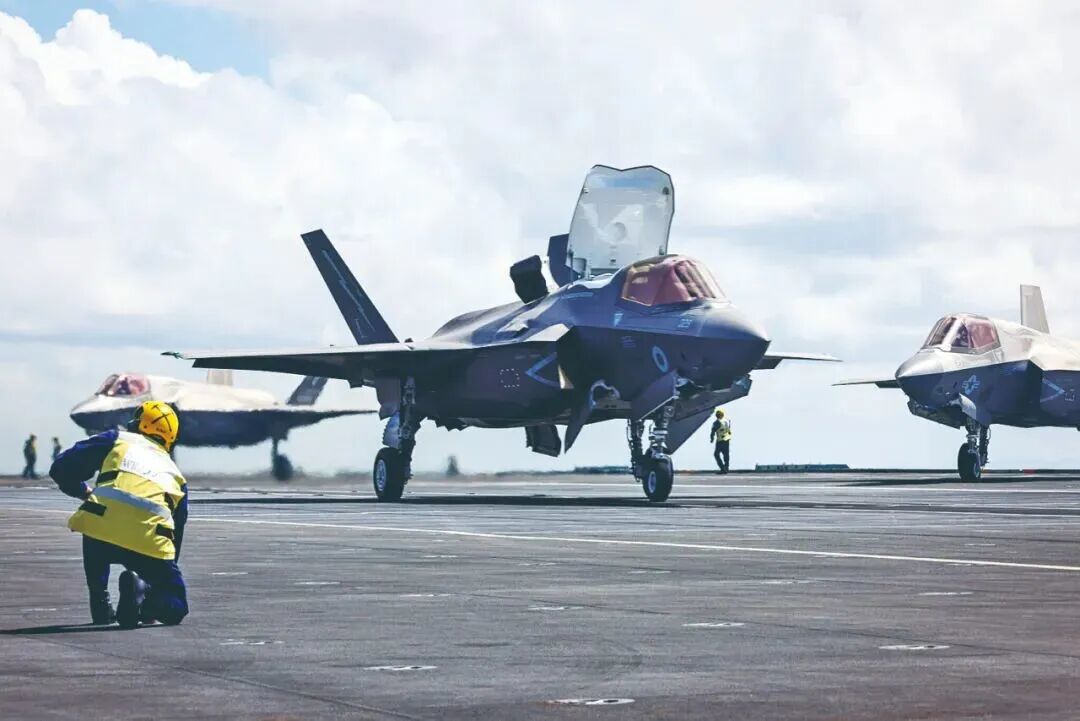
Data Image: British Navy F-35B fighter jet taking off from the "Prince of Wales" aircraft carrier (Source: China National Defense News)
In recent years, the UK has continuously pushed for its aircraft carriers to conduct so-called cruise activities in overseas regions and participate in NATO joint military exercises, attempting to showcase its global maritime presence through its carriers. Cui Yiliang believes that the frequent failures indicate that the UK's maritime power is unable to support its return to the era of the "Empire on which the sun never sets."
Cui Yiliang:
Despite the frequent failures of the UK's "Queen Elizabeth" class aircraft carriers, they remain important maritime platforms relied upon by the UK and NATO. These two carriers are currently the only means for the UK to project power in distant seas, and many maritime operations under the NATO framework also use these two carriers as flagships.
However, the problem lies in the UK's military-industrial capabilities "holding it back." If this issue is not resolved soon, the means for the UK and NATO to engage in distant seas will continue to diminish.
Reporter: Hu Chengcheng
英国航母HMS威尔士亲王号在挪威斯塔万格停靠期间遇到技术问题,此前参与了北约演习。尽管国防部保证航母将很快出航,但由于其历史上的技术问题,关于其可靠性的担忧依然存在。这一情况突显了英国军事工业基础及其维持海军作战能力的更广泛问题。
- HMS威尔士亲王号在北约演习后遇到技术问题。
- 英国国防部淡化了影响,预计航母将很快出航。
- 该航母有可靠性问题的历史,包括螺旋桨轴问题。
- 人们对英国军事工业基础及其支持海军作战能力的能力表示担忧。
- 该航母是英国和北约海上存在的重要平台。