
Nepalese Civil War
The Nepalese Civil War from 1996 to 2006 was the Maoist insurgency against the Nepali state that transformed the country's political order, weakened the monarchy, and contributed directly to the eventual abolition of the royal system. The conflict combined rural insurgency, state repression, political crisis, and negotiated transition, turning what began as a countryside rebellion into a national struggle over sovereignty, representation, and constitutional legitimacy. The conflict links Maoist strategy, uneven development, monarchy crisis, countryside-to-capital political pressure, and the difficulty of turning insurgent war into a new constitutional order. The war ultimately remade the state itself instead of ending with a simple restoration of the old regime.
ATTACKER
 Pushpa Kamal Dahal
 Sher Bahadur Deuba
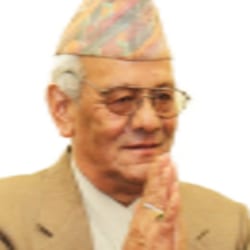 Lokendra Bahadur Chand
 Surya Bahadur Thapa
 Girija Prasad Koirala
 Birendra
 Gyanendra
The insurgency grew from social inequality, weak rural inclusion, and dissatisfaction with the political order under the monarchy.
The Nepalese Civil War grew out of long-standing inequality, marginalization in rural regions, and dissatisfaction with a political system that many saw as failing to deliver meaningful change. Maoist insurgents turned that grievance into armed struggle.
That context matters because the war was not just about ideology. It was also about who had access to state power and development.
The conflict combined countryside insurgency with a widening national political crisis that eventually shook Kathmandu itself.
The Maoist strategy relied heavily on rural organization and insurgent pressure outside the main urban centers. Over time, however, the war could not be contained as a remote countryside problem; it became a national crisis.
Nepal thus serves as an example of an insurgency reshaping the center by first destabilizing the periphery.
The monarchy's political crisis and state repression changed the balance of the war and weakened the legitimacy of the old order.
As the conflict continued, the monarchy's political role became increasingly destabilizing rather than stabilizing. State responses to insurgency did not restore broad confidence in the old system.
The war became as much about the legitimacy of the monarchy as about defeating the insurgents.
The war ended through negotiation and paved the way for the republic-era transformation of Nepal's political order.
The conflict ended through a political process that moved beyond simple disarmament. Nepal's peace process became part of a larger reworking of the constitution and the state's basic form.
The war ended by transforming the political system, not by returning to the prewar status quo.
The conflict should be treated as both an insurgent war and a state-transformation crisis centered on monarchy, representation, and constitutional order.
Nepal's civil war should not be treated as a narrow Maoist security problem. Its real significance lies in how insurgency, monarchy crisis, and constitutional change became inseparable.
An integrated understanding of these intertwined elements provides greater insight than a narrow focus on rebel activities.
No analysis & reports about Nepalese Civil War
No discussions about Nepalese Civil War yet
Start the first discussion