
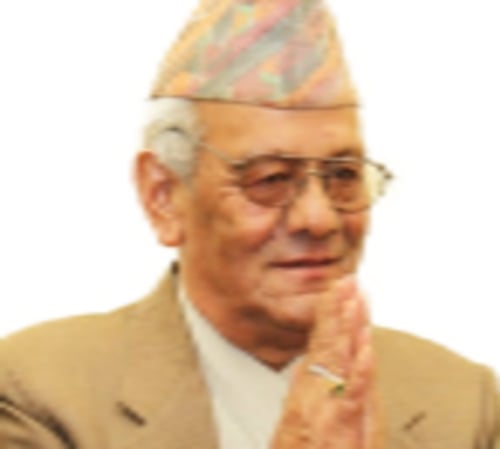
Lokendra Bahadur Chand
Lokendra Bahadur Chand was one of the political figures repeatedly drawn back into leadership during Nepal's crisis years, when monarchy, party politics, and insurgency were colliding in unstable ways. He is historically important not simply because he served as prime minister more than once, but because his career helps explain how states in prolonged crisis recycle experienced establishment figures in search of temporary control. His significance lies in his role within the old royal-panchayat and post-panchayat political order, his place in the turbulence preceding the end of monarchical centrality, and the broader lesson that crisis governments often rely on familiar insiders even when that familiarity cannot solve the structural conflict underneath. He illustrates the political management layer that exists alongside insurgency and constitutional breakdown.
- Nationality
- NPL
- Born:
- February 15, 1940
- Conflicts
- Nepalese Civil War
- Tags
- Needs Review
Chand's importance begins with the repeated return of establishment figures during instability.
Lokendra Bahadur Chand is historically important because political systems under strain often bring back known insiders when they lack better options. His repeated premierships belong to that pattern of crisis management through elite recycling.
This pattern illustrates how armed conflict and constitutional instability are often managed politically through temporary personnel solutions.
Chand mattered because his career sits close to the unraveling of Nepal's older royal-centered system.
Chand mattered because he was part of a governing class trying to preserve order as Nepal's old political framework was weakening. His career helps connect parliamentary maneuver, royal authority, and the crisis of the existing state model.
His significance extends beyond a mere list of offices and lies in the broader political context.
Chand's role shows how governments tried to navigate rebellion without resolving the deeper conflict.
Insurgencies do not interact only with armies; they also interact with governments that must improvise coalitions, legitimacy claims, and temporary political responses. Chand's career reflects that governing dimension of conflict.
Political management is one of the ways states try to survive war short of military resolution.
Chand mattered, but his return to office also reveals how little elite continuity alone could solve.
Chand matters because his repeated relevance also underlines the limits of establishment continuity. Bringing back experienced insiders may slow instability, but it cannot by itself resolve a conflict rooted in social, constitutional, and military breakdown.
This broader frame adds more analytical value than a sparse office-based biography.
Lokendra Bahadur Chand is a figure whose importance lies in crisis-era elite recycling, late-monarchy governance, and the political management of insurgency in Nepal.
Lokendra Bahadur Chand is a Nepalese politician and former prime minister whose career exemplifies how states in crisis recycle familiar elites. He belongs to the waning order of royal-centered governance and connects the Maoist insurgency to the political improvisation of governments attempting to maintain control.
Concise public material on Chand emphasizes his office chronology over deeper conflict analysis.
No analysis & reports about Lokendra Bahadur Chand
No discussions about Lokendra Bahadur Chand yet
Start the first discussion