
Spanish-American War
The Spanish-American War began in 1898 as the United States moved from pressure over Cuba to armed conflict with Spain, driven by Cuban rebellion against colonial rule, American support for Cuban independence, media pressure, and the explosion of the USS Maine in Havana Harbor. The fighting lasted only ten weeks but carried strategic consequences across the Caribbean and the Pacific.
Key theaters included Cuba, with the Battle of San Juan Hill and the naval battle at Santiago de Cuba, and the Philippines, with the Battle of Manila Bay. The Treaty of Paris ceded Puerto Rico, Guam, and the Philippines to the United States, and Spain relinquished its claim to Cuba. Approximately 3,000 died in combat, but over 20,000 perished from disease.
The war connected anti-colonial rebellion, U.S. intervention politics, naval power, and Caribbean strategy, marking the end of the Spanish Empire and the rapid shift from a regional colonial crisis to a wider American imperial turn.
ATTACKER
 William McKinley
 Theodore Roosevelt
 George Dewey
 John Davis Long
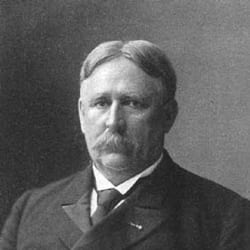 William Shafter
 Fitzhugh Lee
 Nelson Appleton Miles
 Alfonso XIII of Spain
 Ramon Blanco y Erenas
 Arsenio Linares y Pombo
 Pascual Cervera y Topete
The war grew from Cuban rebellion, U.S. intervention pressure, and the political shock surrounding the destruction of USS Maine.
The conflict grew out of Cuba's struggle against Spanish rule, U.S. concern over instability and civilian suffering, and mounting domestic pressure for intervention. The explosion of USS Maine intensified public and political demands for action, but it mattered because it entered an environment already primed to reinterpret crisis through national honor and humanitarian language.
That combination narrowed the final diplomatic space. Humanitarian rhetoric, strategic calculation, public emotion, and media pressure reinforced one another rather than checking one another.
The war resulted from the interaction of rebellion, domestic politics, and symbolic shock, rather than from a single cause such as the loss of the Maine.
The war's geography linked Cuban operations to larger naval routes and imperial positions in Puerto Rico, Guam, and the Philippines.
The war was rooted in Cuba, but its geography quickly widened beyond one island. Naval movement, blockade operations, and sea-lane control connected Caribbean campaigning to a larger imperial map that included Puerto Rico, Guam, and the Philippines.
This made maritime power central to the conflict's operational meaning. The war's short duration did not make it geographically narrow; instead, it demonstrated how a naval contest tied regional crisis to overseas acquisition.
The war thus functioned as both a Caribbean and a global imperial turning point.
The main belligerents were the United States and Spain, but Cuban insurgents and colonial populations were central to the war's political logic.
The main belligerents were the United States and Spain, but Cuban insurgents and civilians were central to the war's political logic. The conflict also affected Spain's wider empire, which means the war belongs to a much larger map than the Caribbean alone might suggest.
That layered actor picture matters. The war was never simply a duel between two navies. It was also a struggle over colonial legitimacy, insurgent agency, and the future distribution of imperial control.
Analyzing the war requires considering both intervention politics and anti-colonial rebellion within the same framework.
The war's civilian significance lay in how colonial populations were drawn into occupation, political transition, and new forms of imperial governance.
The war was brief, but its civilian significance was large because it transferred authority over multiple colonial spaces and reshaped the political futures of people in Cuba, Puerto Rico, Guam, and the Philippines. Intervention did not end the human consequences of imperial rule; it changed their institutional form.
The war's deeper meaning lies in connecting battlefield and naval outcomes to governance, occupation, and the contested politics of liberation versus empire.
A broader civilian perspective avoids a narrow U.S.-centric military narrative and shows why the war still matters in debates about intervention and imperial inheritance.
The Cuban rebellion, the Maine crisis, congressional action, the blockade, and declaration dates are distinct phases rather than a single trigger story.
Different timelines emphasize blockade action, congressional resolutions, Spain's response, or formal declaration dates. The distinction between these timelines reflects the difference between operational escalation and juridical recognition.
Claims about the USS Maine, media influence, and intervention motives are particularly susceptible to oversimplification because public memory often compresses a multi-layered crisis into a single explosion or slogan.
The conflict is notable for how rebellion, media pressure, executive action, and imperial consequence interacted in the move from crisis to war.
No analysis & reports about Spanish-American War
No discussions about Spanish-American War yet
Start the first discussion