
Ukrainian Crisis
The Ukrainian Crisis, also known as the Russo-Ukrainian War, was the political-security breakdown that began in February 2014 following the Euromaidan revolution, or Revolution of Dignity, and the collapse of Viktor Yanukovych's rule. Russia seized and annexed Crimea and supported paramilitaries in the Donbas against Ukraine's military, ending the post-Cold War assumption that Europe's borders were largely settled and creating the conflict architecture that later widened into full-scale war.
That escalation came in February 2022, when Russia launched a full-scale invasion of Ukraine, the largest conflict in Europe since the Second World War. It has produced a severe humanitarian and refugee crisis, with millions requiring aid and hundreds of thousands of deaths, and has disrupted global food supplies through blockades of Ukrainian ports. The crisis linked regime change, covert and overt military coercion, territorial seizure, proxy warfare, sanctions, and the long transition from political crisis into interstate and hybrid conflict.
ATTACKER
 Vladimir Putin
 Sergei Shoigu
 Valery Gerasimov
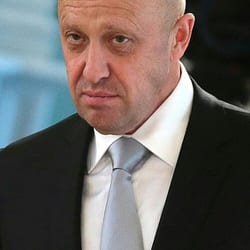 Yevgeny Prigozhin
 Alexander Zakharchenko
 Denis Pushilin
 Igor Girkin
 Volodymyr Zelenskyy
The crisis emerged from internal Ukrainian political upheaval and an immediate Russian move to exploit the resulting power vacuum.
The Ukrainian Crisis began as a domestic political rupture but quickly became an international security conflict. After the collapse of Yanukovych's rule, Russia moved rapidly to secure strategic positions in Crimea and to challenge the post-revolutionary Ukrainian state.
The transition from internal upheaval to external coercion means that the events of 2014 cannot be neatly categorized as solely a revolution or solely a war.
Russia's seizure and annexation claim over Crimea made territorial revisionism the center of the crisis.
Crimea turned the 2014 crisis into a decisive test of sovereignty and territorial integrity. Russian control on the ground, the disputed referendum, and broad international non-recognition established the legal and strategic baseline for everything that followed.
Crimea was not a side episode. It was the moment when the crisis ceased to be only about Ukrainian politics and became a confrontation over borders, force, and international rules.
The crisis widened as conflict in eastern Ukraine added proxy warfare, irregular forces, and sustained interstate confrontation.
Eastern Ukraine transformed the crisis from an annexation dispute into a longer war structure. Armed separatism, Russian support, Ukrainian mobilization, and contested narratives about legitimacy produced a conflict that was neither fully deniable nor fully conventional.
This matters because 2014 created the military architecture later widened in 2022. The Donbas front and Crimea question together formed the unfinished war that shaped the next decade.
The crisis changed civilian life through occupation, repression, displacement, and a long campaign of sanctions and diplomatic non-recognition.
The Ukrainian Crisis had immediate military consequences, but it also changed the legal and civilian environment in occupied and contested areas. Human-rights reporting, non-recognition policies, and sanctions became part of the crisis itself rather than merely reactions to it.
The crisis demonstrates how modern territorial coercion reshapes everyday life and diplomatic systems simultaneously.
The 2014 crisis should be treated as the foundational phase of the later Russo-Ukrainian war, not as a separate closed episode.
Source material on 2014 is abundant but often fragmented by legal, diplomatic, military, and propaganda frames. Those categories should remain distinct, but an emphasis on continuity highlights that the Ukrainian Crisis was the opening phase of a longer conflict that never genuinely stabilized.
Emphasizing continuity rather than a simple political-history summary shows why 2014 still matters when considering the wider war.
No analysis & reports about Ukrainian Crisis
No discussions about Ukrainian Crisis yet
Start the first discussion