Shahed-136

🇮🇷Iran, Islamic Republic of
Iran Aircraft Manufacturing Industrial Company (HESA)
2019 – Present
Spotlight

Low-cost one-way attack drone that turned cheap mass into a strategic strike weapon

These Shahed Drones Were Used in Iran's First Direct Attack on Israel (WSJ Equipped)

Watch on YouTube
Overview
Shahed-136
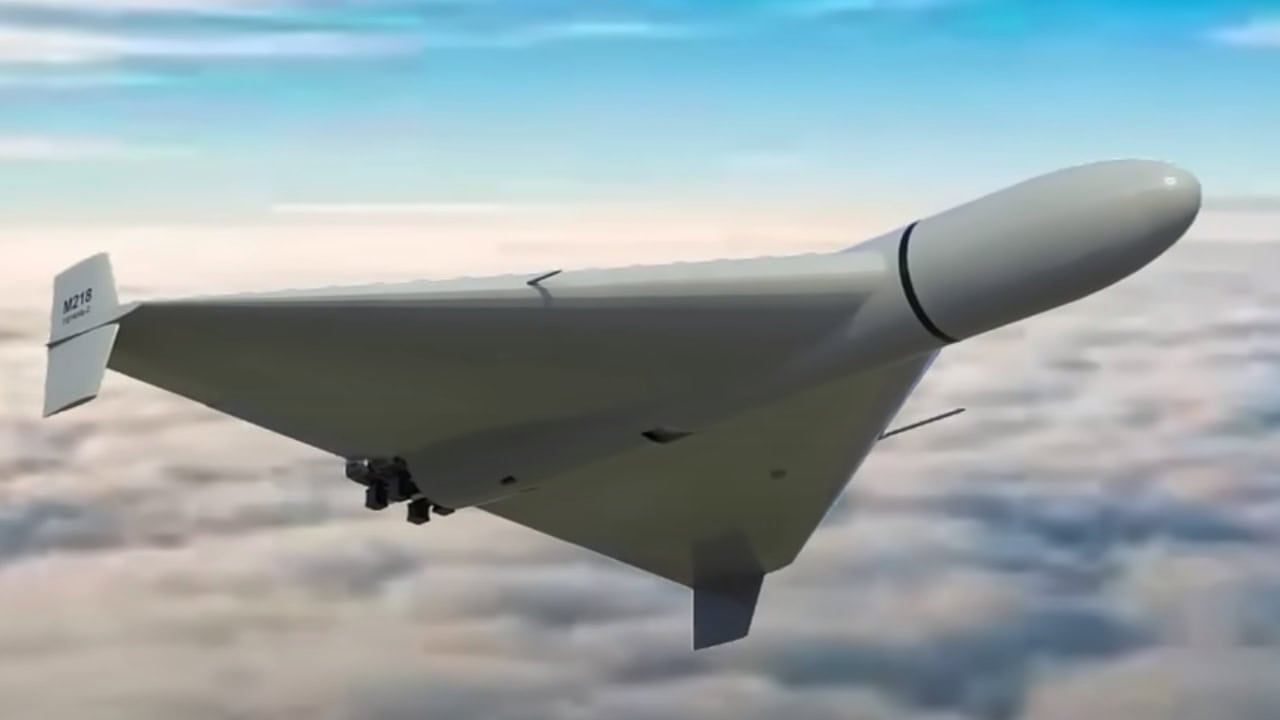
The Shahed-136 is an Iranian-made loitering munition, also known as a suicide or kamikaze drone, designed for precision-guided attacks with a range of up to 2,500 km.
Specifications

General

Guidanceinertial navigation system with GPS
Range Km2,500 km
Speed Kmh185 km/h
Warhead Kg30 kg
Wingspan M2.5 m
Man PortableNo
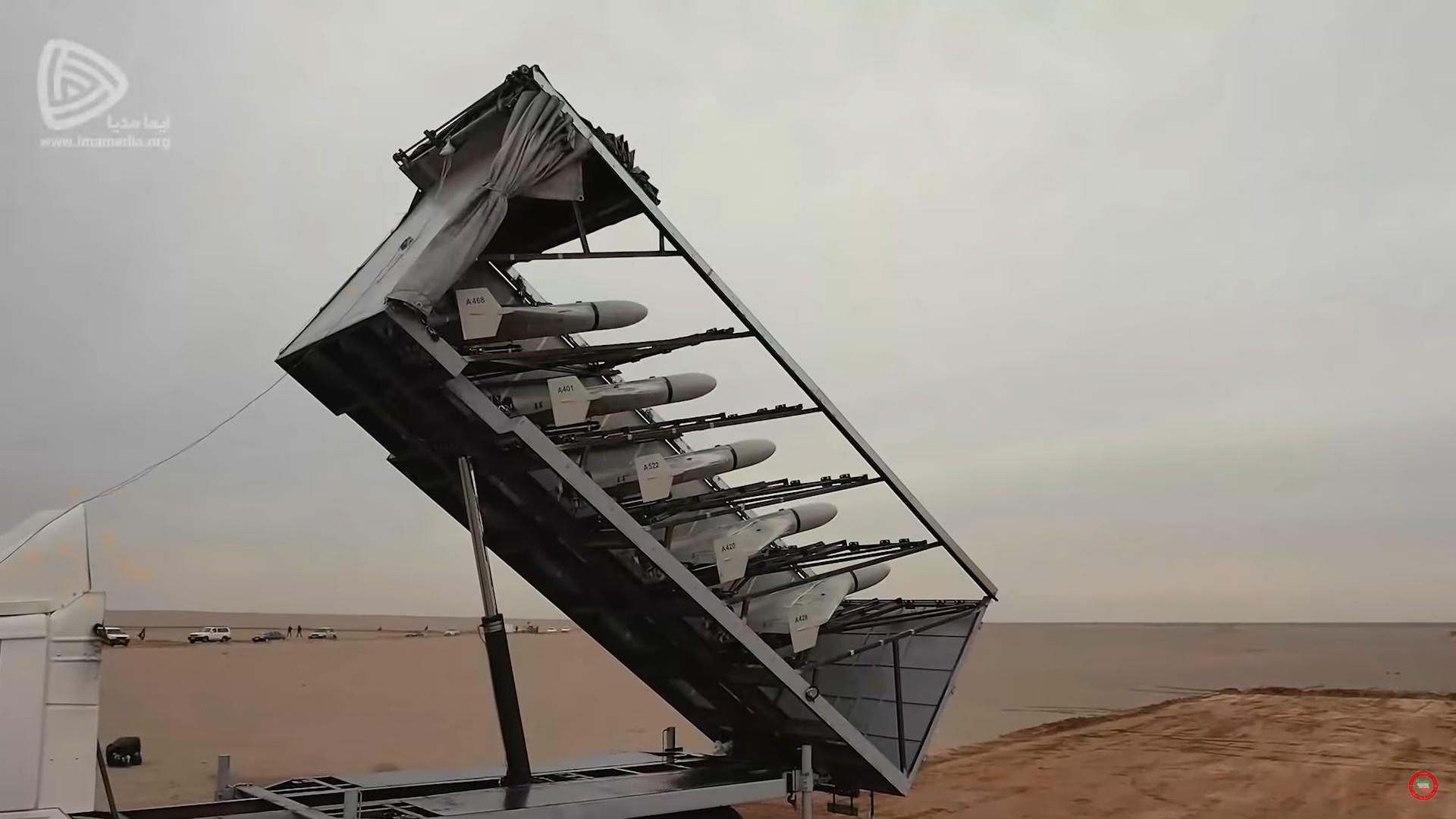
Launch MethodMulti-round rack launch from truck-mounted frames with rocket-assisted takeoff (RATO)

Other

Length M~3.5 m (est.)
PowerplantMado MD-550 4-cylinder piston engine, ~50 hp (est.); turbojet on Geran-3/Shahed-238 variants (reported)
Unit Cost Usd~$20,000-70,000 per airframe (est., varies widely by source and production batch)
Cruise Speed Kmh~180 km/h cruise, ~250 km/h maximum (est.); jet variants ~370-600 km/h (reported)
Launch Weight Kg~200 kg (est.)
Operating Altitude M~60-4,000 m mission profile; low-level ingress reported (est.)
Latest Developments
Sep 23, 2026strong signal
Russian Shahed and 514 Drones Change the Logic of Air Warfare over Ukraine

31 000 пришлись на аппараты типа Shahed.

Sep 19, 2026weak signal
Russia reportedly buries its drone factory underground

Entity 'Shahed-136' mentioned in report

Sep 18, 2026strong signal
Russia's Shahed Drones Are Testing NATO's Air Defenses in 2026

The Shahed-136, known in Russian service as the Geran-2, is not a high-end aircraft.

Sep 3, 2026strong signal
Ukrainian helicopter gets new AI-assisted gun module against Shaheds

Entity 'Shahed' mentioned in report

Aug 28, 2026strong signal
Analyst: new weapons systems echo 1980s Cold War tech

Iran’s Shahed-136, later supplied to Russia and produced domestically as the Geran-2, shares the DAR’s delta-wing shape and truck-launched deployment method, though the precise lineage between the two designs remains disputed among researchers.

Aug 17, 2026strong signal
Russia's Ten Secret Drone Bases Put Warsaw Inside the Kill Zone

A Russian Shahed struck a residential building in Romania in May, injuring two people.

Aug 12, 2026strong signal
Iran Attacked with 4,400 ‘Kamikaze’ Drones: They Cost as Little as $20,000 Each and Tehran’s Factories Might Have Pumped Out 10,000 a Month

The best-known weapon, the Shahed-136, is estimated to cost between $20,000 and $50,000.

Featured Coverage
Research Notes

One-way attack UAV optimized for volume and cost pressure

high

Shahed-136 matters because it made long-range one-way attack drones a central feature of modern saturation warfare.

Shahed-136 is an Iranian-designed one-way attack UAV, often discussed together with Shahed-131. CSIS Missile Threat profiles the Shahed-131 and 136 family and places it in the category of loitering munitions or one-way attack drones.

The weapon's significance is not that each drone is individually sophisticated. Its effect comes from range, low relative cost, mass employment, and the ability to force defenders to spend attention, interceptors, and air-defense capacity.

For HiWars, Shahed-136 should be explained as a saturation and attrition weapon. It changes the economics of air defense by making many low-cost incoming threats strategically meaningful.

Russia's campaign showed the power of persistent drone saturation

high

Shahed use in Ukraine showed how repeated drone waves can pressure cities, infrastructure, and air-defense networks.

CSIS analysis of Russia's Shahed campaign highlights the operational value of persistent drone salvos. Repeated attacks can pressure civilian morale, infrastructure, power grids, air defenses, and command attention even when many drones are intercepted.

This is a different logic from high-end aircraft or cruise missiles. The attacker's aim may be attrition, exhaustion, infrastructure damage, or forcing expensive defensive responses.

A richer page should explain this campaign logic. Shahed-136 is best understood as part of a drone-saturation system involving launch logistics, route planning, warhead choice, and adaptation against defenses.

Countering Shahed requires layered, affordable defense

high

The main defense problem is matching low-cost mass threats with sensors and interceptors that do not exhaust the defender.

Shahed-136 creates a defensive cost-exchange problem. Shooting down low-cost drones with expensive missiles may be necessary to protect critical targets, but it can strain inventories and budgets over time.

Effective defense therefore requires layers: radar and acoustic detection, electronic warfare, guns, short-range interceptors, mobile teams, air patrols, hardened infrastructure, and civil-defense procedures.

For HiWars, Shahed-136 should connect to NASAMS, short-range air defense, counter-UAS systems, Ukraine war lessons, Iran-Russia defense cooperation, and the wider rise of attritable strike drones.

Key parameters at a glance

medium

Headline figures are open-source analyst estimates unless stated; Iran and Russia publish no official data sheet.

Role
Long-range one-way attack drone (loitering munition)
Length
~3.5m (est.)
Wingspan
~2.5m (est.)
Launch weight
~200kg (est.)
Warhead
~30-50kg (est., varies by batch)
Range
~1,000-2,500km (claimed; practical strike range lower)
Cruise speed
~180km/h (est.); jet variants ~370-600 km/h (reported)
Guidance
INS/GNSS with anti-jam CRPA antennas; some variants add camera/datalink (reported)
Unit cost
~$20,000-70,000USD (est.)
Russian designation
Geran-2 (domestic production at Alabuga SEZ since 2023)

Program milestones

medium

Publicly reported milestones; early program history remains opaque.

2021First reported deployments

Shahed-136 airframes reportedly deployed to Yemen with Houthi-aligned forces; the type is publicly shown in Iranian exercises later that year.

2022-09Combat debut in Ukraine

First wreckage of a Russian-operated Shahed-136 documented near Kupiansk; Russia designates the drone Geran-2.

2022-10Infrastructure strike campaign

Mass Geran-2 waves against Kyiv and Ukraine's power grid establish the type's signature role in saturation strikes on fixed targets.

2023Russian localization at Alabuga

A dedicated production line in Tatarstan's Alabuga Special Economic Zone begins licensed assembly, progressively localizing about 90% of production stages (reported).

2024-04Iran's direct attack on Israel

Shahed-type one-way attack drones form the first wave of Iran's April 13-14 strike package against Israel; most are intercepted.

2025Mass swarm packages and upgrades

Russian output reportedly reaches ~2,700-2,800 drones per month; nightly mixed packages of strike drones and decoys peak above 700 airframes, with anti-jam antennas and larger warheads iterated in.

2025Jet-powered Geran-3 in service

Turbojet-powered variants (linked to Iran's Shahed-238 line) appear over Ukraine at reported speeds of ~500-600 km/h, stressing gun- and interceptor-based defenses.

2026-01Further jet evolution reported

Ukrainian sources report a follow-on jet variant designated Geran-5 with a ~90 kg warhead and claimed air-launch capability (unconfirmed).

Strategic significance

medium

The Shahed-136's significance lies less in any single performance figure than in its cost-exchange logic. At an estimated tens of thousands of dollars per airframe, it forces defenders to expend interceptors and gun ammunition that often cost more than the drone itself, and to keep crews and sensors on continuous alert across a wide area. Used in mass, it functions as a slow, cheap substitute for cruise missiles against fixed infrastructure, trading precision and survivability of individual airframes for volume.

Russia's Geran-2 program demonstrated how quickly a licensed design can outgrow its originator. Domestic production at the Alabuga Special Economic Zone reportedly localized most of the supply chain and pushed output to thousands of airframes per month, while iterative upgrades — anti-jam CRPA satellite navigation, larger and thermobaric warheads, decoy escorts, and turbojet-powered Geran-3/-4 variants at reported speeds of 500-600 km/h — have repeatedly reset the countermeasure problem for Ukrainian air defense. The result is an industrialized strike ecosystem rather than a fixed weapon type.

For other militaries the type is a proliferation warning as much as a threat model. Analysts broadly agree that layered, low-cost defenses — electronic warfare, gun systems, interceptor drones — are needed to avoid unfavorable exchange ratios, and comparable one-way attack designs are already appearing in several countries' inventories. How well established air defense doctrines adapt to saturation by cheap, expendable airframes remains an open question, and assessments of the Shahed family's true effectiveness (hit rates, mission success shares) still vary considerably between sources.

Videos

Russia Turns Shaheds into Drone Killers (WION Pulse)

Watch on YouTube

Iran's Shahed-136 kamikaze drone — how does it work? (FlightStrike)

Watch on Bilibili

Iran's 'flying moped': the Shahed-136 (Quanqiu Zhanxie)

Watch on Bilibili
Sources & References
Related Discussions

No discussions about Shahed-136 yet

Start the first discussion