
Russian Shahed and 514 Drones Change the Logic of Air Warfare over Ukraine
 Dmitri Volkov
Russian Shahed and 514 Drones Change the Logic of Air Warfare Over Ukraine
Scale Instead of Precision
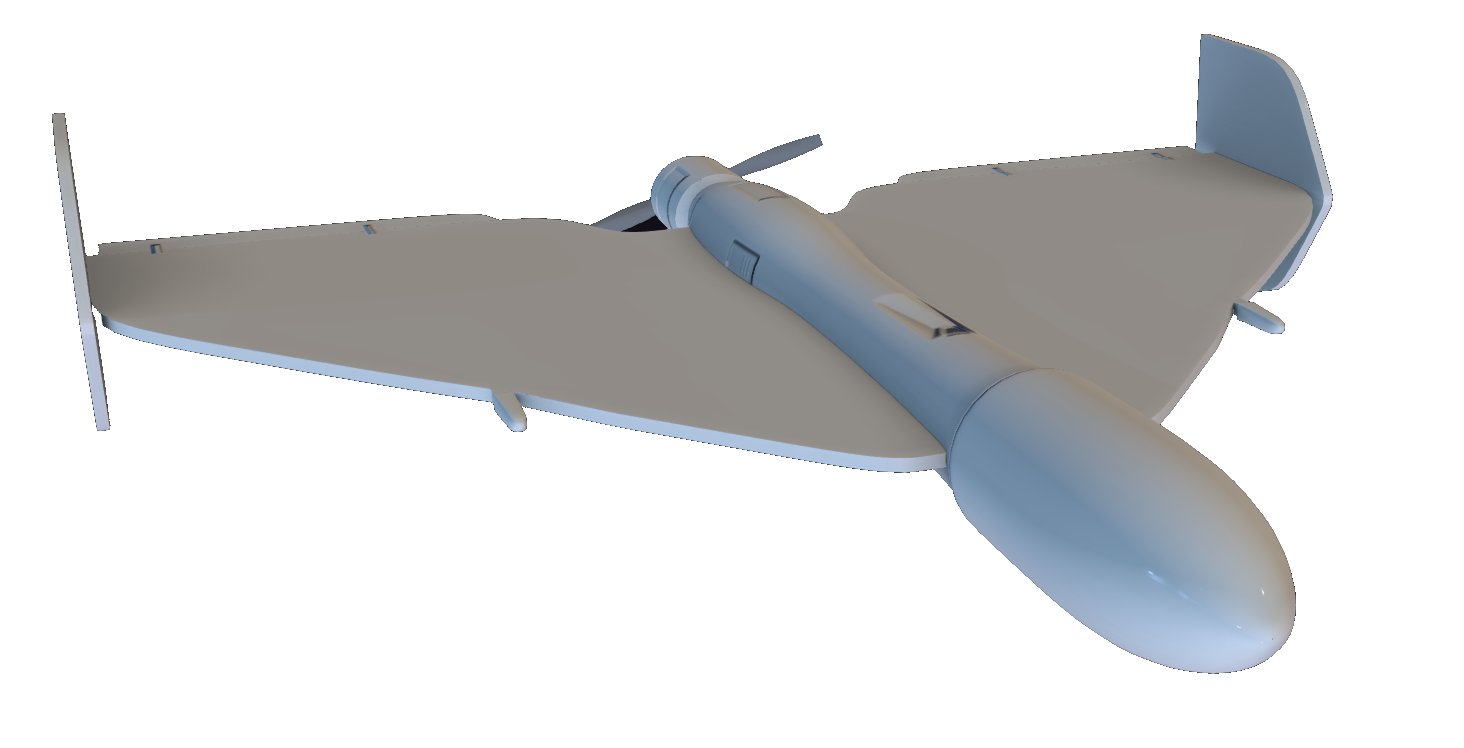
514 drones in one night — this is the number that, according to the Russian Ministry of Defense, the Russian air defense intercepted and destroyed over 18 regions, Crimea, the Black Sea, and the Sea of Azov. Ukrainian sources simultaneously reported a new wave of Russian strikes on Kyiv, where a civilian infrastructure facility was hit and one person was killed (Reuters, September 23, 2026; Kyiv Independent, September 23). In this arithmetic, the difference between the Russian word "destroyed" and the Ukrainian word "shot down" is not the only important aspect. More importantly, both sides describe a war in which the drone has become a consumable munition rather than a rare high-tech system.
After the meeting between Volodymyr Zelensky and Donald Trump in New York, the Russian strike on Kyiv appeared as a military response to diplomatic contact. This does not mean that the Kremlin expects to change Washington's position with a single attack. Such an operation serves a more prosaic purpose: to show that even a negotiation agenda does not limit Russia's ability to create a threat to Ukrainian cities. In Soviet military culture, such a signal was called a demonstration of resolve. Today, it is realized not through a massive sortie of strategic aviation, but through cheap waves of strike UAVs.
What Lies Behind the Figure of 350,000
According to the Ukrainian Ministry of Defense, since the beginning of 2026, Ukrainian forces have neutralized over 350,000 Russian drones. About 220,000 of them, according to this estimate, were fixed-wing drones, approximately 100,000 were multirotors, and 31,000 were Shahed-type devices (The Defense Post citing the Ukrainian agency, September 23). These figures should not be taken as an independent audit: military ministries assess losses according to their own methodologies, and the term "neutralized" may include suppression by electronic warfare, fire damage, and loss of the device for other reasons.
But even with this caveat, the order of magnitude indicates a structural shift. Russia no longer uses Shahed solely as a substitute for cruise missiles. Drones form a layered pressure system: some devices overload the radar picture, some force Ukrainian air defense to expend expensive missiles, some seek weak points between positions, and a small fraction achieve hits. The technological value of an individual device decreases, while the value of the production line and logistics increases. In this sense, Shahed is closer to an artillery shell than to a classic aircraft.
Russian Adaptation and Its Limits
Russia has managed to adapt its air campaign to the economy of a prolonged war. The airframe, engine, navigation unit, and warhead can be produced or assembled in large series; routes can be changed; decoys and reconnaissance devices allow for testing the Ukrainian response. This creates an unpleasant asymmetry for the defending side: intercepting a cheap drone often requires an expensive munition or constant operation of a mobile fire group.
However, mass does not equal air dominance. The Russian claim of 514 destroyed targets primarily demonstrates the volume of the threat, not its quality. If hundreds of devices are launched so that a few reach their targets, this indicates a high production throughput but simultaneously an inability to guarantee precise results. The Russian military system has historically preferred to compensate for uncertainty with quantity. Even in the late USSR, this was rational when there was an industrial reserve; in 2026, the cost of such a model is the wear on air defense, dependence on imported components, and the constant need to maintain the launch tempo.
There is a second limit as well. The Ukrainian side is developing its own interceptors, mobile groups, electronic warfare, and long-range strikes on warehouses and launch sites. Kyiv Independent noted on September 23 that Ukrainian drones are hunting Russian logistics daily, although Kyiv's advantage is not guaranteed. This is fundamentally important: the air war is turning into a competition not of individual samples, but of detection, production, repair, and command contours. Russia can increase the number of Shahed, but it cannot automatically buy the resilience of the entire system.
Diplomatic Significance of the Strike
The strike on Kyiv following the Zelensky-Trump contact should also be viewed as a message to external players. Moscow demonstrates that pressure on it does not immediately lead to de-escalation, and negotiations can be accompanied by an increase in fire activity. This is aimed not only at Kyiv. European capitals are being offered to accept Russia's ability to continue the war as a permanent reality, while the American administration must decide whether it is ready to turn promises of support into concrete means of counteraction.
However, the demonstration of strength has a downside. The more often Russia explains strikes in terms of the scale of retaliatory capabilities, the clearer its bet on exhaustion rather than a quick operational turnaround becomes. 514 drones is an impressive figure for a report, but not proof that Ukrainian air defense is destroyed or that Russian aviation has gained freedom of action. It is an indicator of industrial mobilization, which Ukraine and its partners will now attempt to disrupt with strikes on supply chains and cheaper interception means.
Forecast
In the coming months, Russian attacks are likely to remain wave-like and combined, with periodic night packages of hundreds of devices. Their task is not only to inflict damage but also to force Ukraine to constantly expend limited resources on city defense. Russia will maintain an advantage in launch scale if component production does not become a bottleneck. But this resource is not infinite: with a steady increase in Ukrainian interceptors and long-range strikes on logistics, mass Shahed may turn from a pressure tool into an expensive ritual. Moscow will survive such a race, but the cost will be measured not by one night, but by the gradual degradation of the quality of the entire military system.
Russian Armed Forces conducted airstrikes targeting civilian infrastructure in Kyiv on September 23, 2026, using 514 drones. This operation follows a diplomatic meeting between Ukrainian President Zelensky and U.S. President Trump, signaling Russia's intent to maintain pressure despite negotiations. Ukrainian forces reported neutralizing over 350,000 Russian drones since early 2026, highlighting a significant shift in the air war dynamics.
- Russian air defense intercepted and destroyed 514 drones over 18 regions including Crimea and the Black Sea.
- Ukrainian forces have neutralized over 350,000 Russian drones since the beginning of 2026.
- The airstrikes on Kyiv were seen as a response to diplomatic contacts between Ukraine and the U.S.
- The use of drones has shifted from high-tech systems to mass-produced units, indicating a change in warfare strategy.
- Ukraine is developing its own interceptors and conducting strikes on Russian logistics.