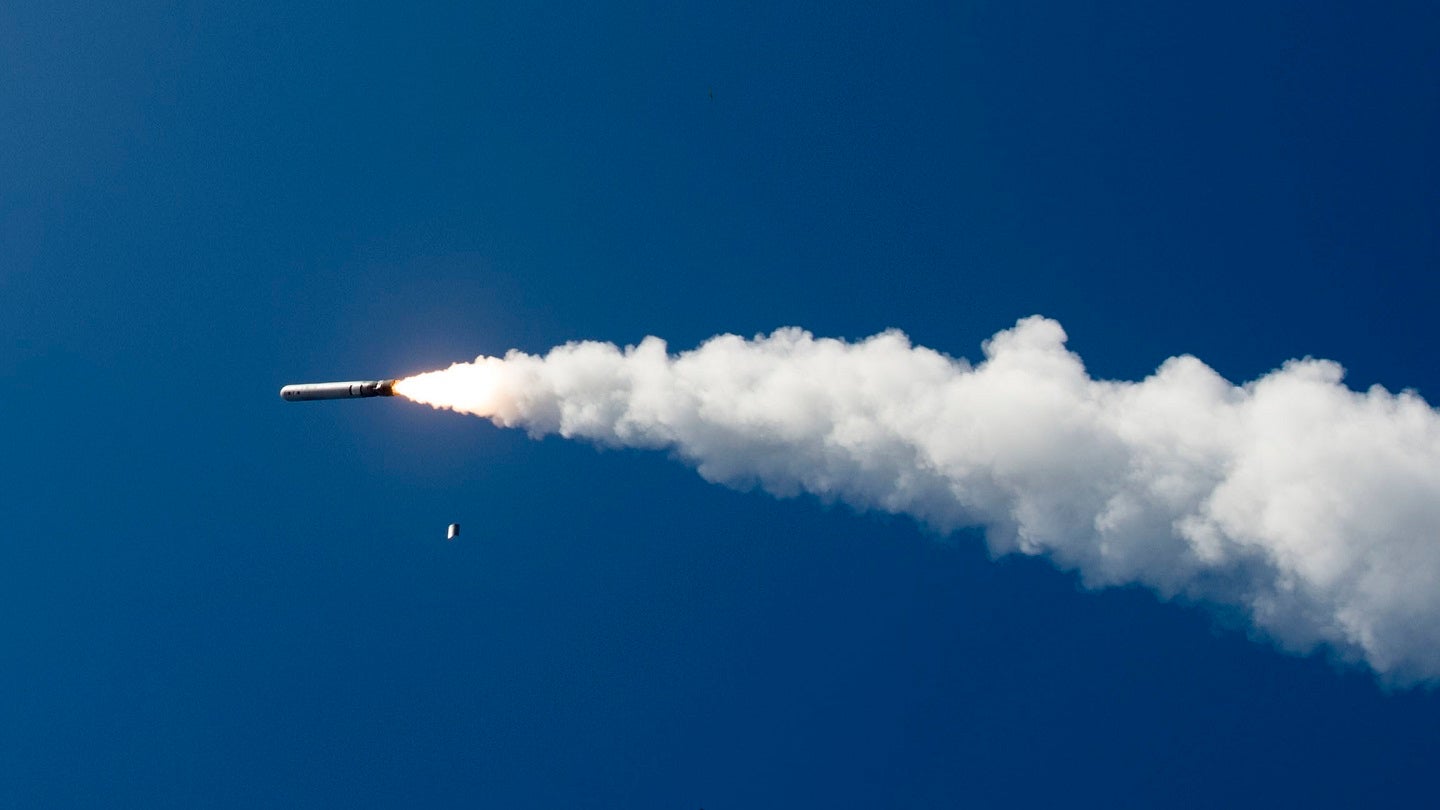
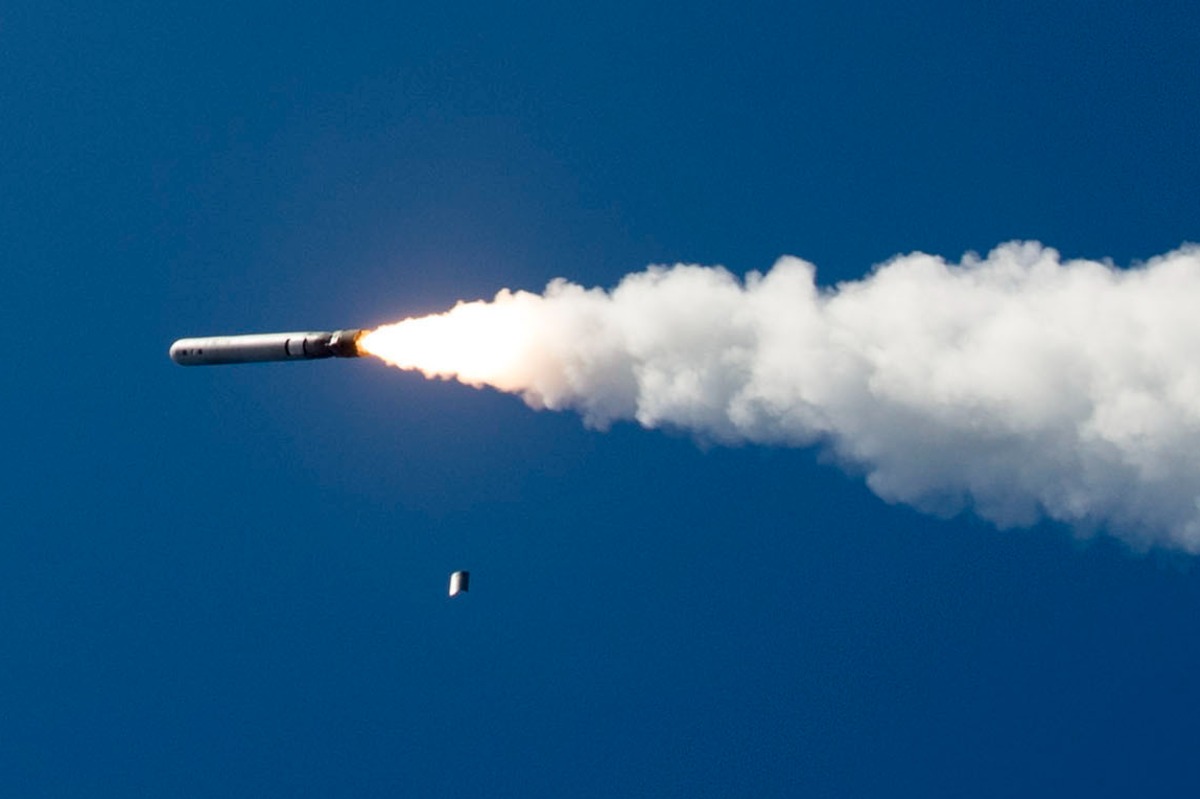
The Tomahawk's value has never rested on performance at the margins. It is subsonic, non-stealthy by modern standards, and against a layered air-defence network it is best understood as a volume weapon rather than a silver bullet. What has kept it central for four decades is the combination of reach from platforms that need not enter defended airspace, an accuracy standard measured in metres, and — since Block IV — the ability to loiter and be retargeted in flight. Recent campaigns illustrate both sides of that ledger: against Houthi and Iranian infrastructure the missile delivered large, politically low-risk opening salvos, but each of those salvos consumed inventory that takes years to replace.
The more consequential change is where Tomahawks are now launched from. The US Army's Typhon Mid-Range Capability battery moved the missile ashore, and its deployments to the Philippines and Japan place a substantial portion of the East and South China Seas within reach of a truck-mounted launcher. The first live Typhon firing during Balikatan in May 2026 — roughly 600 km across Luzon — was a demonstration of that concept rather than a range record, but it confirmed an operational capability that Beijing has repeatedly protested. Land basing trades the mobility and ambiguity of a submarine for persistence and cost, and it makes host-nation politics an inseparable part of the weapon's employment calculus.
Export has become the third axis. The United Kingdom has fielded Tomahawk for years; Australia, Japan and the Netherlands have now bought or begun firing it, and Japan's July 2026 JS Chokai launch marked a notable step in its shift toward counterstrike capability. Against that widening demand, the $22.9 billion seven-year contract awarded in August 2026 to push output past 1,000 missiles a year is the clearest signal of the binding constraint: not capability, but stock. That same constraint framed Washington's 2025 debate over transferring Tomahawks to Ukraine, where the Pentagon's assessment that inventories could absorb a transfer was ultimately overridden at the political level. Production capacity, not the missile's technical envelope, is likely to determine how freely the Tomahawk is used and shared over the next decade.