
Australia's Tomahawk Buy Is More Useful Than Greece's $4 Billion Package
 Marcus Chen
Australia's Tomahawk Buy Is More Useful Than Greece's $4 Billion Package
Australia is asking Washington for roughly $300 million in Tomahawk capability-development equipment. Greece, by contrast, has agreed to pursue as much as $4 billion in American weapons, including F-16 upgrades, missiles, bombs, and helicopter support. The larger number is in Athens. The more consequential package for the Indo-Pacific is in Canberra.
That is not an argument that Greece's purchase is unimportant. It is an argument about what a weapon does before the shooting starts. Greece is modernizing an air force for a familiar regional contest. Australia is building the planning, targeting, and command architecture needed to put long-range fires into a future Pacific campaign. One package buys more hardware. The other changes the geography of a potential fight.
Tomahawk Is a Network, Not a Missile Purchase
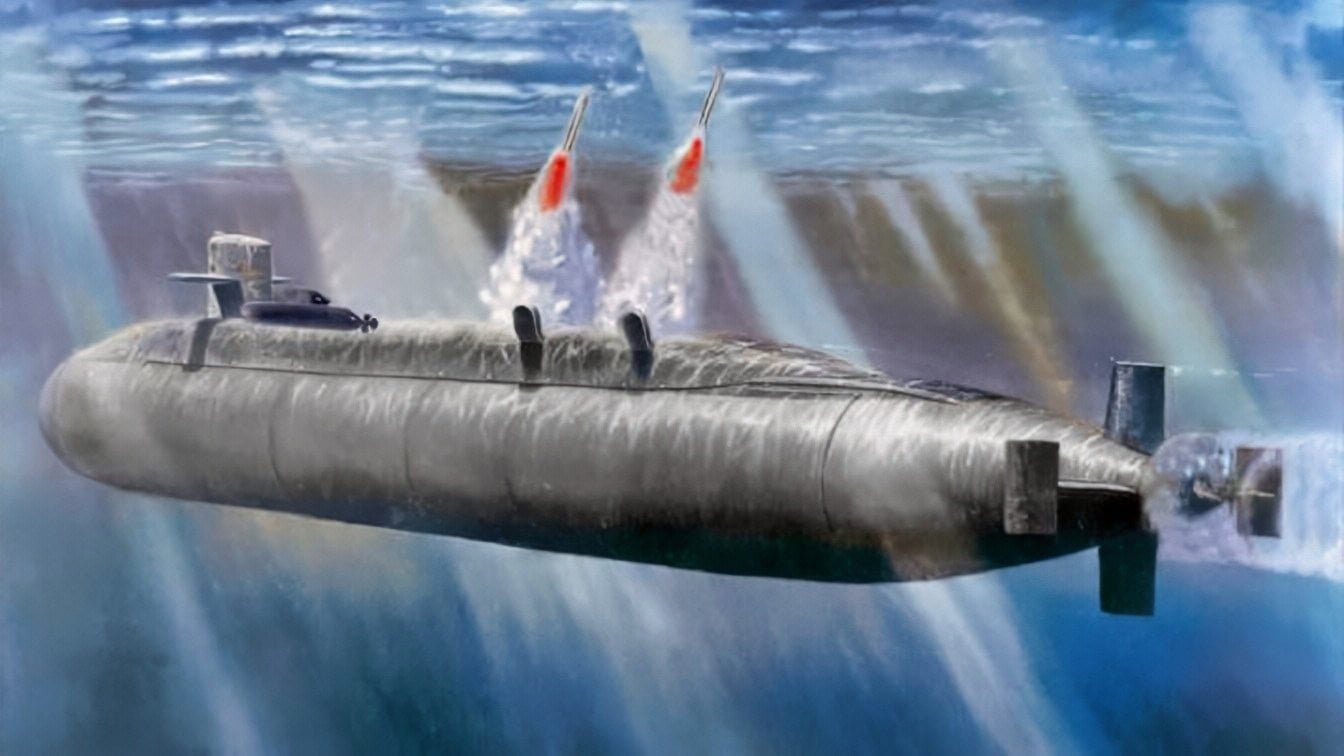
The U.S. State Department's proposed sale is described as Tomahawk capability development, not simply a delivery of a large missile stock. Reporting by Reuters, Janes, and Australian defense outlets indicates that the package centers on mission-planning systems, software, training, support, and related equipment. That distinction matters. A Tomahawk is useful only when a force can generate a target, authorize a strike, plan a route, maintain communications, assess damage, and repeat the process under attack.
Australia already plans to operate Tomahawk from its Virginia-class submarines. The Royal Australian Navy is also moving toward the SSN-AUKUS submarine, although that platform is years away. The capability-development sale therefore fills the gap between political intent and operational competence. It gives Australian crews and headquarters a chance to learn the American kill chain before Canberra possesses its full future submarine fleet.
The missile itself has the range to hold fixed targets at risk from positions far outside the immediate battlespace. Public figures vary by variant, but the basic operational point is stable: a submarine-launched land-attack cruise missile can threaten command nodes, air defenses, fuel storage, and port infrastructure without requiring an Australian aircraft to penetrate Chinese air defenses. The hard part is not the last several hundred miles of flight. It is finding a target that remains valid when the order is transmitted.
Why the Australian Package Has Strategic Weight
China's military problem in a Taiwan contingency is not only the island. It is the regional system that supports a campaign: airfields, missile units, naval bases, logistics hubs, and the maritime approaches linking them. Australian long-range strike would not solve the denial problem by itself. It would force the People's Liberation Army to spend surveillance, air defense, and missile capacity farther south and east.
That creates a useful division of labor. Japan and the Philippines provide geography close to the first island chain. The United States brings the largest magazine and the most mature targeting network. Australia offers distance, political depth, and submarines that can operate from approaches Beijing must monitor. The value is cumulative. A weapon launched from an Australian submarine does not need to defeat every Chinese sensor. It needs to complicate the enemy's confidence about where the next launch will come from.
But capability-development money is not the same as combat power. Australia still has to solve submarine availability, crew generation, secure communications, battle-damage assessment, and reload logistics. A Tomahawk force measured in dozens of missiles can be exhausted quickly in a high-end conflict. The United States learned this lesson in the Middle East: precision weapons are expensive, and production capacity does not expand at the speed of a crisis.
Greece's $4 Billion Deal Solves a Different Problem
Reuters reported that Greece agreed to buy up to $4 billion in U.S. weapons as Athens modernizes older F-16s and adds missiles, bombs, and other support. Those systems can improve Greek air-defense penetration, sortie generation, and readiness in the Aegean. The package also strengthens the U.S.-Greek defense relationship at a moment when Washington wants more capable partners in Europe.
Yet the package is mostly a force-modernization program. F-16V upgrades extend the life of existing aircraft and improve radar, data links, and weapons employment. That is valuable, but it does not create a new theater of operations. Greece's aircraft remain tied to bases close to the Aegean problem set, and their effectiveness depends on runways, tanker support, air-defense suppression, and access to a contested airspace.
The political signal is also mixed. American weapons sales to Greece may improve NATO's southeastern flank, but they do not automatically produce forces available for an Indo-Pacific contingency. A Greek F-16 upgrade cannot reinforce Taiwan. An Australian submarine trained to plan Tomahawk missions can affect Chinese calculations even when it remains hidden hundreds of miles from the target.
The Industrial Math Still Favors Caution
Canberra should not confuse access to a U.S. weapons ecosystem with independence. Tomahawk production, maintenance, and software updates remain linked to American supply chains. Australian submarines require long maintenance periods, and every additional mission system adds training and certification demands. If the submarine is unavailable, the missile's range is irrelevant.
Washington also has to decide how many missiles it can allocate to Australia while meeting its own war plans and other allied commitments. The package is a down payment on a kill chain, not proof that Australia has a large wartime magazine. That distinction should be written into every public statement about AUKUS.
Australia Gets the Better Strategic Return
On a dollar-for-dollar basis, Greece's package is larger and more immediately visible. On a map, Australia's is more disruptive. The Tomahawk development deal links an allied submarine fleet to the U.S. targeting enterprise and gives the Indo-Pacific another source of long-range pressure. It will not stop a Chinese invasion, and it will not compensate for thin missile inventories or slow submarine construction.
But it moves Australia from being a rear-area supporter to becoming a potential contributor to sea denial. That is the relevant threshold. Greece is buying better tools for an existing air force. Australia is learning how to make a distant submarine part of a Pacific strike network. If the training, stockpiles, and industrial support follow, the $300 million package may be the more consequential American arms deal of the two.
The warning is straightforward: a Tomahawk force without enough submarines, crews, and reloads is a brochure. Canberra has started buying the network. Now it has to build the fleet that makes the network credible.
Sources
Australia is developing Tomahawk capabilities with a $300 million request for equipment, while Greece is modernizing its air force with a $4 billion arms deal. The Australian package focuses on mission-planning systems, enhancing operational competence, whereas Greece's deal improves air defense capabilities. Both packages have strategic implications for their respective regions, with Australia's efforts potentially complicating Chinese military operations in the Pacific.
- Australia is requesting $300 million for Tomahawk capability development.
- Greece is pursuing up to $4 billion in U.S. weapons including F-16 upgrades.
- Australia's package focuses on mission-planning systems and operational competence.
- Greece's deal enhances air defense but does not create a new operational theater.
- Australia's Tomahawk capabilities could complicate Chinese military calculations.