
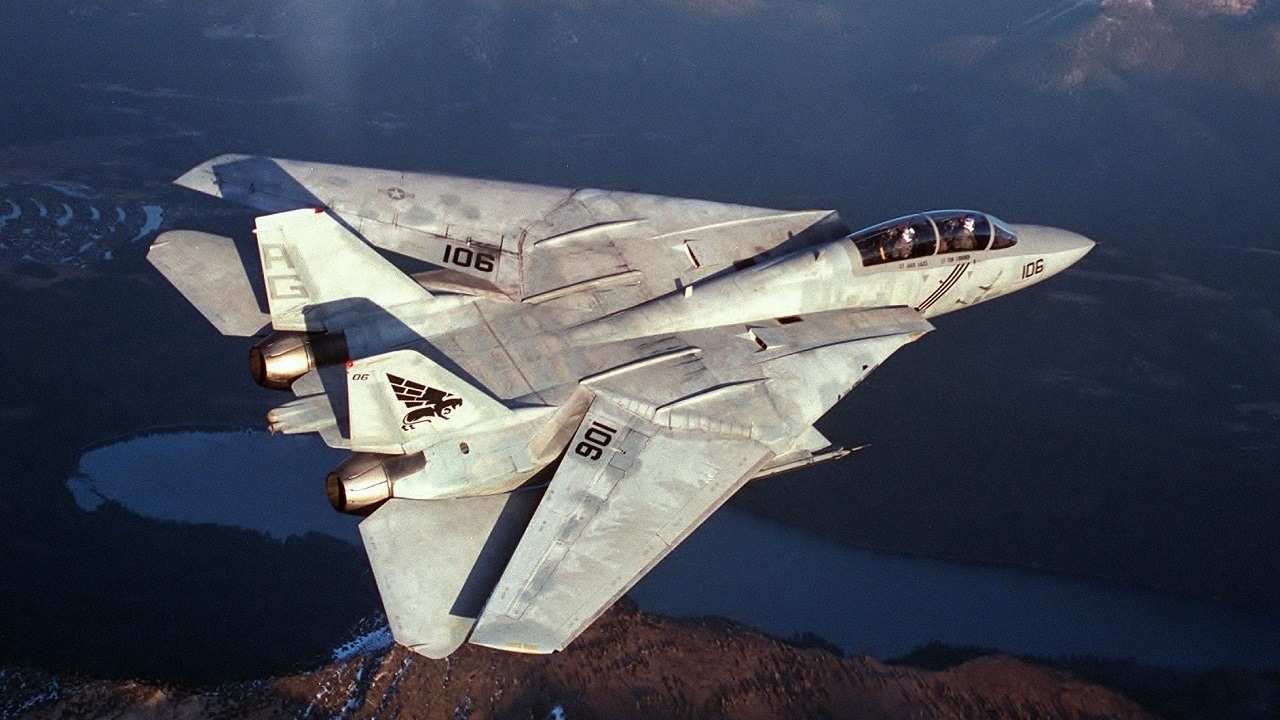
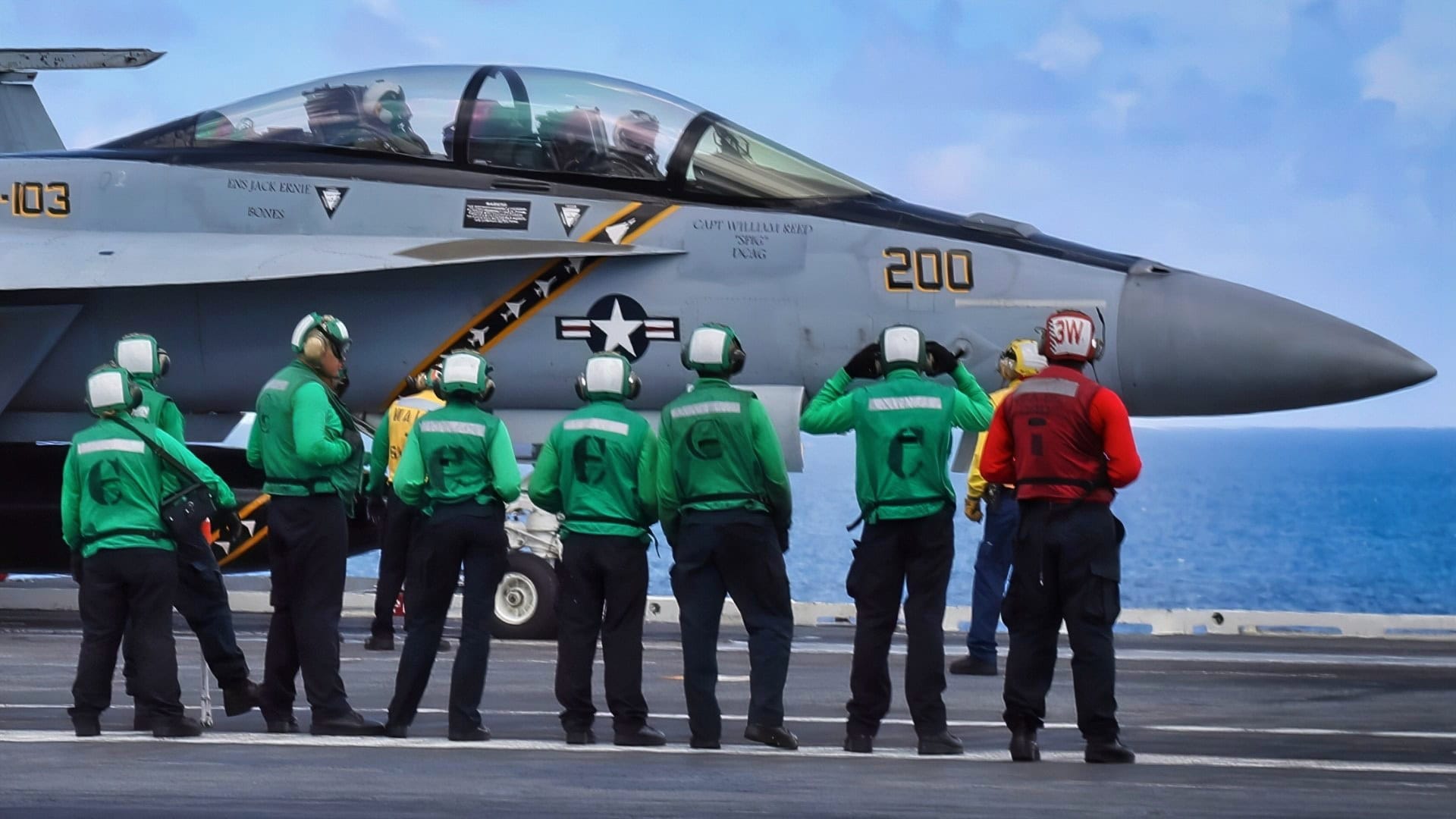
F/A-18 Hornet

🇺🇸United States
McDonnell Douglas (now part of Boeing) and Northrop (now part of Northrop Grumman)
1983 – Present
Spotlight

America's first true strike fighter; the last classic Hornets now fly with the Marines

Blue Angels Transition from Legacy Hornets to Super Hornets (Boeing)

Watch on YouTube
Overview
F/A-18 Hornet
The F/A-18 Hornet is a twin-engine, supersonic, all-weather, carrier-capable, multirole combat jet, designed as both a fighter and attack aircraft.
Specifications

General

Crew1
Radarall-weather air-to-air radar
Length M17.07 (F/A-18C)
Hardpoints11
Wingspan M12.31 (including wingtip missile launchers)
Max Speed Kmh1,915 km/h
Combat Radius Km~537 (290 nmi, hi-lo-lo-hi attack profile; reported)
Service Ceiling M15,000 m
Engines2
StealthNo
Air To AirAIM-9 Sidewinders
Internal Gun20 mm M61A1 Vulcan cannon
Air To Groundconventional or guided weapons
Ferry Range Km2,017 km
Max Payload Kg8,032 kg
Max Speed Mach1.8 Mach
Range Km2,017 km
Internal BayNo
Survivability FeaturesHighly maneuverable with digital fly-by-wire control system and leading-edge extensions

Other

Height M4.66
Generation4th
Powerplant2 x General Electric F404-GE-402 afterburning turbofans, ~78.7 kN (17,700 lbf) each
Empty Weight Kg~10,400 (F/A-18C, est.)
Total Production~1,480 legacy Hornets (F/A-18A/B/C/D), production ended 2000 (reported)
Max Takeoff Weight Kg~23,540 (51,900 lb, F/A-18C)
Latest Developments
Sep 21, 2026weak signal
The US Navy Dreamed Up a F-14 ‘Super’ Tomcat Fighter For Aircraft Carriers That Would Have Had A New Engine, Greater Range But Missing Stealth

the U.S. Navy had a new fighter that could more easily implement and integrate future technologies than one whose genesis was in the Vietnam era

Sep 18, 2026strong signal
Finland’s first F-35 jets have arrived in the country

They landed at Rovaniemi 24 minutes later, escorted by Finnish F/A-18 Hornets.

Sep 2, 2026strong signal
U.S. Navy awards GE $2.87 billion for F/A-18 engines

The U.S. Navy has awarded GE Aerospace a five-year contract worth up to $2.87 billion to keep the engines powering its F/A-18 E/F Super Hornet and EA-18G Growler fleet running.

Aug 18, 2026strong signal
Body cam footage shows Marine after ejecting from F-18: ‘Hey buddy, I just crashed’

the F/A-18 Hornet was flying near Rimrock Lake, near Mount Rainier, approximately 55 miles south of Seattle.

Featured Coverage
Research Notes

Carrier-capable fighter-attack aircraft that reshaped naval aviation

high

The F/A-18 Hornet combined fighter and attack roles in a carrier-capable aircraft and became a foundation for later Super Hornet development.

The F/A-18 Hornet was built around a dual-role fighter and attack concept, reflected in the F/A designation. It gave the U.S. Navy and Marine Corps a carrier-capable multirole aircraft that could perform air-to-air and air-to-ground missions from the same basic platform.

NASA describes the Hornet as a dual-role fighter-attack aircraft used by the Navy and Marine Corps. The Navy's fact file connects the legacy F/A-18A-D Hornet to the later F/A-18E/F Super Hornet, making the page important as both a legacy aircraft record and a family-history record.

For HiWars, the Hornet parent page should distinguish legacy Hornets from Super Hornets. They share lineage and mission logic, but the E/F Super Hornet is a substantially enlarged and modernized successor rather than a simple variant.

Multirole flexibility for carrier air wings

high

Hornet value comes from giving carrier air wings a flexible aircraft for air defense, strike, close air support, and fleet operations.

The Hornet's usefulness came from role flexibility. A carrier air wing benefits when one aircraft type can switch between fighter escort, fleet air defense, strike, close air support, and reconnaissance-support missions depending on loadout and mission planning.

That flexibility also simplified parts of training and logistics compared with maintaining many specialized aircraft types. The Hornet became a practical naval aviation workhorse because it could absorb multiple roles within the space and operating constraints of a carrier.

The Super Hornet extended this logic with greater range, payload, avionics growth, and modern block upgrades. Boeing describes the Super Hornet as a carrier air wing backbone with advanced avionics, AESA radar, IRST, and Block III networked capabilities.

Legacy Hornet retirement and Super Hornet continuity

high

The Hornet family story now centers on legacy aircraft aging out while Super Hornet and Growler derivatives carry the Navy's strike-fighter and electronic attack burden.

Legacy F/A-18A-D Hornets have aged out of many front-line U.S. Navy roles, while Super Hornets continue as a major carrier air wing aircraft. This transition matters because databases often mix Hornet and Super Hornet records unless the lineage is clearly separated.

The E/A-18G Growler also shows how the broader Hornet/Super Hornet family became a platform base for electronic attack. That makes the family important not only for strike and fighter missions, but also for electromagnetic warfare and carrier survivability.

HiWars should track Hornet records by generation, operator, airframe life, upgrade standard, and whether the aircraft is a legacy Hornet, Super Hornet, or Growler derivative. Otherwise a simple F/A-18 label hides large differences in capability.

Key parameters at a glance

high

Figures below are for the legacy or "classic" Hornet (F/A-18A/B/C/D), not the larger F/A-18E/F Super Hornet. Dimensions and weights follow the F/A-18C; fleet and programme figures follow the cited reporting.

Role
Carrier-capable multirole strike fighter; the first US combat aircraft designed from the outset for both the fighter and attack missions, hence the F/A designation
Variant family
F/A-18A (single-seat) and F/A-18B (two-seat) from 1980; F/A-18C/D from 1987 adding night-attack, improved avionics and expanded weapons
Origin
Derived from the Northrop YF-17 lightweight fighter prototype, navalised by McDonnell Douglas as prime contractor with Northrop as principal partner
First flight
18 November 1978; first operational squadron VMFA-314 (US Marine Corps) in 1983; first carrier deployment 1985
Air wing effect
Replaced the F-4 Phantom II and A-7 Corsair II in one type, cutting the number of aircraft models a carrier air wing had to maintain and arm
Combat record
On 17 January 1991 two VFA-81 F/A-18Cs shot down Iraqi MiG-21s while carrying a full bomb load and continued to their assigned targets
US Navy status
Withdrawn from front-line Navy fleet squadrons in 2019, superseded by the F/A-18E/F Super Hornet
US Marine Corps status
Sole remaining US operator; roughly 125 legacy Hornets in service, with retirement expected around the end of the decade
Final fit upgrades
AN/APG-79(V)4 AESA radar, AGM-158 JASSM stand-off cruise missile, and air-to-air optimised APKWS II 70 mm laser-guided rockets for counter-drone work
Blue Angels
The US Navy demonstration squadron flew the legacy Hornet for 34 years; its final sunset flight over Pensacola was on 4 November 2020, ahead of the Super Hornet's 2021 season debut

Program milestones

high

Publicly documented milestones from prototype to the type's ongoing sundown in US and export service.

1978-11First flight

The first F/A-18A prototype flies, having been selected as the navalised development of the Northrop YF-17.

1983First operational squadron

US Marine Corps squadron VMFA-314 becomes the first front-line unit to field the Hornet, ahead of the type's first carrier deployment in 1985.

1991-01Desert Storm combat debut at scale

Navy and Marine Hornets fly strike, SEAD and escort sorties; VFA-81 F/A-18Cs down two Iraqi MiG-21s and press on to their bombing targets, demonstrating the single-seat multirole concept.

2001Super Hornet enters service

The larger F/A-18E/F reaches initial operational capability and begins displacing legacy Hornets from Navy carrier squadrons.

2019US Navy fleet retirement

The legacy Hornet leaves front-line Navy squadron service; remaining US airframes concentrate in Marine Corps units and support roles.

2020-11Blue Angels sunset flight

The Blue Angels fly their legacy Hornets for the last time over Pensacola on 4 November after 34 years, converting to 18 modified early-block F/A-18E/F for the 2021 season.

2021-11Australian classic Hornet retirement

Eight No. 75 Squadron F/A-18A/B fly the RAAF's final classic Hornet mission on 30 November; of 75 aircraft delivered from 1985, 25 were sold to Canada and 46 earmarked for US adversary contractor Air USA.

2030Planned end of service

The Marine Corps expects to retire its remaining legacy Hornets around the end of the decade; Finland and Switzerland likewise plan to withdraw their Hornets by 2030 as F-35A deliveries proceed.

Strategic significance

medium

The legacy Hornet's main contribution was structural rather than aerodynamic. By making one airframe credible in both the fighter escort and the attack role, it let the US Navy collapse several specialised types into a single deck-load, simplifying maintenance, training and ordnance handling aboard a carrier. The price was range and payload: compared with the A-6 and A-7 it replaced, the Hornet traded reach for versatility, and that shortfall is the clearest reason the Navy funded the larger F/A-18E/F rather than continuing to buy the original design.

That same trade explains the type's long tail in Marine Corps service. The Marines retained roughly 125 legacy Hornets well after the Navy retired the type in 2019, and their withdrawal is paced by F-35B/C transition capacity rather than by any sudden loss of airframe utility. The final-fit programme is telling: an AN/APG-79(V)4 AESA radar, AGM-158 JASSM for stand-off strike, and air-to-air APKWS II rockets for cheap drone and cruise-missile defence are all attempts to keep a 1980s airframe tactically relevant to about 2030, at costs far below new-build fighters.

Export operators bought the Hornet for a different reason: it offered twin-engine redundancy and carrier-grade structural margins at a tier below the F-15, which suited Canada, Australia, Spain, Kuwait, Finland, Switzerland and Malaysia. Those fleets are now retiring in a near-synchronised wave, and almost all of them are converting to the F-35A — Australia completed its handover in 2021, while Finland's roughly 62 Hornets and Switzerland's 30 are due out by 2030. The practical effect is a shrinking pool of fourth-generation twin-engine tactical aircraft in Western inventories and a further concentration of allied airpower on a single fifth-generation type.

Videos

18 F/A-18s fly the barn: VMFAT-101 sundown ceremony at MCAS Miramar (AIRBOYD)

Watch on YouTube

End of an era for the F/A-18A/B Classic Hornets (Defence Australia)

Watch on YouTube

Finland's Hornet MLU 2 upgrade and its air-to-ground capability (HoBess)

Watch on Bilibili
Sources & References
Related Discussions

No discussions about F/A-18 Hornet yet

Start the first discussion