AN/APG-81

🇺🇸United States
Northrop Grumman
2005 – Present
Spotlight

F-35's multifunction AESA: fire control, SAR mapping and electronic attack in one array

APG-81 AESA Radar for the F-35 JSF (Northrop Grumman)

Watch on YouTube
Overview
AN/APG-81
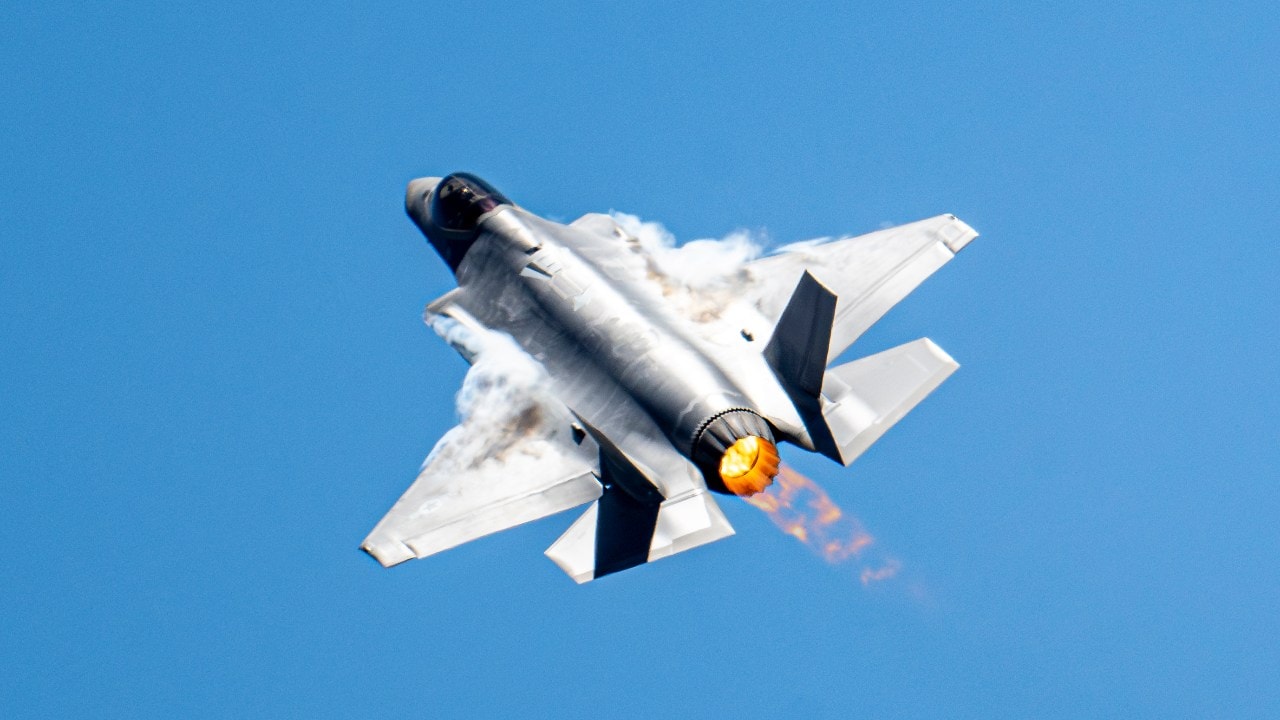
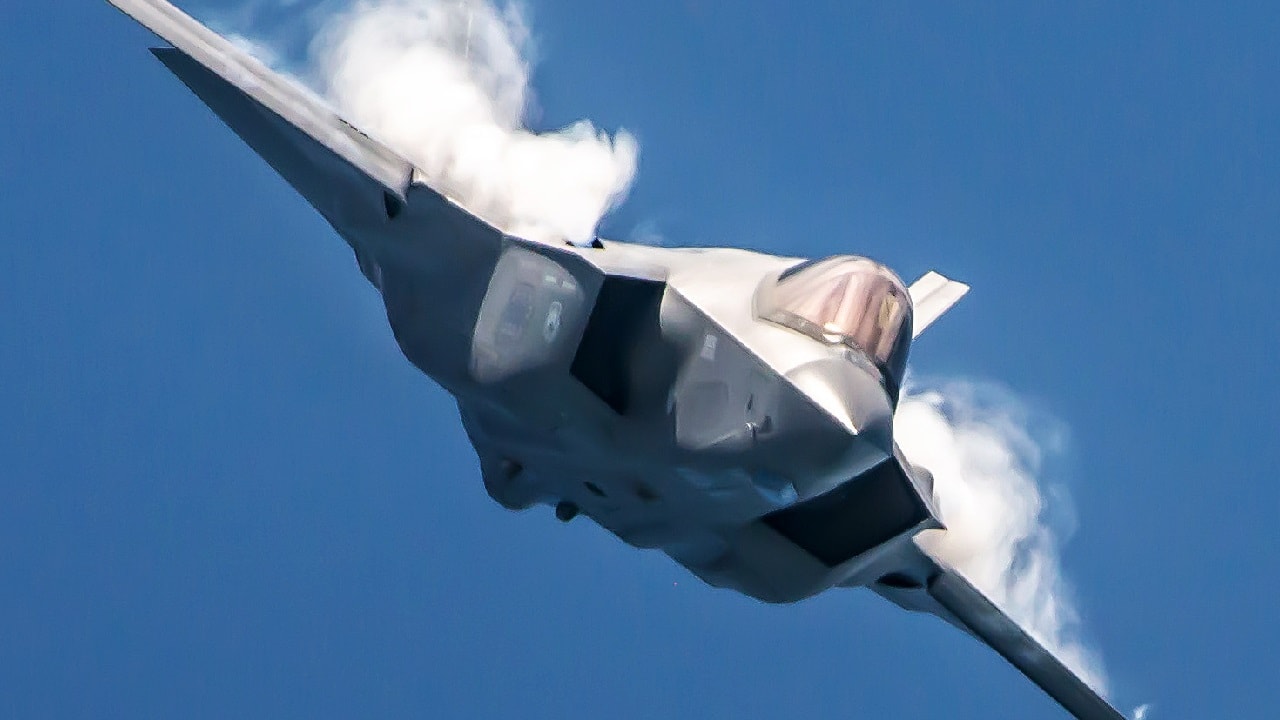
The AN/APG-81 is an active electronically scanned array (AESA) fire-control radar developed for the F-35 Lightning II, designed to engage ground and air targets at long range and provide excellent situational awareness with electronic warfare capabilities.
Specifications

General

Typefire control
MobileNo
Range Km150 km
Antenna TypeAESA
Targets Tracked23

Other

PlatformF-35A / F-35B / F-35C (all variants)
SuccessorAN/APG-85; production start reported for April 2028
Tr Modules1,200-1,676 (reported; open sources differ)
Primary ModesAir-to-air search and track, SAR mapping, GMTI/GMTT, sea search, EA/ES/EP
Frequency BandX-band
Units Delivered1,000+ across 11 production lots (Northrop Grumman, December 2022)
Operational Readiness>99% (Northrop Grumman)
Latest Developments
Jul 5, 2026strong signal
The F-35’s New Radar May Secretly Be a Directed-Energy Weapon, Says the Analyst Who Hunted the ‘Aurora’ Spy Plane

It is set to replace the older AN/APG-81 on new American aircraft.

Apr 15, 2026strong signal
The F-35 Stealth Fighter Has a Message for Iran and the U.S. Air Force

The AN/APG-81 was only giving aviators an image oriented toward the front of the airplane, not the sides.

Feb 12, 2026strong signal
Why New F-35 Stealth Fighters Are Being Delivered Without Radar

Entity 'APG-81' mentioned in report

Featured Coverage
Research Notes

F-35 sensor-suite cornerstone

The AN/APG-81 was developed by Northrop Grumman as the F-35 Lightning II's multifunction AESA radar.

The AN/APG-81 is the F-35 Lightning II's principal fire-control radar and a central part of the aircraft's sensor suite. Northrop Grumman describes it as an AESA radar that supports air-to-air, air-to-ground, electronic warfare, intelligence, surveillance, and reconnaissance functions. Its development built on earlier AESA experience, including the F-22's APG-77, but had to serve three F-35 variants and a much broader multirole mission set.

Multirole AESA with EW and ISR functions

APG-81 combines active and passive modes, long-range air targeting, surface mapping, and electronic support functions.

The APG-81 is more than a target-detection radar. Northrop Grumman emphasizes long-range active and passive air-to-air and air-to-ground modes, stealth-compatible operation, and significant electronic warfare and ISR functions. AESA architecture lets the radar switch modes quickly and manage energy across the array. For the F-35 pilot, that means radar data is fused with other sensors into a single tactical picture rather than presented as a standalone scope.

Mass-produced fifth-generation radar

APG-81 became one of the most widely fielded fighter AESA radars through global F-35 production.

In service, the APG-81's importance is amplified by the scale of the F-35 program. It equips US and allied F-35s across air force, navy, and marine variants, making it a common sensor across a large fifth-generation fleet. Northrop Grumman's flight-test release reported early successful target tracking, while later production made the radar central to coalition air operations. Its value depends on fusion, software updates, electronic protection, and integration with the wider F-35 mission system.

Key parameters at a glance

high

Capability and production figures come from Northrop Grumman; array and detection figures remain open-source estimates.

Role
Multifunction AESA fire-control and sensor aperture
Manufacturer
Northrop Grumman, Linthicum, Maryland
Platform
F-35A / F-35B / F-35C
Frequency band
X-band
T/R modules
1,200-1,676(reported)
Air-to-air
Long-range multi-target search, track and engagement support
Air-to-ground
High-resolution SAR mapping plus ground and maritime moving-target modes
Electronic warfare
Electronic attack, electronic support and electronic protection through the same aperture
Units delivered
1,000+ across 11 lots by December 2022
Successor
AN/APG-85 for Block 4; production reported for April 2028

Program milestones

high

Milestones documented by Northrop Grumman and reputable defence reporting.

1996-02JSF radar risk-reduction contracts

Competing radar risk-reduction work began under the Joint Strike Fighter programme, with Westinghouse Electronic Systems - later absorbed into Northrop Grumman - among the contenders.

2001-10Selected for JSF system development

Northrop Grumman was confirmed as radar supplier when the Lockheed Martin team won the JSF System Development and Demonstration contract.

2005-08First flight on the BAC 1-11 testbed

The array flew for the first time aboard Northrop Grumman's BAC 1-11 flying laboratory, accumulating several hundred hours of mode development before aircraft integration.

2008-11Integration on the CATBird avionics testbed

Testing moved to Lockheed Martin's Cooperative Avionics Test Bed, where the radar was exercised alongside the rest of the F-35 sensor suite for fusion work.

2010-06F-35 mission-systems flight test

The radar met or exceeded performance objectives during the first F-35 mission-systems test sortie, and later that year the programme received the DoD David Packard Excellence in Acquisition Award for demonstrated electronic-protection gains against jammers.

2022-121,000th unit delivered

Northrop Grumman reported more than 1,000 radars delivered across 11 production lots, with unit production cost reduced by more than 70 percent since the first lot.

2023-01AN/APG-85 successor disclosed

Northrop Grumman confirmed development of the AN/APG-85 as the Block 4 replacement, compatible with all three F-35 variants and initially targeted at the tail end of Lot 17.

2026-06Successor slips; radar-less deliveries begin

US officials told Congress that APG-85 production would not begin until April 2028 and that six Marine Corps F-35Bs had been accepted without a radar installed, leaving the APG-81 as the fleet baseline for longer than planned.

Strategic significance

medium

The AN/APG-81 marks the point at which a fighter radar stopped being a dedicated sensor and became a shared aperture. Air-to-air search and track, ultra-high-resolution synthetic aperture mapping, ground and maritime moving-target modes, and electronic warfare functions all run through the same array under software control. The earlier AN/APG-77 on the F-22 proved fighter AESA technology first, but the APG-81 was designed from the outset for that multifunction workload and for volume manufacture, with more than 1,000 units delivered across 11 lots by December 2022 and unit cost cut by over 70 percent - a scale no other Western fighter radar has matched.

The electronic warfare role carries the most operational weight. Because electronic support and electronic attack are performed by the fire-control aperture itself, an F-35 can geolocate and engage emitters without a dedicated jamming pod that would compromise its signature, while SAR mapping supports target identification and precision engagement in the same pass. The 2010 David Packard Award citation credited demonstrated gains in electronic protection against enemy jammers, which is one of the few officially acknowledged data points in an otherwise classified performance envelope. Detection ranges quoted in open sources should be read as estimates against unspecified target sizes rather than published performance.

The near-term issue is succession rather than capability. The gallium-nitride AN/APG-85 is central to the Block 4 upgrade, but its mounting hardware is not backward compatible with APG-81 installations, and reported production start has slipped to April 2028. US services have consequently begun accepting aircraft with ballast in place of a radar, and Lot 17 jets continue to be delivered with the APG-81. That leaves the older array as the operational baseline for the great majority of the F-35 fleet well into the 2030s, and makes the retrofit path - not the sensor's design - the principal open question.

Videos

F-35 DAS and APG-81 Radar Detect Multiple Rocket Launches (Northrop Grumman)

Watch on YouTube

Top 5 Reasons the F-35's New APG-85 Radar is a Game Changer (PilotPhotog)

Watch on YouTube

How Advanced Is the F-35's APG-81 AESA Radar (Chinese-subtitled, Bilibili)

Watch on Bilibili
Sources & References
Related Discussions

No discussions about AN/APG-81 yet

Start the first discussion