Nimitz-class

🇺🇸United States
Newport News Shipbuilding Company
1975 – Present
Spotlight

Ten nuclear supercarriers that carried US power projection for half a century

Nimitz Class - Rise of the Aircraft Carrier (Big Bigger Biggest documentary)

Watch on YouTube
Overview
Nimitz-class - Image 1
Nimitz-class - Image 2
Nimitz-class - Image 3
Nimitz-class - Image 4
Nimitz-class - Image 5
Nimitz-class - Image 6
Nimitz-class - Image 7
Nimitz-class - Image 8
Nimitz-class - Image 9
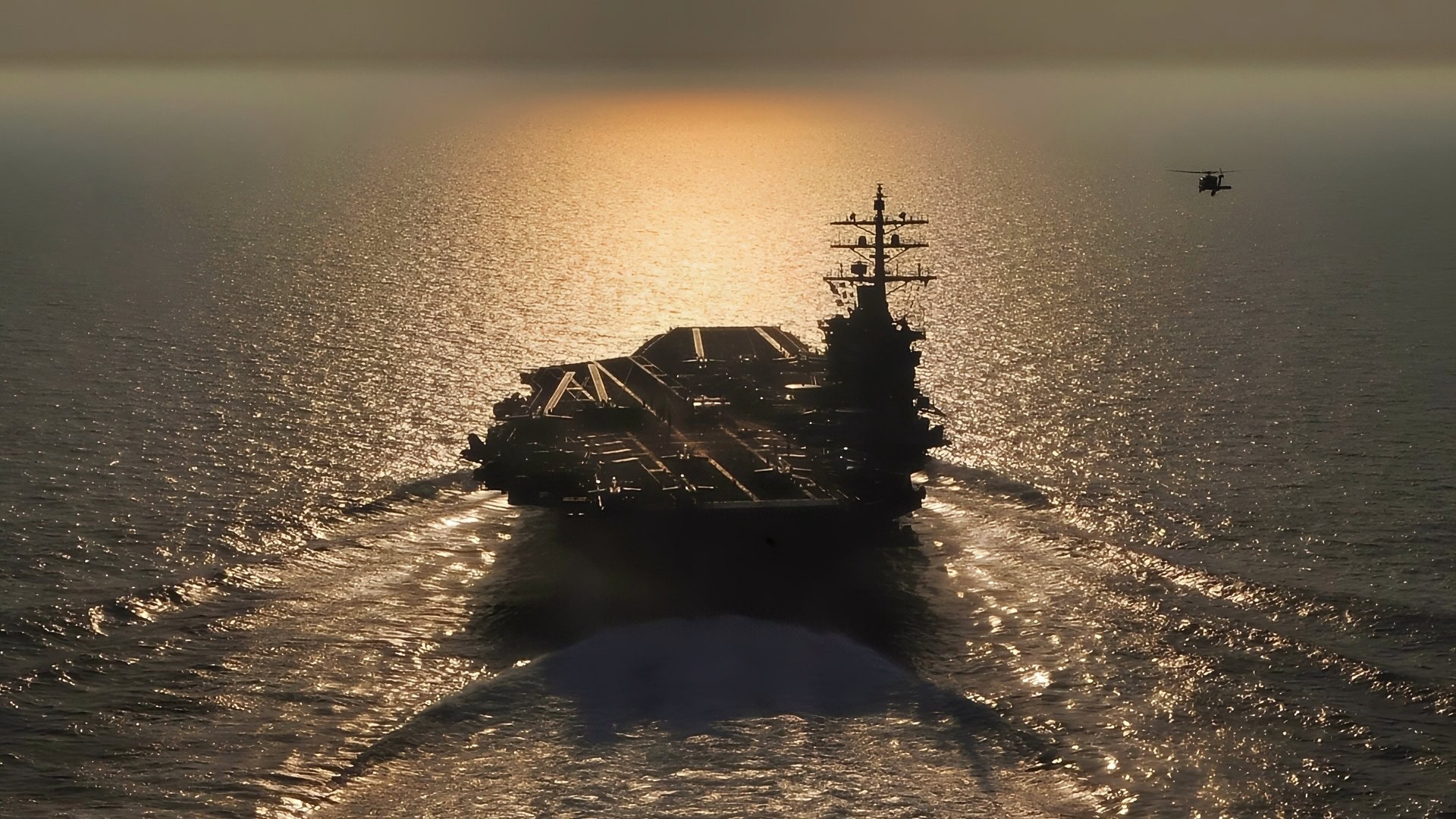
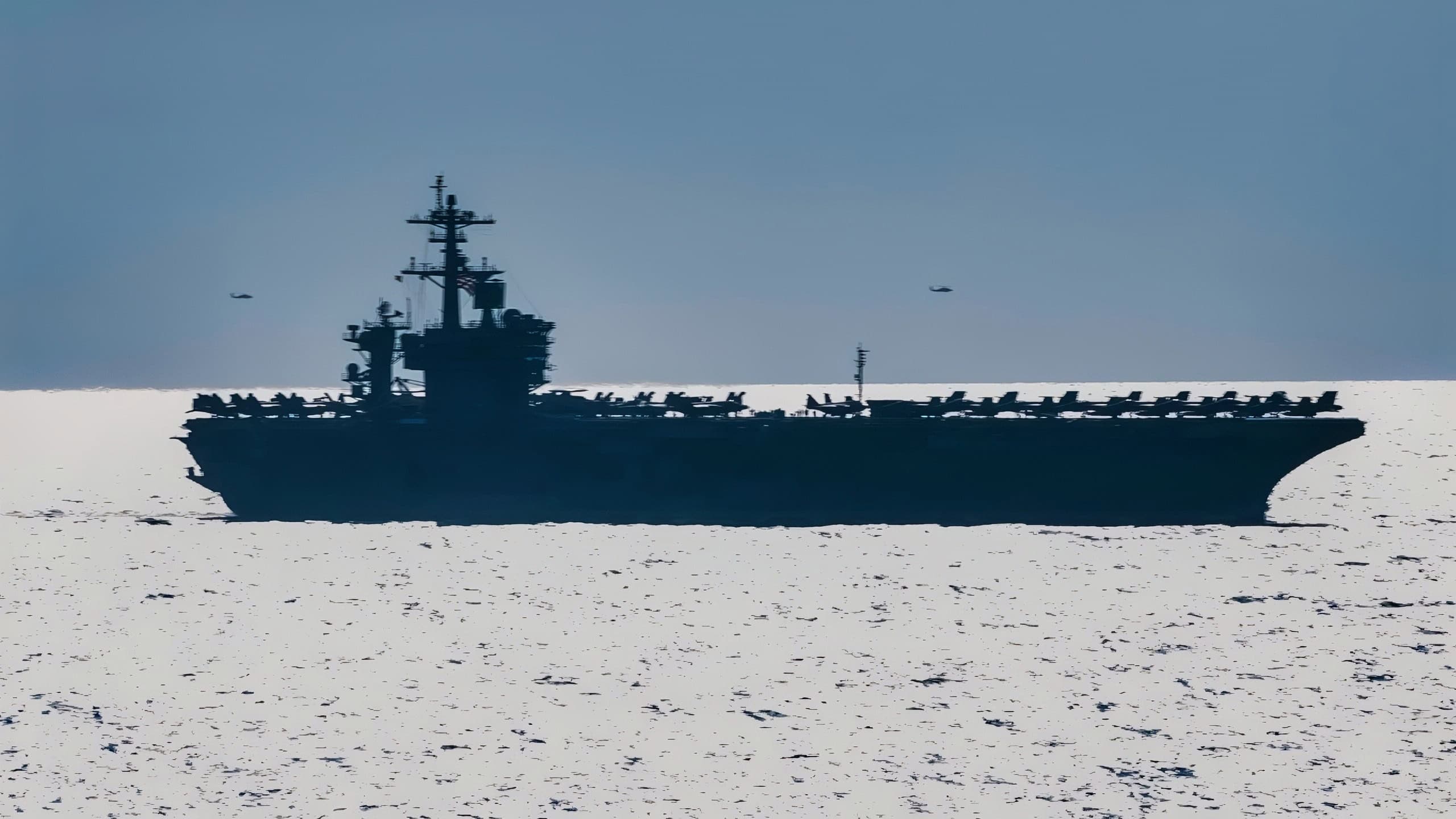
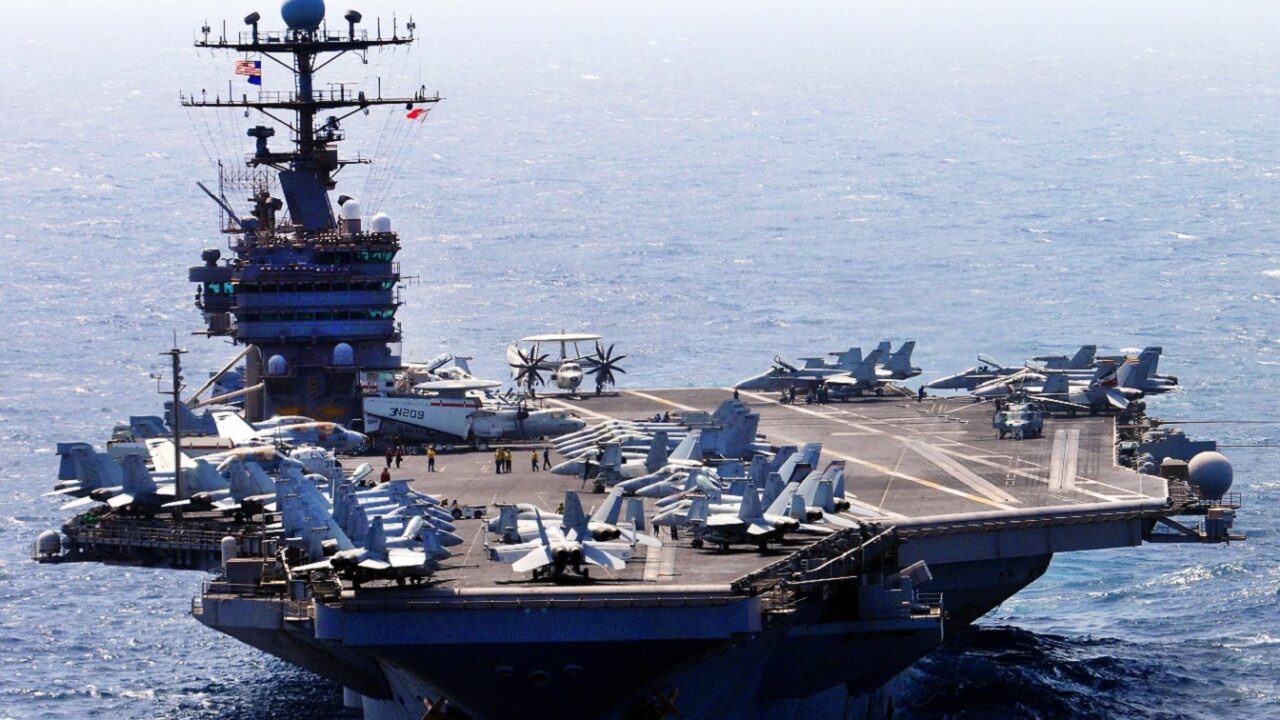
The Nimitz-class aircraft carriers are a fleet of ten nuclear-powered vessels in the U.S. Navy, designed for versatile air operations and enhanced capabilities over previous classes. With a large flight deck, advanced technology, and robust defensive armament, they have played a crucial role in U.S. military operations since 1975, participating in various conflicts and missions worldwide.
Specifications

General

Crew3,500
Length M332.8 m
Catapults4
Propulsionnuclear
Speed Knots30 knots
Launch SystemCATOBAR
Aircraft TypesF/A-18 Hornet, E-2 Hawkeye, C-2 Greyhound, and others
Aircraft Capacity60
Displacement Tons100,000 tons

Other

Reactors2 x Westinghouse A4W pressurised-water reactors
Arresting GearMk 7 hydraulic arresting gear; 4 cross-deck pendants (3 on CVN-76 and CVN-77)
Shaft Power Hp~260,000 shp (est.), 4 shafts / 4 steam turbines
Ships In Class10 (CVN-68 through CVN-77), commissioned 1975-2009
Mid Life OverhaulRefuelling and Complex Overhaul (RCOH) at ~25 years; planned ~4 years, recent overhauls ~6 years
Air Wing Personnel~1,500-2,500 embarked air wing personnel; total complement ~5,000-5,700
Flight Deck Width M76.8 m (252 ft, extreme flight-deck beam)
Self Defense Armament2-3 Mk 29 Sea Sparrow/ESSM launchers, 2 RIM-116 RAM launchers, 3-4 Mk 15 Phalanx CIWS (fit varies by hull)
Latest Developments
Oct 5, 2026strong signal
US Navy 100,000-Ton Nimitz-Class and Ford-Class Nuclear Aircraft Carriers Have 1 Clear Weakness That Can’t Ever Be Fixed

The Nimitz-class was designed for a roughly 50-year service life.

Aug 19, 2026strong signal
Federal Law Requires 11 US Navy Aircraft Carriers. One More Delay Drops the Navy to 10.

Today, the US operates 11 supercarriers, ten of the aging Nimitz-class and one of the modern Ford-class.

Jul 30, 2026strong signal
The US Navy Now Needs 15 Years to Build One Nuclear Aircraft Carrier. That Is Why a 51-Year-Old Ship Cannot Retire.

The Navy planned to deactivate USS Nimitz in May 2026.

Featured Coverage
Research Notes

Cold War nuclear carrier class that defined U.S. sea-based air power

high

The Nimitz class became the backbone of U.S. carrier aviation for decades and remains the bridge between Enterprise-era carriers and the Ford class.

The Nimitz class is one of the most consequential warship families in modern naval history. It gave the U.S. Navy a large nuclear-powered carrier force able to sustain forward presence, crisis response, deterrence, and high-tempo air operations far from U.S. territory.

The U.S. Navy groups Nimitz and Gerald R. Ford-class carriers as the world's largest warships, designed for long service lives with mid-life refueling. That service model allowed Nimitz-class ships to remain relevant across the Cold War, post-Cold War operations, the wars after 2001, and the current transition toward Ford-class ships.

For HiWars, the Nimitz-class page should be treated as a class and force-structure overview. Individual ship records can then capture refueling complex overhauls, deployment history, air wing composition, maintenance periods, and retirement timing.

Mobile airfield, command hub, and strike-group center

high

A Nimitz-class carrier is best understood as the center of a carrier strike group rather than as a standalone ship.

The U.S. Navy describes aircraft carriers as adaptable and survivable airfields able to control the sea, conduct strikes, and support operations across multiple domains. Nimitz-class ships embody that concept through a large flight deck, nuclear propulsion, aviation fuel and weapons handling, command spaces, and the ability to embark a carrier air wing.

The ship's power depends on the surrounding ecosystem. A carrier needs escorts, submarines, logistics ships, aircraft maintenance, trained crew, munitions, tanking, and command networks. Without that system, the hull alone does not represent the full capability.

This makes Nimitz-class records useful when connected to deployments, air wings, escorts, and theaters. Carrier pages should help readers understand where sea-based aviation was available and what wider force package supported it.

Refueling, aging, and Ford-class replacement

high

Nimitz-class relevance increasingly depends on managing aging ships while Ford-class carriers enter the fleet.

Nimitz-class carriers are not static assets. Each ship's condition depends on refueling complex overhaul status, maintenance availability, modernization, crew readiness, and how much service life remains before retirement.

CRS reporting on the Ford program is also relevant to Nimitz because Ford-class procurement determines how quickly the older class can retire. If Ford-class ships are delayed or force-level requirements change, Nimitz-class service lives and maintenance planning become more important.

HiWars should therefore treat Nimitz as a transition-era class. The record should connect each hull to overhaul status, deployment tempo, projected retirement, and replacement by Ford-class ships.

Key parameters at a glance

high

Figures reflect published US Navy and builder data; complement and air wing numbers vary by hull and deployment.

Role
Nuclear-powered CATOBAR supercarrier
Ships in class
10hulls (CVN-68 to CVN-77)
Commissioning span
1975-2009
Full-load displacement
~100,000long tons
Length overall
332.8m (1,092 ft)
Flight deck width
76.8m (252 ft)
Propulsion
2 x A4W reactors, ~260,000 shp (est.), 4 shafts
Flight deck fit
4 steam catapults, 4 deck-edge elevators, 4 arresting wires
Complement
~3,000-3,200 ship's company plus ~1,500-2,500 air wing
Service arc
USS Nimitz decommissioning set for March 2027, ~52 years after commissioning

Program milestones

high

Publicly reported milestones across the class and the ongoing Ford-class transition.

1975-05USS Nimitz (CVN-68) commissioned

Lead ship enters service at Newport News, introducing the two-reactor A4W plant that replaced the eight-reactor arrangement of USS Enterprise.

1986-10USS Theodore Roosevelt (CVN-71) commissioned

Start of the improved subgroup, built with heavier armour protection and detail design changes carried through the remaining hulls.

1998-05USS Nimitz begins first-of-class RCOH

Refuelling and Complex Overhaul at Newport News, completed in 2001, establishing the mid-life template for the rest of the class.

2009-01USS George H.W. Bush (CVN-77) commissioned

Tenth and final Nimitz-class hull, serving as a transitional design with bulbous bow, redesigned island and other Ford-class precursors.

2017-07USS Gerald R. Ford (CVN-78) commissioned

First Ford-class carrier enters service with electromagnetic catapults, advanced arresting gear and dual-band radar, beginning the class replacement.

2025-03USS Nimitz departs on final operational deployment

Sails from Bremerton for a roughly nine-month Indo-Pacific and Middle East deployment, returning in December 2025.

2026-03Navy extends Nimitz service life into 2027

Decommissioning slips roughly ten months to March 2027 to align with delivery of USS John F. Kennedy (CVN-79) and hold the fleet at 11 carriers.

2026-07Nimitz arrives at Naval Station Norfolk

Completes the transit around South America to her final homeport, where she is to support aviation training before inactivation and defuelling.

Strategic significance

medium

The Nimitz class defined US carrier aviation for roughly half a century. Ten hulls commissioned between 1975 and 2009 gave the Navy a standardised, nuclear-powered platform able to sustain a 60-plus aircraft air wing anywhere it could be supported logistically, and the class absorbed successive air wings from the A-6 and F-14 era through the Super Hornet, EA-18G, E-2D and now the F-35C and CMV-22B. That continuity of deck, catapult and arresting-gear standards is a large part of why the design remained relevant across such a long service arc.

The class is now in a managed drawdown. USS Nimitz herself was scheduled to decommission in 2026, but the Navy extended her into March 2027 to line up with delivery of the Ford-class USS John F. Kennedy (CVN-79) and to avoid dropping below the congressionally mandated 11 carriers. That decision illustrates the core problem of the transition: replacement hulls are arriving later than the legacy hulls are wearing out, and the mid-life Refuelling and Complex Overhaul that keeps a Nimitz useful is itself a multi-year, multi-billion-dollar commitment that competes for the same Newport News dock space.

Operationally, the remaining nine ships still represent the largest concentration of sea-based fixed-wing airpower in the world, but their value proposition is contested. Long-range anti-ship ballistic and cruise missiles have pushed the assumed operating distance further out, which places more weight on air wing range and on unmanned tanking such as the MQ-25. The Nimitz class will remain the numerical backbone of the carrier force well into the 2030s, so how quickly the Ford class matures, and how reliably RCOH schedules hold, will matter more to US carrier availability than any single new-build milestone.

Videos

The Future Of The Aircraft Carrier (CNBC)

Watch on YouTube

USS Nimitz departs for final deployment (FOX 13 Seattle)

Watch on YouTube

USS Nimitz: the nuclear carrier approaching fifty years of service (Bilibili)

Watch on Bilibili
Variants (10)
Service YearName
1975 –USS Nimitz (CVN-68)
1977 –USS Dwight D. Eisenhower (CVN-69)
1982 –USS Carl Vinson (CVN-70)
1986 –USS Theodore Roosevelt (CVN-71)
1989 –USS Abraham Lincoln (CVN-72)
1992 –USS George Washington (CVN-73)
1993 –USS John C. Stennis (CVN-74)
1998 –USS Harry S. Truman (CVN-75)
2003 –USS Ronald Reagan (CVN-76)
2009 –USS George H.W. Bush (CVN-77)
Sources & References
UNITS
NameCountryStatusService YearDescription
USS George H.W. Bush (CVN-77)
🇺🇸United States
ACTIVE2009 – PresentLast Nimitz-class nuclear carrier
USS Ronald Reagan (CVN-76)
🇺🇸United States
ACTIVE2003 – PresentNimitz-class nuclear carrier
USS Harry S. Truman (CVN-75)
🇺🇸United States
ACTIVE1998 – PresentNimitz-class nuclear carrier
USS John C. Stennis (CVN-74)
🇺🇸United States
ACTIVE1995 – PresentNimitz-class nuclear carrier
USS George Washington (CVN-73)
🇺🇸United States
ACTIVE1992 – PresentNimitz-class nuclear carrier
USS Abraham Lincoln (CVN-72)
🇺🇸United States
ACTIVE1989 – PresentNimitz-class nuclear carrier
USS Theodore Roosevelt (CVN-71)
🇺🇸United States
ACTIVE1986 – PresentNimitz-class nuclear carrier
USS Carl Vinson (CVN-70)
🇺🇸United States
ACTIVE1982 – PresentNimitz-class nuclear carrier
USS Dwight D. Eisenhower (CVN-69)
🇺🇸United States
ACTIVE1977 – PresentNimitz-class nuclear carrier
USS Nimitz (CVN-68)
🇺🇸United States
ACTIVE1975 – PresentLead ship Nimitz class
Related Discussions

No discussions about Nimitz-class yet

Start the first discussion