
052D, J-16 and Other Types of Warships and Fighter Jets Deployed, How Strong is This Configuration's Combat Power?
On May 31, the Southern Theater Command issued an official statement: The People's Liberation Army Southern Theater Command organized naval and air forces to conduct combat readiness patrols in the territorial waters and airspace around China's Huangyan Island. On the same day, the China Coast Guard announced that on May 31, it conducted law enforcement patrols in the territorial waters and surrounding areas of Huangyan Island.
The combat readiness patrol video released by the Southern Theater Command shows that this operation has a strong "formation." The Southern Theater Command not only deployed multiple warships, including the Type 052D destroyer and Type 054A frigate, but also dispatched various aircraft such as the H-6K and J-16. What kind of combat capability can such a naval and air force configuration generate? In this regard, military commentator Du Wenlong analyzed:
The Type 052D has a large displacement, complete weaponry, and possesses comprehensive air defense capabilities, missile defense capabilities, and anti-ship attack capabilities, among other operational capabilities.
The Type 054 has strong anti-submarine capabilities, and with its large tonnage and strong firepower, it can also handle general maritime and aerial situations.
The Type 056, due to its smaller displacement, fast speed, and strong firepower, can undertake various reconnaissance and alert tasks in the front line, and can respond to unexpected situations with its high speed.
The three types of vessels can leverage their respective advantages around Huangyan Island, forming a powerful reconnaissance, control, and strike capability.
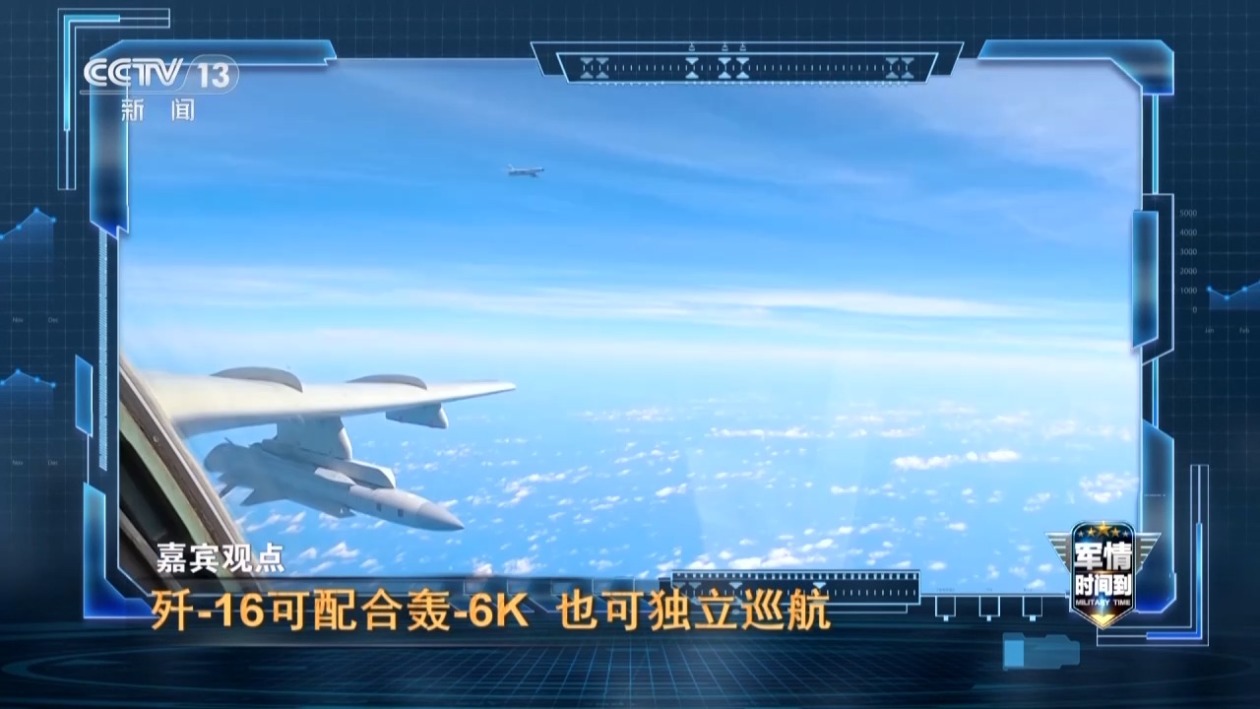
The H-6K is carrying live ammunition for cruise missions; what does this mean?
Military commentator Du Wenlong: It can create a significant strike range in the South China Sea, posing a considerable threat to aircraft carriers, amphibious ships, and other targets. The missile has a fast speed and strong penetration capability, especially the YJ-12, which has been observed in previous exercises to strike at supersonic speeds, with strong maneuverability and trajectory change capabilities at the terminal phase, forming a strong maritime deterrent capability. Additionally, the aerial component is also an offensive formation; the H-6K can carry long-range missiles to initiate attacks, while the J-16 can cooperate with the H-6K or independently conduct cruise operations, indicating that this combination of surface and aerial formations, as well as the three-dimensional integration of naval and air forces, can quickly cover the waters around Huangyan Island and efficiently handle various situations.
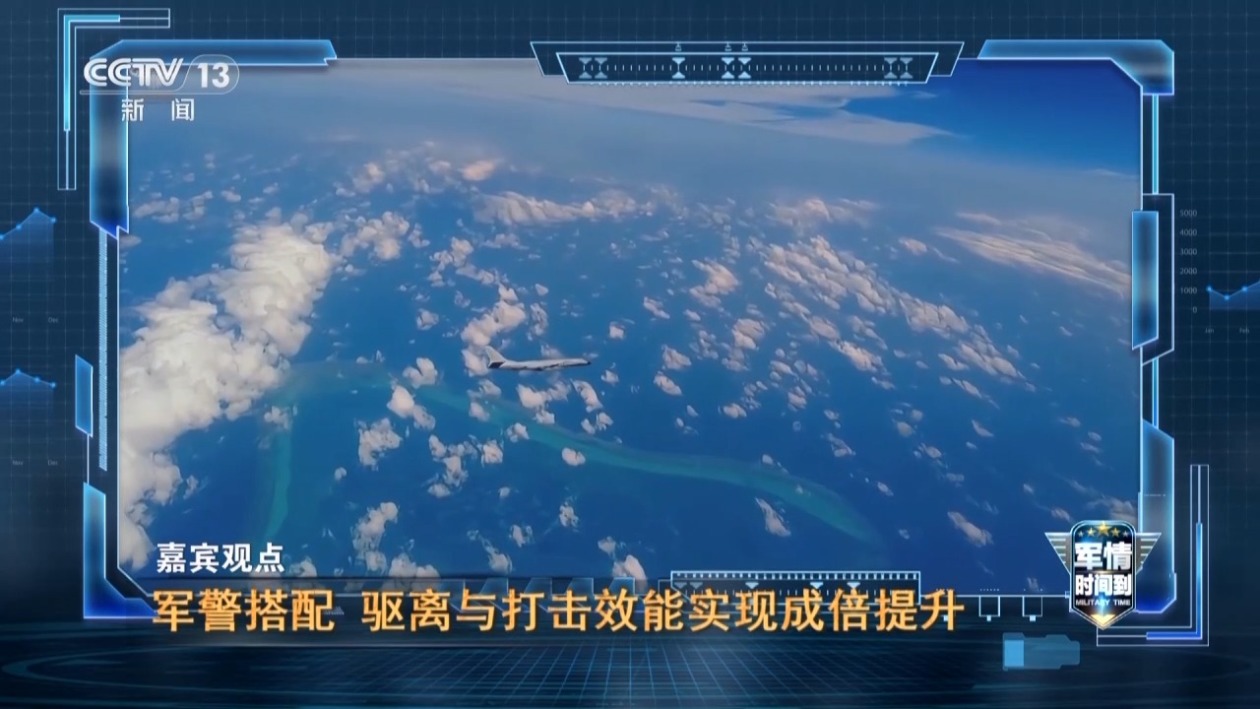
Another characteristic of this operation is that it achieved simultaneous combat readiness patrols by theater forces and law enforcement by Coast Guard vessels on the same day, in the same maritime area, and with synchronized operations—one responsible for sovereignty readiness and the other for maritime law enforcement. What are the challenges and benefits of such military-police coordination?
Military commentator Du Wenlong: There may be some difficulties, firstly, the communication and command methods between the military and police may differ, but through coordination and adaptation, relative consistency can be achieved. Additionally, there are certain differences in the speed and performance of the vessels, but this model currently has significant advantages. Coast Guard vessels and maritime law enforcement forces are regularly present in the vicinity, with very high surveillance capabilities over maritime targets. The Navy, including aerial weaponry, can form rapid strike capabilities, and the deterrent and strike effects it generates in different maritime areas can be exponentially increased, so the military-police combination can respond to threats of varying levels.
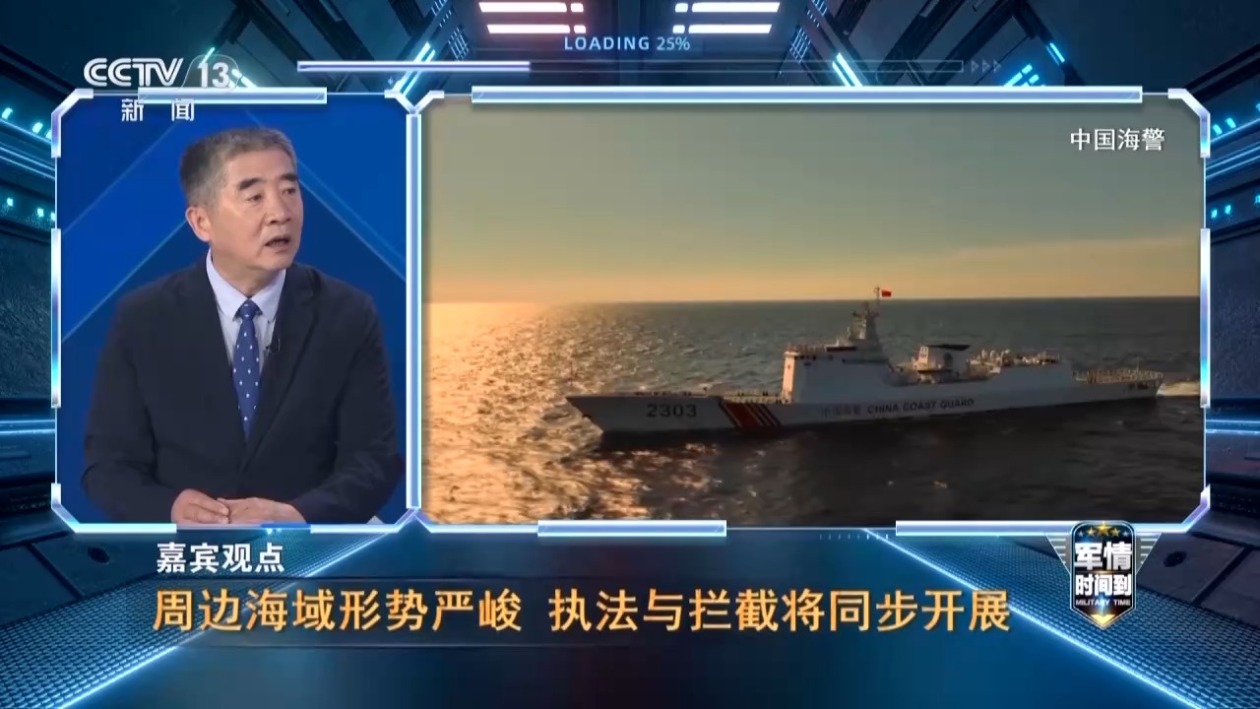
If the maritime infringement actions of certain countries escalate further, what countermeasures can we take?
Military commentator Du Wenlong: The surrounding situation remains severe, so our next steps in law enforcement and military interception actions must proceed in parallel, expanding the early warning range and enhancing early warning capabilities through different combinations. At the same time, new means of deterrence are likely under development and consideration. For those particularly egregious targets, stronger actions should be taken; in addition to proactive electronic interference, I believe there will certainly be more powerful measures to demonstrate China's strength and capabilities in the South China Sea and other maritime areas.
On May 31, the People's Liberation Army Southern Theater Command conducted combat readiness patrols and law enforcement inspections around Huangyan Island in the South China Sea. The operation involved multiple naval vessels, including 052D destroyers and 054A frigates, as well as H-6K bombers and J-16 fighters. This coordinated effort between military and Coast Guard forces aimed to enhance maritime security and readiness in the region.
- The Southern Theater Command organized naval and air forces for patrols around Huangyan Island.
- Multiple vessels including 052D destroyers and 054A frigates were deployed.
- H-6K bombers and J-16 fighters participated in the operation.
- The operation included both military readiness patrols and law enforcement inspections by the Coast Guard.
- The military and Coast Guard coordinated their operations on the same day in the same area.