

Summary and Key Points: The aircraft carrier USS Harry S. Truman entered dry dock at Newport News on Sept. 29 to begin the eighth Nimitz-class Refueling and Complex Overhaul and won’t return until 2031. With USS Nimitz on training duty until retirement in 2027, USS Ronald Reagan and USS John C. Stennis in workups until summer 2027, and USS John F. Kennedy not delivered until March 2027, only six of 11 Navy carriers can deploy during the Iran conflict.
US Navy Aircraft Carrier USS Harry S. Truman Is Now Out of Action for RCOH
On September 29th, the Nimitz-Class aircraft carrier Harry S. Truman entered dry dock at Newport News Shipyard in Virginia to begin her mid-life Refueling and Complex Overhaul (RCOH). That means this mighty 100,000-ton supercarrier will be out of action for years, with no clear return date.
The Truman will be the 8th Nimitz-class carrier to undergo this multi-billion-dollar, multi-year process to refurbish and upgrade the ship for the next 25 years of its lifecycle.
The timing for this is less than ideal.
The US is currently engaged in a hot conflict with Iran and is short of carriers.
Of the Navy’s eleven nuclear-powered aircraft carriers, only six are ready for deployment.
The USS Nimitz (CVN-68) has been relegated to training duties and will be retired in 2027.
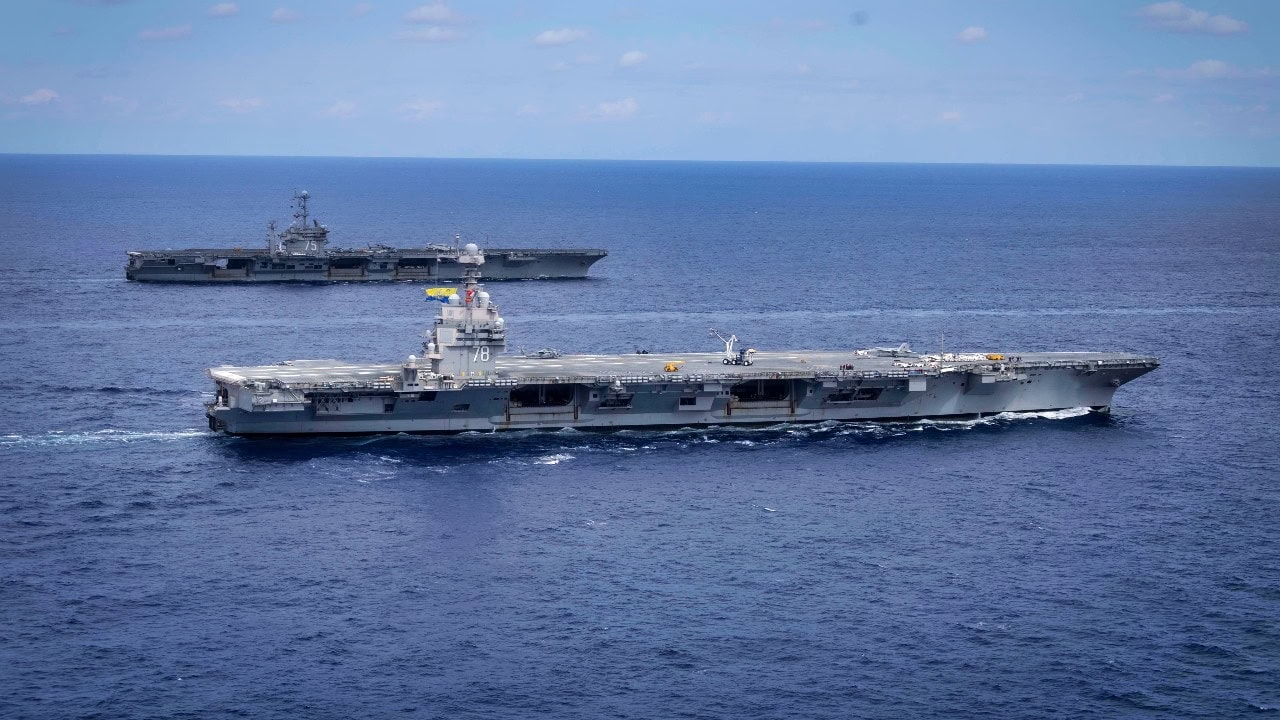
ATLANTIC OCEAN. (Aug. 24, 2024) The Nimitz-class aircraft carriers USS Harry S. Truman (CVN 75), back, and the world’s largest aircraft carrier, USS Gerald R. Ford (CVN 78), sail in formation in the Atlantic Ocean, Aug. 24, 2024. USS Gerald R. Ford is the flagship of the Gerald R. Ford Carrier Strike Group. The aircraft carrier is underway in the Atlantic Ocean to further develop core unit capabilities and skills such as fuels certification and ammunition on-load during its basic phase of the optimized fleet response plan. (U.S. Navy photo by Mass Communication Specialist 2nd Class Maxwell Orlosky).
The USS Ronald Reagan(CVN-76) just completed her complex overhaul. She has a mostly new crew and is in a months-long process of workups and training cruises, and she will not be ready to deploy until summer 2027.
The USS John C. Stennis(CVN-74) has just left overhaul and will not be ready to deploy until the summer of 2027.
USS Harry S. Truman (CVN-75) has entered drydock and will be out of service until 2031.
The replacement for the Nimitz, the USS John F. Kennedy(CVN-79), might be delivered to the Navy in March of 2027
The carrier USS John C. Stennis has just completed her major overhaul 14 months behind schedule.
As she left the dry dock, the Truman was almost right behind her, as the Newport News Shipyard in Virginia is the only place these extensive, complex overhauls can be done.
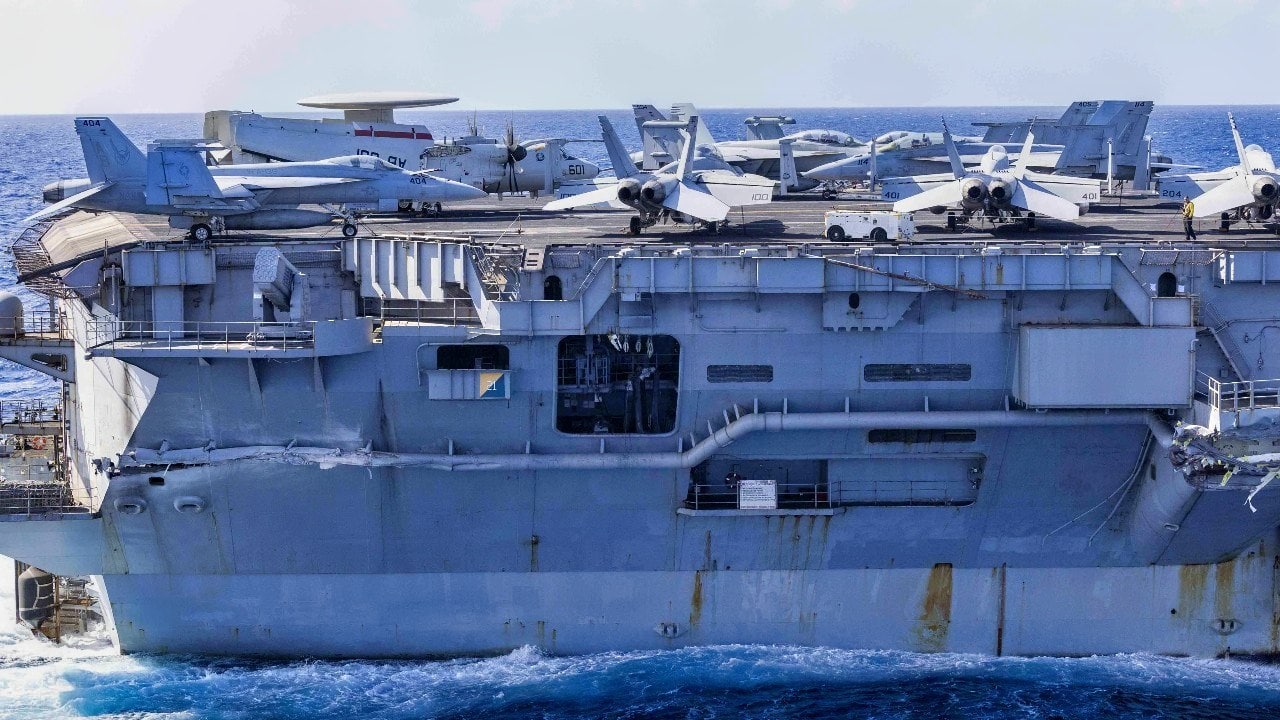
(Feb. 13, 2025) Exterior damage of USS Harry S. Truman (CVN 75) viewed from an MH-60S Sea Hawk helicopter, attached to the “Dragonslayers” of Helicopter Sea Combat Squadron (HSC) 11 following a collision with the merchant vessel Besiktas-M, Feb. 12, while operating in the vicinity of Port Said, Egypt. USS Harry S. Truman, the flagship of the Harry S. Truman Carrier Strike Group (HSTCSG), is on a scheduled deployment in the U.S. 6th Fleet area of operations supporting U.S. Naval Forces Europe-Africa to defend U.S., Allied and partner interests. (U.S. Navy photo by Chief Mass Communication Specialist Jose Hernandez)
The work on the Stennis was delayed when unexpected damage to one of her steam turbine generators required additional repair or replacement.
Post-pandemic supply chain issues and a shortage of dockyard workers made this harder.
The Nimitz-Class Carriers Have Turbine Problems
The same turbine issue appeared in the Washington when she entered drydock for her complex overhaul.
That turned a four-year overhaul into six years, which in turn delayed work on the Stennis as well; it was finished 14 months behind schedule.
The delays on both carriers mean the Truman is three and a half years behind schedule for her own overhaul.
There is every reason to suspect she too will need one or more turbines replaced, causing an even greater delay in overhauling the next carrier that follows the Truman.
Our Ability To Project Power Is Suffering
The US Navy’s ten Carrier Strike Groups represent US power projection and protect its interests and allies around the world.
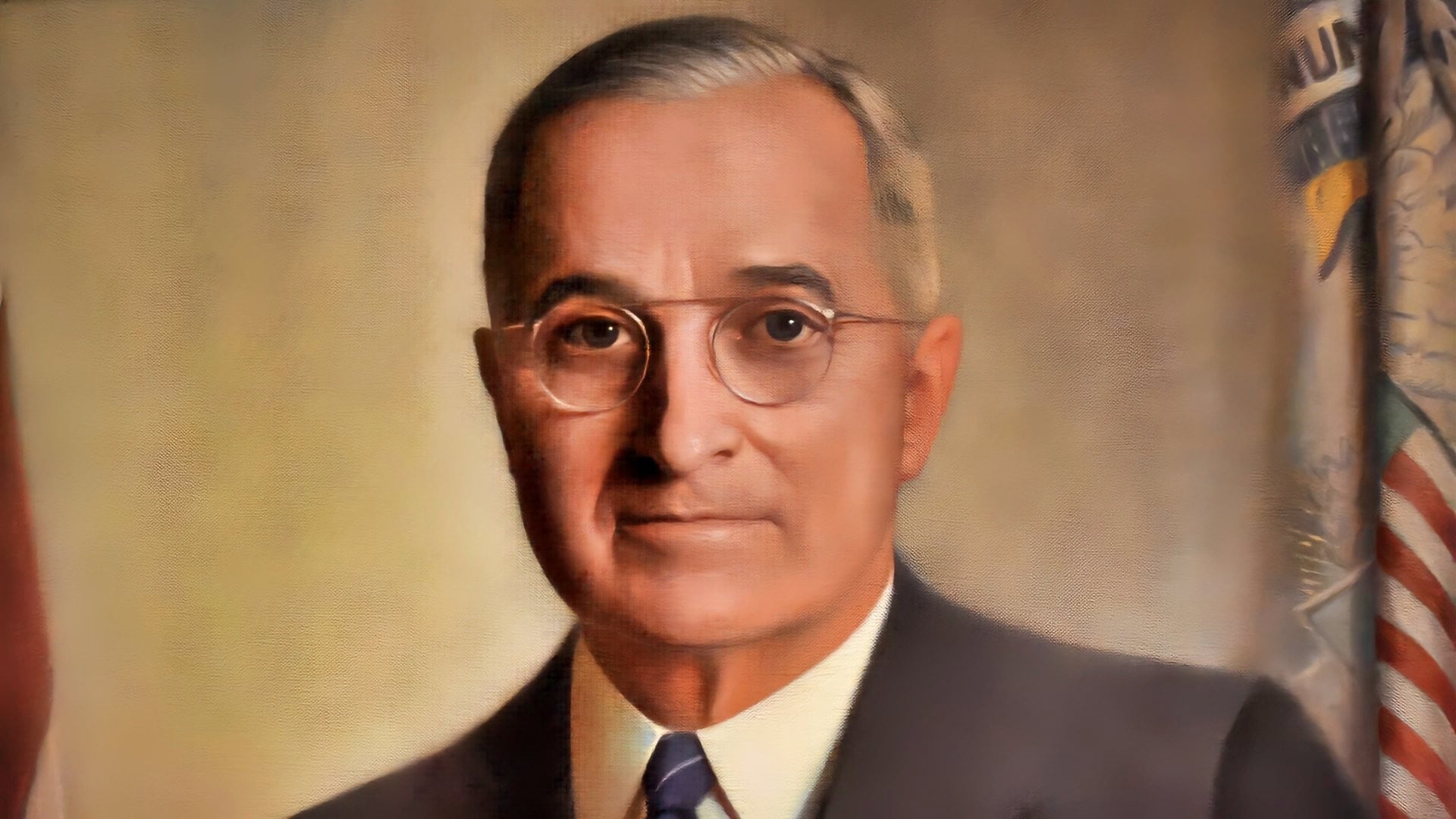
Harry S. Truman National Portrait Gallery 19FortyFive.com Photo Taken in Washington, DC on 1/23/2026.
Its ships, aircraft, and submarines, with their varied offensive capabilities and ability to loiter, are a critical component of US foreign policy.
It is said that when a US president gets his first brief on an emerging crisis somewhere in the world, his first question is, “Where are the aircraft carriers?”
The six deployable Carrier Strike Groups available today represent a considerable reduction of US power projection from the ten we are trying to maintain.
This is at a time of conflict with Iran when a shortage of carriers means much longer deployments for those on station, increased wear and tear on their machinery, nuclear reactors, aircraft, and the crews manning them.
The Navy Has Its Hands Tied
The Navy has very limited options here, if any.
Only a single shipyard in Newport News, Virginia, can do complex overhauls, and building one on the West Coast seems like a tall task.
Complex overhauls for aircraft carriers take years of planning, staging, and execution and require about five million man-hours.
Much of it happens on a 24-hour schedule, five days a week.
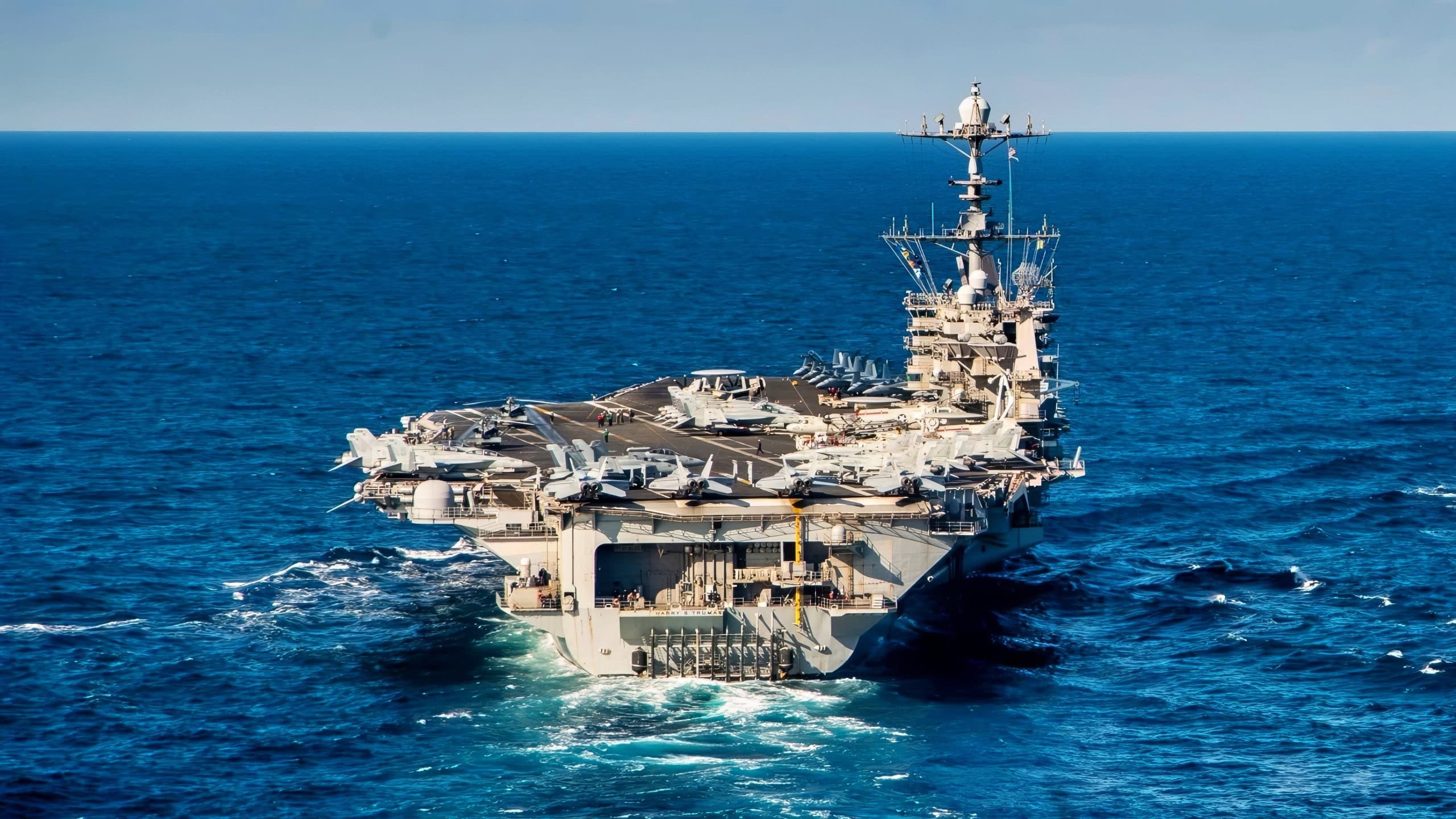
MEDITERRANEAN SEA (Jan. 22, 2021 The Arleigh Burke-class guided-missile destroyer USS Gravely (DDG 107) breaks away from the Nimitz-class aircraft carrier USS Harry S. Truman (CVN 75) following a replenishment-at-sea exercise, Jan. 22, 2022. The Harry S. Truman Carrier Strike Group is on a scheduled deployment in the U.S. Sixth Fleet area of operations in support of naval operations to maintain maritime stability and security, and defend U.S., allied and partner interests in Europe and Africa. (U.S. Navy photo by Mass Communication Specialist 3rd Class Bela Chambers)
Delaying one major overhaul to keep a carrier in service delays future work for all carriers scheduled to follow, as added wear and tear shortens the window in which that work must be performed.
The Timing Couldn’t Be Worse
With only one shipyard for this work, long delays in getting it done, and an ongoing conflict in Iran, the USS Harry S. Truman is the latest aircraft carrier to flip its “Not In Service” sign and head for the garage.
It couldn’t come at a worse time.
About the Author: Sean Spoonts
Sean Spoonts is the former Editor-In-Chief of SOFREP.com. He is a military analyst, writer, and commentator whose work has appeared in Newsweek, CNS News, Ukrinform, and various military/veteran media networks and professional publications, including the Military Intelligence Professional Bulletin. He is a U.S. Navy veteran, having served as an Aviation Anti-Submarine Warfare Operator and Search and Rescue Helicopter Aircrewman.