
Saudi Arabia is considering an attack involving 100,000 fighters to reclaim Bab al-Mandab from the Houthis in 2026.
 Ahmed Al-Rashid
Saudi Arabia is considering an attack involving 100,000 fighters to reclaim Bab al-Mandeb from the Houthis in 2026
【Riyadh】Reports published between October 2 and 3, 2026, discussed Saudi Arabia's readiness for a large-scale attack in Yemen aimed at regaining control of Bab al-Mandeb from the Houthi group, with estimates circulating of up to 100,000 Yemeni fighters. Reuters, Axios, and Daily Sabah conveyed the idea in different forms, while other sources mentioned that the United States does not intend to participate in combat during the initial phase. These are not confirmed operational orders, and there is currently no official Saudi announcement verifying the size of the force or the timing of the attack, but the timing of the reports reveals that Riyadh has shifted from managing the threat in the Red Sea to considering changing its source.
From circulating news to military inquiry
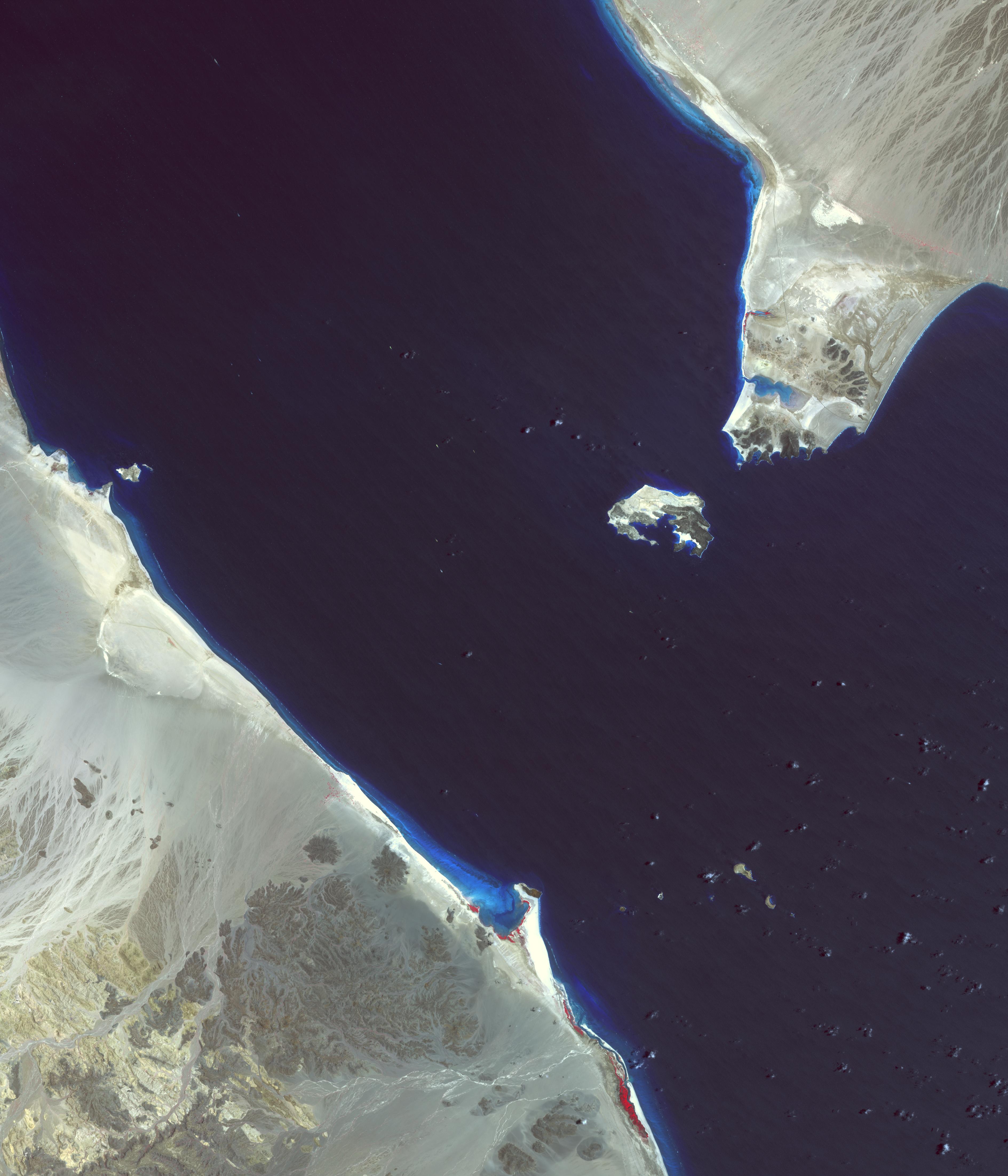
Bab al-Mandeb is not a distant geographical point from Saudi security. The strait connects the Red Sea to the Gulf of Aden, and any Houthi capability to threaten ships or impose costs on passage gives the group a leverage that extends beyond Yemen. For Riyadh, this means that protecting the coast and oil facilities is not enough if the southern maritime route remains open to missile, drone, and boat attacks.
However, the circulating figure of 100,000 fighters requires careful interpretation. It may refer to the total Yemeni forces that can be politically gathered, not to a unified offensive force ready to move in a single day. The difference between lists of names and units that can be commanded and supplied is very significant. Any military person who has served in the region knows that a paper mobilization does not equal maneuvering power, especially in a country with multiple decision-making centers and loyalties.
Why might Riyadh consider an attack now
First, the reports are linked to Saudi attacks on Houthi targets and discussions about targeting a power station in Medina, information that requires independent verification of its field details. Second, the Red Sea has become part of a broader equation that includes energy security, supply chains, and Saudi Arabia's reputation as a guarantor of trade routes. Third, the formation of a political and security committee linked to the Mecca Agreement for mutual defense, along with Pakistan's talk of focusing on Houthi attacks, gives Riyadh a regional channel to distribute the political and military burden.
However, the announced Pakistani support does not mean Islamabad is ready to send combat troops. It is more likely that its contribution, if it develops, will focus on advice, training, mediation, and logistics. The discussion of a direct Turkish or American role remains unresolved. Washington may provide reconnaissance, munitions, and air defense, but it seems keen to keep the offensive decision Arab and Yemeni, so that the operation does not turn into a new American war.
Bab al-Mandeb cannot be reclaimed by airstrikes alone
The presumed operational goal is not to occupy all Houthi areas, but to push them away from the coast and secure the ports and routes leading to the strait. To achieve this, the attacking force needs continuous reconnaissance, short-range air defense, engineering for mine clearance, port protection, and a command system capable of coordinating different Yemeni units. It also needs naval capability to prevent resupply to the Houthis or the transfer of missiles to launch areas.
Here, the equation of triad capability emerges, which is often overlooked in armament data: equipment, training, and institution. Saudi Arabia can provide aircraft and munitions, and it may be able to gather a large force, but the success of the operation depends on the discipline of this force after the first engagement and its ability to hold ground without turning the population into new adversaries. An airstrike may destroy a launch platform, but it does not create local police, fix a port, or resolve tribal disputes.
Moreover, the Houthis do not need to have complete control over Bab al-Mandeb to raise the cost of navigation. It is sufficient for them to maintain mobile missile cells, low-cost drones, and unmanned boats operating from scattered coasts. Therefore, an incomplete ground attack may shift the threat southward or to the sea, rather than eliminate it. Controlling the coastal strip requires long-term monitoring, a task that is fundamentally different from executing a wave of bombing.
The message to Iran and the United States
If Riyadh proceeds with the operation, it will send a message to Iran that pressure on navigation will not go unanswered, and that Saudi Arabia is prepared to use its Yemeni partners instead of relying entirely on American power. However, Tehran may respond indirectly by increasing technical support for the Houthis or opening pressure fronts on energy and port facilities. In this case, reclaiming Bab al-Mandeb becomes part of a regional war of attrition rather than a limited battle.
The United States will face a practical contradiction. It wants to protect navigation and deter attacks, but it does not want to bear the consequences of a large-scale Saudi attack alone. Therefore, it may provide early warning, intelligence, and missile interception while refraining from announcing direct participation. This arrangement gives Riyadh political space, but it also leaves it facing a difficult test if Yemeni forces suffer significant losses or navigation is further disrupted.
The problem that the number 100,000 does not solve
The real capability is not measured by the announced number of fighters, but by the number of units that can be mobilized, fed, maintained, and led under fire. If the circulating number is merely a sum of anti-Houthi forces, then transforming it into a single army will require a political agreement that airstrikes do not provide. If it is a limited attack led by selected units, its chances may be better, but it will not guarantee permanent control over the strait.
Practically, Riyadh has a strong reason to plan such an operation, but it does not have a guarantee that the operation will produce lasting security. Attacks may buy time and reopen some routes, but they will not buy cohesive Yemeni institutions. The harsh conclusion is that Saudi Arabia is trying to militarily reclaim Bab al-Mandeb, while the strait needs a viable Yemeni authority and continuous maritime security. Between the two goals remains the gap in which most power projects in the region fail.
Sources
- Reuters, October 2, 2026 on potential Saudi plans against the Houthis to mitigate the Red Sea threat.
- Axios, October 2, 2026 on the possibility of a Saudi attack without direct American participation.
- Daily Sabah, October 3, 2026 on Saudi Arabia's search to reclaim Bab al-Mandeb.
- Middle East Monitor, October 2, 2026 on the meeting of the Mecca Agreement committee and the focus on Houthi attacks.
- Al-Monitor, October 3, 2026 on Russia's balance between Saudi Arabia and the Houthis in Yemen.
Saudi Arabia is planning a large-scale military operation involving 100,000 fighters to regain control of Bab al-Mandab from the Houthis in 2026. The U.S. is not expected to participate in the initial phase, and the operation aims to secure maritime routes and protect energy infrastructure. The success of the operation will depend on the coordination of various Yemeni units and sustained military presence.
- Saudi Arabia is planning an attack involving 100,000 fighters to regain Bab al-Mandab from the Houthis in 2026.
- The U.S. is not expected to participate in the initial phase of the operation.
- The operation aims to secure maritime routes and protect energy infrastructure.
- The success of the operation depends on the coordination of various Yemeni units and sustained military presence.
- The attack could escalate regional tensions and provoke a response from Iran.