
101st Airborne soldiers hitch rides aboard Marine Ospreys in exercise

Ahead of the 101st Airborne Division’s receipt of the Bell MV-75, its personnel tested the tiltrotor waters in a training exercise with the Marine Corps MV-22 Osprey.
On Jan. 23, the Army’s 101st Airborne Division at Fort Campbell, Kentucky, used aircraft from the North Carolina-based Marine Medium Tiltrotor Squadron 744 for Operation Lethal Eagle, according to a video release.
The operation, a 21-day exercise featuring mock-up Army initiatives, aims to cultivate large-scale and long-range air assault capabilities throughout the division, per the video’s description.
The exercise continues the 101st Airborne Division’s experimentation on tiltrotor aircraft as the service prepares to receive its own delivery, the Bell MV-75, in the near future.
The division planners wanted to utilize the Osprey in training to mitigate any possible learning curve prior to receiving the MV-75, according a report from Stars and Stripes.
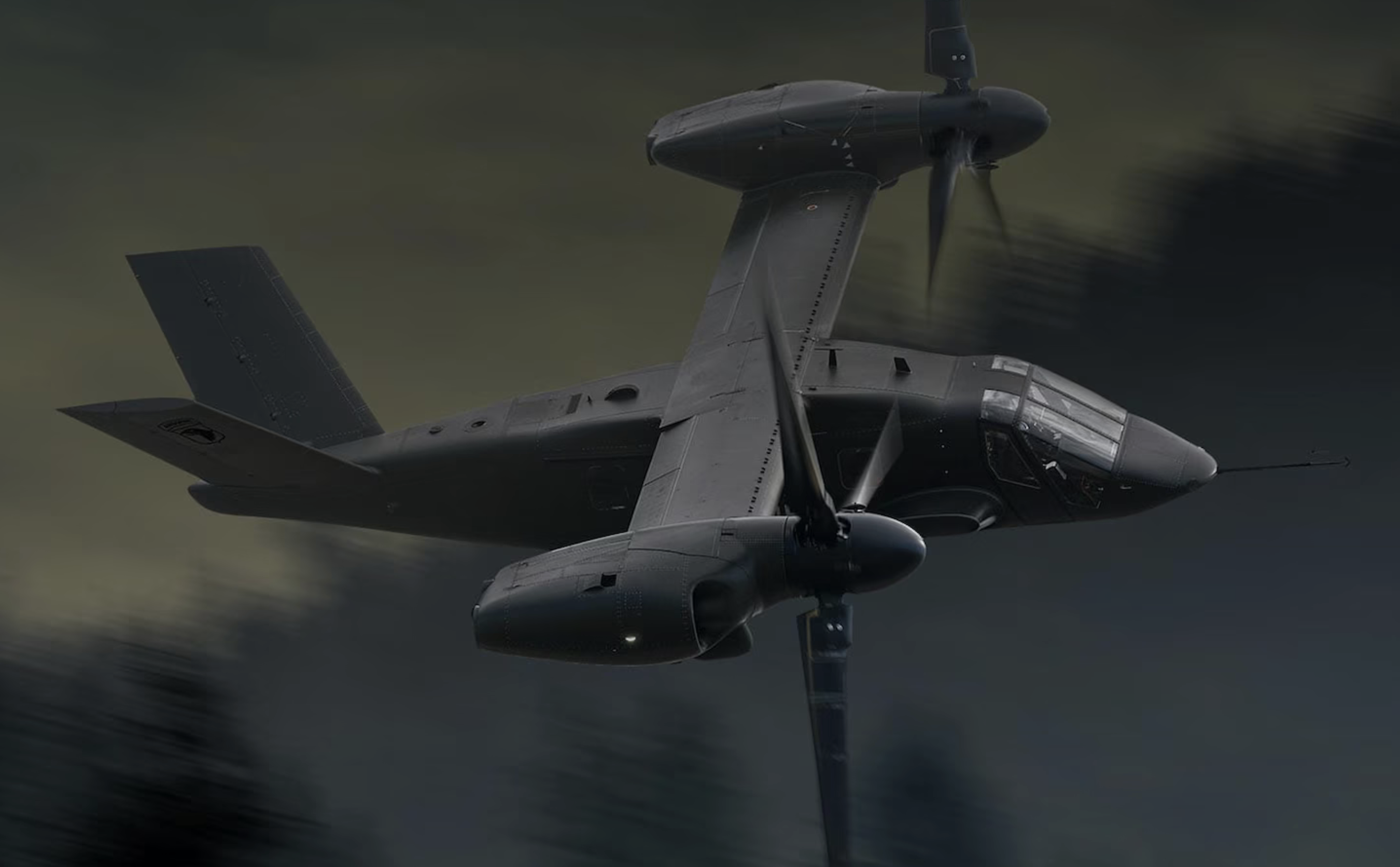
The MV-75 will be slightly smaller than the Osprey, but will be able to carry 14 troops. It was built completely from scratch to fulfill the Army’s unique needs, Stripes reported. The aircraft’s design includes an all-digital platform that allows the Army to adapt to enemy capabilities courtesy of software and hardware that can be quickly modified.
The 101st Airborne Division was selected in March 2025 as the first unit to receive the Future Long-Range Assault Aircraft, meant to replace the Black Hawk utility helicopters, because of the division’s “mission profile and theater demands.”
“The 101st flies into real world contested environments, across wide terrain, often without the luxury of fixed support infrastructure,” Army Gen. James Mingus said previously of the decision. “They need speed, endurance and reliability.”
The MV-75 has a cruise speed of 320 miles per hour, compared to the Black Hawk’s speed of around 183 miles per hour, with an unfueled range of 920 miles. The Black Hawk’s range is approximately 367 miles.
Army Army Chief of Staff Gen. Randy George announced earlier this month that the service will begin training on MV-75 prototypes as early as this year.
The aircraft was previously slated for delivery between 2031 and 2032, but George announced during the town hall that production has been accelerated.
“We said, ‘No, we need it very quickly,’” George said at a townhall meeting. “At the end of this year, we will actually have those flying.”
Zita Ballinger Fletcher contributed to this report.
The 101st Airborne Division conducted a training exercise at Fort Campbell, Kentucky, on January 23, 2025, utilizing Marine Corps MV-22 Ospreys as part of Operation Lethal Eagle. This exercise aims to enhance the division's air assault capabilities ahead of receiving the new Bell MV-75 aircraft, which is designed to meet their operational requirements. The MV-75 will replace Black Hawk helicopters and features advanced technology for adaptability in combat.
- 101st Airborne Division conducted a training exercise with Marine Corps MV-22 Ospreys.
- The exercise is part of Operation Lethal Eagle, aimed at enhancing air assault capabilities.
- The 101st is preparing to receive the Bell MV-75, designed for their operational needs.
- The MV-75 will replace Black Hawk helicopters and has superior speed and range.
- Training on MV-75 prototypes is set to begin within the year.