
107 ballistic missiles in 19 days show the limits of Russia's bet on "Zircon"
 Dmitri Volkov
107 ballistic missiles in 19 days show the limits of Russia's bet on "Zircon"
Two figures for July look stronger than any official report: in the first nineteen days of the month, Russia, according to the calculations of the Ukrainian publication "Militarnyi" based on daily summaries from the Ukrainian Air Force, used 107 ballistic missiles and 20 3M22 "Zircon" missiles. If the estimate from the Main Intelligence Directorate of Ukraine regarding the monthly output of about 60 9M723 missiles for the "Iskander-M" system and 40 RM-48U missiles for launches from the S-400 is close to reality, then the incomplete July has already exceeded the monthly production norm for ballistic missiles. The picture for "Zircons" is even sharper: twenty launches in nineteen days with a planned annual output of about thirty units means the consumption of two-thirds of the annual production (Militarnyi, July 19, 2026). This is not the collapse of the Russian missile campaign. It is its transition to a more expensive and more nerve-wracking phase.
What the July launches show
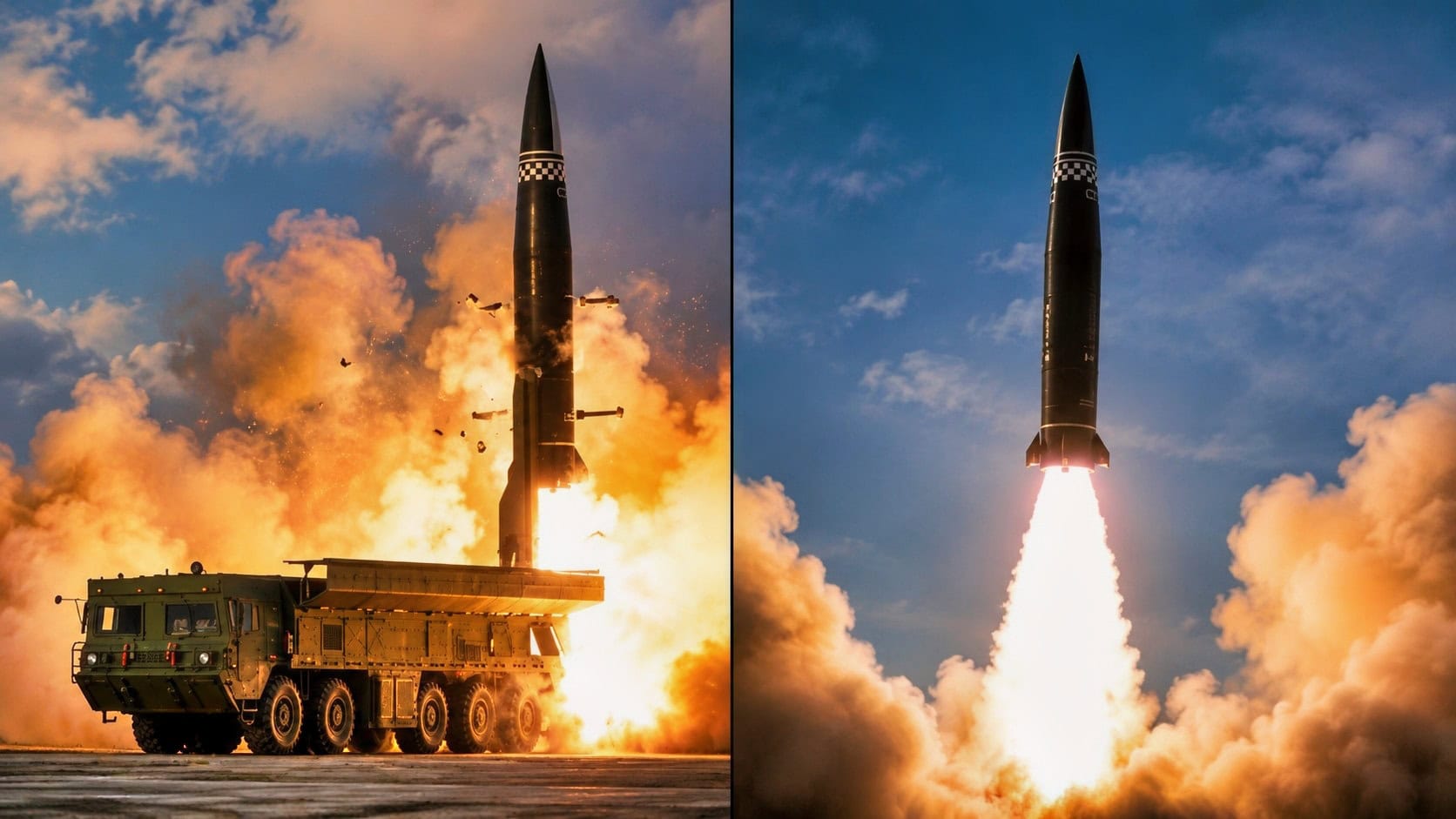
In Soviet and Russian military tradition, a massive strike has always been not only a way to destroy a target but also a way to test the opponent's resilience. The difference in 2026 is that it is no longer just Ukrainian energy or logistics being tested, but the saturation of Ukrainian missile defense. ISW noted in its assessment on July 19 that Russian strikes once again combined ballistic missiles, "Zircons," drones, and strikes on civilian and logistical infrastructure, including the Kharkiv, Odesa, and Mykolaiv regions. Ukrainian President Volodymyr Zelensky publicly noted during the same period that Russia is placing a special bet on ballistics. The wording is political, but its military meaning is quite precise: a ballistic missile reduces the response time of air defense and forces Kyiv to expend its most scarce interception layer.
It is important not to exaggerate the accuracy of the figures. Ukrainian summaries are counted based on launches and interceptions, while the Russian side does not publish complete statistics, and the production estimates from the GUR inevitably have intelligence inaccuracies. But the order of magnitude looks convincing. In June, according to the same calculations, Russia used 102 ballistic missiles from "Iskander-M" and S-400, two X-47M2 "Dagger" missiles, and 15 "Zircons." July is not a random spike after a long pause; it is a continuation of an upward trend. If we accept the estimate of stocks before the attack—over 100 9M723 missiles, over 400 RM-48U missiles, and over 120 "Zircons"—then Russia is consuming not only the current output but also a pre-accumulated reserve. In military economics, this is called not "unlimited power," but accelerated conversion of stockpiles into political effect.
"Zircon" as a symbol and as an accounting problem
The 3M22 "Zircon" missile has been presented by Russian propaganda for years as an almost metaphysical weapon: hypersonic, invulnerable, capable of changing the balance of power at sea and on land. In real war, a symbol always meets accounting. If the annual output is indeed around thirty units, then twenty launches in an incomplete month turn "Zircon" from a strategic reserve weapon into a consumable for a pressure campaign. This may be a conscious choice: it is better to expend an expensive munition now, while Ukrainian air defense is experiencing a shortage of interceptors, than to save it for a future demonstration at a parade or in a report to the minister. But such a choice shows that the Russian General Staff does not see a cheap way to achieve the same effect.
The technical debate about the nature of "Zircon" is also important. Independent experts, including Fabian Hinz, point out that "Zircon" is likely closer to a quasi-ballistic system than to a classic hypersonic cruise missile. This does not make it safe for Ukraine: even a quasi-ballistic trajectory at high speed creates serious difficulties for interception. But it reduces the mythological component. We are not dealing with a miracle weapon, but an expensive high-speed munition with a limited production cycle dependent on materials, electronics, testing infrastructure, and assembly quality. In late Soviet archives, one can find similar logic around systems that looked excellent in reports but scaled poorly in mass production. History, as usual, does not repeat itself, but it does wink slyly.
Why the bet on ballistics does not mean weakness
It would be a mistake to read the July statistics as a sign of Russia's immediate exhaustion. The Russian defense industry has proven since 2022 that it can restructure supply chains, find workarounds for electronics, and maintain missile production above pre-war expectations. The very ability to launch more than a hundred ballistic missiles in an incomplete month indicates the preservation of significant potential. Moreover, Russia combines ballistics with mass drones, cruise missiles, and strikes on energy, ports, postal terminals, and oil infrastructure, thereby forcing Ukraine to distribute limited air defense resources among multiple threats.
But strength and resilience are not the same. The bet on ballistic missiles increases the cost of each cycle of pressure. A cheap "Shahed" can exhaust air defense calculations, but it does not replace the strike of an "Iskander" on a protected target; "Iskander" and RM-48U can penetrate defenses faster, but they require an industrial base that cannot be infinitely accelerated by order. If Russia produces about a hundred ballistic missiles of the relevant classes monthly and consumes more than this volume in twenty days, then the difference is covered by the stockpile. A stockpile, unlike a television broadcast, has a finite volume.
Ukrainian response to oil logistics
Against this backdrop, Ukrainian strikes on Russian oil infrastructure do not appear as a separate story but as part of the same resource war. On July 19, the SBU reported a strike by the maritime drone "Mamaj" on the tanker "Avero" of the Russian "shadow fleet" in the Black Sea and the destruction of three oil depots in the Stavropol region at a distance of about 600 kilometers from the Ukrainian border (ArmiyaInform, July 19, 2026). According to the Ukrainian version, this is already the fourth tanker of this class in ten days. Even if some of the claimed effects require independent confirmation, the direction of the strike is clear: Kyiv is trying to raise the cost of the Russian missile campaign not only through interceptions but also by pressuring revenues, fuel, and logistics.
For the Russian system, this is an unpleasant coincidence. To maintain a high intensity of missile strikes, money, components, transport, fuel, and a political decision to tolerate the accelerated consumption of expensive munitions are needed. At the same time, Ukraine is striking at oil exports and fuel and lubricants depots. This is not a symmetrical response to "Zircon"—Ukraine has no equivalent to the Russian missile arsenal. It is an asymmetric attempt to attack the economic base from which this arsenal is fed.
Strategic conclusion
The July picture indicates Russian adaptation, not Russian degradation in a simple sense. Moscow has likely concluded that the window of Ukrainian interceptor shortages must be used quickly and expensively. Therefore, "Iskanders," launches from S-400, "Zircons," and combined night packages are being employed. However, such a strategy works only under two conditions: if Western supplies of air defense systems are slower than the Russian rate of missile consumption, and if Russian industry can maintain output without a sharp decline in quality.
My forecast is cautious. In the coming weeks, Russia will maintain a high share of ballistic means in strikes against Ukraine, especially against Kyiv, port infrastructure, and logistics nodes. But if the pace of July becomes the norm rather than a demonstration surge, by autumn there will be a choice: to reduce intensity, expend the strategic reserve, or take greater technological risks in production. The Russian army knows how to fight with reserves. The problem is that a reserve is not a doctrine, but a postponement of the moment when accounting catches up with the General Staff.
Russia launched 107 ballistic missiles and 20 3M22 Zircon missiles in July 2026, targeting Ukrainian air defense capabilities across Kharkiv, Odessa, and Mykolaiv Oblasts. This marks a significant increase in missile usage, indicating a strategic shift in military operations. Concurrently, Ukraine has targeted Russian oil infrastructure to disrupt missile supply lines and reduce operational costs for Russia's missile campaign.
- Russia launched 107 ballistic missiles and 20 Zircon missiles in the first 19 days of July 2026.
- The monthly production estimate for Iskander-M missiles is around 60, with 40 RM-48U missiles from S-400 systems.
- The usage of Zircon missiles has significantly exceeded planned annual production rates.
- Ukrainian President Zelensky noted Russia's increased reliance on ballistic missiles.
- Ukraine has conducted strikes on Russian oil infrastructure to counter missile campaigns.