

Military Quote of the Day: “A good Navy is not a provocation to war. It is the surest guarantee of peace.” – Theodore Roosevelt
Theodore Roosevelt was both a famed military leader and a political figure, famously stepping down as Assistant Secretary of the Navy to lead the Rough Riders at the dawn of the Spanish-American War in 1898, then assuming the vice presidency in 1901 and the presidency later that same year.
Throughout his career, before, during, and after his presidency, Roosevelt was known as a Naval strategist, working on various fronts to build up American naval power.
According to a USNI account, Roosevelt first worked to rebuild the U.S. Navy as Assistant Secretary of the Navy in 1897 and 1898. But he had developed an interest in naval power and strategy years earlier.
The Naval War of 1812
According to an account published by the Theodore Roosevelt Association, Roosevelt began studying naval strategy in the War of 1812 while still an undergraduate at Harvard, finishing the book The Naval War of 1812 when he was just 24 years old.
The book, that account said, changed how scholars had viewed the war itself, after Roosevelt “started to articulate a theory that America’s greatness depended on the robust deployment of sea power.” He held to that theory for the rest of his life, including during his presidency.
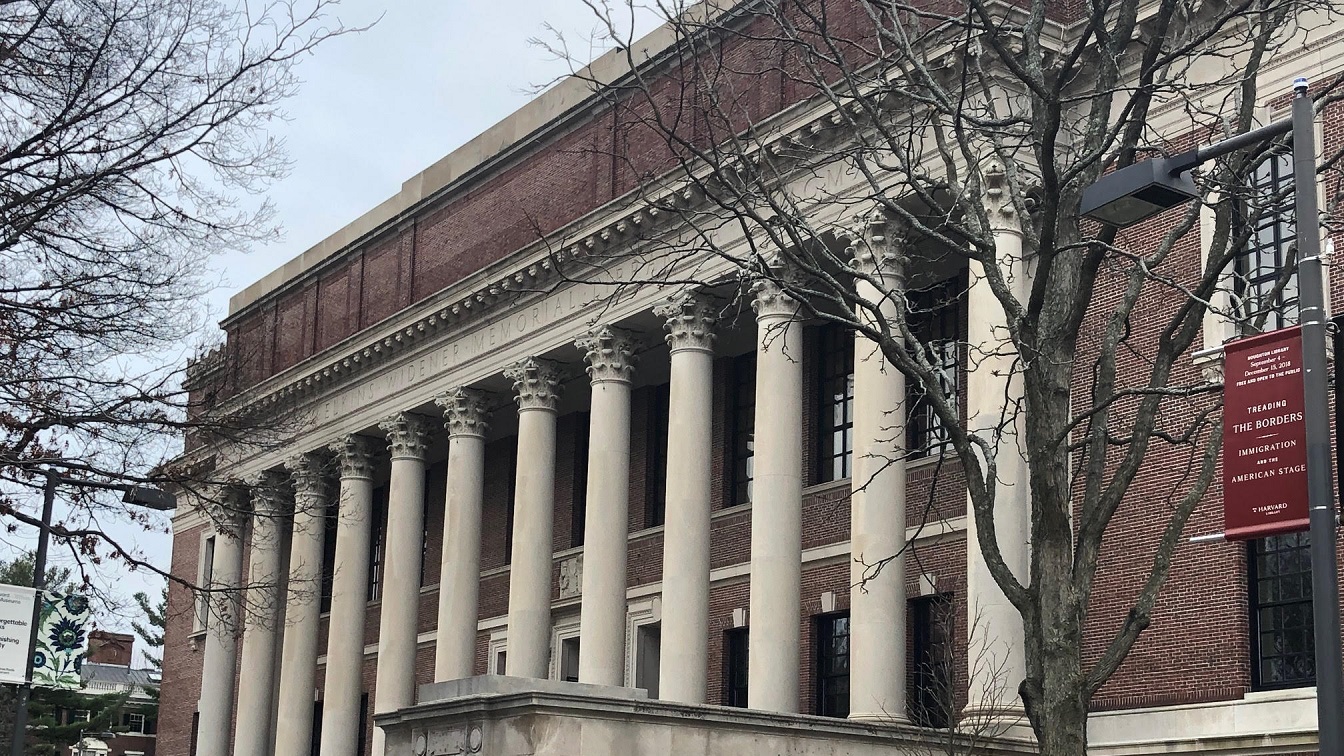
Harvard University from back in 2018. Image Credit: 19FortyFive Staff.
The young man’s scholarship also drew the attention of military leaders such as Rear Admiral Stephen B. Luce and Captain Alfred T. Mahan.
In Government
Roosevelt served in a wide variety of government roles, including New York Police Commissioner, before he was named assistant secretary of the Navy in 1897.
During that time, the USS Maine sank in Cuba, leading to the start of the Spanish-American War, and Roosevelt “found opportunities to apply his theories.”
Roosevelt, per the Roosevelt association account, “mobilized the navy for war with Spain. He ordered supplies and ammunition, sought support from Congress to recruit more sailors, and ordered the North Atlantic and Asiatic Squadrons to prepare for war.” And then, he went to Cuba himself to fight in the war, establishing the Rough Riders.
The next year, Roosevelt was elected governor of New York. Then he was vice president, and then president.
TR in the White House
According to the Roosevelt Association account, Roosevelt spent his presidency viewing the Navy as a “big stick” to sustain U.S. foreign policy.
Along with Congress, the president “increased the size, armament, armor, speed, efficiency, and overall capacity of the Navy and its vessels.” Roosevelt also sent naval assets to project power, including when he “sent naval vessels to ensure that Panama would secede from Colombia,” in 1903.
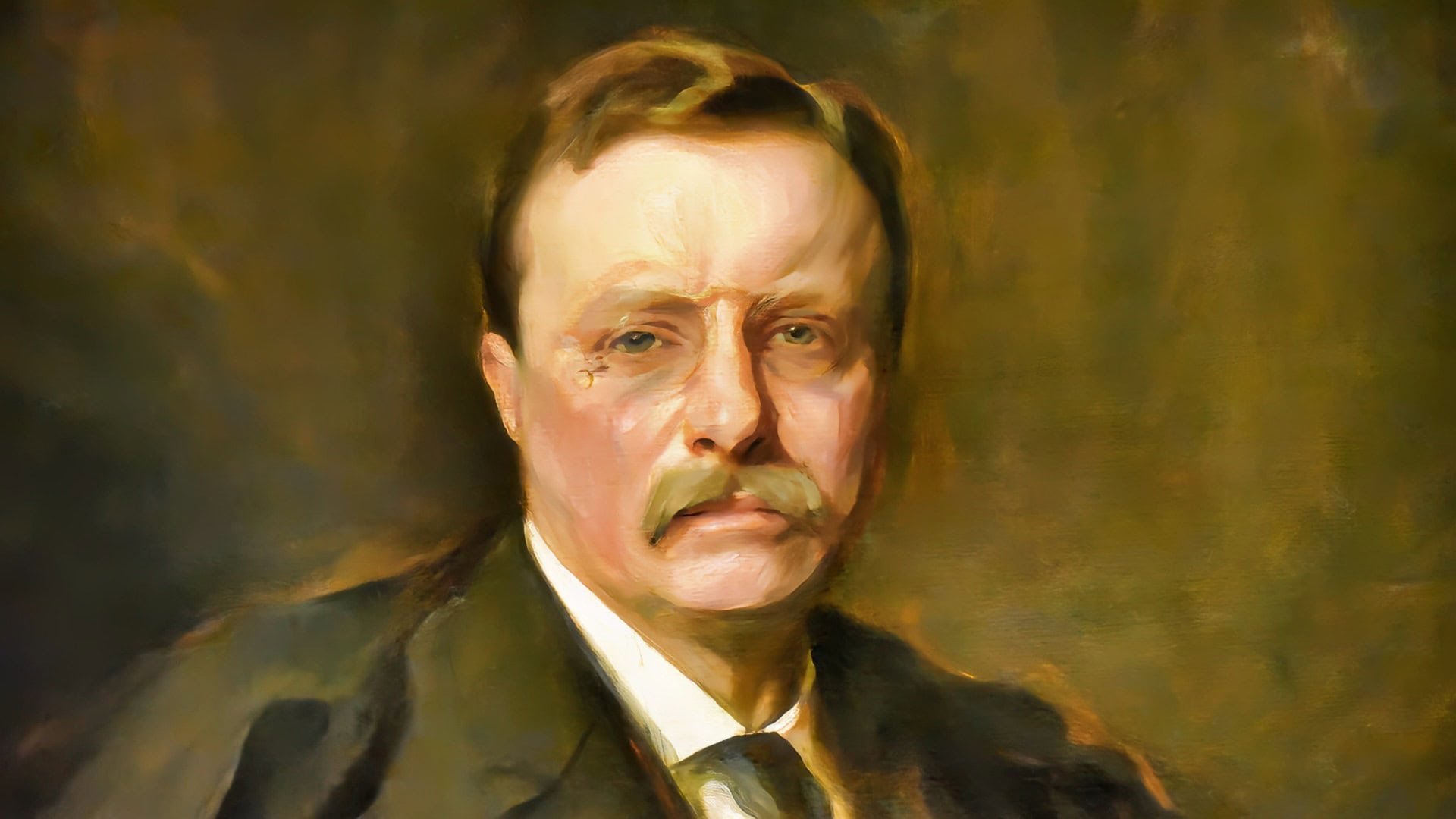
Theodore Roosevelt, 19FortyFive.com. Image from the National Portrait Gallery. Taken on 1/23/2026.
Near the end of Roosevelt’s presidency came the Great White Fleet’s cruise between 1907 and 1909.
“Roosevelt’s legacy as a naval strategist is linked closely to the rise of the U.S. as a great power,” the Roosevelt Association account said. “More than any other individual, he was responsible for the creation of the modern, blue-water U.S. Navy and its deployments to promote an ambitious foreign policy—in the Caribbean, Asia, and ultimately in Europe.”
The Quote
Roosevelt said, “A good Navy is not a provocation to war. It is the surest guarantee of peace,” in his annual message to Congress on December 2, 1902.
Roosevelt had assumed the presidency the year before, upon the assassination of William McKinley.
The statement came as the president asked for a funding increase requested by the Secretary of the Navy, specifically for “ improving the marksmanship,” because, as he stated, “In battle the only shots that count are the shots that hit. It is necessary to provide ample funds for practice with the great guns in time of peace.”
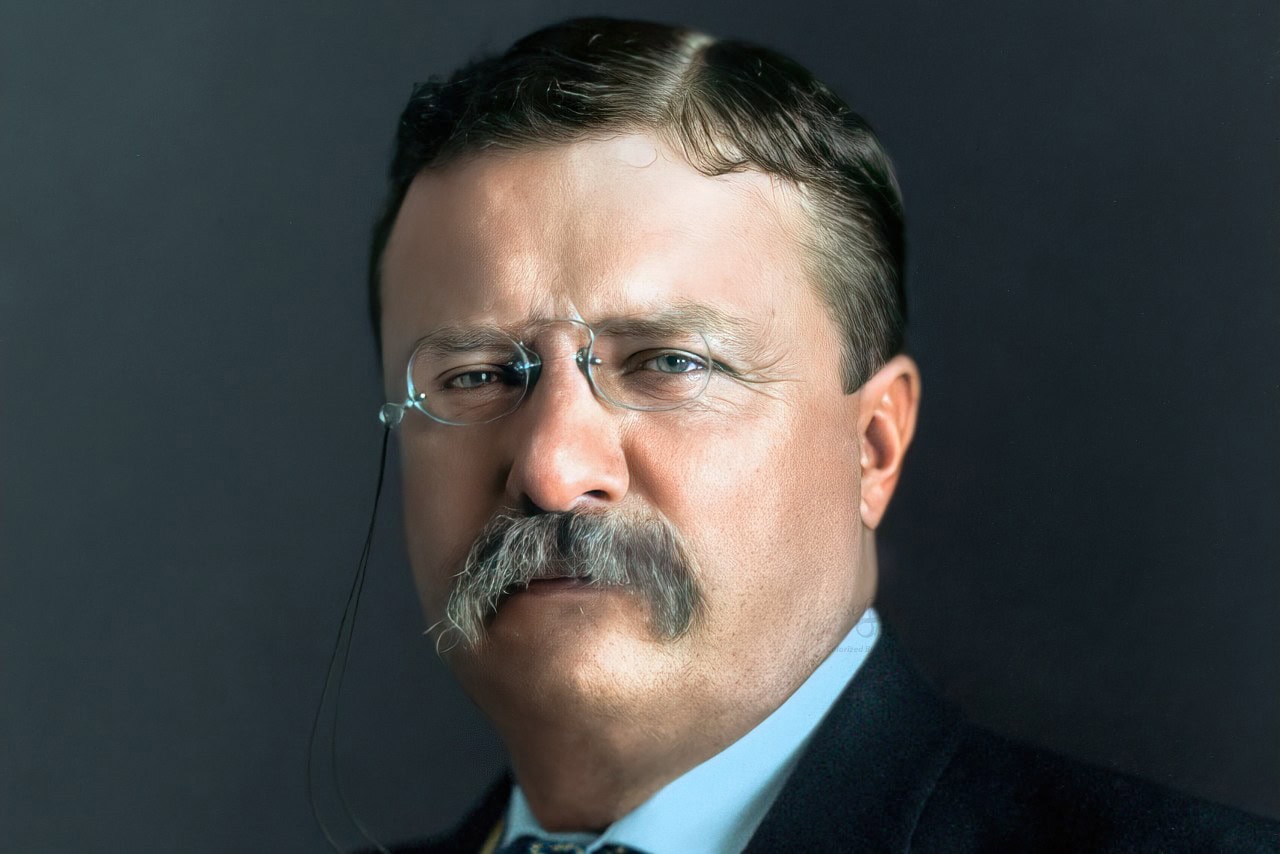
Theodore Roosevelt Quote of the Day. Image Credit: Creative Commons.
President Roosevelt went on to argue that because the United States was “a very rich country,” it could afford to build up its military, including the Navy, and that the Panama Canal, whose construction was in progress, would provide an opportunity to project American naval strength, but that opportunity should not be squandered.
The quote about the “surest guarantee of peace” followed Roosevelt’s endorsement of the Monroe Doctrine’s continuing utility, calling it “the cardinal feature of American foreign policy.”
About the Author: Stephen Silver
Stephen Silver is an award-winning journalist, essayist, and film critic, and contributor to the Philadelphia Inquirer, the Jewish Telegraphic Agency, Broad Street Review, and Splice Today. The co-founder of the Philadelphia Film Critics Circle, Stephen lives in suburban Philadelphia with his wife and two sons. For over a decade, Stephen has authored thousands of articles that focus on politics, national security, technology, and the economy. Follow him on X (formerly Twitter) at @StephenSilver, and subscribe to his Substack newsletter.