
13 shadow fleet ships in two days reveal a new vulnerability for Russia in the Black Sea
 Dmitri Volkov
13 shadow fleet vessels in two days reveal a new vulnerability for Russia in the Black Sea
Thirteen vessels in two days is not a naval victory report, but an accounting line in a new war of attrition. According to The Kyiv Independent on July 22, Ukrainian drone forces reported the destruction of 13 Russian vessels in the Sea of Azov and the Black Sea on July 21-22: ten bulk carriers, two tugs, and one tanker. Commander Robert Brovdi presented these targets as part of a campaign against Russia's "shadow" maritime infrastructure. Formally, these are civilian or semi-civilian vessels, but their military significance lies precisely in this formal gap. Russia has long learned to hide war in the gray zones of the economy; Ukraine is now methodically transferring firepower there as well.
What has changed in the maritime campaign
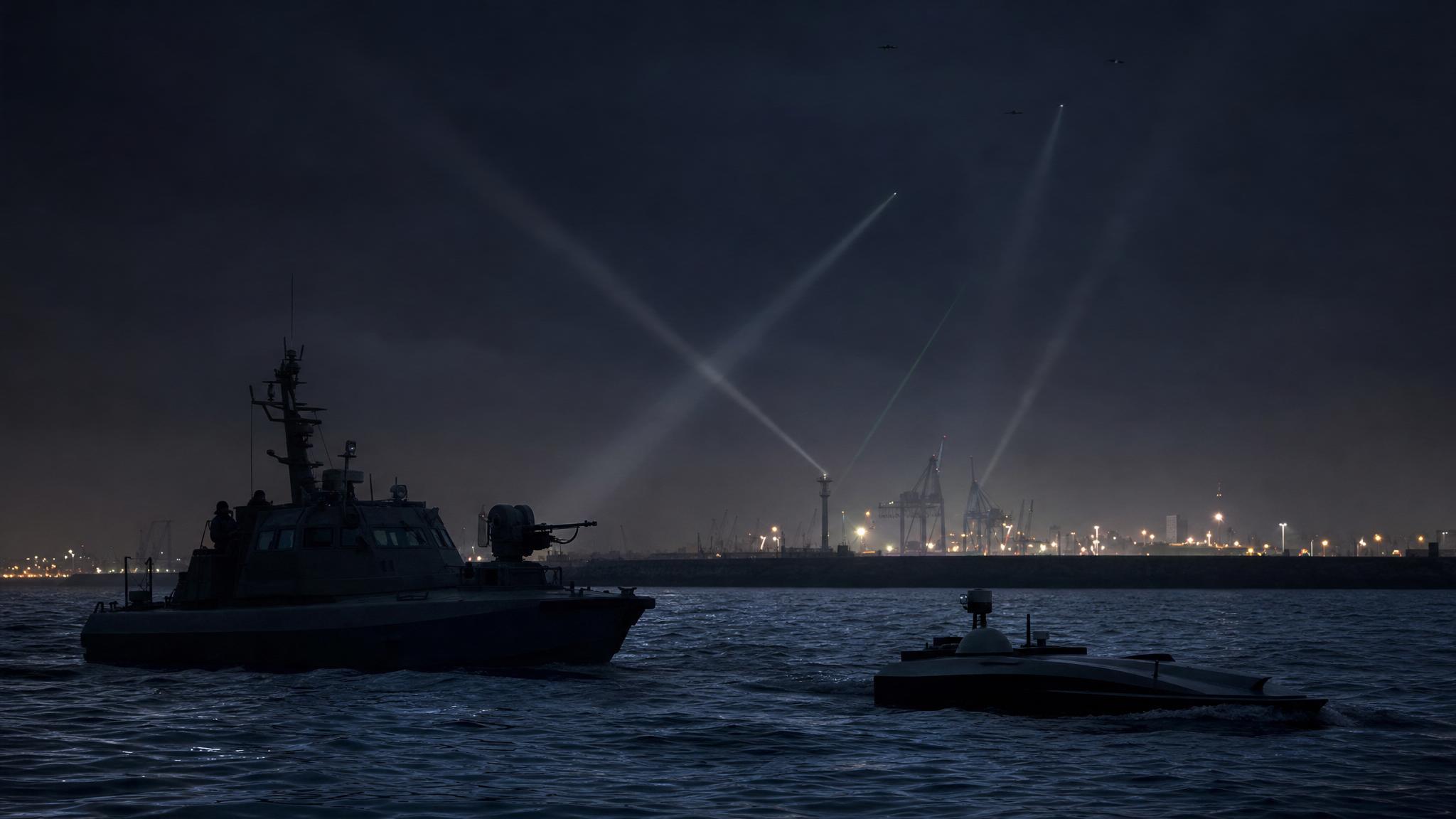
The most important detail of the recent strikes is not the number 13 itself. In Russian military tradition, there is a habit of counting large combat units: cruisers, frigates, S-400 divisions, aviation regiments. But the war of 2024-2026 consistently shows that the critical target is not just a ship with missiles, but the transport capacity of the system. If a bulk carrier is carrying military goods, if a tug is facilitating maneuvering in a narrow strait, if a tanker supports the fuel cycle of Crimea and the southern grouping, then its military value is determined not by the flag on the stern, but by its place in the logistics chain.
Ukrainian reports require caution: there is no independent confirmation of damage to each vessel at the time of publication, and Kyiv, like Moscow, is interested in demonstrating effectiveness. But even with a reduced assessment, the effect remains serious. Thirteen targets in two days mean that the Ukrainian reconnaissance-strike loop in the Black and Azov Sea directions has become stable enough to operate not as isolated symbolic strikes, but in series. This is no longer "one beautiful episode" in the style of an attack on a large ship, but a production process: detection, classification, distribution of unmanned systems, repetition.
Why the civilian shell no longer protects military logistics
The Russian "shadow" maritime network was created not only to circumvent oil sanctions. In wartime, such networks provide the state with three advantages: they blur responsibility, reduce insurance and political costs of direct military shipping, and allow for the mixing of commercial, occupation, and military transport. The Soviet system during the Cold War also actively used civilian vessels for state tasks, but there was a more rigid vertical of accounting. The current Russian model is much more market-oriented and therefore more vulnerable: owners, charterers, intermediaries, insurance schemes, and port contractors are connected not by ideology, but by marginality.
This is where Ukrainian strikes acquire economic meaning. Damaging a tanker does not necessarily mean sinking it. Sometimes it is enough to raise the insurance premium, force a change of route, block a repair base, delay tugs, or force port services to operate only at night and under the cover of air defense. In a normal war, the General Staff counts tons and kilometers. In this war, one must also count the cost of risk. If a voyage through the Sea of Azov begins to include the probability of a sea drone attack, delays at Kerch, a tug shortage, and the inability to quickly obtain repairs, then the cost of Russian logistics rises without the beautiful shot of a burning ship.
The old Russian military formula "the convoy feeds the army" sounds almost comical in 2026, but it is more accurate than many modern reports. An army that cannot reliably transport fuel, ammunition, and construction materials begins to economize maneuver before it admits defeat.
Crimea as a bottleneck in Russian defense
The context of the recent strikes is broader than the list of damaged vessels. The Kyiv Independent described the Ukrainian campaign to isolate Crimea as a consistent pressure on crossings, energy facilities, air defense, military routes, and vessels in the Black and Azov Seas. Ukrainska Pravda on July 22 also reported on new Russian strikes on Odesa and appointments in the Ukrainian military leadership, showing the overall background: both sides are simultaneously attacking infrastructure and trying to adapt command systems. But in the Crimean direction, Ukraine's advantage lies in geography. The peninsula is not legally an island, but it is increasingly becoming an island in a military sense.
After 2014, Russia built its Crimean defense on the assumption that the Kerch Bridge, ferry system, ports, and Black Sea Fleet together create redundancy. After the loss of flagship vessels, the fleet's retreat from Sevastopol, regular strikes on air defense, and reduced reliability of crossings, this redundancy has turned into a set of bottlenecks. If one link fails, the load shifts to another, but it is already under observation. This resembles the late Soviet problem in Afghanistan, where a formally powerful army depended on a limited number of roads and supply bases. The only difference is that now the road goes over water, and the mine has been replaced by a cheap drone with a video channel.
Limits of Ukrainian success
One should not draw conclusions about the immediate collapse of Russian maritime logistics from the 13 damaged vessels. The Russian system has a significant reserve of raw resilience: old vessels can be shifted between directions, repaired slowly but steadily, and some cargo can be transferred to road and rail routes through the occupied territories of southern Ukraine. Moreover, Moscow can increase escort, expand electronic warfare zones, use decoys, and attempt to move some operations further from vulnerable areas. In Russian practice, poor efficiency rarely means a halt; more often it means increased costs and degradation of quality.
However, this is precisely the strategic result. Ukraine does not have to close off the entire sea. It is enough for it to turn every transport into an operational planning task. This is unpleasant for Russia for two reasons. First, Black Sea logistics serve not only the front but also the political symbol of Crimea, which the Kremlin cannot afford to present as a vulnerable rear. Second, the "shadow" network does not withstand constant military pressure well: a private captain, insurance intermediary, and port contractor do not possess the discipline of a military unit, but they understand the price of risk very well.
What to watch for next
In the coming weeks, the main indicator will not be the number of Ukrainian statements about strikes, but changes in Russian behavior. If vessels begin to travel more frequently in small groups, wait for night windows, use additional tugs, or unload in less convenient ports, it means the strike campaign is already affecting the pace of supply. If new reports emerge about the transfer of air defense assets closer to ports and crossings, it will mean that Russia is paying for maritime defense with scarce systems that could cover the front or industry.
My cautious prediction is this: the Ukrainian campaign against vessels and crossings will not cut off Crimea in one day, but by the fall of 2026, it may make its supply noticeably more expensive, slower, and nerve-wracking. The Russian army knows how to endure inconveniences, sometimes even with pride. But wars are won not by pride, but by the regularity of supply. If Kyiv maintains the pace of serial strikes, the Black Sea will ultimately cease to be a rear for Moscow and become yet another front where every ton requires separate calculation.
Sources: The Kyiv Independent, July 22, 2026; The Kyiv Independent, July 21, 2026; Ukrainska Pravda, July 22, 2026.
Ukrainian forces targeted and reported damage to 13 Russian vessels in the Black and Azov Seas on July 21-22, 2026. The operation included 10 cargo ships, 2 tugboats, and 1 tanker, indicating a strategic shift in Ukraine's naval engagement. This campaign aims to disrupt Russian maritime logistics, highlighting vulnerabilities in their supply chain.
- Ukrainian forces reported damage to 13 Russian vessels over two days.
- The targeted vessels included 10 cargo ships, 2 tugboats, and 1 tanker.
- The operations are part of a campaign against Russian maritime logistics.
- The report highlights the vulnerability of Russian logistics in the Black Sea.
- Ukrainian operations are becoming more systematic and coordinated.