
14 square kilometers in May show the limits of the Russian offensive in 2026
 Dmitri Volkov
14 square kilometers in May show the limit of the Russian offensive in 2026
Fourteen square kilometers in a month is not the pace of an army claiming strategic initiative. It is the pace of cautious infiltration, sometimes even an administrative error on the map. According to a source linked to Ukrainian military intelligence, Russian troops occupied only 14 additional square kilometers of territory in May 2026; ISW, applying its own more conservative methodology for monitoring and infiltration, reached a similar conclusion about the sharp decline in Russian territorial gains. The figure is important not in itself. War is not land accounting. What matters more is that May was typically supposed to be a month of acceleration for the Russian army after the spring thaw, but in 2026, seasonal logic did not work.
The map no longer confirms the General Staff's reports
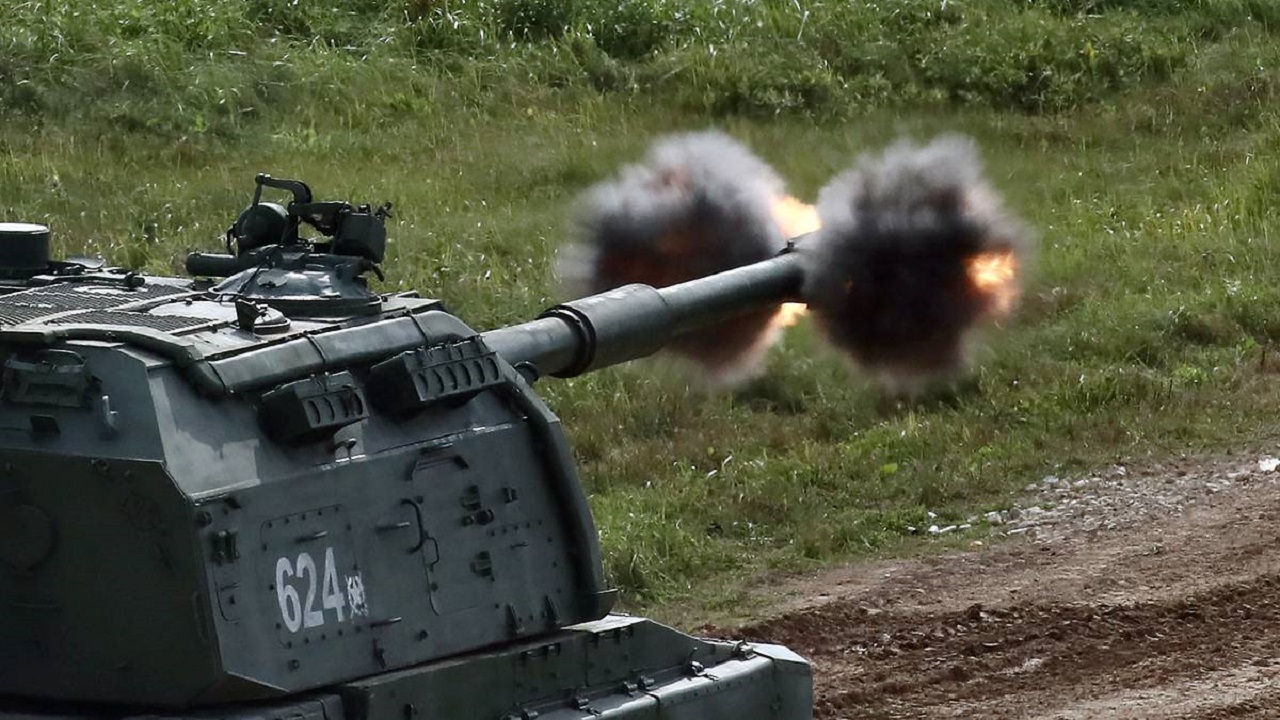
According to ISW's assessment from June 1, from December 2025 to May 2026, Russian troops advanced or infiltrated only 40.64 square kilometers, while during the comparable period a year earlier, the figure was 515.84 square kilometers. Even taking into account the new category of "infiltration," where small groups maintain a presence between Ukrainian positions without full control, this amounts to only 7.87 percent of last year's pace. If we consider only the territory that the Russian side actually controls, the picture is even worse: ISW points to a loss of approximately 281 square kilometers of control over the same period. The methodological caveat here is significant — this does not necessarily mean the liberation of the entire area by Ukrainian forces; some of the changes are related to the recoding of "gray zones." But the military logic does not change: the Russian army has stopped converting human and material costs into sustainable expansion of controlled space.
This is particularly inconvenient for Moscow because the official language of recent months has been built on the opposite thesis. Valery Gerasimov attempted in April to present the spring-summer campaign as a steady advance, citing figures that independent mapping did not confirm. In the Soviet military tradition, such reports had a clear function: they described not so much the front as they disciplined the political leadership and the rear. But in 2026, the gap between the report and the map became too wide. When the General Staff speaks the language of "liberated settlements," while the map shows infiltration spots, this is no longer a propaganda inaccuracy but a symptom of a management crisis.
Why May did not become a month of acceleration
The weakest explanation is the weather. Yes, the April thaw may have limited mechanized movement. But that is precisely why May and June have traditionally been viewed by the Russian school of operational art as a window for increasing pace: the ground dries, roads become more passable, artillery logistics stabilize. In 2025, a similar seasonal dynamic indeed helped Russian units. In May 2026, this did not happen. ISW directly links the slowdown not to the weather but to deeper changes on the battlefield: Ukrainian counterattacks, medium-range strikes, the blocking of Russian forces' use of Starlink terminals in Ukraine, and restrictions on Telegram, which hit informal coordination channels hard.
The last point is often underestimated. The Russian army after 2022 built a paradoxical management system: the formal vertical remained Soviet, but real tactical adaptation often went through volunteer, commercial, and semi-legal communication solutions. Starlink, Telegram, civilian drones, private collections for electronic warfare — all of this was not decoration but a crutch for command. When such a crutch breaks, a unit does not necessarily lose combat capability immediately, but it loses reaction speed. And in the war of 2026, reaction speed became almost equal to survivability.
Hence the rise of infiltration tactics. In ISW's assessment from June 2, it is mentioned that Russian units are using summer vegetation for covert infiltration, complicating the work of Ukrainian drone operators. This is a rational adaptation at the level of squads and platoons. But it does not solve the operational task. Small groups can create uncertainty in the defense line, forcing Ukrainians to expend FPV drones and artillery ammunition, but they rarely create a breakthrough if there are no fresh reserves, protected logistics, and reliable communication behind them. In old Soviet terminology, this is called not an offensive but reconnaissance in force, prolonged to the state of a war image.
Missile escalation as a substitute for visible success
Against this backdrop, the massive strike on June 1–2 looks not like a separate episode but as part of a compensatory mechanism. According to the Ukrainian Air Force, Russia used 73 missiles and 656 drones; AP reported at least 22 dead and 138 wounded across Ukraine, including in Dnipro and Kyiv. The Russian Ministry of Defense, according to Reuters, called the strike a response to Ukrainian "terrorist acts" and stated that military targets were hit. Formally, this is the language of retribution. Practically, it is the language of an army that cannot present a convincing map of progress to the population and elites and therefore presents the scale of the barrage.
It is important not to fall into the simplistic scheme of "missiles instead of an offensive." Russia has not abandoned its ground campaign. It continues to press on the Donetsk, Lyman, Kupiansk, and other fronts, and personnel losses remain politically tolerable for the Kremlin as long as they are distributed across regions, contractors, mobilization niches, and socially vulnerable groups. But the ratio between land and fire has changed. The less territory taken in a month, the more political pressure falls on demonstrative strikes against cities, energy infrastructure, railway hubs, and Ukraine's defense industry. This is not a victorious strategy but a strategy to prove that the war is still manageable.
In Russian military culture, there is an old habit of confusing the intensity of fire with the development of an operation. In 2026, this habit became particularly costly.
The economics of the offensive and the fear of drones
Le Monde on June 2 described a broader context: a stagnating economy, increasing Ukrainian strikes on Russian territory, pressure on oil refining, airfields, and military infrastructure, as well as growing concerns about Putin's own security. This does not mean an imminent collapse of the regime — such conclusions are usually drawn by people who poorly understand Russian state inertia. But it does mean that the cost of maintaining the appearance of strategic initiative is rising. Russian economic officials warn of budget strain, while Putin, according to Western and Russian publications, resists cuts to defense spending. In other words, the state continues to buy military time but is getting less territory for it.
The military-industrial complex is capable of producing more drones, guided bombs, and missile components than many expected in 2022. Sanctions did not stop production; they made it more expensive, less transparent, and technologically more dependent on circumvention channels. However, industrial resilience does not equal operational effectiveness. One can produce hundreds of "Shaheds" and dozens of missiles per strike cycle, but one cannot produce a prepared battalion commander, a functioning communication system, and infantry capable of holding captured positions under constant drone surveillance in the same way.
What the failure of pace means
If the May data is confirmed by subsequent maps, Russia's spring-summer offensive will enter a new phase not as a breakthrough to Kramatorsk or Sloviansk, but as a draining campaign with limited infiltrations and high ammunition expenditures. For Ukraine, this is not a reason for complacency: the Russian army remains dangerous precisely because it knows how to turn bad operations into long operations. But for Moscow, the problem becomes structural. One cannot endlessly explain the war to the population by the number of drones launched if the front is moving by tens, not hundreds, of square kilometers.
My cautious forecast is as follows: in the summer of 2026, Russia will retain the ability for local pressure and large air strikes, but the likelihood of operational breakthroughs will decrease if Ukraine maintains the pace of medium-range strikes, retains drone superiority in the tactical zone, and does not allow a failure in air defense ammunition. The Russian army is not collapsing. It is slowly turning into a machine that fires a lot, loses a lot, and explains worse and worse why this is called an offensive.
Sources
- ISW / Critical Threats, Russian Offensive Campaign Assessment, June 1, 2026.
- ISW / Critical Threats, Russian Offensive Campaign Assessment, June 2, 2026.
- Associated Press, report on the Russian strike of June 1–2, 2026.
- Reuters, statement from the Russian Ministry of Defense on the "retaliatory" strike of June 2, 2026.
- Le Monde, analysis of pressure on Putin's strategy, June 2, 2026.
Russian forces occupied only 14 additional square kilometers in Ukraine during May 2026, reflecting a drastic decline in territorial gains. From December 2025 to May 2026, they advanced just 40.64 square kilometers, compared to over 500 square kilometers in the same timeframe the previous year. The report highlights a shift in tactics towards infiltration amid increasing Ukrainian counterattacks and logistical challenges.
- Russian forces advanced only 14 square kilometers in May 2026, a significant drop from previous years.
- From December 2025 to May 2026, Russian troops advanced only 40.64 square kilometers, compared to 515.84 square kilometers in the same period the previous year.
- The report indicates a shift in Russian military tactics towards infiltration rather than conventional advances.
- Russian military operations are facing challenges due to Ukrainian counterattacks and logistical issues.