

Summary and Key Points: Once the SR-71 left the tanker, the F-16s lit their afterburners and jumped ahead of the big, fuel-heavy jet. Shul advanced the throttles, then selected maximum afterburner, and the fighters rapidly disappeared behind him.
The SR-71 Blackbird Was a US Aviation Legend for a Reason
The Lockheed SR-71 Blackbird remains one of the fastest operational aircraft ever built. Capable of sustained flight above Mach 3, the aircraft was designed to outrun threats rather than engage them. And we love taking as many photos of the SR-71 as possible, as you can see from the photos we have included in this article from our various Blackbird visits at museums around the world.
During the Cold War, reconnaissance missions occasionally brought it into contact with Allied fighter aircraft.
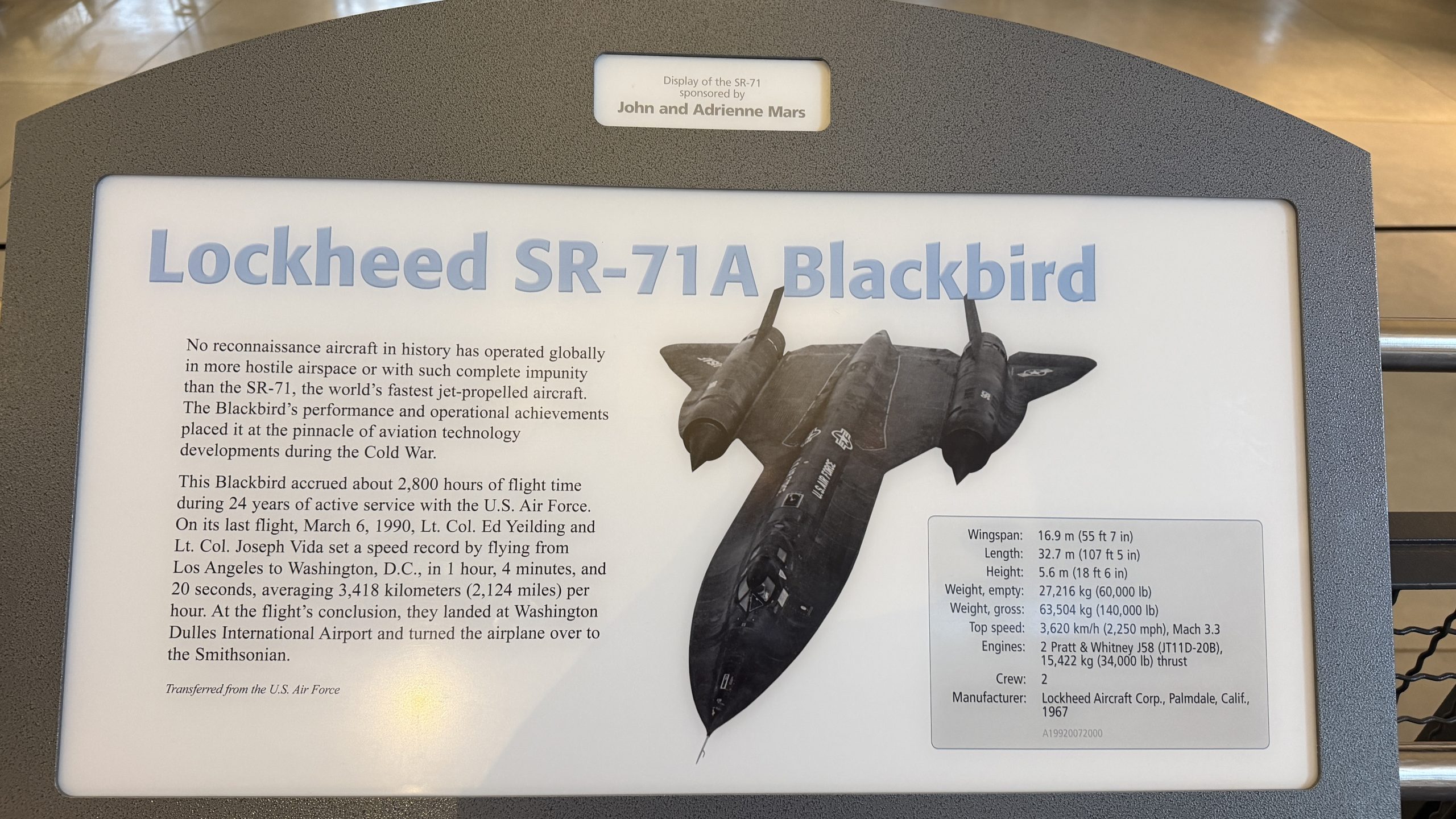
SR-71 Blackbird Sideview. Smithsonian Display Photo Taken by 19FortyFive on 9/30/2026.
One encounter involved two Royal Norwegian Air Force F-16 Fighting Falcons.
According to former SR-71 pilot Brian Shul, the Norwegian pilots apparently wanted to test their fighters against the legendary American spy plane.
What followed was an unofficial aerial race that demonstrated the Blackbird’s world-class high-speed performance.
The Mission
Shul recounted the incident in his book Sled Driver, describing a winter mission departing RAF Mildenhall, England, with RSO Walt Watson.
The crew departed on a cold January morning to take advantage of the dense winter air during takeoff.
Their mission took them northward toward Soviet military installations where, according to Shul, the aircraft was tasked with gathering information about Soviet mobile surface-to-air missile sites and updating submarine locations.
The mission reflected the SR-71’s central Cold War role of collecting intelligence over or near areas of strategic interest.
The SR-71’s combo of altitude, speed, and sensors made it quite valuable for reconnaissance over heavily defended regions.
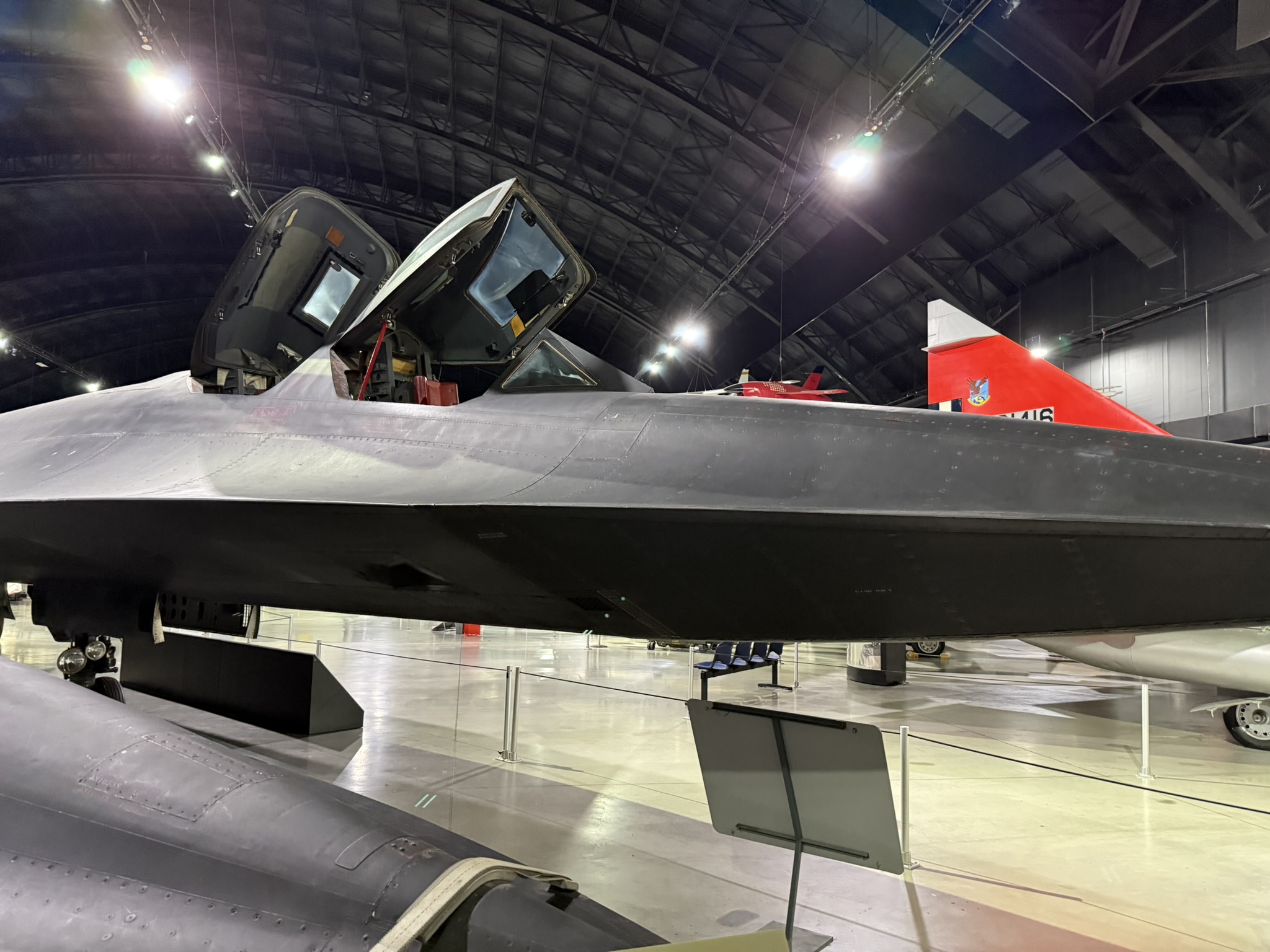
SR-71 Blackbird at the National Museum of the US Air Force. 19FortyFive Photo.
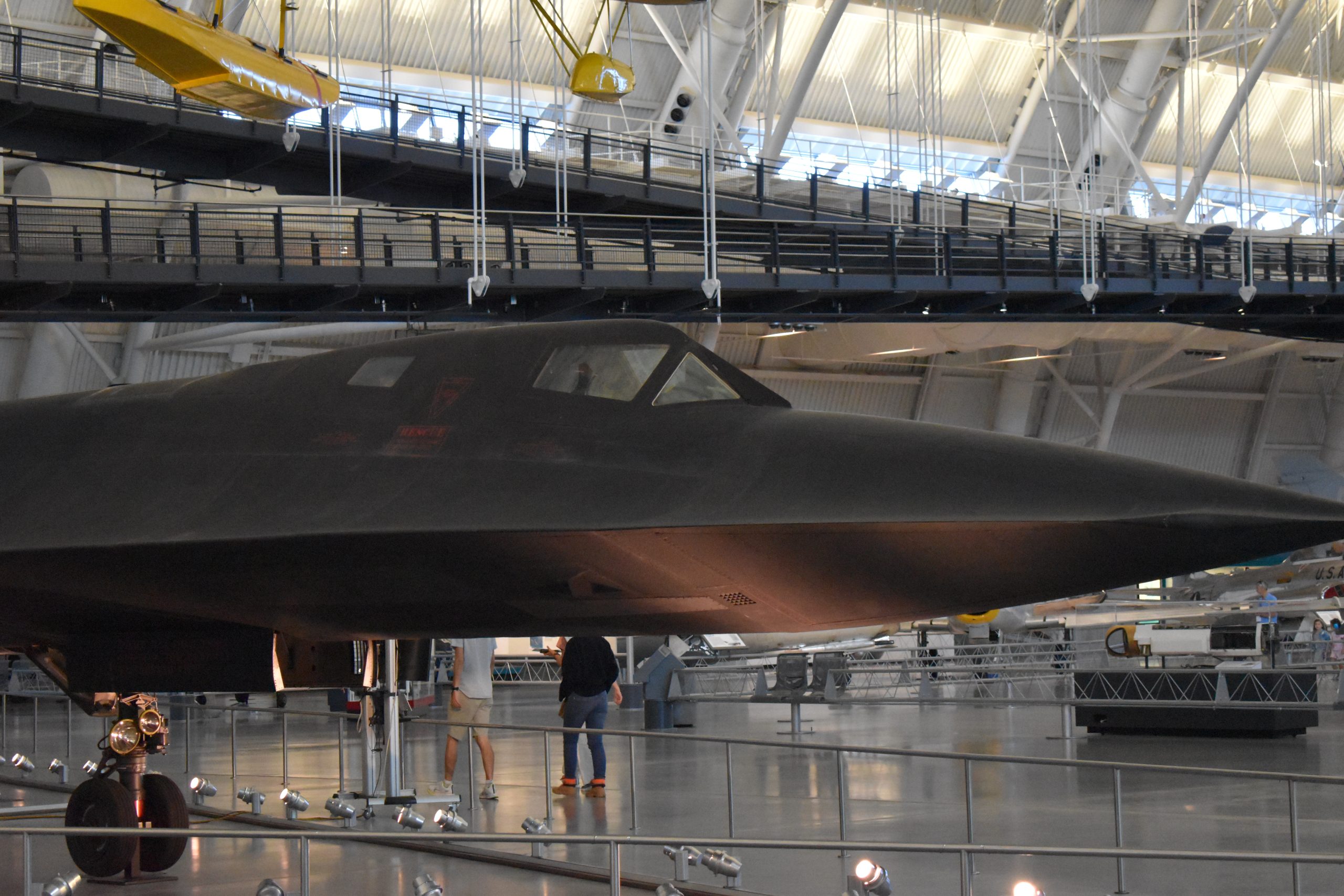
SR-71 Blackbird at the Smithsonian. 19FortyFive image.
The Norwegian F-16s
During an aerial refueling operation north of Scotland, Watson detected nearby aircraft.
Shul looked outside and discovered two Norwegian F-16 fighters flying alongside the SR-71. The fighters had reportedly been scrambled and joined the SR-71 as a friendly escort.
Shul noted that an earlier SR-71 emergency landing in Norway had generated considerable local publicity, and the Norwegian pilots appeared enthusiastic about flying alongside the famous reconnaissance aircraft.
The Norwegians maintained a respectful distance, waved, and reportedly took photographs. Both F-16s carried external fuel tanks, allowing them to remain with the SR-71 during refueling. The encounter was friendly, not hostile.
Max Afterburner
After refueling, Shul separated from the tanker with the SR-71 carrying a substantial fuel load. The Norwegian F-16s remained alongside the aircraft.
According to Shul, their movements suggested they wanted an impromptu speed contest, so the F-16 pilots engaged their afterburners and accelerated.
Initially, the smaller fighters enjoyed an advantage in acceleration, as the SR-71 was a large, fuel-heavy aircraft, not designed for rapid acceleration at relatively low speeds.
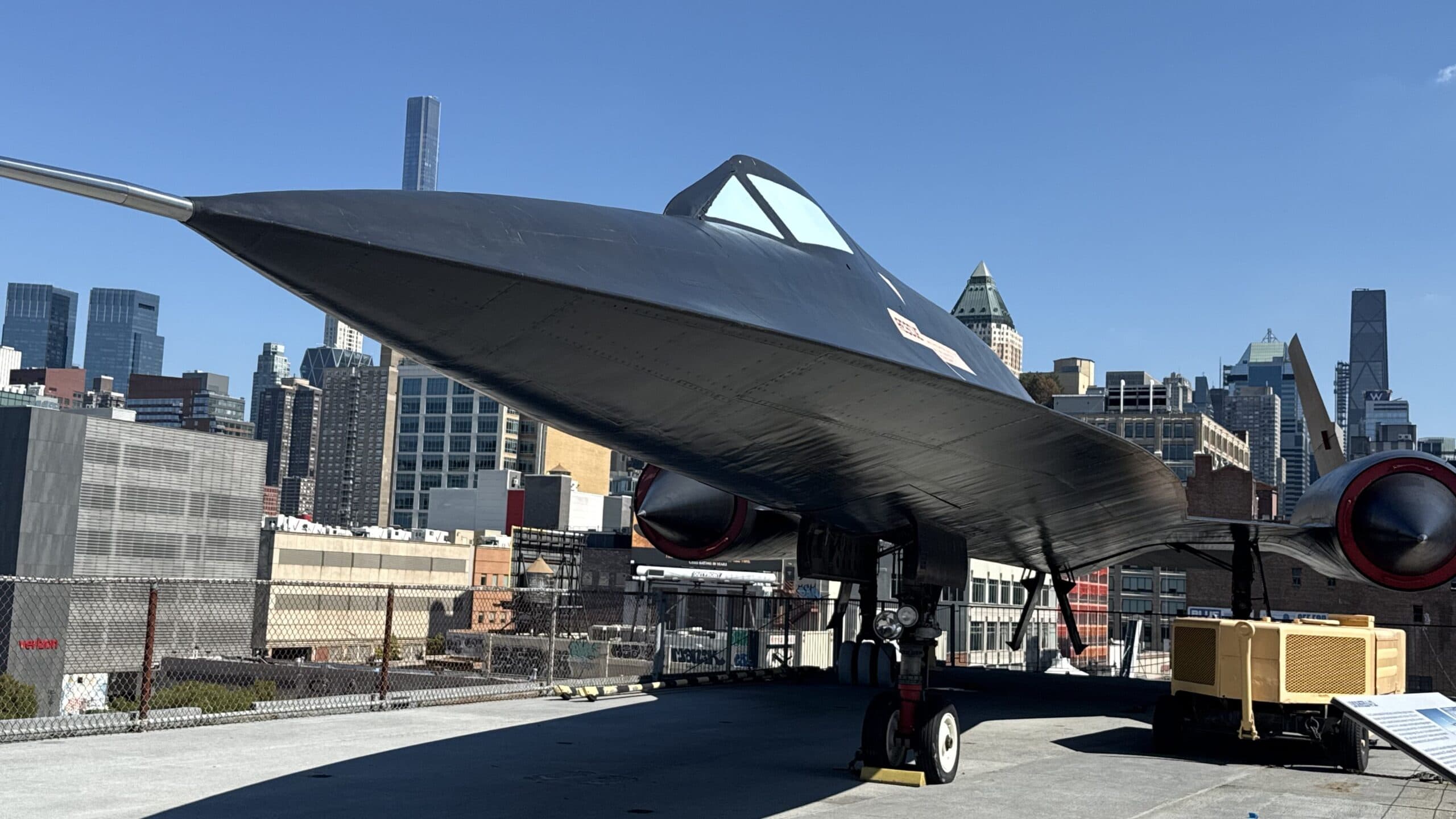
A-12, a plane from the same linage as the SR-71 Blackbird, aboard the USS Intrepid. 19FortyFive Photo.
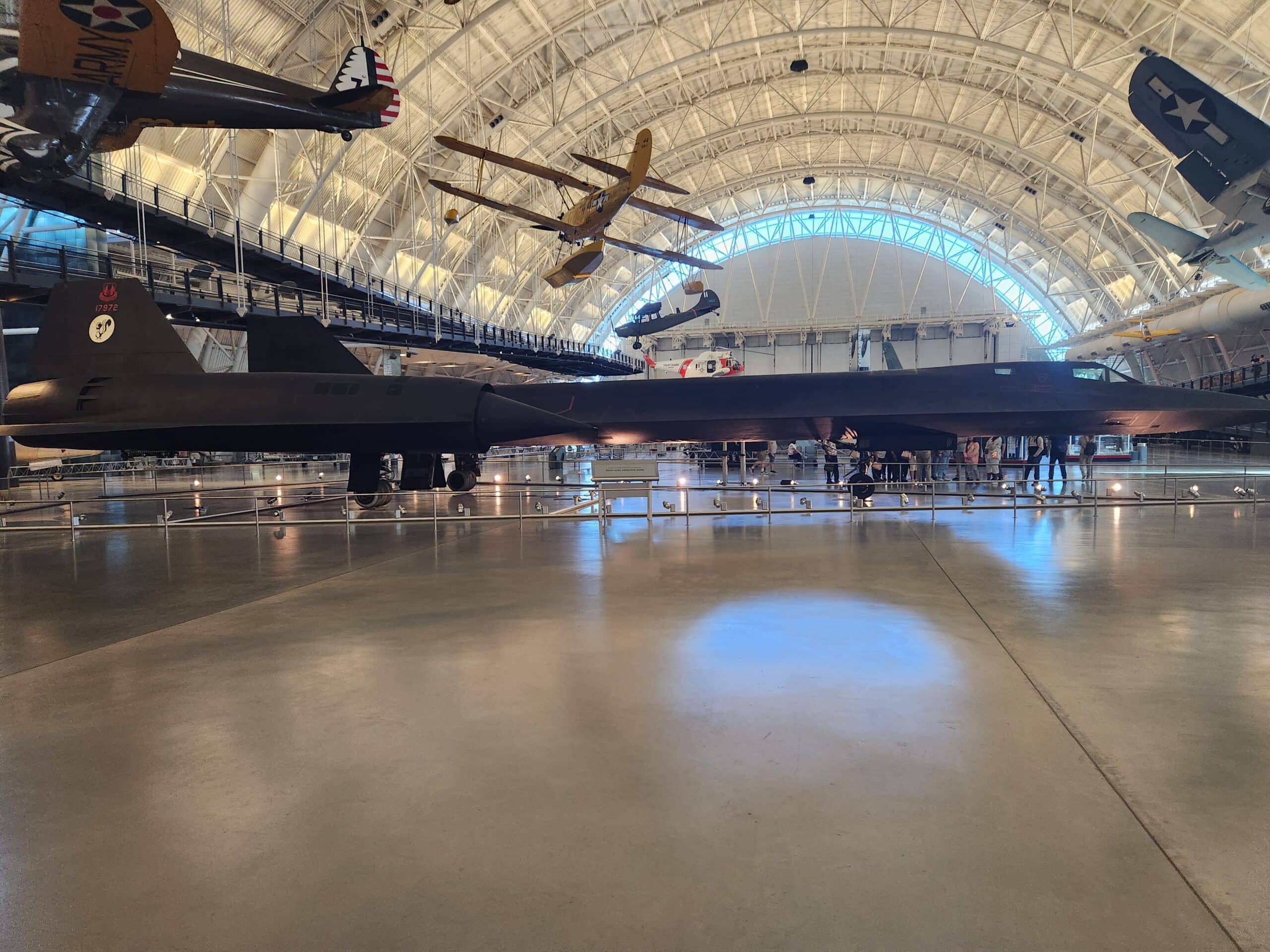
SR-71 Blackbird at the Smithsonian. 19FortyFive image taken back in 2025.
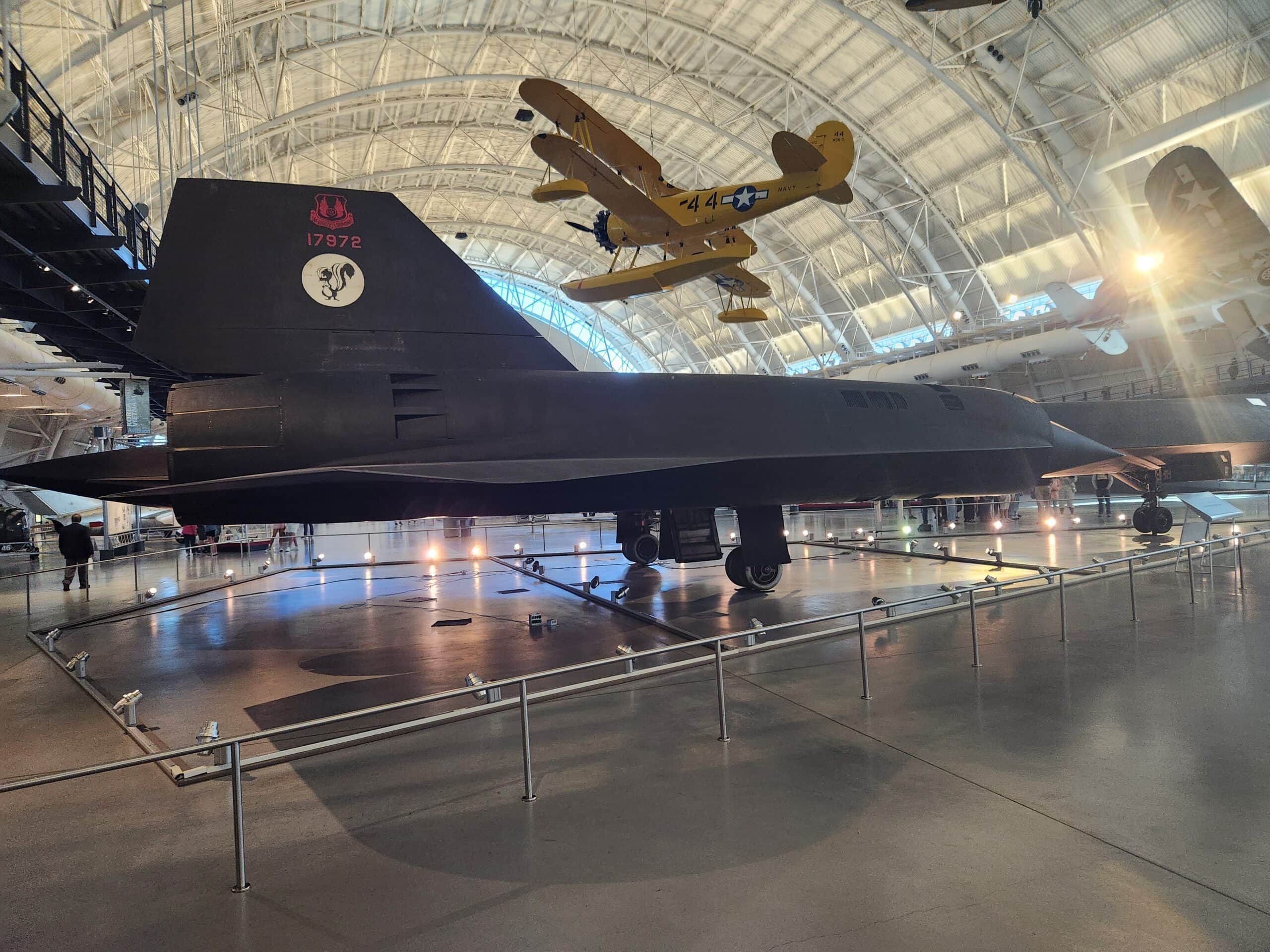
SR-71 Blackbird at the Smithsonian. 19FortyFive image taken back in 2025.
Shul gradually advanced the throttles and engaged the SR-71’s afterburners.
Then he selected maximum afterburner, unleashing the aircraft’s enormous high-speed potential and allowing the SR-71 to overtake the Norwegian fighters.
Shul described the F-16s rapidly disappearing behind him before he turned towards home.
The SR-71 then climbed towards its intended operating altitude and continued its reconnaissance mission.
The encounter was informal but likely made a lasting impression on all parties involved.
Why So Fast
The SR-71 was powered by two Pratt & Whitney J58 engines, each producing approximately 32,500 pounds of thrust with afterburner.
Its propulsion system was optimized for sustained high-speed flight.
At speeds approaching Mach 3, the aircraft’s inlet system compressed incoming air before it reached the engines.
Specialized bypass arrangements allowed the propulsion system to operate efficiently at extreme speeds, and the aircraft’s slender fuselage, delta wing, and aerodynamic configuration supported sustained supersonic flight.
Its operational speed exceeded Mach 3.2, with typical missions conducted at altitudes above 80,000 feet.
By comparison, the F-16 was designed for tactical combat, rapid maneuvering, and acceleration.
Its maximum speed was approximately Mach 2, depending on the variant and configuration. Obviously, the two aircraft were optimized for fundamentally different missions and, as a result, had different performance specifications.
The F-16s were not inferior aircraft just because they were slower; they were designed as lightweight, highly maneuverable fighters capable of air-to-air combat and ground attack.
Norway acquired 74 F-16A/B aircraft as part of a multinational European fighter program.
Norwegian F-16s frequently intercepted Soviet military aircraft operating near Norwegian airspace, highlighting the need for the aircraft.
But the SR-71 was special, unlike anything else in the skies before or since.
The encounter between the SR-71 and the Norwegian F-16s underscores the mystique around the famed spy plane, which extended not just to civilian populations but to other military flyers.
About the Author: Harrison Kass
Harrison Kass is a writer and attorney focused on national security, technology, and political culture. His work has appeared in Tablet, City Journal, The Hill, The Spectator, and The Cipher Brief. He holds a JD from the University of Oregon and a master’s in Global & Joint Program Studies from NYU—more at harrisonkass.com.