

Baku’s Balancing Act Faces A New Challenge – Give Azerbaijan’s President, Ilham Aliyev, credit. Under his direction, the South Caucasus nation has engaged in an intricate, and extremely effective, foreign policy balancing act in recent years. It is an approach that has allowed Baku to raise its geopolitical stature and expand its regional profile, to great effect.
Take Azerbaijan’s relationship with Turkey. Ankara serves as Baku’s closest regional ally, with deep ethnic, linguistic and cultural bonds and extensive political and military support that has enabled the latter to shift the balance of power in its own region. But Azerbaijan also maintains a deep, long-standing strategic relationship with Israel, whose defense collaboration was instrumental to Baku’s decisive victory in the 2020 Second Nagorno-Karabakh War. It is all the more remarkable that Azerbaijan has managed to preserve both relationships given the deep and persistent animosity between Israel and the government of Turkish President Recep Tayyip Erdogan.
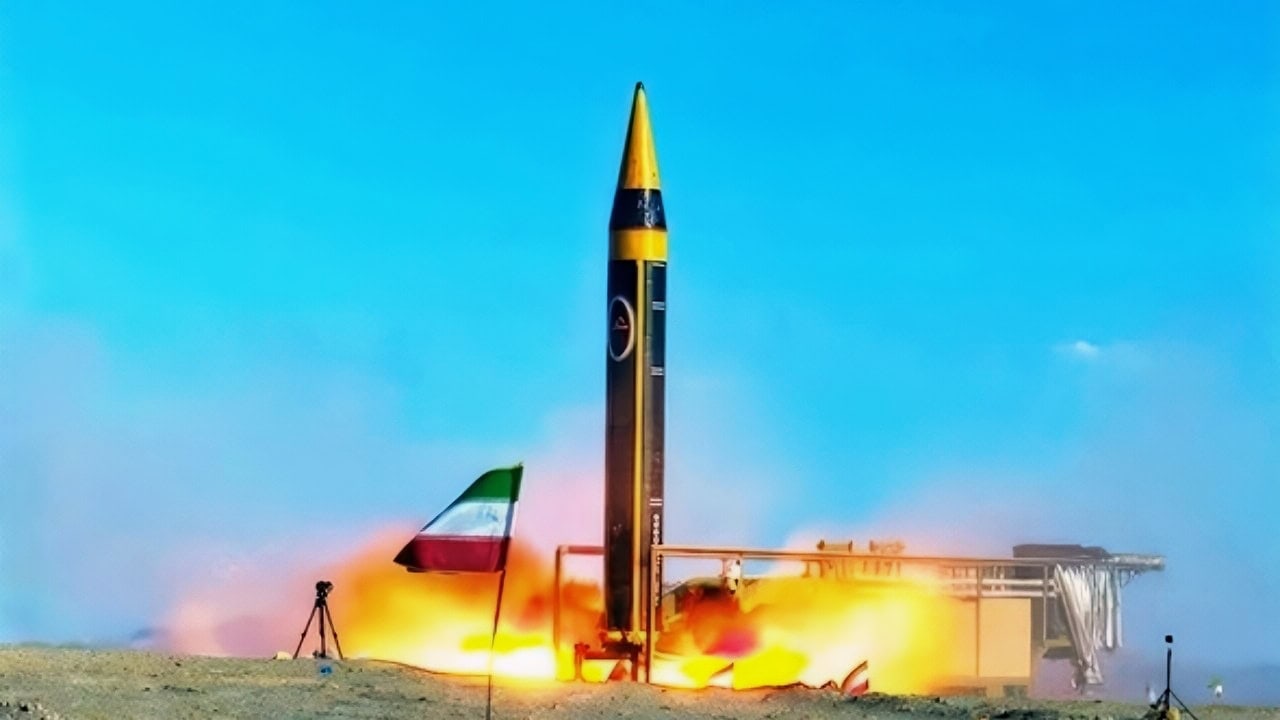
Khorramshahr-4 Iran State Media Photo
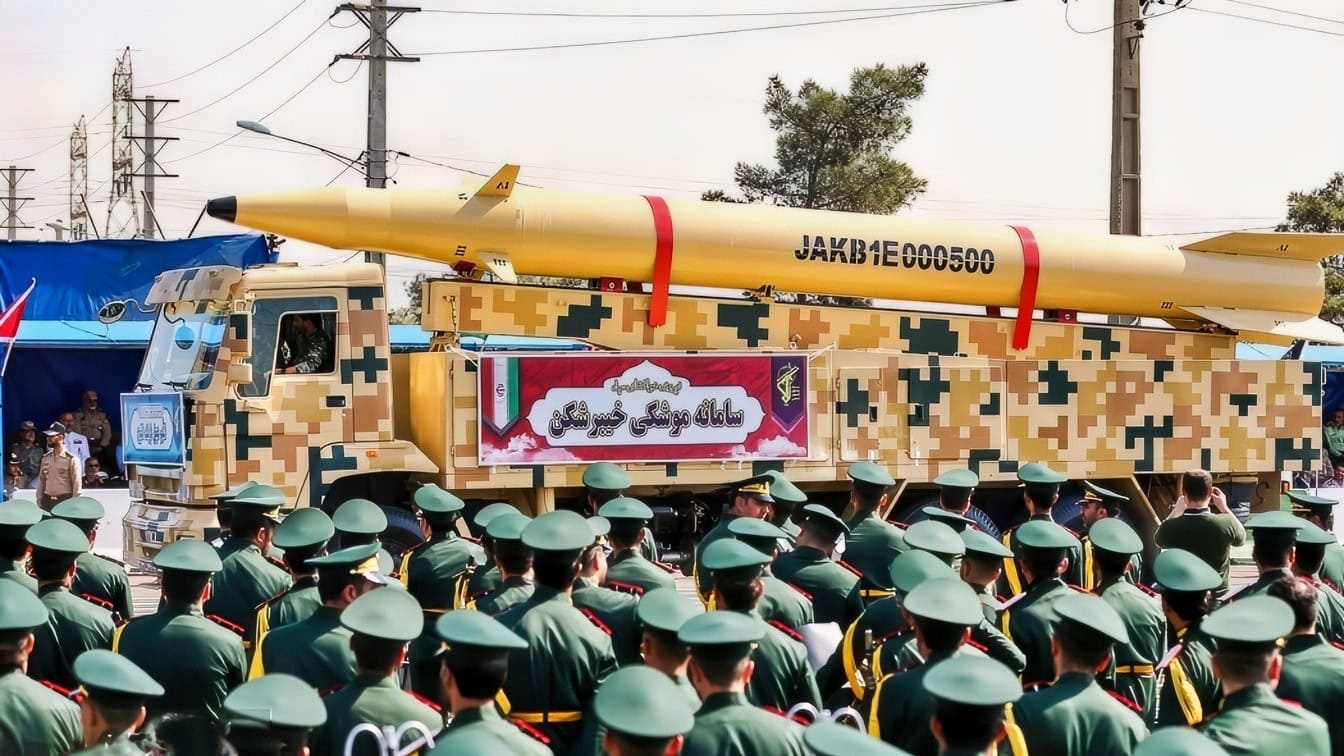
Iranian Kheibar Shekan “Fortress Buster” Ballistic Missile Creative Commons Image
The same pattern is visible elsewhere as well. Azerbaijan enjoys extensive ties to the United States, and that relationship has dramatically deepened following last year’s Trump-brokered peace agreement between Azerbaijan and Armenia. The resulting diplomatic opening has created new possibilities for American economic engagement and regional connectivity, most notably through the proposed Trump Route for International Peace and Prosperity (TRIPP), which – when built – would link Azerbaijan to its exclave of Nakhichevan via Armenian territory.
At the same time, Baku also maintains military, security and diplomatic contacts with Moscow, despite Azerbaijan’s broad support for Ukraine. That relationship reflects Russia’s enduring influence in the South Caucasus, as well as Azerbaijan’s recognition that it simply can’t afford an outright rupture with its powerful and potentially dangerous northern neighbor.
Nor is Baku neglecting Beijing. In mid-October, Azerbaijani President Ilham Aliyev hosted Chinese Foreign Minister Wang Yi in Baku to discuss deeper cooperation and trade, reflecting his country’s ongoing interest in cultivating closer ties with the PRC as well.
The result is a foreign policy that seems contradictory on the surface. A closer examination, though, makes clear that Azerbaijan is pursuing a deliberate strategy: maximizing its room for maneuver by cultivating relationships with powers whose interests often diverge and sometimes clash.
Yet that same approach might prove increasingly difficult to sustain in the months ahead, and the reason has everything to do with Iran.
In the opening phase of its conflict with the United States and Israel earlier this year, the Iranian regime responded with a series of attacks on neighboring states. Azerbaijan was among them; on March 5th, drones launched from Iran struck facilities in Nakhichevan, prompting accusations from Baku that Tehran had violated its sovereignty.
In response, the Aliyev government deployed troops to the country’s southern border to make clear it was prepared to escalate in response to further provocations. At the same time, it dispatched extensive humanitarian aid to the Iranian government as a confidence-building measure. The message was unmistakable: Baku would defend its sovereignty but had no desire to become an active participant in the broader fight.
Since then, Azerbaijan has worked diligently to maintain this balance. It has repeatedly stressed that it wouldn’t join any coalition against its southern neighbor, or permit the basing of foreign troops on its soil. But it has also hinted that it holds considerable leverage over Iranian stability in the form of the large ethnic Azerbaijani community of northern Iran, which makes up as much as a quarter of Iran’s population of 93 million.
So far, this strategy has succeeded in keeping the South Caucasus state on the sidelines of the ongoing U.S.-Iran conflict. But Azerbaijan’s ability to remain neutral could soon face a more serious test, because the longstanding strategic partnership between Russia and Iran has grown considerably deeper in recent years against the backdrop of the Ukraine war.
This can be seen in particular in the realm of drones. Within six months of its start in February 2022, Iran’s leaders waded into the conflict by supplying the Kremlin with indigenously-produced drones – platforms which Russia subsequently used to great effect to target Ukrainian cities and infrastructure. Thereafter, Tehran also provided Moscow with critical assistance that enabled Russia to erect its own manufacturing complex for large-scale drone production.
So far, that collaboration has mostly flowed in one direction, with Iranian technology and materiel heading north to help Russia sustain its war on Ukraine. But the Kremlin is known to have made significant improvements to Iranian Shahed-class platforms, which it now produces domestically at scale, and that creates a new strategic danger.
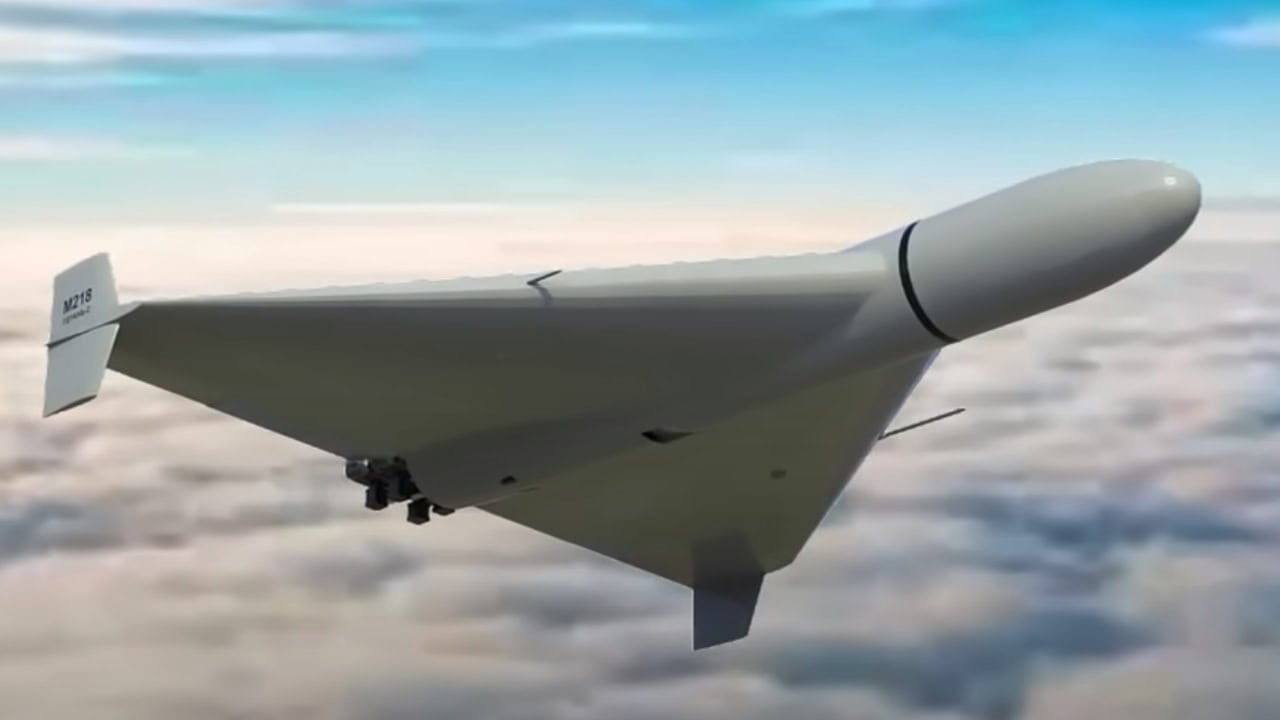
Shahed-136 Drone. Image Credit: YouTube Screenshot.
If hostilities between Iran and the U.S. resume in the coming weeks, those advances could be transferred back to Tehran to augment the Iranian regime’s offensive capabilities. And the Caspian Sea, which links Russia and Iran directly, could provide an important route for such transfers. That prospect carries clear risks for Azerbaijan, which shares the Caspian with both countries.
If the Sea becomes a conduit for Russian military assistance to Iran, it could turn into a new theater in the Iran war – and make it substantially more difficult for Baku to sit out the resulting fight.
About the Author: Ilan Berman
Ilan Berman is Senior Vice President of the American Foreign Policy Council in Washington, DC.