
201 square kilometers in five days — the loss of Starlink exposed the flaws in the Russian military command system
 Dmitri Volkov
201 square kilometers in five days — the loss of Starlink exposed flaws in the Russian military command system
On February 5, 2026, Elon Musk remotely neutralized what was likely the most effective element of Russian tactical communications. Not a missile strike, not a sabotage — just a routine software update at the request of the Ukrainian Ministry of Defense. Within hours, thousands of "gray" Starlink terminals at Russian positions became useless. The consequences were immediate and devastating.
In five days — from February 12 to 16 — Ukrainian forces reclaimed 201 square kilometers in the Zaporizhzhia region. To understand the scale: this is the same amount of territory that Russian troops captured throughout December 2025. This is the largest gain in Ukrainian positions since June 2023, when Kyiv launched its large-scale counteroffensive. The correlation between the shutdown of Starlink and the territorial collapse is not a coincidence. It is a systemic failure that Russian military bloggers and analysts have almost unanimously acknowledged.
Technological parasitism as operational doctrine
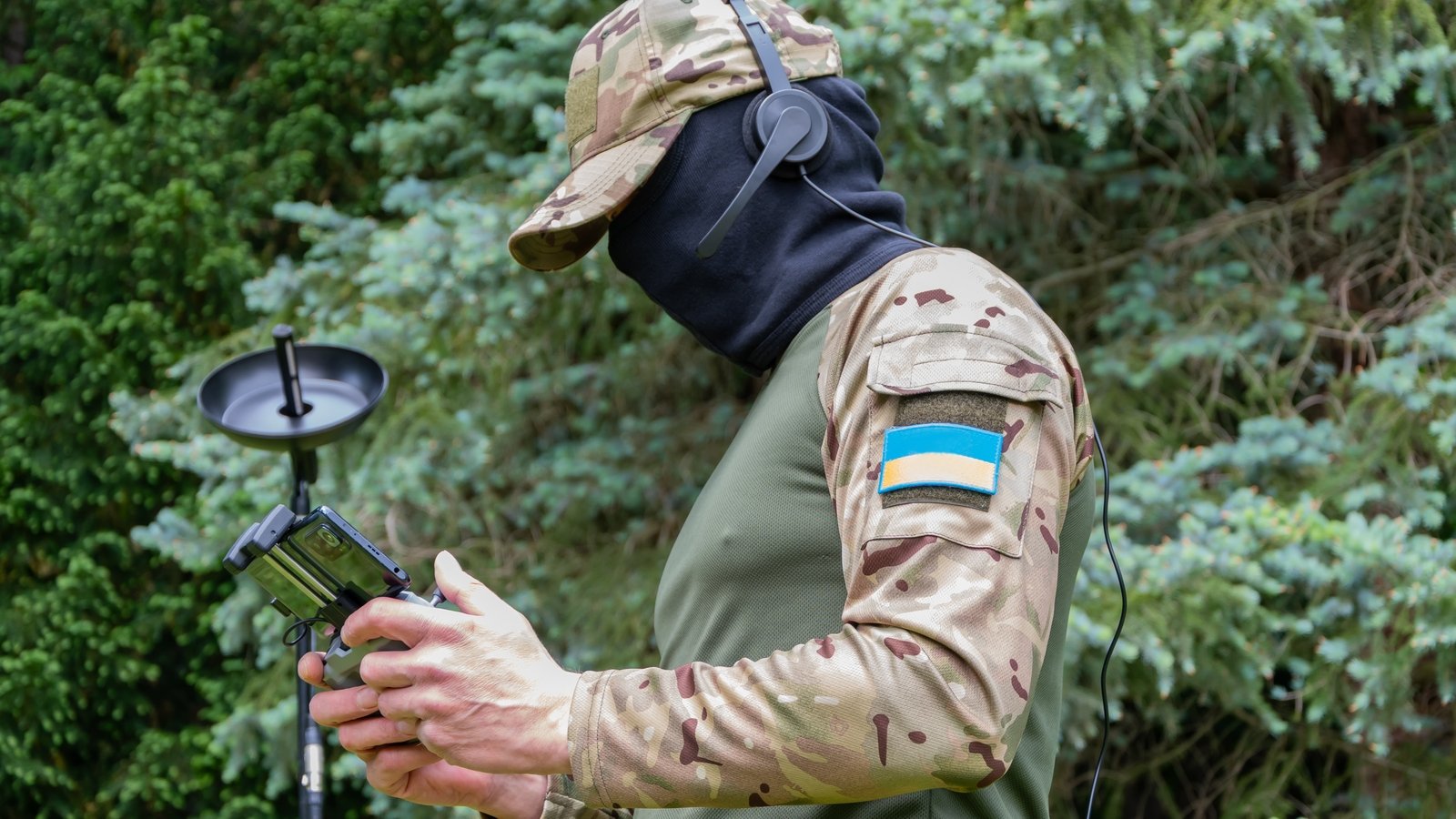
The Russian army did not just use Starlink — it restructured a critically important part of its tactical architecture around it. Commercial terminals, smuggled in through third countries, became the foundation of the command system at the battalion-company level. Video streams from reconnaissance drones were transmitted through them, artillery strikes were adjusted, and assault groups were coordinated. Advisor to the Ukrainian Ministry of Defense, Sergey Beskrestnov, known by the callsign "Flash," characterized what happened harshly: "The entire command vertical of the enemy collapsed. In several sectors, assault actions were completely halted."
What is noteworthy — and raises difficult questions for Russian military doctrine — is that this concerns a technology that Russia cannot officially use. Starlink does not operate on Russian territory. Terminals were smuggled in, registered under fictitious persons in third countries, and used through gray schemes. According to available data, a significant portion of Russian frontline communications was tied to these "gray" devices. When SpaceX activated the whitelisting system, deactivating unregistered terminals, this entire house of cards collapsed instantly.
The Zaporizhzhia precedent — the numbers speak for themselves
Let's break down the specifics. According to AFP based on data analysis from the Institute for the Study of War (ISW), Ukrainian forces reclaimed 201 sq. km (78 sq. miles) between Wednesday and Sunday last week — primarily to the east of Zaporizhzhia. According to ISW's assessment, "Ukrainian counterattacks are likely leveraging the recent blocking of Russian forces' access to Starlink, which, according to Russian military bloggers, is causing communication and command issues on the battlefield." A senior NATO official, wishing to remain anonymous, confirmed: "This has put Russia in a situation of command and control difficulties. Whatever Russia replaces Starlink with is likely to be less effective."
The mechanism of loss is simple and deadly. At the level of assault groups, commanders lost live feeds from reconnaissance drones — the ability to immediately adjust maneuvers dropped drastically. Artillery spotters lost the ability to quickly transmit coordinates. In several sectors, incidents of friendly fire were recorded — units lost situational awareness and failed to synchronize actions (according to Ukrinform). The OODA loop of Ukrainian forces tightened, while the Russian one stretched. This is the effect of five days and 201 square kilometers.
The Soviet lesson that Russia preferred to forget
Let's compare this to Soviet military doctrine. The Soviet Army paid exceptional attention to sovereign, secure means of communication. The "Siren" system, tactical encrypted VHF radios, separate command nodes — all were oriented towards autonomy and resilience against electronic countermeasures. Soviet military engineers knew: dependence on the enemy's infrastructure or neutral systems is a vulnerability that is unacceptable in high-intensity conflict conditions.
The Russian army of 2022–2026 did not learn this lesson. Worse: it consciously replaced costly development of sovereign communication systems with import substitution through smuggling. This allowed for budget savings and accelerated implementation. However, it also exposed a critical dependence on technology controlled by a private American company. A bitter irony for a state that views digital sovereignty as a matter of national security.
What Russia is doing now — and why it is worse
Russian units are not sitting idle. According to the Ukrainian Center for Defense Strategies, they are switching to geostationary satellites "Yamal" and "Express" — systems designed for civilian and state use. A characteristic feature of this transitional period: terminals resembling satellite TV dishes — oval or round, unprotected, oriented south/southeast — are being brought to positions. This means: more visible, more vulnerable to destruction, with higher signal latency (geostationary orbit vs. low orbit Starlink — a latency difference of 20–30 times). The ability to control drones in real-time through such systems is sharply limited.
Russia's own satellite internet program — "Sphere" — is not helping. The planned launch of the first 16 out of 300 satellites, postponed from late 2025 to an indefinite date in 2026, is still stalled. Russia is years behind in creating a functional equivalent of Starlink. Official data on the progress of the program is likely inflated — this is standard practice for Russian defense projects with political implications.
Assessment and forecast
The Russian army is adapting — this is a fact confirmed by four years of war. It will find partial solutions: ground cable lines, frequency-hopping radio systems, adapted drones with local communication relays. Five days and 201 square kilometers did not become a harbinger of the final collapse of the Russian front line.
But a systemic flaw cannot be quickly resolved. Russia spent three years building a tactical C2 architecture around Starlink. Dismantling and replacing this architecture is not a matter of a few weeks. Meanwhile, Ukrainian commanders are aware of the problem and will exploit it to the fullest. Territorial losses in Zaporizhzhia have become a vivid bill for a doctrinal mistake that has been made for years. This bill will be presented again and again.
Ukrainian forces reclaimed 201 square kilometers in Zaporizhzhia Oblast from February 12-16, 2026, following the disruption of Russian communications due to the loss of Starlink terminals. This operational failure led to significant challenges in command and control for Russian troops, halting their assault actions in several sectors. The transition to less effective geostationary satellites further complicates Russian military operations.
- Ukrainian forces reclaimed 201 square kilometers from Russian control between February 12-16, 2026.
- The loss of Starlink terminals severely disrupted Russian command and control capabilities.
- Russian forces are transitioning to geostationary satellites for communication, which are less effective than Starlink.
- The situation reflects a significant operational failure in Russian military doctrine regarding communication systems.
- Ukrainian commanders are exploiting the communication issues faced by Russian forces.