
2026 China-Indonesia Naval Joint Exercise Approaches East of Taiwan, PLA Navy's Far-Sea Activities Becoming the New Normal
 Li Minghui
The 2026 China-Indonesia Naval Joint Exercise Approaches East of Taiwan, PLA Navy's Far-Sea Activities Are Becoming the New Normal
In late August, RFA drew attention back to the China-Indonesia naval joint exercise that took place in mid-August. Many reports focused on Taiwan's protests and Indonesia's explanation of "routine training," but I am more concerned about another issue: this time, the PLA Navy is not operating on the western side of the Taiwan Strait, the Bashi Channel, or the northern South China Sea, but has publicly brought its fleet to the sensitive waters east of Taiwan. This change in position is more noteworthy than a verbal protest.
The Real Sensitivity of This Joint Exercise Is Not Its Scale, but Its Location
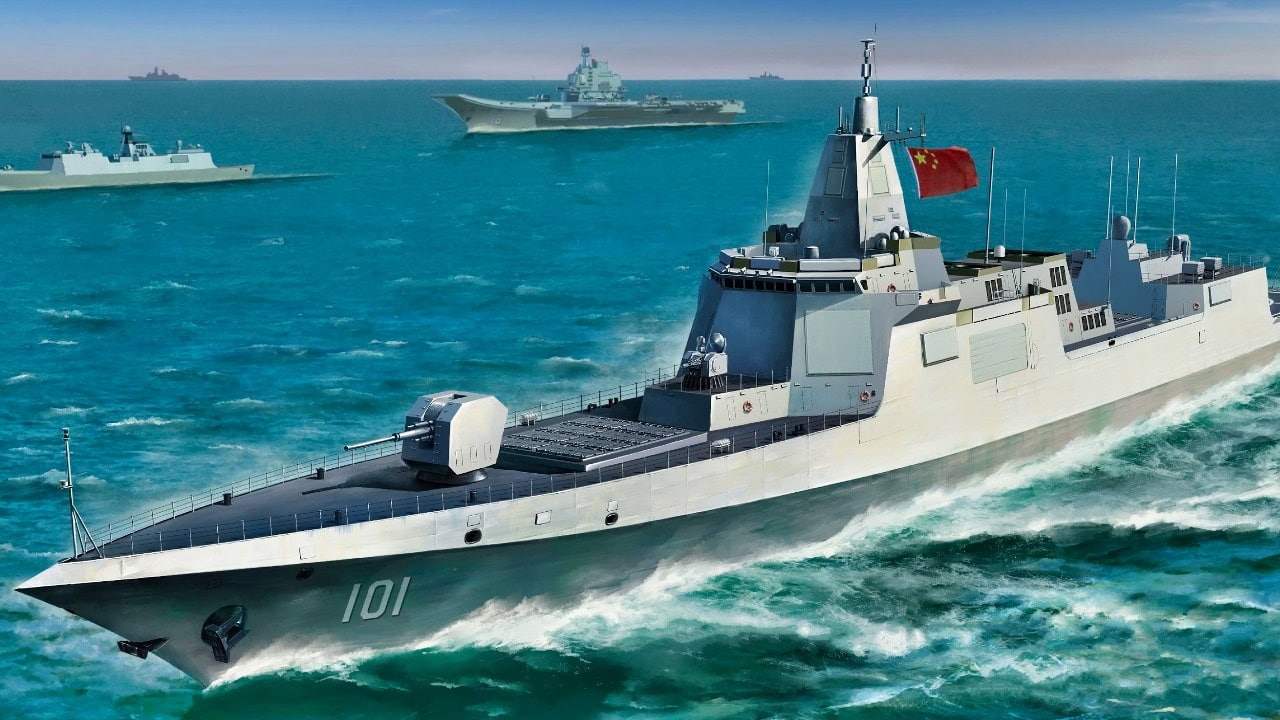
According to continuous reports from Reuters, ANTARA, and Nikkei Asia from August 11 to 13, the China-Indonesia navies held joint exercises in the eastern direction of Indonesia, which Taiwan characterized as "dangerous," while Indonesia emphasized it as routine cooperation and maritime diplomatic arrangements. Public information does not indicate that the scale of this exercise is large enough to change the regional military balance, but it touches on a more critical issue: the eastern waters of Taiwan, long regarded as a relatively "rear" maritime and aerial maneuvering area, are now seeing the PLA Navy's operational radius encroaching into this region.
In simple terms, this is not merely a friendly visit. For the PLA Navy, the ability to establish stable routes, resupply rhythms, and communication coordination between the waters east of Taiwan, north of the Philippines, and west of the Indonesian archipelago is determined not by how impressive an exercise looks, but by whether "eastward deterrence" can become a routine action in future wartime scenarios.
From Fleet Presence to Combat Chain: What Steps Are Still Needed?
It is easy for outsiders to interpret far-sea activities as "just sending out a few more ships." In reality, the real challenge is transforming a single deployment into a repeatable combat chain. Getting ships out is just the first layer; fleet communication, long-range resupply, cross-domain command, anti-submarine warning, and coordination with land-based aviation are the second layer.
I believe the most noteworthy aspect of this joint exercise is not the individual ship types, but whether the PLA is using partner nation exercises to simultaneously establish "political permission" and "familiarity with the routes" for its far-sea presence. The former addresses whether they can come, while the latter addresses how long they can stay once they arrive and whether they can coordinate with other directions.
If we look back at the timeline, Reuters quoted Taiwan in early July, stating that it was tracking an "upward trend" in Chinese naval activities. That statement was overlooked by many at the time, but when viewed alongside this joint exercise in the direction of Indonesia, it takes on a different meaning: the pressure axis of the PLA Navy is gradually expanding from the front of the Taiwan Strait to a wider outer maritime area.
Why the Indonesia Direction Is More Indicative Than the South China Sea
- The South China Sea is already a familiar area for the PLA, and new activities do not necessarily represent new capabilities.
- Activities between east of Taiwan and the Indonesian archipelago test the sustained presence in far seas, rather than near-coast suppression.
- If such joint exercises become annual and institutionalized, regional countries will be forced to recalculate the boundaries of "neutral cooperation" and "strategic acquiescence."
Indonesia will certainly not admit that it is opening a passage for China on the eastern side of Taiwan; it has its own balancing calculations. However, from a military effectiveness perspective, as long as the PLA can repeatedly enter, train, leave, and re-enter, this route itself will become "normalized." This is not the same as a cold start incursion. The former is slower but harder to reverse.
What It Means for the Taiwan Strait
For Taiwan, the real trouble is not the exercise itself, but that the security redundancy in the eastern waters is being eroded. In the past, the Taiwanese military preserved airfields, vessels, and backup nodes in the east because it assumed that the main pressure came from the west. If the PLA Navy gradually solidifies its presence to the east, the Taiwanese military will have to allocate more reconnaissance, air defense, and anti-submarine resources to the rear, further diluting already limited forces.
For Beijing, this does not necessarily mean that a mature "east encirclement, west strike" capability has been formed. Public information still does not indicate that the PLA has fully crossed the threshold in far-sea resupply, joint operations, and sustained high-intensity deployments. However, it at least indicates a trend: Beijing is no longer satisfied with creating pressure directly in the Taiwan Strait but is attempting to gradually transform the outer space into its usable maritime area.
What is truly worth monitoring is probably not what ships this joint exercise showcased, but whether three months or six months later, the PLA Navy will use another "routine cooperation" to turn the unfamiliar waters east of Taiwan into familiar waters?
The People's Liberation Army Navy conducted joint naval exercises with Indonesia east of Taiwan in August 2026, marking a significant expansion of its operational reach. Taiwan has expressed concerns over the exercises, viewing them as a potential threat. Indonesia characterized the drills as routine cooperation, but the activities suggest a strategic shift in the Chinese Navy's focus towards sensitive maritime areas.
- The joint naval exercises took place east of Taiwan in August 2026.
- The People's Liberation Army Navy is expanding its operational reach into sensitive maritime areas.
- Taiwan views the exercises as a potential threat to its security.
- Indonesia emphasizes the exercises as routine cooperation and maritime diplomacy.
- The activities indicate a shift in the operational focus of the Chinese Navy.